
OKX Crypto Access: What You Need to Know About Trading on OKX and Alternatives
When you talk about OKX crypto access, a global cryptocurrency exchange offering spot, futures, and DeFi trading with high liquidity and low fees. Also known as OKX Exchange, it's one of the top platforms where traders manage Bitcoin, Ethereum, and thousands of altcoins without needing to switch between apps. Unlike some exchanges that lock you into basic trading, OKX gives you direct control over your assets, advanced charting tools, and access to token launches—all from one dashboard.
But OKX isn’t the only player. Many users compare it to Binance, the largest crypto exchange by volume, with similar features but stricter regional restrictions, or dYdX, a decentralized futures exchange built for traders who want full custody and zero gas fees. OKX sits between these two: it’s centralized enough to be easy to use, but offers enough DeFi integration to appeal to advanced users. If you’re looking for margin trading, staking, or NFT markets, OKX has them. But it’s not perfect—some countries can’t access all features, and regulatory scrutiny is growing.
What you’ll find in the posts below isn’t just a list of OKX reviews. It’s a real look at what happens when exchanges rise and fall. You’ll read about OKX crypto access compared to platforms like TAGZ, Pearl v1.5, and MDEX—all of which promised big things but either collapsed, vanished, or turned out to be risky. There are also deep dives into how exchanges like Antarctic Exchange and CoinSwap.com handle security, fees, and user trust. You’ll see how Japan’s licensing rules affect where you can trade, and why some platforms, even with zero fees, are better avoided. Whether you’re new to crypto or have been trading for years, these posts help you spot the difference between a solid exchange and a ghost platform that’s already gone.
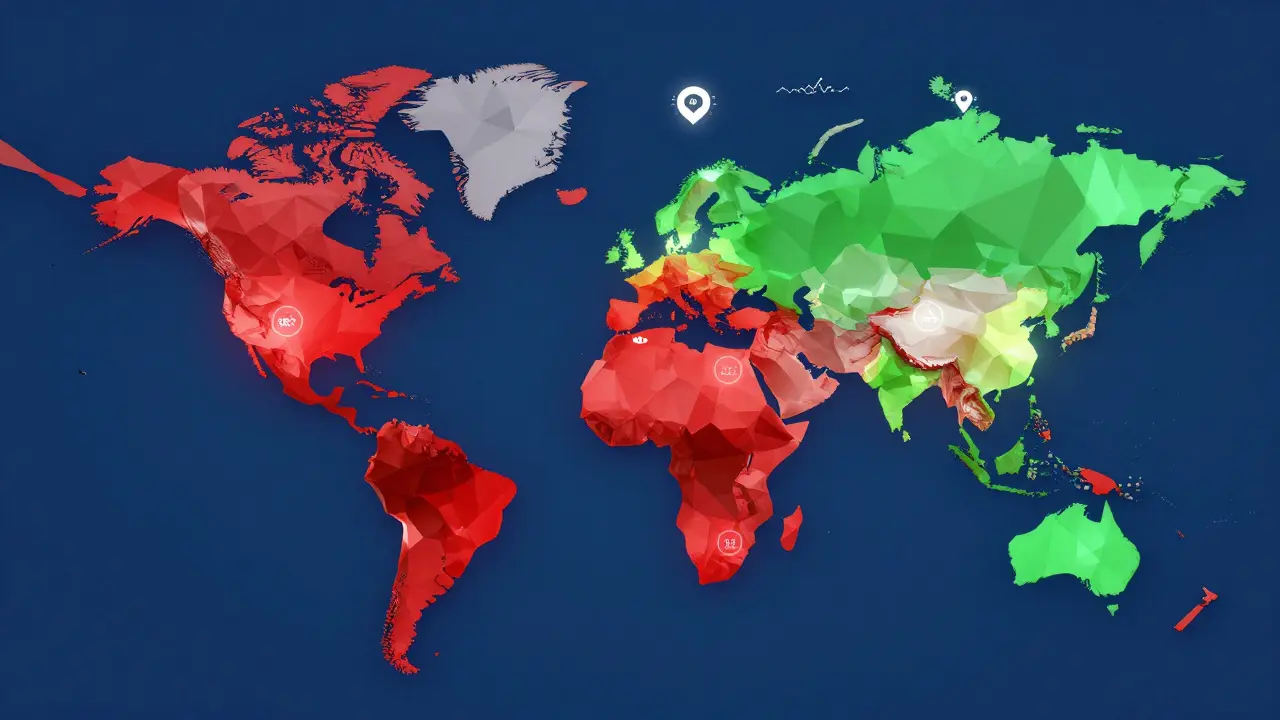
OKX restricts access in over 20 countries and limits features in many others due to global regulations. Learn where you can trade, where you’re blocked, and what’s changing in 2025-2026.
- Read More