OKX Country Restrictions: Where You Can and Can't Use OKX in 2025
When you try to sign up for OKX, a global cryptocurrency exchange offering spot, futures, and staking services. Also known as OKX Exchange, it's one of the largest platforms by trading volume—but not everyone can use it. That’s because OKX country restrictions block users in over 30 countries, including the U.S., Canada, the U.K., Japan, and several others. These aren’t random bans—they’re legal responses to local regulations around licensing, taxation, and anti-money laundering rules. If you’re in one of these restricted zones, you won’t just get a warning—you’ll be locked out entirely, even if you use a VPN.
OKX follows the same pattern as other major exchanges like Binance and Coinbase: comply with local laws or lose access. In the U.S., for example, OKX pulled out after failing to secure state-level money transmitter licenses. Japan requires exchanges to register with the Financial Services Agency (FSA), and OKX never applied. Meanwhile, countries like Bangladesh and Ecuador have outright crypto bans, so OKX doesn’t even try to operate there. The result? A patchwork of access where you’re either in or out—no gray area.
Some users wonder if OKX’s restrictions are about safety or just legal risk. The truth is both. In places like Nigeria and India, where P2P trading is common, OKX allows access because local rules don’t target exchanges directly. But in countries with strict financial oversight, OKX avoids the legal minefield entirely. This isn’t about distrust—it’s about survival. If OKX tried to operate in the U.S. without a license, it could face fines, asset seizures, or criminal charges. So they play it safe.
What does this mean for you? If you’re outside the U.S. and Western Europe, you’re likely fine. But if you’re in a restricted country, don’t waste time trying to bypass it. You won’t get support, your funds could be frozen, and you’ll have no legal recourse. Instead, look for exchanges that are licensed in your region—like Kraken in the U.S. or Bitget in India. The market has options.
You’ll find posts below that dig into how other exchanges handle country rules—like Japan’s crypto licensing framework, Bangladesh’s cryptic ban, and Ecuador’s banking restrictions. These aren’t just isolated cases. They’re part of a global trend: crypto exchanges are becoming more like banks, forced to pick sides in a patchwork of national laws. Whether you’re trading, staking, or just holding, knowing where OKX works—and where it doesn’t—isn’t just helpful. It’s essential.
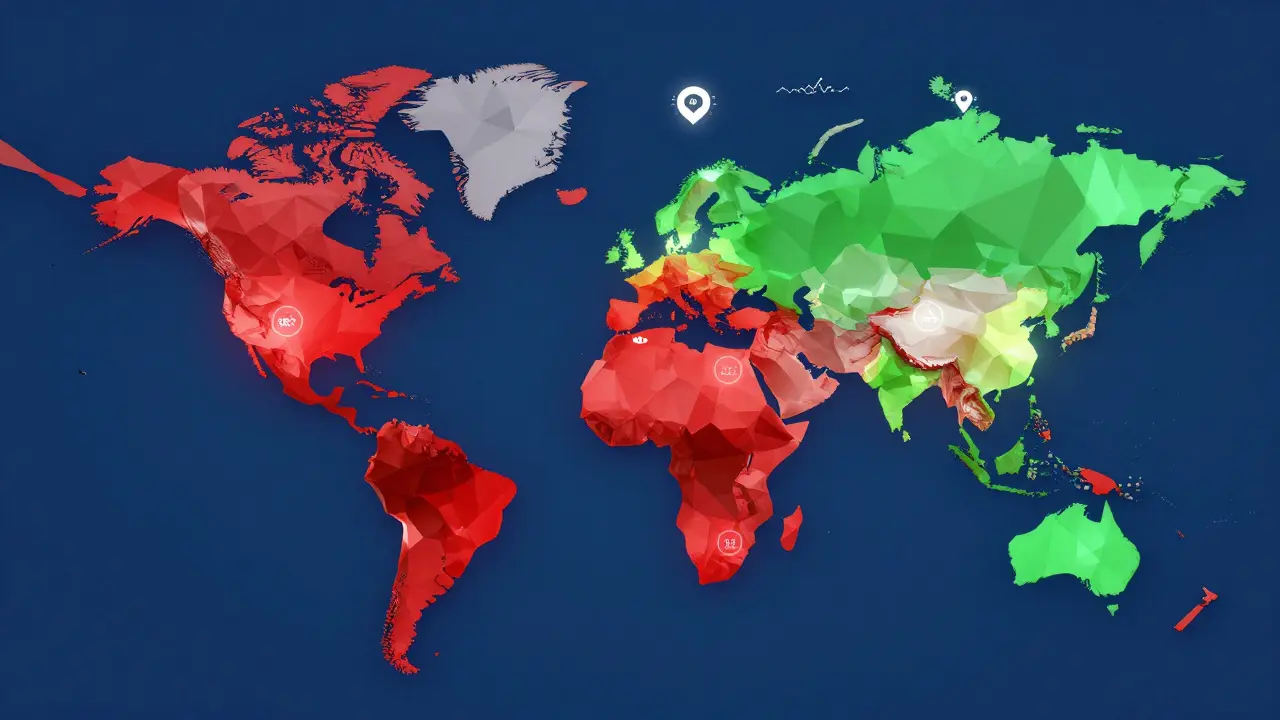
OKX restricts access in over 20 countries and limits features in many others due to global regulations. Learn where you can trade, where you’re blocked, and what’s changing in 2025-2026.
- Read More