
OKX Banned Countries: Where You Can't Use OKX and Why
When you try to sign up for OKX, a global cryptocurrency exchange offering spot, futures, and margin trading. Also known as OKX Exchange, it operates in over 100 countries but is blocked in others due to local financial laws. Not every country lets you use OKX—even if you have a VPN. Some governments outright ban crypto exchanges, others demand strict licensing, and a few punish users for even accessing them.
OKX is banned in places like the United States, where federal and state regulations require separate licensing for each jurisdiction, and Bangladesh, where the central bank prohibits crypto transactions under the 1947 Foreign Exchange Act. In China, all crypto exchanges are illegal, and OKX shut down its local operations in 2021. Even in countries like Ecuador, where banks can’t process crypto payments, OKX isn’t officially banned—but using it means bypassing financial restrictions. These aren’t random decisions. Each ban ties back to control: governments want to manage capital flows, prevent money laundering, or push their own digital currencies.
What’s interesting is that bans don’t always mean zero usage. In countries like OKX banned countries, people still trade through P2P platforms or offshore wallets. But the risks are real: frozen accounts, legal trouble, or even fines. If you’re in a restricted region, you’re not just fighting a technical block—you’re navigating legal gray zones. The posts below cover exactly this: where exchanges like OKX are blocked, how users adapt, what alternatives exist, and why some countries enforce these rules so harshly. You’ll find real examples from Russia, Japan, Bangladesh, and more—not just lists, but the stories behind the bans.
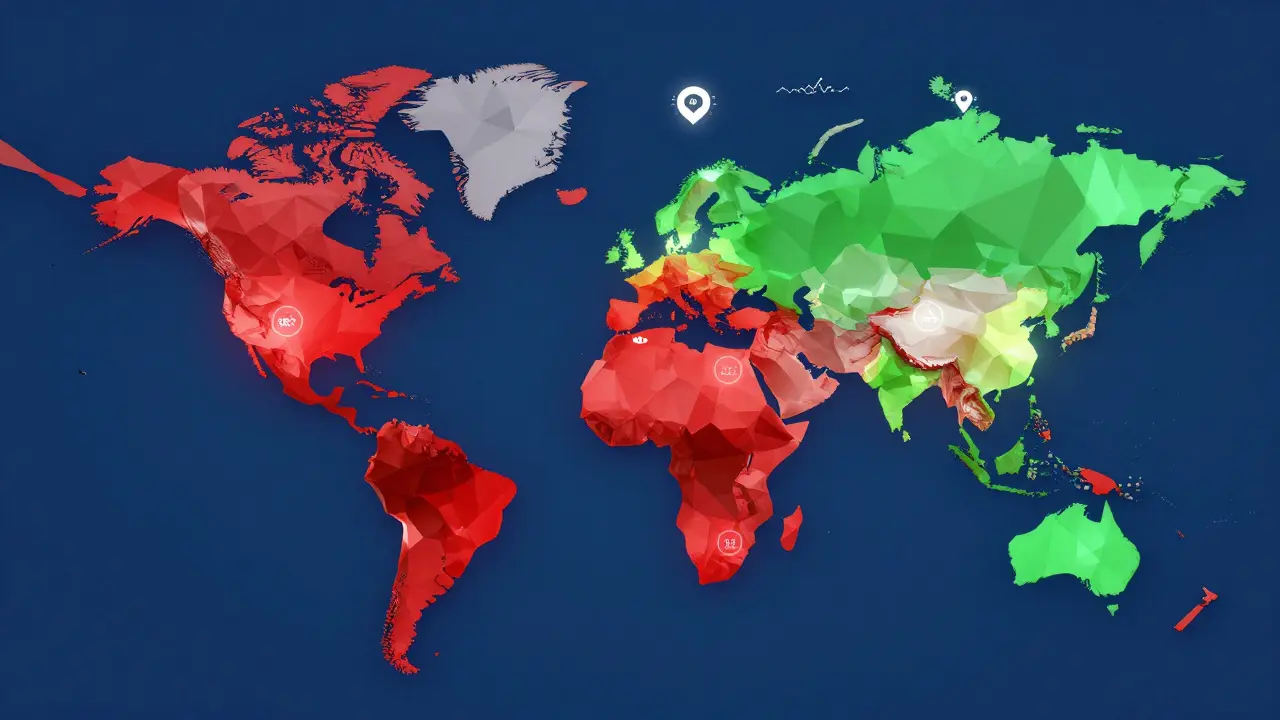
OKX restricts access in over 20 countries and limits features in many others due to global regulations. Learn where you can trade, where you’re blocked, and what’s changing in 2025-2026.
- Read More