
NFT Interoperability: How Cross-Chain NFTs Work and Why It Matters
When you own an NFT, it’s locked to one blockchain—unless NFT interoperability, the ability for NFTs to move and function across different blockchains. Also known as cross-chain NFTs, it’s what could finally turn digital collectibles from static images into usable assets. Right now, most NFTs are trapped. A Binance Smart Chain NFT can’t enter a Solana game. An Ethereum-based art piece can’t be used in a Polygon metaverse. That’s not just inconvenient—it kills real value. If your NFT can’t move, it’s just a picture with a fancy hash.
NFT interoperability isn’t magic. It needs bridges, standardized metadata, and smart contracts that understand each other. Projects like sidechains, independent blockchains connected to mainnets like Ethereum or Bitcoin help by letting assets move faster and cheaper. But even sidechains don’t solve the core problem: different NFT standards. ERC-721 on Ethereum doesn’t speak the same language as BEP-721 on BSC. Without a common protocol, you’re stuck with silos. That’s why true interoperability requires more than tech—it needs industry-wide agreement on how NFTs should behave, no matter where they live.
Think about what this unlocks: an NFT from a game could become a wearable in a virtual concert. A land plot from one metaverse could host a shop in another. Liquidity flows when assets aren’t locked down. That’s why low-volume tokens like Pine (PINE), a token built for NFT lending with almost no trading activity—or dead projects like VikingsChain (VIKC), a token that trades at $0 and has no active team—fail. They don’t offer utility. They don’t connect. They’re just noise. Real NFTs need to move, be used, and earn. Interoperability makes that possible.
What you’ll find below isn’t a list of hype. It’s a collection of real stories—about scams pretending to be NFT airdrops, exchanges that claim to be decentralized but don’t let you truly own your assets, and tokens that died because they never solved the basic problem: how do you make digital things useful? Some posts warn you about fake Christmas NFT drops. Others show you why Block DX and Antarctic Exchange actually let you control your stuff. And some expose projects that looked like the future but vanished because they built in a cage, not a bridge. This is what NFT interoperability looks like in practice: not theory. Not promises. Just what works—and what doesn’t.
- Dec, 8 2025
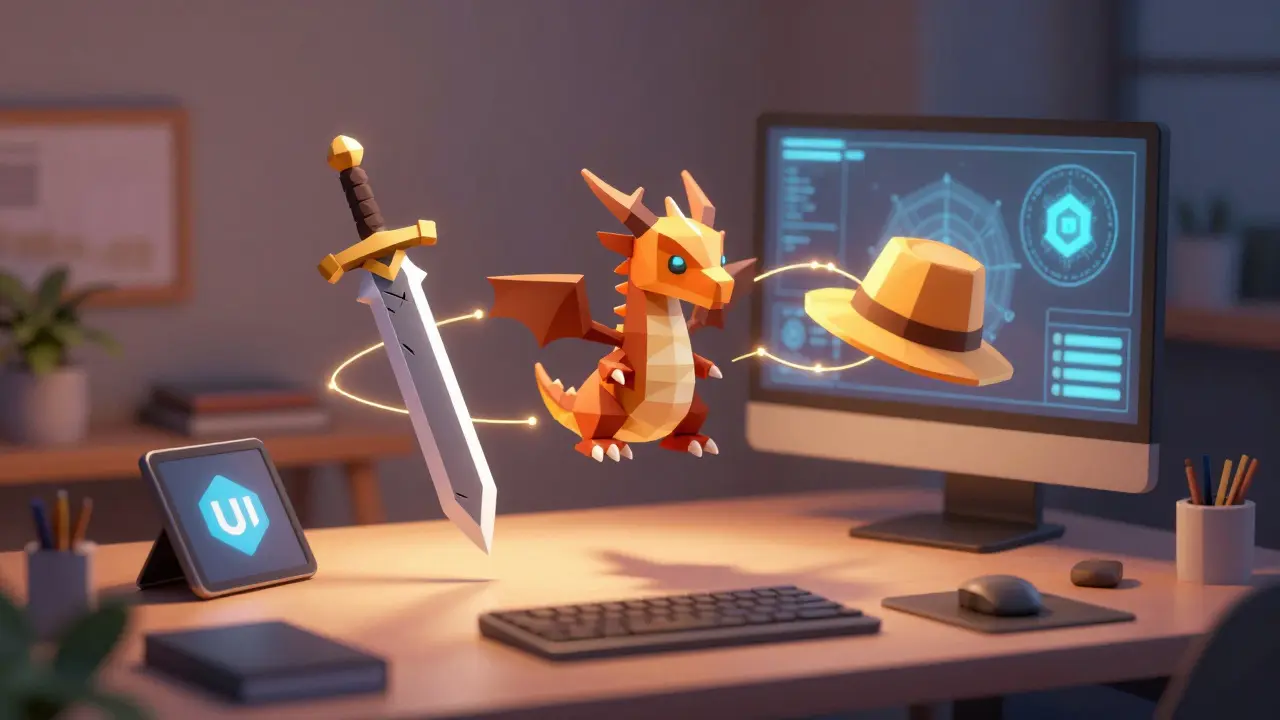
NFTs are transforming game development in 2025 by enabling true ownership, cross-game asset use, ongoing royalties, and player-driven economies. Developers now build games that earn long-term and grow with their communities.
- Read More