
Benefits of NFTs for Game Developers in 2025
NFT Royalty Calculator
Calculate Your Revenue
How It Works
NFT royalties provide ongoing revenue for developers when assets are resold. For example:
• $200 sword sold for $200 with 10% royalty = $20 per resale
• 5 resales = $100 total revenue
Note: This calculator shows potential revenue based on article examples (like Gods Unchained). Actual rates may vary by platform.
Your Estimated Revenue
Per Resale:
$0.00
Total Revenue:
$0.00
Example: With $200 item at 10% royalty, you'd earn $20 per resale.
At 10 resales, you'd earn $200 total.
At 10 resales, you'd earn $200 total.
Game developers in 2025 aren’t just building levels and characters anymore-they’re building economies. Thanks to NFTs, digital assets now have real ownership, lasting value, and the ability to move across games. This isn’t speculation anymore. It’s a working model that’s changing how games are made, sold, and played.
More Ways to Make Money, Long After Launch
Traditional games make money when you buy them-or when you spend $5 on a skin. That’s it. NFTs change that. With NFTs, developers earn not just from the first sale, but from every resale. If a player sells a rare sword they bought in your game for $200, you get a cut-say, 10%. That’s $20 back to you, every time. And it keeps happening. No expiration. No platform taking 30%. This isn’t theory. Games like Gods Unchained and a blockchain-based trading card game that pays royalties to creators on every secondary sale have been doing this for years. In 2025, it’s standard for indie studios to launch with limited-edition NFTs that fund future updates. One developer in Wellington raised $1.2 million in pre-launch NFT sales just to finish their game’s core engine. No investors. No loans. Just players betting on their vision.Assets That Work Across Games
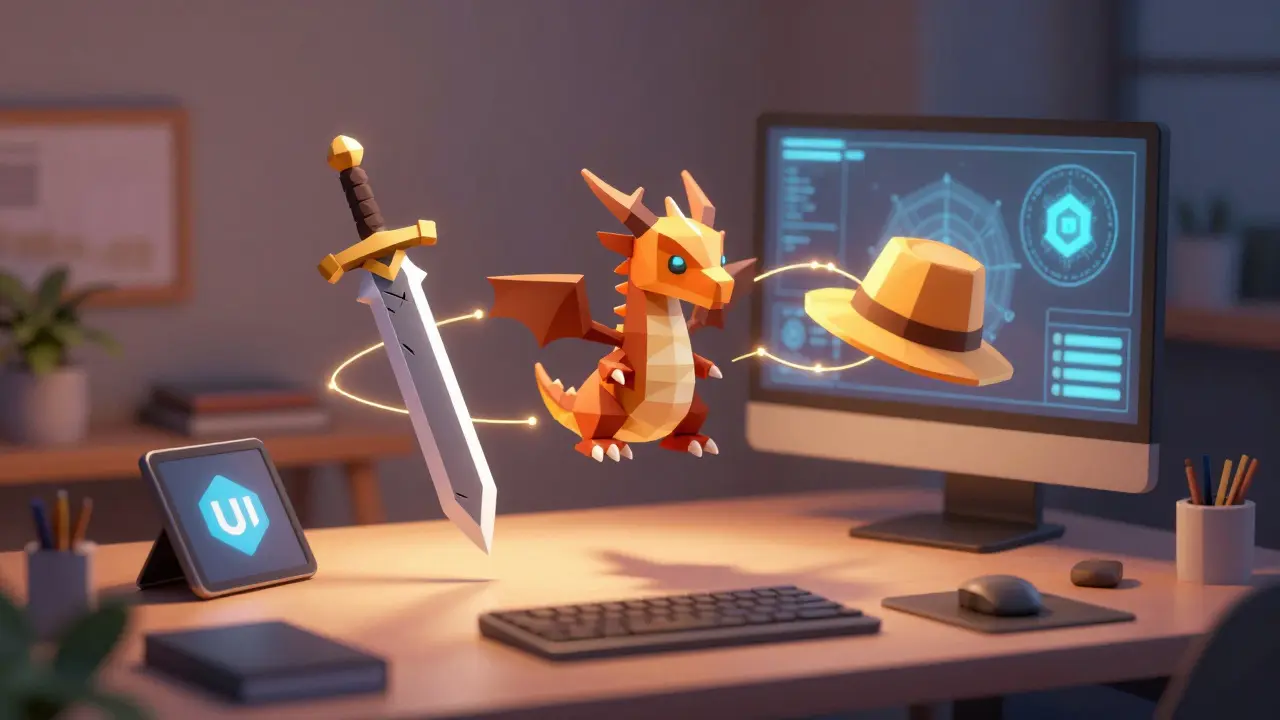
Imagine wearing your armor from one game into another. Not a copy. Not a skin. The actual item you own. That’s what NFTs make possible. Built on open standards like ERC-721 and ERC-1155, these digital assets can be recognized by any game that supports them. Your dragon mount from Axie Infinity and a play-to-earn NFT game where creatures are owned by players could become a companion in a new RPG. Your rare hat from a puzzle game might unlock a secret area in a multiplayer shooter. This interoperability isn’t just cool-it’s strategic. Developers can partner up. Instead of competing for players, they share them. One studio builds the item. Another builds the world where it’s used. Player retention jumps because your stuff doesn’t disappear when you quit one game. You’re not just playing-you’re collecting a digital legacy.Players Care More When They Own Something
When you rent a car, you don’t wash it. When you own it, you detail it. The same applies to games. NFTs turn players from consumers into owners. They’re no longer just spending money-they’re investing. This shifts the whole dynamic. Players spend more time mastering skills because their gear has real value. They join forums, give feedback, even help design new items. This is the shift from play-to-earn to play-to-own. It’s not about grinding for cash. It’s about building something that lasts. A study from the Game Developers Conference in early 2025 showed that games using NFTs had 40% higher 90-day retention than traditional games with similar mechanics. Why? Because players feel like they’re part of something real. They’re not just buying a skin. They’re buying a piece of the game’s future.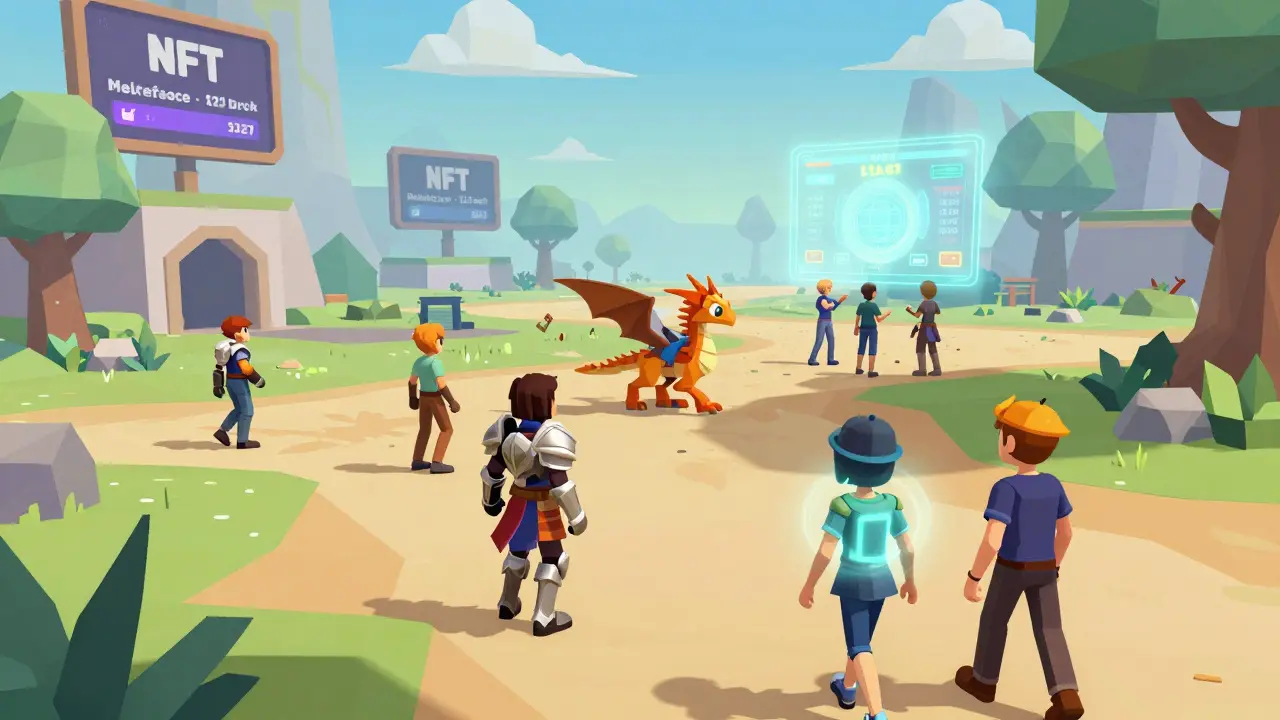
Games That Grow With You
The most exciting innovation in 2025 isn’t just NFTs-it’s dynamic NFTs. These aren’t static images. They change. Your sword gets scarred in battle. Your pet evolves as you level up. Your character’s outfit shifts based on your playstyle. This is powered by AI and smart contracts working together. If you play aggressively, your armor gains a battle-worn texture. If you focus on stealth, your cloak becomes invisible in low light. Developers don’t have to code every variation. The system learns from your actions and updates the NFT automatically. This level of personalization was impossible before. Now, every player’s journey is unique-and their assets reflect it. One indie team built a fantasy RPG where your NFT dragon’s appearance changes based on how many quests you complete, who you befriend, and even how often you log in. Players are sharing screenshots of their evolving dragons like family photos. That’s engagement you can’t buy with ads.Games That Live in the Metaverse
The metaverse isn’t a buzzword anymore-it’s infrastructure. NFT games are now part of larger digital ecosystems where you can shop, socialize, and play-all with the same assets. Your NFT avatar from a racing game can walk into a virtual mall, attend a concert, or even open a shop selling your in-game gear. This isn’t sci-fi. Platforms like The Sandbox and a decentralized virtual world where users create and monetize experiences using NFTs already let players bring their assets across dozens of experiences. For developers, this means your game doesn’t have to be the whole world. It can be a part of one. That opens up new revenue: licensing your NFTs for use in other virtual spaces. It also means your game stays relevant. Even if player interest in your original game dips, your assets keep circulating elsewhere. Your game becomes a node in a larger network-not a dead end.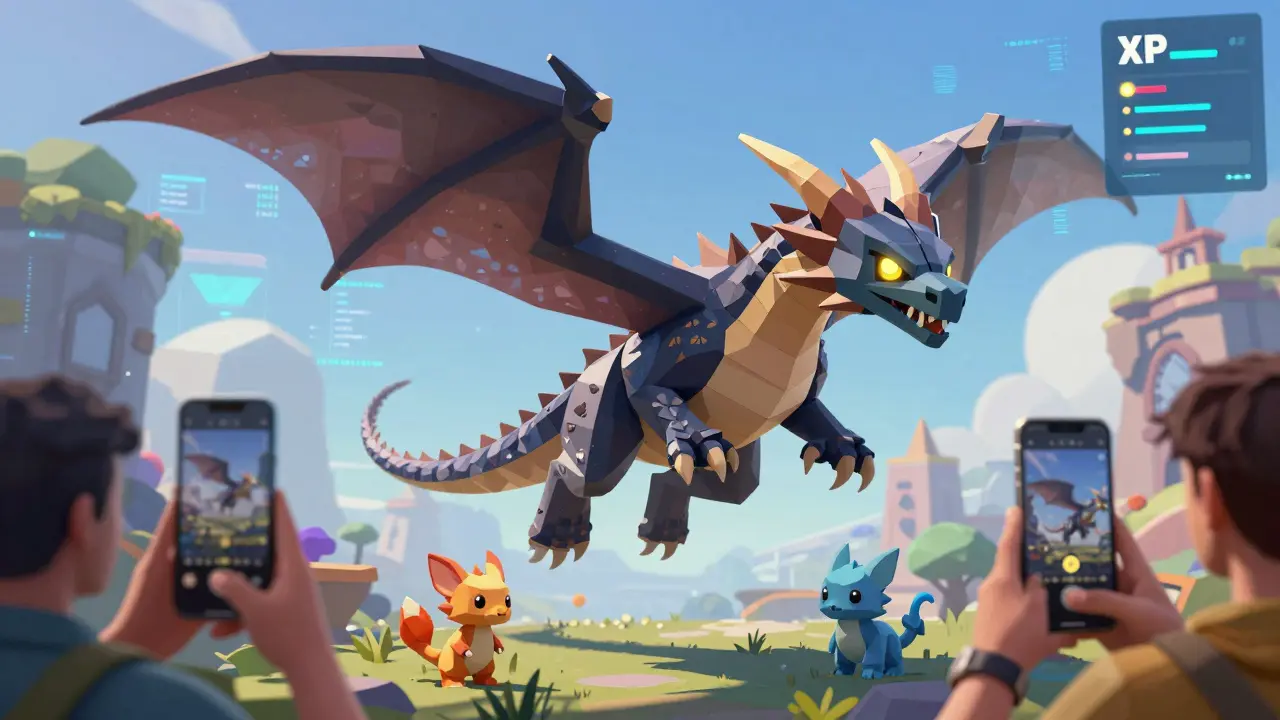
Kenneth Ljungström
December 9, 2025 AT 14:29And the fact that I can take it into another game? That’s the future. No more starting over from scratch.
Cristal Consulting
December 10, 2025 AT 04:46Tom Van bergen
December 11, 2025 AT 23:42Sandra Lee Beagan
December 13, 2025 AT 14:06And yes, I’m using jargon because it’s accurate. Not everything needs to be dumbed down.
Ben VanDyk
December 13, 2025 AT 18:24Nina Meretoile
December 15, 2025 AT 03:17Barb Pooley
December 16, 2025 AT 01:13Shane Budge
December 17, 2025 AT 11:27sonia sifflet
December 17, 2025 AT 21:05Chris Jenny
December 18, 2025 AT 22:48Adam Bosworth
December 20, 2025 AT 05:50Uzoma Jenfrancis
December 20, 2025 AT 06:40Renelle Wilson
December 21, 2025 AT 07:58And yet, the potential for player-driven governance through DAOs introduces a revolutionary model of participatory design-one that, if properly regulated, could redefine creative agency in digital media.
Nelson Issangya
December 22, 2025 AT 19:01Joe West
December 24, 2025 AT 11:54Richard T
December 24, 2025 AT 16:14jonathan dunlow
December 26, 2025 AT 10:42Mariam Almatrook
December 27, 2025 AT 07:20