
Home Mining Crypto: What It Is, Risks, and Realistic Returns in 2025
When you think of home mining, the practice of using personal computers or specialized hardware to validate blockchain transactions and earn cryptocurrency rewards. It used to be a way for anyone with a decent PC to earn Bitcoin. Today, it’s a niche activity driven by specific coins, hardware, and electricity costs. Most people who try it now aren’t chasing Bitcoin—they’re looking at altcoins that still reward solo miners, like Monero or smaller Proof-of-Work tokens. But even then, success depends on more than just plugging in a rig.
NiceHash, a platform that lets you rent out your mining power or instantly sell mined coins without holding them changed the game for casual miners. Instead of running a full node, you can use your GPU to mine for others and get paid in Bitcoin. It’s not traditional home mining, but it’s how many people still make money from their hardware. Then there’s mining hardware, specialized equipment like ASICs and high-end GPUs designed to solve cryptographic puzzles faster than consumer gear. These aren’t cheap, and they’re loud, hot, and power-hungry. A single ASIC can eat $500 a year in electricity—so if your local rates are high, you’re already losing money before you turn it on.
And let’s not forget the hidden risks. Many crypto projects that claim to be mineable are either dead, scams, or designed to drain your power bill. Projects like PlatinumBAR (XPTX) and Marmot (MARMOT) look like mining opportunities on paper—but they’re essentially digital ghosts with zero liquidity. Even if you mine them, you can’t sell them. Meanwhile, exchanges like MDEX and Pearl v1.5 used to promise easy rewards, but now they’re either dead or too risky to touch. If you’re thinking about home mining, you need to ask: Is this coin still being mined by real people? Is there a market for it? Or am I just powering someone else’s scam?
There’s also the legal side. In places like China, mining is outright banned. In Ecuador and Bangladesh, banks block crypto-related transactions, making it hard to cash out. Even in the U.S., you’re on the hook for taxes on every coin you mine—even if you never sell it. The IRS treats mined crypto as income the moment it hits your wallet. That means you need to track every block reward, every transaction, and every dollar’s worth of electricity you used.
So who still mines at home? Mostly people with cheap power, old GPUs they already own, or those who treat it like a hobby—not an investment. A few still mine Monero on CPUs because it’s resistant to ASICs. Others use NiceHash to turn idle hardware into small Bitcoin payouts. But if you’re expecting to replace your salary with home mining in 2025, you’re already behind. The era of easy wins is over. What’s left is a grind—where success means knowing which coins still reward miners, which hardware still makes sense, and which projects are just noise.
Below, you’ll find real breakdowns of mining-friendly platforms, dead coins that tricked people into wasting power, and the hidden rules that decide whether your home mining setup pays off—or just heats up your basement.
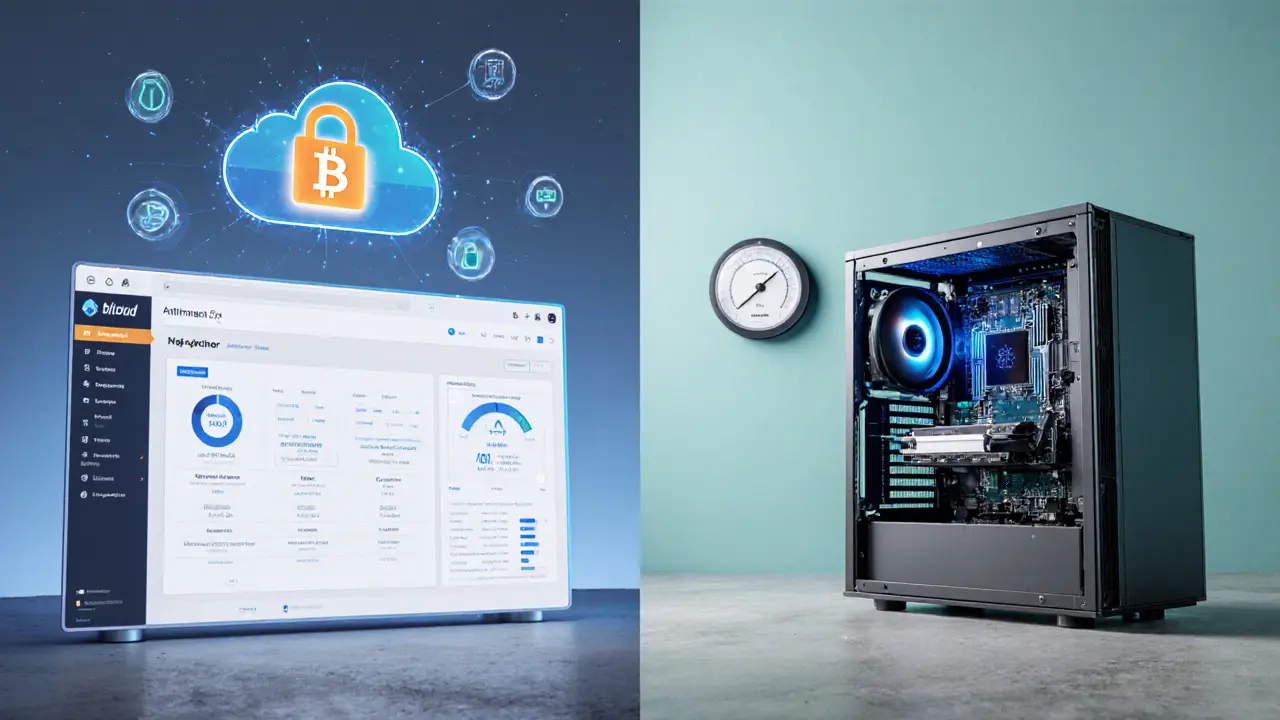
In 2025, cloud mining offers ease but little control, while home mining demands effort but real ownership. Learn which option actually pays off based on electricity costs, hardware, and long-term risks.
- Read More