
Cryptocurrency Mining: How It Works, Who Does It, and What You Need to Know
When you hear cryptocurrency mining, the process of validating blockchain transactions and adding them to the public ledger in exchange for new coins. Also known as crypto mining, it’s the backbone of Bitcoin and other proof-of-work networks. It’s not digital alchemy—it’s computational labor. Miners use powerful hardware to solve complex math problems, and the first one to crack it gets rewarded with newly minted coins and transaction fees. This system keeps the network honest, prevents double-spending, and distributes new currency without banks.
Most people think mining is still something you can do on a gaming PC, but that’s mostly over. Today, ASIC miners, specialized hardware built only for mining specific cryptocurrencies like Bitcoin dominate the scene. These machines are expensive, loud, and eat electricity like crazy. You won’t find them in dorm rooms—you’ll find them in warehouses in Texas, Kazakhstan, or Iceland, where power is cheap and cooling is easy. Even then, profit margins are razor-thin. Most small miners have either quit or switched to other coins that still allow GPU mining, like Monero or Ravencoin.
Proof of work, the consensus mechanism that requires real-world energy to secure a blockchain is under pressure. Ethereum ditched it in 2022. Newer chains avoid it entirely. But Bitcoin? It’s stuck with it. And that’s why mining still matters. Every block mined reinforces Bitcoin’s security. Every new ASIC deployed makes it harder for anyone to take over the network. The more miners there are, the more decentralized and resilient the system becomes—even if the rewards shrink over time.
What’s left for regular people? Not much, unless you’re in the right place with cheap power. But mining isn’t just about making coins anymore. It’s about understanding how trust is built in crypto without middlemen. The same hardware that mines Bitcoin also powers decentralized cloud computing, AI training, and even scientific research in some cases. Mining has become a bridge between physical infrastructure and digital value.
You’ll find posts here about exchanges that let you trade mining rewards without owning hardware, scams that pretend to offer "cloud mining" contracts, and how tax rules treat mining income in places like Switzerland and Portugal. Some articles expose fake mining platforms. Others break down why certain coins are still mineable while others aren’t. You’ll see what happened to NiceHash, how mining pools work, and why the Bitcoin hash rate keeps climbing even as prices swing. This isn’t a beginner’s guide to setting up a rig. It’s a look at the real, messy, profitable, and sometimes dangerous world behind the scenes of every blockchain transaction.
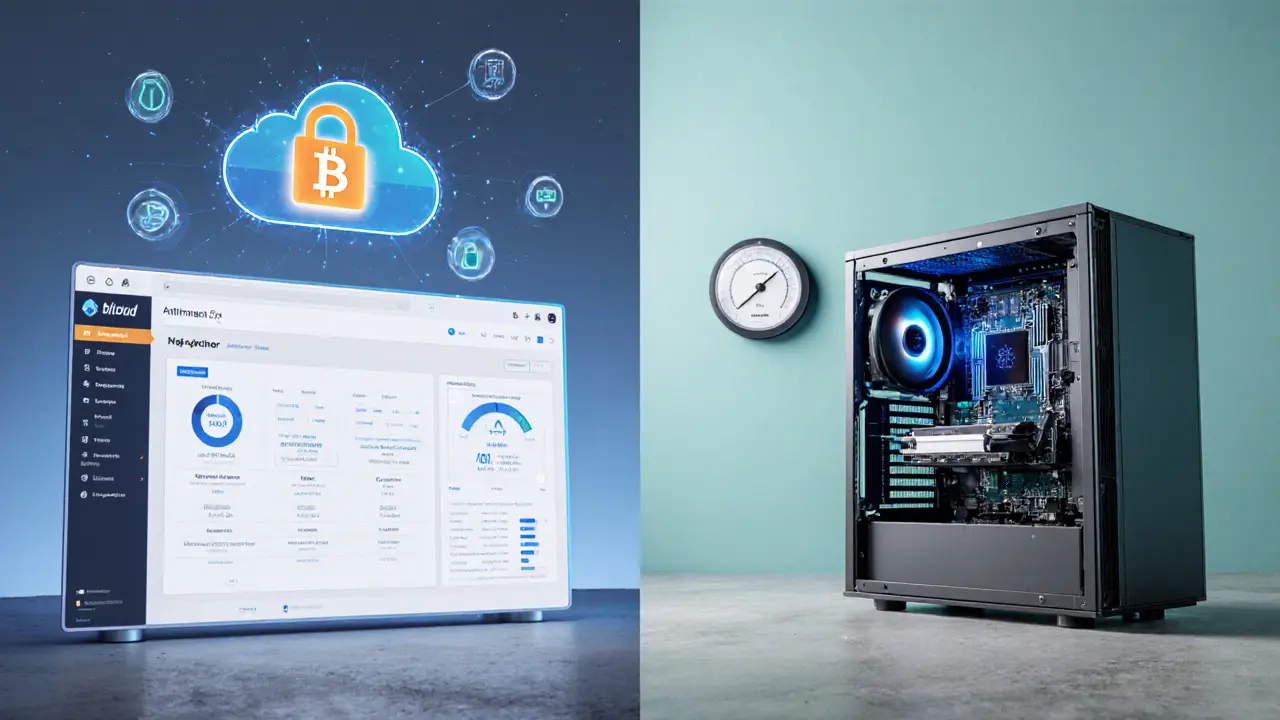
In 2025, cloud mining offers ease but little control, while home mining demands effort but real ownership. Learn which option actually pays off based on electricity costs, hardware, and long-term risks.
- Read More