
Cloud Mining Explained: What It Is, How It Works, and Why It's Risky
When you hear cloud mining, a service that lets you rent computing power to mine cryptocurrency without owning hardware. Also known as hash power leasing, it promises easy crypto earnings with just a click. But behind the ads promising daily Bitcoin payouts, there’s a messy reality. Most cloud mining platforms are either scams, overpriced, or designed to lose you money slowly. The idea sounds simple: pay a fee, get a share of mining output, and collect coins. In practice, the math rarely works out.
Cloud mining relies on mining contracts, agreements where you pay for a set amount of hash power over time. These contracts are sold by companies that claim to run large mining farms in places with cheap electricity. But here’s the catch: if the company actually owned those rigs, they’d mine for themselves—not sell you slices. Many are shell companies with no public data on hardware, location, or ownership. Even the legit ones? They often charge more than the coins you’ll earn. You’re paying for electricity, maintenance, and profit margins you didn’t sign up for.
And then there’s hash power, the raw computing strength used to solve blockchain puzzles and earn rewards. The more hash power you control, the higher your odds. But cloud mining services rarely tell you how much you’re actually getting. Is that $50/month contract worth 10 TH/s? Or is it 1 TH/s buried under fees and hidden costs? Without transparency, you’re guessing. And in crypto, guessing costs money.
Some services try to look legit by offering live dashboards or fake mining stats. But if you can’t verify the hardware, the location, or the contract terms in writing, you’re trusting strangers with your cash. The collapse of companies like HashFlare and Genesis Mining isn’t an anomaly—it’s the norm. And while there are rare cases where cloud mining makes sense for testing or small-scale experiments, it’s almost never a profitable long-term strategy.
What you’ll find below are real stories of cloud mining gone wrong: platforms that vanished, contracts that stopped paying, and scams disguised as opportunities. You’ll also see how people got fooled by promises of passive income, and what actual mining looks like compared to the hype. No fluff. No promises. Just what happened—and why most of it wasn’t worth the risk.
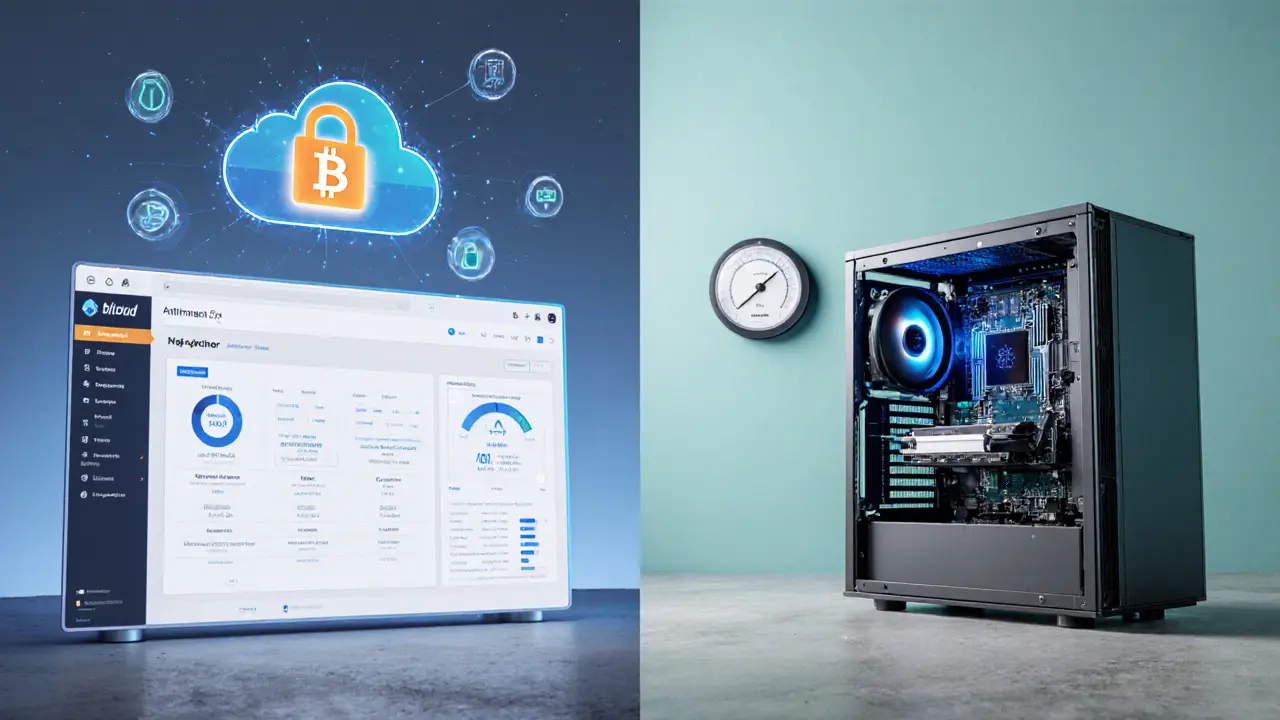
In 2025, cloud mining offers ease but little control, while home mining demands effort but real ownership. Learn which option actually pays off based on electricity costs, hardware, and long-term risks.
- Read More