
Bitcoin Mining: How It Works, Who Does It, and What You Need to Know
When you hear Bitcoin mining, the process of validating Bitcoin transactions and securing the network through computational power. It's not just about creating new coins—it's the backbone of Bitcoin's security and decentralization. Without miners, the network wouldn't function. Every transaction you make, every wallet update, every price change—it all relies on miners solving complex math problems to lock data into the blockchain.
Proof of work, the consensus mechanism that forces miners to expend real energy to earn rewards is what makes Bitcoin tamper-proof. It’s not magic—it’s electricity, hardware, and time. Miners compete to solve cryptographic puzzles, and the first one to crack it gets rewarded in Bitcoin. This isn’t just theory; it’s a real-world economic game where power costs, hardware efficiency, and electricity prices decide who wins. The machines used are called ASIC miners, specialized hardware built only for Bitcoin mining, far more powerful than regular computers. They’re expensive, loud, and hot—but without them, mining wouldn’t be profitable at scale.
Bitcoin mining isn’t done by hobbyists in their basements anymore. It’s a global industry dominated by large operations in places like Texas, Kazakhstan, and Canada, where energy is cheap and regulations are loose. Smaller miners still exist, but they’ve had to adapt—pooling resources, using renewable energy, or focusing on niche hardware. The system is designed to get harder over time, so only those who can manage costs survive. That’s why mining isn’t just about tech—it’s about business, energy, and timing.
What you’ll find in these posts isn’t hype. It’s real analysis: how mining affects Bitcoin’s price, why some countries ban it, how energy use is measured, and which mining setups still make sense today. You’ll see what happens when regulations change, when electricity prices spike, or when a mining company goes under. This isn’t about getting rich overnight. It’s about understanding the engine behind Bitcoin—and whether you’re watching the show, or still trying to get in the game.
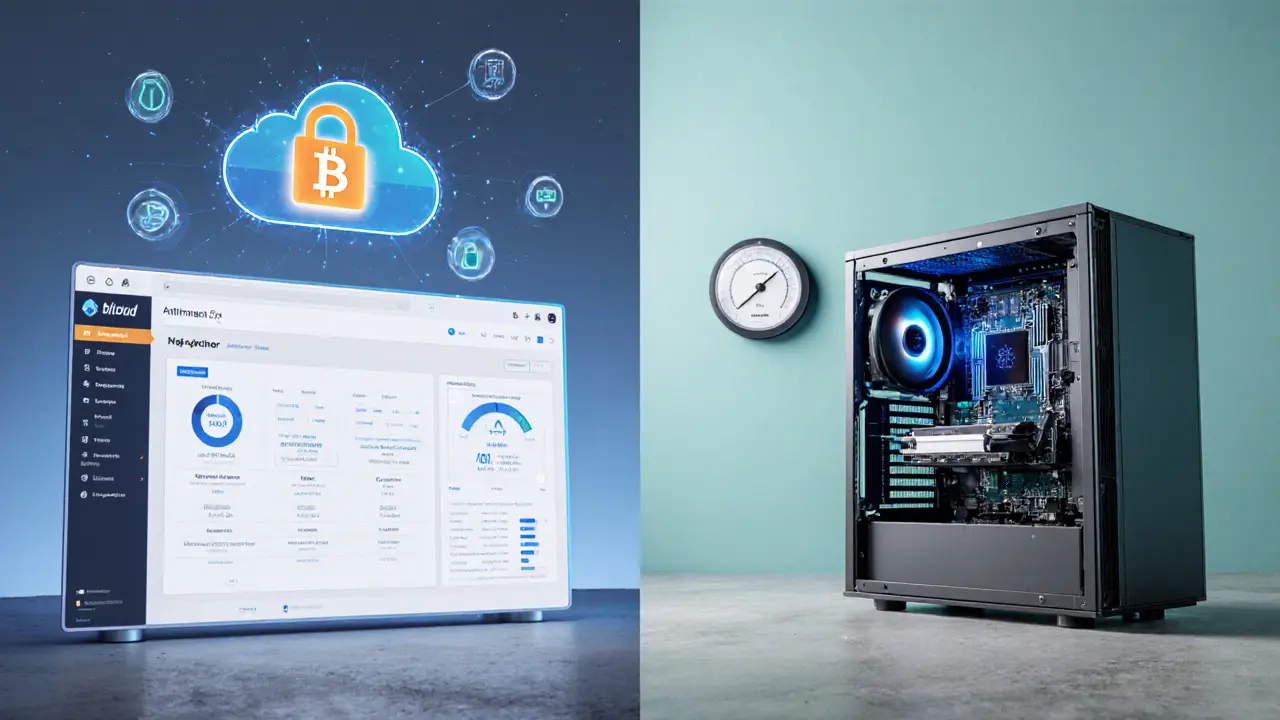
In 2025, cloud mining offers ease but little control, while home mining demands effort but real ownership. Learn which option actually pays off based on electricity costs, hardware, and long-term risks.
- Read More