
ASIC Miners: What They Are, How They Work, and Why They Dominate Crypto Mining
When you hear about Bitcoin mining, you’re really hearing about ASIC miners, specialized hardware built to solve complex cryptographic puzzles for blockchain networks. Also known as application-specific integrated circuit miners, these machines are designed for one thing only: mining cryptocurrency as efficiently as possible. Unlike old-school GPUs or CPUs, ASICs don’t try to do everything—they’re single-purpose powerhouses built to crush the SHA-256 algorithm used by Bitcoin and similar coins. That’s why they’ve taken over the mining world.
ASIC miners don’t just run faster—they run smarter. They’re built with custom silicon chips that perform billions of hash calculations per second, far outpacing anything you can buy at a regular electronics store. A top-tier ASIC like the Bitmain Antminer S19 can hit over 100 terahashes per second, while using less power than a hairdryer. That efficiency is everything. Mining isn’t just about raw speed; it’s about how much electricity you burn for every coin you earn. That’s why home GPU mining is nearly dead. The math doesn’t work anymore unless you’ve got cheap power and serious hardware.
These machines aren’t just tools—they’re the backbone of Bitcoin’s security. Every time an ASIC solves a block, it adds a new layer of proof to the chain, making it harder and more expensive for anyone to hack or reverse transactions. Without ASIC miners, Bitcoin’s network would be slower, less secure, and far more vulnerable. But there’s a catch: ASICs are expensive, noisy, and generate serious heat. They’re not plug-and-play gadgets. You need ventilation, stable power, and a plan for cooling. And if you’re thinking of buying one today, you’re not just buying hardware—you’re betting on electricity costs, Bitcoin’s price, and how long the mining rewards will last before they halve again.
What you’ll find in the posts below isn’t a list of product reviews or buying guides. It’s a collection of real-world stories about mining, regulation, and survival in a space where hardware is king. You’ll see how NiceHash lets miners trade hash power without owning gear, how China’s ban pushed mining underground, and why some projects died because they couldn’t compete with the ASIC arms race. This isn’t about hype. It’s about what happens when you put real machines against real economics—and who wins.
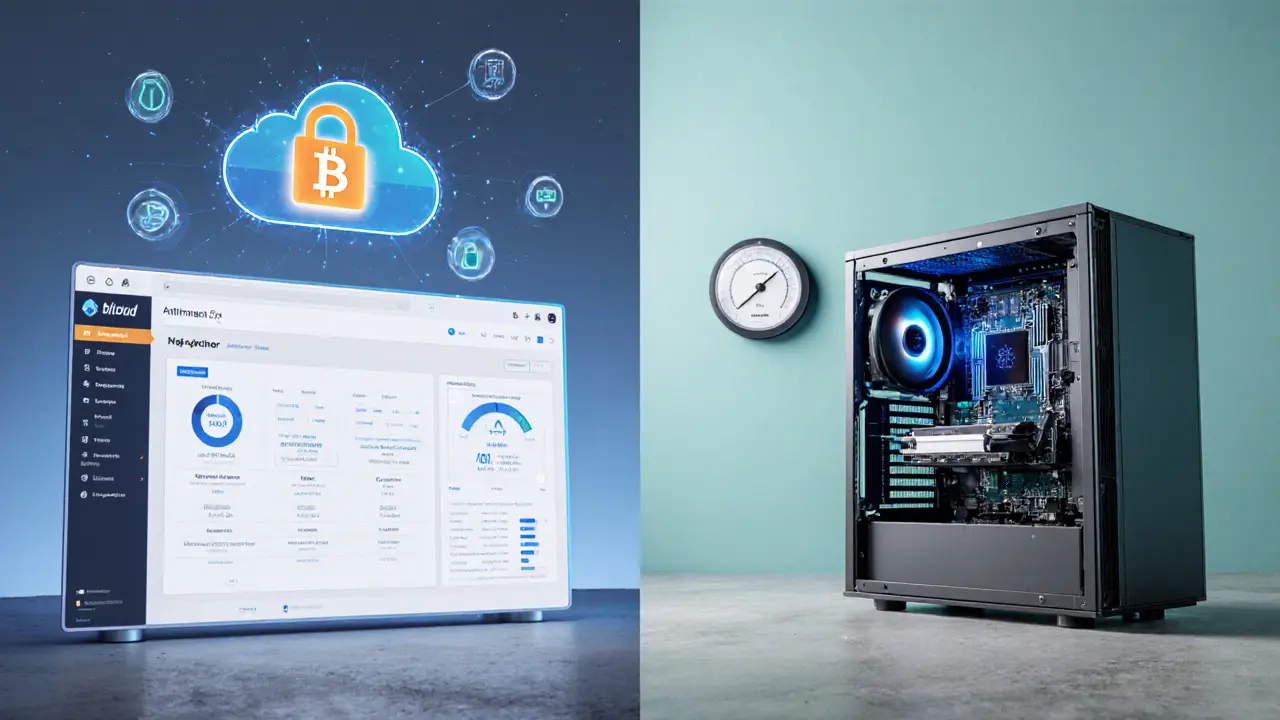
In 2025, cloud mining offers ease but little control, while home mining demands effort but real ownership. Learn which option actually pays off based on electricity costs, hardware, and long-term risks.
- Read More