
Quantum Computing Threat Timeline: When Will Blockchain Encryption Break?
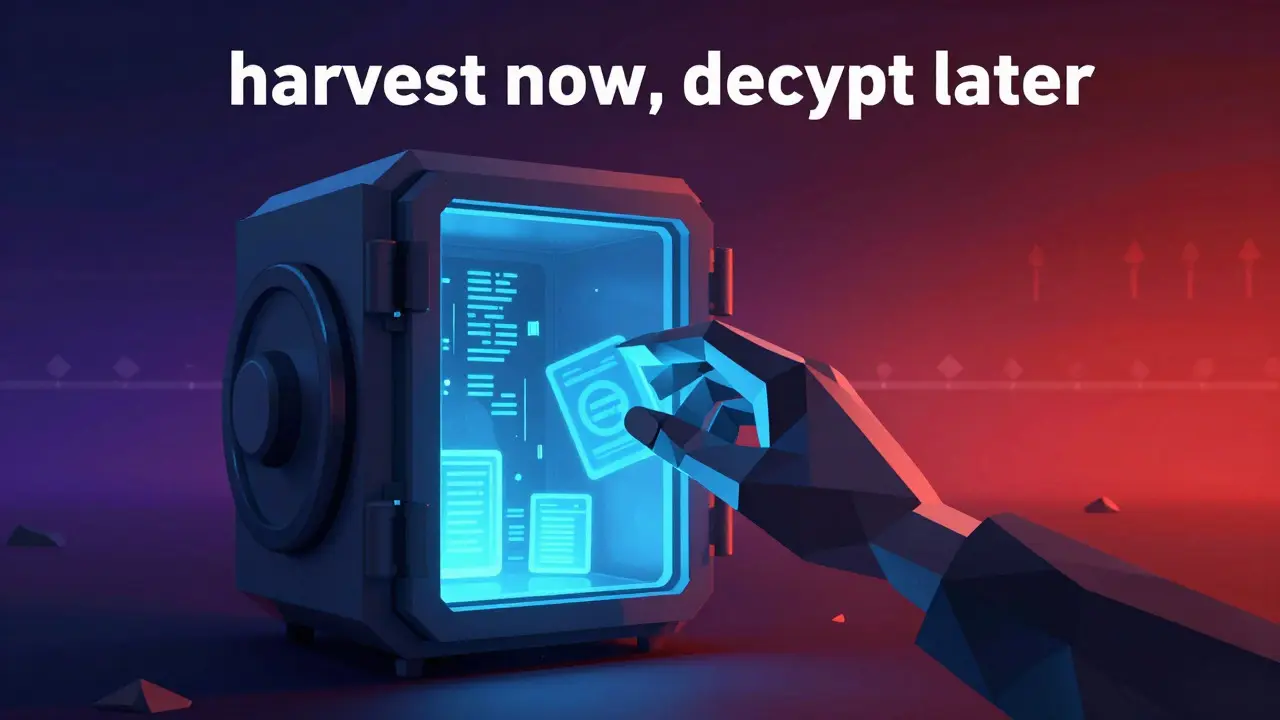
Imagine sending a secret message today that stays safe for ten years. Now imagine someone stealing that message right now, keeping it in a digital vault, and waiting until they have the technology to open it. That is not science fiction. It is called "harvest now, decrypt later", and it is the single biggest reason cybersecurity experts are losing sleep over quantum computers.
We are standing at a crossroads. The encryption protecting your Bitcoin wallet, your bank account, and your private emails relies on math problems that classical computers find nearly impossible to solve. But a sufficiently powerful quantum computer could crack these codes in hours instead of millennia. The big question isn't if this will happen, but when. And the answer might be sooner than you think.
The Quantum Threat Clock: What Do Experts Say?
To understand the danger, we need to look at the numbers. For years, estimates were vague-"maybe in 20 years," "perhaps never." But recent data has sharpened the picture significantly. The Global Risk Institute released a pivotal report in 2024 that changed how we view the timeline. They calculated that by 2034, there is a 17% to 34% chance a cryptographically relevant quantum computer (CRQC) will exist. By 2044, that probability jumps to a staggering 79%.
What does a CRQC actually mean? It means a machine capable of breaking RSA-2048 encryption-the standard used for much of our secure internet traffic-in under 24 hours. This isn't about theoretical physics anymore; it's about practical engineering milestones being hit faster than expected. Recent breakthroughs in quantum error correction suggest we might see these capabilities emerge as early as 2035 if current trends continue. Even cautious estimates from organizations like MITRE place the arrival around 2055-2060, but the acceleration in hardware development makes the earlier dates increasingly plausible.
Why Blockchain Is on the Hot Seat
If you hold cryptocurrency, you might wonder why you should care about government encryption standards. The answer lies in how blockchain networks secure transactions. Most major blockchains, including Bitcoin and Ethereum, rely heavily on elliptic curve cryptography (specifically ECDSA) for digital signatures. These signatures prove ownership of funds without revealing your private key.
A quantum computer running Shor's algorithm can reverse-engineer a public key to find its corresponding private key. If an attacker knows your public address (which is visible on the blockchain) and has a quantum computer, they could theoretically steal your funds before you even move them. While this requires significant computational power, the risk is asymmetric: the attacker only needs to succeed once to drain a wallet, while the defender must protect every transaction perfectly.
This vulnerability extends beyond just wallets. Smart contracts, decentralized finance (DeFi) protocols, and layer-2 scaling solutions all depend on cryptographic integrity. If the foundation cracks, the entire structure wobbles. Unlike traditional banks that can freeze accounts, blockchain systems are immutable. Once a transaction is validated with a compromised signature, it is very difficult to undo.
The Government Mandates: Deadlines You Can't Ignore
While tech timelines fluctuate, regulatory deadlines do not. Governments are moving fast to force industries into compliance. In the United States, National Security Memorandum 10 (NSM-10) mandates that all federal agencies migrate to post-quantum cryptography (PQC) by 2035. But wait-that deadline seems far away, doesn't it? Here is the catch: migration takes time. Upgrading legacy systems, rewriting code, and testing new algorithms is slow, expensive, and complex. To be ready by 2035, organizations must start planning and implementing changes today.
Some sectors are moving even faster. The Department of Homeland Security has targeted a 2030 transition for critical infrastructure. Meanwhile, the Commercial National Security Algorithm Suite 2.0 (CNSA 2.0) requires post-quantum cryptography for national security systems starting between 2030 and 2033. These mandates signal a broader trend: regulators believe the threat is imminent enough to require immediate action, regardless of whether a quantum computer exists yet.
| Source / Entity | Estimated Threat Window | Key Requirement or Milestone |
|---|---|---|
| Global Risk Institute | 2034 - 2044 | 17-34% chance by 2034; 79% by 2044 |
| NIST Standards | 2024 (Published) | First official PQC algorithms approved |
| US Federal Agencies (NSM-10) | By 2035 | Mandatory full migration to PQC |
| DHS Critical Infrastructure | By 2030 | Accelerated transition for high-risk assets |
| MITRE Assessment | 2055 - 2060 | Cautious estimate based on linear trends |

The "Harvest Now, Decrypt Later" Reality
This is where the urgency comes from. You don't need a quantum computer today to break encryption from 2026. An adversary simply needs to intercept and store encrypted data. They can sit on it, patiently waiting for the technology to mature. If that data remains valuable in five or ten years-think state secrets, long-term financial records, or intellectual property-it is already vulnerable.
For blockchain users, this poses a unique challenge. Data on a blockchain is permanent. Every transaction ever made is still accessible. If a quantum computer becomes available in 2035, it could theoretically retroactively sign transactions dating back to 2009. This means old, dormant wallets with large balances are prime targets. The longer you wait to upgrade your security posture, the more historical data is exposed to this retrospective attack vector.
Post-Quantum Cryptography: The Solution Is Ready
The good news? We aren't waiting for a miracle cure. The National Institute of Standards and Technology (NIST) published its first set of post-quantum cryptography standards in 2024. These algorithms, such as CRYSTALS-Kyber for key encapsulation and CRYSTALS-Dilithium for digital signatures, are designed to resist attacks from both classical and quantum computers.
These standards are not experimental. They are vetted, tested, and ready for implementation. Organizations are already beginning to integrate them. Deloitte’s 2025 survey found that 52% of companies are actively measuring their quantum exposure, and 30% are taking decisive action. In the financial sector, awareness is universal among executives. The tools exist; the barrier is largely organizational inertia.
For blockchain developers, this means upgrading consensus mechanisms and signature schemes. Projects like Zcash and others have already begun exploring quantum-resistant alternatives. However, widespread adoption across the entire ecosystem will take time. Interoperability between quantum-safe and legacy chains will be a major hurdle. You cannot simply flip a switch; you need coordinated upgrades across nodes, wallets, and exchanges.

How to Protect Yourself Today
So, what should you do? Panic is not productive, but complacency is dangerous. Here is a practical approach to securing your digital assets against the quantum horizon:
- Audit Your Exposure: Identify which cryptocurrencies you hold and whether their underlying cryptography is quantum-vulnerable. Most major coins currently are.
- Use Fresh Addresses: Never reuse addresses. Each time you receive funds, use a new address. This limits the amount of data an attacker can collect to analyze your public key.
- Monitor Quantum-Safe Projects: Keep an eye on blockchain projects that are actively migrating to post-quantum algorithms. Consider diversifying into ecosystems that prioritize this upgrade.
- Secure Private Keys Offline: Use hardware wallets and keep them disconnected from the internet. While this doesn't stop a quantum attack on the network level, it protects against remote theft of your keys via classical hacking methods.
- Stay Informed on Standards: Follow updates from NIST and major blockchain foundations. When a hard fork or upgrade introduces quantum resistance, be prepared to participate.
The Path Forward: Adaptation Over Fear
The quantum threat is real, but it is manageable. The timeline suggests we have a window of roughly 5 to 15 years before cryptographically relevant quantum computers become a common threat. This is enough time to plan, test, and implement solutions, but not enough time to ignore the problem. The convergence of regulatory pressure, technological acceleration, and industry awareness creates a perfect storm for change.
Blockchain technology is inherently adaptive. It has survived forks, bugs, and market crashes. It can survive the quantum era too, provided the community acts proactively. The shift to post-quantum cryptography will be one of the largest technical migrations in digital history. Those who prepare early will not only secure their assets but also gain a competitive edge in a landscape that values resilience above all else.
When exactly will quantum computers break blockchain encryption?
There is no single date, but estimates vary widely. The Global Risk Institute suggests a 17-34% chance by 2034 and a 79% chance by 2044. More cautious estimates place it around 2055-2060. However, due to "harvest now, decrypt later" attacks, data encrypted today is already at risk if it remains valuable in the future.
Is Bitcoin vulnerable to quantum attacks?
Yes, Bitcoin uses ECDSA for digital signatures, which can be broken by Shor's algorithm on a sufficiently powerful quantum computer. If an attacker knows your public key (visible when you send funds), they could derive your private key. Reusing addresses increases this risk significantly.
What is "harvest now, decrypt later"?
This is an attack strategy where adversaries intercept and store encrypted data today, waiting for quantum computers to become powerful enough to decrypt it in the future. This makes current encryption vulnerable even before quantum computers exist, especially for data with long-term value.
Are there any quantum-safe cryptocurrencies yet?
Several projects are researching and implementing post-quantum cryptography, but widespread adoption is still in early stages. Look for projects explicitly stating compliance with NIST's 2024 post-quantum standards. Some newer blockchains are launching with quantum-resistant algorithms from day one.
What should I do to protect my crypto assets?
Avoid reusing addresses, use hardware wallets, and stay informed about quantum-resistant upgrades. Monitor announcements from major blockchain networks regarding hard forks or protocol updates that introduce post-quantum cryptography. Diversifying into quantum-safe ecosystems may also reduce risk.