
Block DX Crypto Exchange Review: Is It Truly Decentralized in 2025?
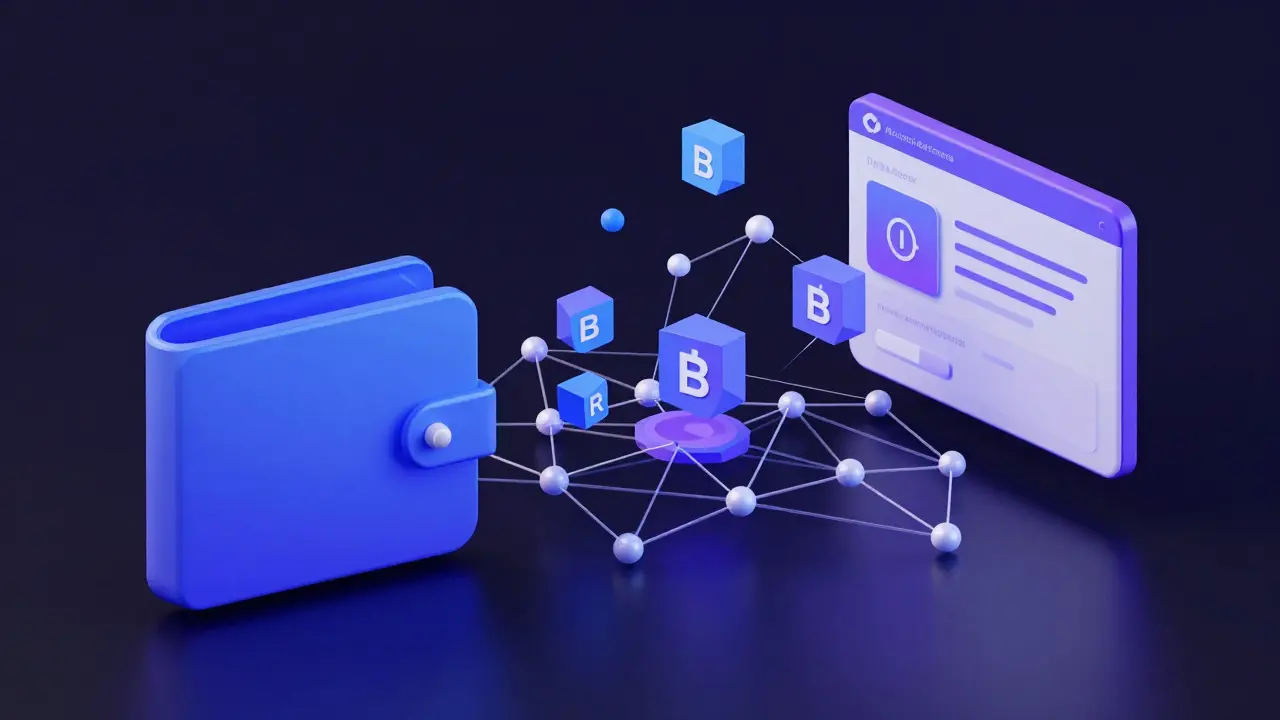
Block DX Staking Calculator
Estimate Your Block DX Rewards
Calculate potential annual rewards based on your BLOCK token holdings. Remember: Staking rewards are variable and depend on network activity.
Results
Important Note: Block DX requires a minimum of 5,000 BLOCK tokens to operate a service node. Rewards are variable and based on network activity. This is an estimate only - not financial advice.
Most crypto exchanges claim to be decentralized. But how many actually let you keep full control of your money? Block DX says it’s different. It promises to remove every middleman - no KYC, no custodial wallets, no central server holding your funds. But in 2025, with dozens of decentralized exchanges competing for attention, does Block DX deliver on its promises? Or is it just another project shouting louder than the rest?
What Makes Block DX Different?
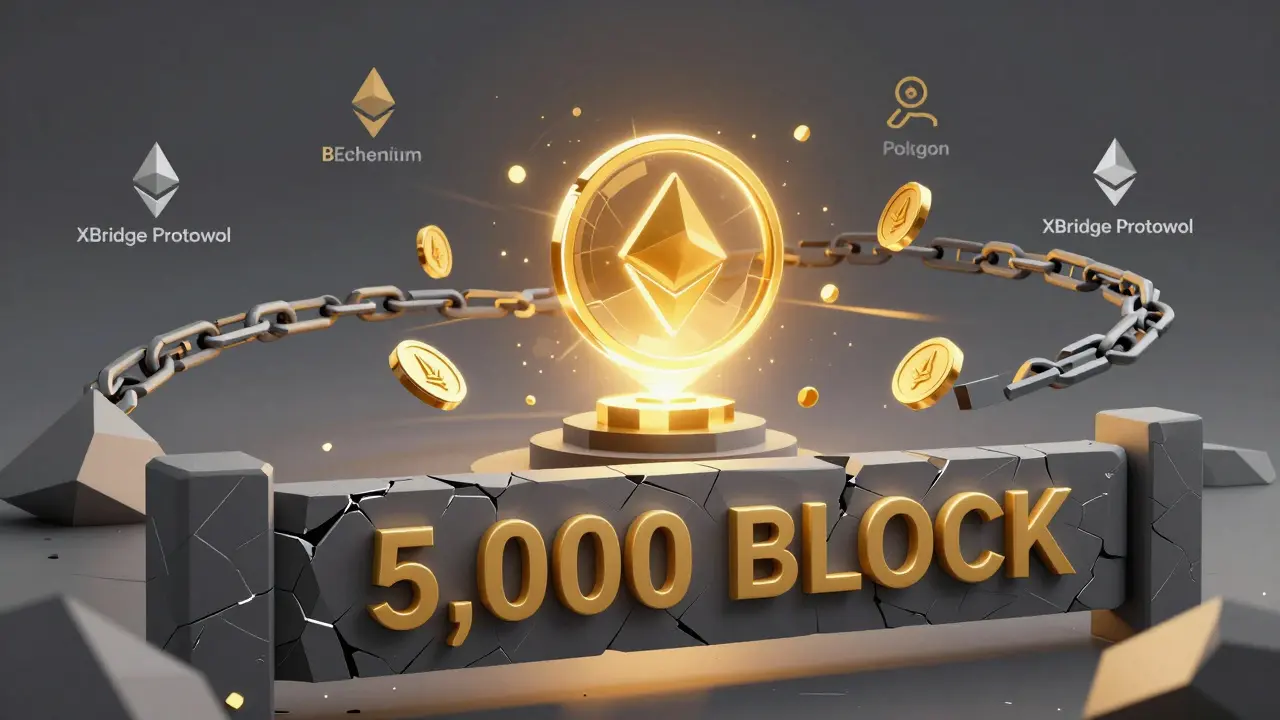
Block DX doesn’t just say it’s decentralized - it breaks down exactly how. Most DEXs still rely on centralized order books or off-chain matching. Block DX claims to decentralize all four core parts: funds storage, order books, order matching, and settlement. That’s rare. If true, it means your crypto never leaves your wallet. You place an order directly from your MetaMask or Ledger. Trades happen peer-to-peer using the XBridge Protocol, with no company in the middle.
That’s not theoretical. It’s built into the code. The platform is open-source, so anyone can audit it. No hidden backdoors. No admin keys that could freeze your assets. If you hold your private keys, Block DX can’t touch your coins. That’s the gold standard.
The BLOCK Token: Powering the Ecosystem
Block DX doesn’t just use its native token - it depends on it. Every fee on the platform, from trading to withdrawals, must be paid in BLOCK tokens. That’s not just a gimmick. It creates real demand. If you want to trade on Block DX, you need BLOCK. And if you want to earn rewards, you need even more.
Here’s how staking works: every time a new block is added to the network, one BLOCK token is rewarded to the validator. Your chance of being selected to validate is proportional to how many BLOCK tokens you hold. So if you own 1% of the total circulating supply, you have roughly a 1% shot at earning that reward. Simple. Transparent.
But here’s the catch: to run a service node - which lets you earn trading fees from the platform - you need at least 5,000 BLOCK tokens. That’s not small change. At current prices, that’s thousands of dollars locked up. It’s a high barrier. This design favors long-term holders and serious participants, not casual traders.
How It Compares to Other Decentralized Exchanges
In 2025, Block DX isn’t the only player. SushiSwap moves $100 million a day across Ethereum, Arbitrum, and Polygon. dYdX handles derivatives with deep liquidity. IDEX offers near-instant trades with order books that feel like centralized exchanges. Block DX doesn’t publish real-time volume data, so it’s hard to say how it stacks up.
What’s clear? Block DX trades fewer pairs. You won’t find hundreds of obscure memecoins here like you would on Uniswap. The selection is focused. That’s good if you want to avoid scams. Bad if you’re chasing the next 100x.
Speed is another issue. Block DX settles trades on-chain. That means you’re subject to blockchain congestion. On Ethereum, gas fees can spike. On other chains, speed varies. Compare that to centralized exchanges like Bybit, where trades execute in milliseconds. Block DX isn’t built for speed - it’s built for control.
Pros: Why You Might Choose Block DX
- No KYC - Trade anonymously. No ID, no address, no paperwork.
- Self-custody - Your keys, your coins. No exchange can freeze your account.
- Transparent code - Open-source, auditable, no hidden logic.
- Staking rewards - Earn BLOCK tokens just for holding and validating blocks.
- Censorship-resistant - No government or regulator can shut it down.
Cons: The Real Risks
- Low liquidity - Thin order books mean slippage on larger trades. A $5,000 trade might move the price 5% or more.
- 5,000 BLOCK requirement - If you want to earn fees, you need serious capital. Most users won’t qualify.
- No customer support - Lose your private key? Too bad. No one can help you recover it.
- Hard to use - If you’re not comfortable with MetaMask, gas fees, or blockchain explorers, this isn’t for you.
- Limited blockchain support - It’s built on its own protocol. You won’t find native integration with Solana, Cosmos, or Tron like you do on other DEXs.
Who Is Block DX For?
Block DX isn’t for beginners. It’s not for people who want to buy Bitcoin with a credit card. It’s not for traders who need instant execution or deep liquidity.
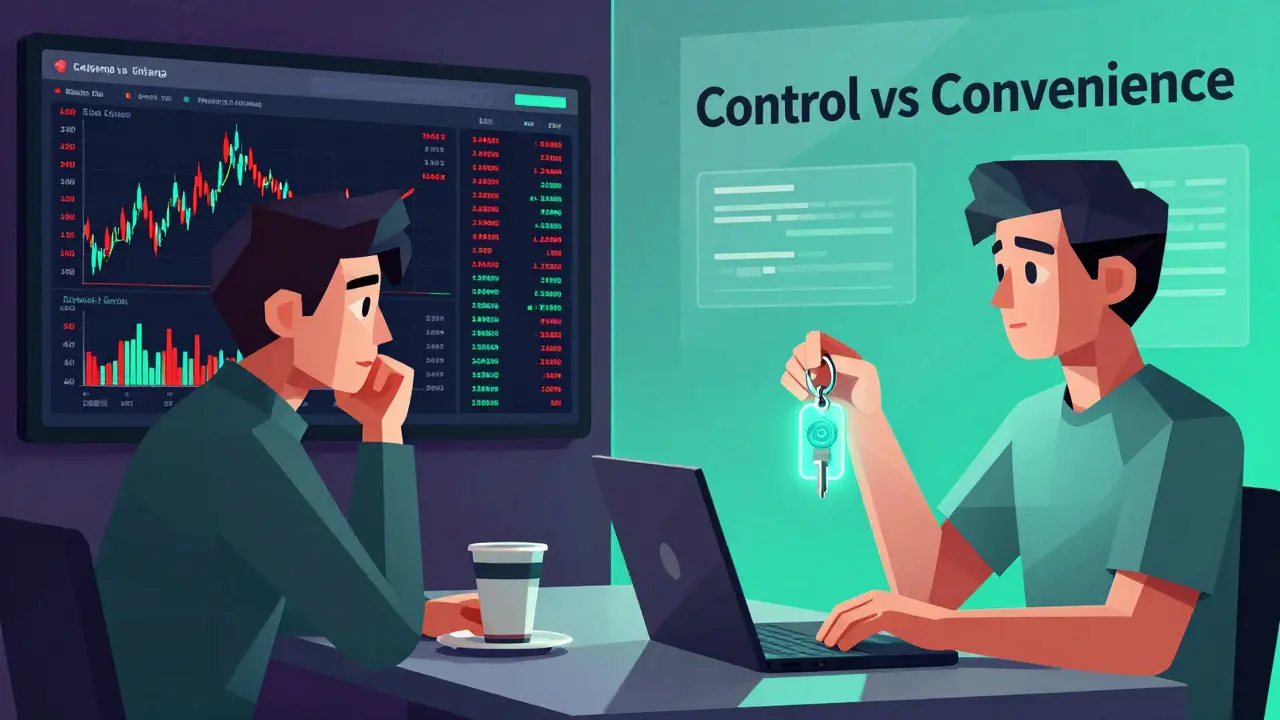
It’s for people who care more about control than convenience. If you believe crypto should be trustless, and you’re willing to sacrifice ease of use for sovereignty, Block DX is worth testing. It’s also for long-term BLOCK token holders who want to earn passive income through staking and service node rewards.
But if you’re trading large amounts, or you need to move in and out of positions quickly, stick with a centralized exchange - even if it means giving up some privacy. The trade-off is real.
The Bigger Picture: Why Decentralized Exchanges Are Growing
Regulation is pushing traders away from centralized platforms. In Europe, Bybit recently removed margin trading for users. In some countries, entire exchanges are blocked. People are tired of being at the mercy of corporate policies and government crackdowns.
Block DX thrives in that environment. It doesn’t need to comply with AML rules. It doesn’t answer to regulators. It runs on code, not contracts. That’s why, despite its flaws, it’s gaining traction among privacy-focused users.
But here’s the problem: most users still don’t understand how to use a DEX safely. Scam tokens, fake liquidity pools, and phishing attacks are rampant. Block DX doesn’t solve that. It just shifts the risk from the exchange to you.
Final Verdict: Worth Trying?
Block DX is not the easiest DEX. It’s not the fastest. It’s not the most liquid. But it’s one of the few that claims - and appears to deliver - true decentralization across all four pillars. That’s rare.
If you’re serious about owning your crypto, not just trading it, and you’re comfortable with the technical side, Block DX is a solid option. Start small. Test it with a few hundred dollars. See how the interface feels. Try staking a small amount of BLOCK to see if the rewards are worth the lock-up.
But don’t go all-in. No DEX is perfect. And Block DX’s biggest weakness isn’t its tech - it’s the lack of independent verification. No major crypto analytics firm has published a deep review. No large user base has confirmed its reliability at scale. Until that changes, treat it as an experiment, not a replacement for your main exchange.
Decentralization isn’t a buzzword. It’s a commitment. Block DX asks you to make that commitment. Are you ready?
Is Block DX really decentralized?
Yes, according to its own architecture. Block DX claims to decentralize all four core functions of an exchange: funds storage, order books, order matching, and settlement. Unlike many DEXs that still rely on centralized order books, Block DX uses the XBridge Protocol to handle everything on-chain. This means your crypto never leaves your wallet, and no central entity controls your trades. While independent audits are limited, the open-source nature of the platform allows for public verification.
Do I need KYC to use Block DX?
No. Block DX does not require any form of identity verification. You can connect your wallet - like MetaMask or Ledger - and start trading immediately. This makes it ideal for users who value privacy or live in regions with strict crypto regulations.
How do I earn rewards on Block DX?
You earn BLOCK tokens by staking. Every time a new block is added to the network, one BLOCK token is awarded to a validator. Your chance of being selected is based on how many BLOCK tokens you hold relative to the total supply. To earn trading fees as a service node operator, you need to stake at least 5,000 BLOCK tokens.
Can I trade fiat on Block DX?
No. Block DX is a crypto-to-crypto exchange only. You cannot deposit or withdraw fiat currencies like USD or EUR. You’ll need to buy crypto on a centralized exchange first, then transfer it to your wallet before connecting to Block DX.
Is Block DX safe from hacks?
Because Block DX doesn’t hold your funds, it’s not vulnerable to large-scale exchange hacks like those seen on centralized platforms. However, your personal wallet can still be compromised if you don’t secure your private keys. Also, smart contract bugs or flaws in the XBridge Protocol could pose risks. Always audit contracts before interacting and never invest more than you can afford to lose.
What blockchains does Block DX support?
Block DX operates primarily on its own XBridge Protocol, which connects multiple blockchains. While it supports trading across different networks, it doesn’t have native liquidity pools on chains like Solana or Avalanche like other DEXs. Its focus is on interoperability through its protocol, not direct integration with every blockchain.
How does Block DX compare to Uniswap or SushiSwap?
Uniswap and SushiSwap have much higher trading volumes and support thousands of tokens, especially on Ethereum and its Layer 2s. Block DX has fewer trading pairs and lower liquidity, but it offers deeper decentralization by controlling order matching on-chain. If you prioritize volume and token variety, go with Uniswap. If you prioritize full control and no centralized components, Block DX is a stronger fit.
Can I use Block DX on mobile?
Yes, through wallet apps like MetaMask or Trust Wallet on your phone. You can connect your mobile wallet to the Block DX website. However, the interface is not optimized for mobile use, and complex operations like staking or managing service nodes are easier on desktop.
Scott Sơn
December 7, 2025 AT 01:07Stanley Wong
December 8, 2025 AT 04:01miriam gionfriddo
December 8, 2025 AT 17:33Kenneth Ljungström
December 9, 2025 AT 11:48Cristal Consulting
December 10, 2025 AT 20:16Tom Van bergen
December 11, 2025 AT 15:59Ben VanDyk
December 13, 2025 AT 03:09michael cuevas
December 13, 2025 AT 12:22Nina Meretoile
December 14, 2025 AT 16:44Barb Pooley
December 16, 2025 AT 14:27Shane Budge
December 18, 2025 AT 13:19sonia sifflet
December 20, 2025 AT 07:52Chris Jenny
December 20, 2025 AT 13:04Adam Bosworth
December 22, 2025 AT 12:25