
Why Local Address Re-Derivation Matters in Non-Custodial Billing
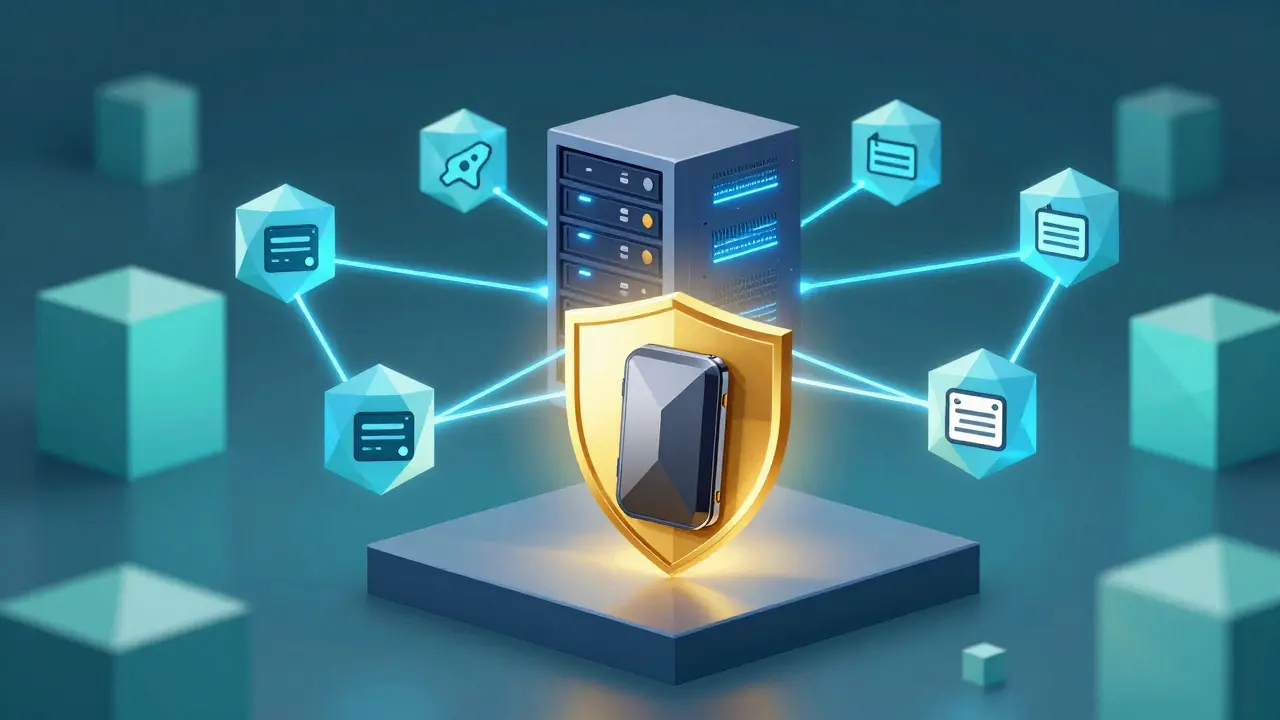
Imagine you run a software service with 10,000 subscribers. Every month, you send out 10,000 invoices. If you are accepting Bitcoin or Ethereum payments, you need 10,000 unique wallet addresses to keep your accounting clean and your customers' privacy intact. Now imagine that one day, your database crashes. You lose the table linking Invoice #4592 to Wallet Address bc1q.... Without a backup of that specific mapping, you have no way to prove who paid what. You might never see those funds again because they sit in an address you can't identify.
This is exactly why local address re-derivation is critical for modern non-custodial billing. It is the technical process of recreating any past or future payment address on-demand, using only a public key and a mathematical formula, rather than relying on a stored database record. This method ensures that even if your servers burn down, your billing history remains recoverable from the blockchain itself, while keeping your private keys safely offline.
The Foundation: Hierarchical Deterministic Wallets
To understand local address re-derivation, we first need to look at how modern crypto wallets generate addresses. In the early days of Bitcoin (launched in 2009 by Satoshi Nakamoto), users generated random keys for every transaction. This was messy. Backing up thousands of individual keys was nearly impossible. If you lost one, you lost the money.
The solution arrived with the introduction of Hierarchical Deterministic (HD) wallets, standardized by BIP32 a proposal authored by Pieter Wuille around 2012-2013 that defines how to derive a tree of key pairs from a single seed. Later, BIP44 a standard introduced by Marek Palatinus and Pavol Rusnak in 2014 that structures these derivation paths for multi-coin support refined this further.
Here is the magic trick: From a single secret seed phrase (usually 12 or 24 words), a wallet can generate billions of unique key pairs. More importantly, it creates two types of extended keys:
- Extended Private Key (xprv): Can generate both private and public keys. This stays in your secure hardware wallet, like a Ledger Nano S a hardware wallet device released in 2016 by Ledger or Trezor One a hardware wallet device released in 2014 by SatoshiLabs.
- Extended Public Key (xpub): Can generate only public keys (addresses). This key is "read-only." It cannot sign transactions or move funds.
In a non-custodial billing setup, you give your xpub to your billing server. The server can then calculate infinite receiving addresses for your invoices. But because it only has the xpub, it can never steal your funds. The private signing power remains isolated in your hardware wallet.
What Is Local Address Re-Derivation?
Local address re-derivation is the act of computing a payment address right inside your billing application, at the moment you need it, without asking a remote service or looking it up in a static database column.
Instead of storing the string bc1qxy2kgdygjrsqtzq2n0yrf2493p83kkfjhx0wlh next to Invoice ID 101, your system stores the rule: "Invoice ID 101 corresponds to index 101 on the external chain of Account 0."
When you need to display the address to a customer, your server takes the merchant's xpub, applies the derivation path defined in BIP44 (typically `m/44'/0'/0'/0/101` for Bitcoin), and mathematically derives the public key. It then encodes this into a Bech32 address format. This happens in microseconds using libraries like bitcoinjs-lib a JavaScript library for working with Bitcoin data structures and cryptography.
If you need that same address five years later for an audit, you don't need the original database row. You just re-run the calculation. The result is identical every time. This determinism is the core value proposition.
Security: Eliminating Custodial Risk
The primary reason merchants choose non-custodial billing is security. History is littered with centralized exchanges that held user funds and failed spectacularly. The collapse of Mt. Gox in 2014 resulted in the loss of approximately 850,000 BTC. More recently, the FTX implosion in November 2022 wiped out billions of dollars in customer assets because the exchange commingled funds and lacked proper controls.
Local address re-derivation enforces a strict separation of concerns. Your billing platform acts purely as a ledger tracker. It watches the blockchain for incoming transactions to the addresses it derived. It does not hold the keys to spend them. Even if hackers breach your billing server and exfiltrate all your data, they only get xpubs and invoice mappings. They cannot sign transactions to move funds to their own wallets.
This architecture aligns with cybersecurity frameworks like ISO/IEC 27001. By removing private keys from the web-facing environment entirely, you drastically reduce your attack surface. You are not managing hot wallets; you are managing metadata.

Reliability and Disaster Recovery
Databases fail. Migrations break. Bugs happen. In traditional custodial systems, if the link between an invoice and a deposit address is corrupted, reconciling payments becomes a nightmare. Support teams spend weeks manually matching blockchain transactions to customer emails.
With local re-derivation, recovery is automated. If your database is wiped, you can rebuild your entire billing state from scratch. You simply iterate through your invoice IDs, re-derive the corresponding addresses, and query the blockchain for each one. Since the derivation is deterministic, you will find the exact same transactions that were originally recorded.
This also solves the "gap limit" problem. Standard wallets often stop scanning for new addresses after seeing 20 unused ones (the BIP44 gap limit). If your billing system generates addresses too far ahead of actual usage, some lightweight wallets might miss them. By deriving addresses locally and only generating them when an invoice is created, you ensure tight synchronization between your billing logic and your wallet's visibility window.
Privacy and Regulatory Compliance
Blockchain analytics firms like Chainalysis and Elliptic use heuristics to cluster addresses and identify entities. Address reuse is the biggest enemy of privacy. If you use the same Bitcoin address for every customer, anyone can see your total revenue and link your customers to each other.
Local re-derivation makes it computationally trivial to issue a fresh, unique address for every single invoice. This enhances customer privacy and keeps your business volume opaque to outside observers.
From a regulatory standpoint, particularly under the EU's GDPR, minimizing stored Personally Identifiable Information (PII) is crucial. By not persisting full address strings in your database rows tied to customer names, you reduce the sensitivity of your data store. If a breach occurs, attackers get less actionable financial data. Furthermore, because the system derives addresses from public keys, it helps maintain a clear legal distinction: you are providing software services, not acting as a custodian holding funds, which can simplify compliance with regulations like the EU's MiCA framework.

Scalability in Multi-Tenant Systems
Consider a payment gateway serving 5,000 merchants. If each merchant issues 100,000 invoices over time, that is 500 million potential addresses. Storing 500 million variable-length strings in a database consumes significant disk space and slows down queries.
Local re-derivation reduces this overhead dramatically. Instead of storing the address string, you store:
- The merchant's xpub (~111 characters).
- A simple integer counter for the last used index.
- The derivation path template.
This reduces storage requirements by orders of magnitude. It also allows for horizontal scaling. Any number of stateless application servers can handle invoice creation because they all share the same xpubs and counters. There is no need to synchronize complex address pools across servers. As long as the counter increments atomically (using database sequences in PostgreSQL, for example), the system remains consistent.
| Feature | Static Database Storage | Local Address Re-Derivation |
|---|---|---|
| Data Recovery | Dependent on DB backups; high risk of loss | Fully recoverable from xpub and chain |
| Storage Cost | High (stores every address string) | Low (stores only xpub and indices) |
| Security Model | Requires careful handling of key exports | Non-custodial; xpubs cannot sign txs |
| Address Privacy | Risk of reuse if pool is exhausted | Unique address per invoice guaranteed |
| Complexity | Simple to implement initially | Requires understanding of HD paths |
Implementation Pitfalls to Avoid
While powerful, local re-derivation introduces specific risks if implemented poorly. Here are the most common mistakes developers make:
- Derivation Path Mismatch: A merchant configures their billing system to use BIP44 (`m/44'/0'/0'/0/*`) but their hardware wallet is set to BIP84 (`m/84'/0'/0'/0/*`). The addresses won't match, and payments will go to "ghost" addresses that the wallet doesn't recognize. Always validate sample addresses against the hardware wallet before going live.
- Index Collisions: In distributed systems, if two servers try to create invoices simultaneously without atomic counter locking, they might assign the same index to different invoices. This results in two customers paying the same address, causing accounting chaos. Use database sequences or distributed locks to manage index allocation.
- Gap Limit Exhaustion: If your system pre-generates addresses far beyond the current invoice count, your hardware wallet might stop showing balances for older addresses due to its internal gap limit. Stick to on-demand derivation to stay within safe limits.
Modern platforms are addressing these issues by building verification tools directly into their dashboards. For instance, some newer gateways allow merchants to connect via WebHID to verify that the derived addresses match what their Ledger sees in real-time. This adds a layer of trustlessness to the integration process.
The Future of Non-Custodial Billing
As the crypto economy matures, the demand for self-sovereign financial infrastructure grows. We are moving away from trusting intermediaries toward verifying mathematics. Local address re-derivation is a foundational technology in this shift. It enables sophisticated features like multi-signature escrows, time-locked subscriptions, and Layer 2 channel integrations without compromising security.
For solo founders and indie hackers, this means you can build scalable, enterprise-grade billing systems without becoming a banking institution. You retain control of your funds, minimize your liability, and ensure your business data survives any technological hiccup. The key is to respect the hierarchy: keep the seeds safe, share only the public keys, and let the math do the rest.
What is the difference between custodial and non-custodial billing?
In custodial billing, the payment provider holds your private keys and manages the funds in their own wallets. You rely on them to withdraw your money. In non-custodial billing, you retain control of your private keys (often via a hardware wallet). The provider only tracks payments and generates addresses derived from your public keys. Funds settle directly to your wallet, eliminating counterparty risk.
Can I recover my billing data if my database is deleted?
Yes, if you use local address re-derivation. Because addresses are mathematically derived from your xpub and invoice indices, you can regenerate the entire list of addresses and scan the blockchain to reconstruct your payment history, provided you still have access to your xpub and invoice numbering sequence.
Is it safe to give my xpub to a third-party billing service?
Yes. An extended public key (xpub) is read-only. It allows the generation of receiving addresses but cannot be used to sign transactions or move funds. As long as your extended private key (xprv) remains secured in your hardware wallet or offline storage, your funds are safe.
What is the BIP44 gap limit?
The gap limit is a setting in HD wallets (typically 20) that determines how many consecutive unused addresses the wallet will scan before assuming there are no more funds. If a billing system generates addresses too far ahead of usage, the wallet may stop detecting payments. Local re-derivation helps manage this by generating addresses on-demand.
Do I need to know coding to implement local address re-derivation?
Implementing it from scratch requires knowledge of cryptographic libraries and HD wallet standards (like BIP32/BIP44). However, many modern non-custodial payment gateways handle this complexity internally, allowing merchants to simply connect their hardware wallet and start issuing invoices securely.
Hadleigh Edwards
May 30, 2026 AT 14:33I have been thinking about this exact problem for quite some time now and it is truly fascinating how the industry has evolved to address these specific vulnerabilities in such a robust manner. The idea that you can completely rebuild your entire financial history just by having access to a public key and a simple mathematical formula is nothing short of revolutionary for anyone who cares about data integrity and long-term security. It really gives me hope that we are moving towards a future where our digital assets are protected by mathematics rather than trusting fallible human institutions or centralized databases that can crash at any moment without warning.
mark valmart
May 31, 2026 AT 07:11man i totally get why people are stressed about losing their keys or database records because it happens way more often than you think and its super scary when you realize all your money is gone just because of a tech glitch
Crystal Davis
June 2, 2026 AT 01:46This article is painfully obvious to anyone who has actually read BIP32 documentation from start to finish. The concept of deterministic wallets has been standard practice for over a decade, so framing local re-derivation as some novel breakthrough is misleading at best. Most developers already know that storing static addresses is an anti-pattern due to the gap limit issues mentioned here. The real issue isn't the technology but the sheer incompetence of engineers who refuse to implement proper HD wallet structures because they find cryptography difficult to understand.
Christina Pearce
June 3, 2026 AT 05:49That is a really interesting point about the gap limits though because I had no idea that generating addresses too far ahead could actually cause visibility issues with hardware wallets. It makes total sense that keeping the derivation tight and on-demand would prevent those synchronization errors between the billing system and the actual wallet device.
Barclay Chantel
June 3, 2026 AT 20:00The pretension of believing that one can simply 'trust the math' while ignoring the complex socio-economic realities of modern commerce is laughable. This approach assumes a level of technical literacy among business owners that simply does not exist in the broader market. Furthermore, the reliance on open-source libraries introduces supply chain risks that are rarely discussed in these utopian narratives. It is a naive solution for a sophisticated problem, appealing only to those who enjoy playing with code rather than running actual businesses.
Miss Masquer
June 5, 2026 AT 08:21In many cultures around the world, particularly in regions with unstable banking systems, the ability to recover financial records independently is not just a convenience but a necessity for survival and economic participation. I have seen small merchants in developing nations lose everything because a central server went down, and knowing that there is a method like this which allows them to retain sovereignty over their transaction history is incredibly empowering for global financial inclusion efforts.
Joshua Alcover
June 6, 2026 AT 00:29The epistemological implications of decentralized ledger verification necessitate a rigorous examination of the ontological status of digital currency within the framework of sovereign monetary policy. By utilizing hierarchical deterministic structures, one effectively circumvents the traditional custodial paradigms that have historically facilitated systemic fraud and capital misappropriation. It is imperative that we recognize the strategic advantage of maintaining cryptographic autonomy in an increasingly hostile geopolitical landscape where financial censorship is becoming a tool of statecraft.
Diana Morris
June 7, 2026 AT 19:29stop worrying about the politics and just secure your funds because if you dont use hd wallets you are basically leaving your money on the table for hackers to take and its not hard to set up so just do it already
Dianne Wright
June 9, 2026 AT 08:55i feel like everyone keeps forgetting how exhausting it is to manage these keys yourself and then someone tells you oh just trust the math but what if you make a typo in the seed phrase and then you lose everything and its just so draining to have to be responsible for every single bit of security yourself
trisya hazriyana
June 10, 2026 AT 09:31sure lets pretend that implementing bip44 paths correctly is easy for everyone who clearly hasnt dealt with the nightmare of index collisions in distributed systems where race conditions ruin your accounting and you spend weeks debugging why two invoices share the same address
Debbie Lewis
June 11, 2026 AT 01:45it seems pretty straightforward once you understand the basics of how extended public keys work and most modern libraries handle the heavy lifting for you so there is no need to overcomplicate the implementation process
Eric Grosso
June 12, 2026 AT 00:28does this mean i can still use my old random key generation method if i just back up the database really well or am i missing something obvious here because im trying to keep things simple for my small shop
Edith Mair
June 12, 2026 AT 12:26You absolutely should not rely on static backups for critical financial infrastructure because databases fail and backups get corrupted, so switching to a deterministic model is the only responsible choice for anyone handling significant volume of transactions.
Sam Dashti
June 14, 2026 AT 06:59Imagine having a golden ticket to financial freedom but instead of using it wisely you leave it in a shoebox under your bed hoping nobody steals it while the rest of us are building unbreakable vaults made of pure mathematics and logic that cannot be picked or broken by any conventional means.
Joe Clements
June 16, 2026 AT 04:59I appreciate how clear this explanation is because it really helps demystify the technical aspects of crypto billing for those of us who are not experts in cryptography but still want to ensure our business operations are secure and resilient against potential failures.
Rosie Morris
June 16, 2026 AT 14:37i love how this post explains everything so nicely and it makes me feel much better about setting up my own payment system since i was worried about losing track of payments but now i know i can just regenerate the addresses anytime
lorna erni
June 18, 2026 AT 07:28Let's stop debating the philosophy and start implementing these standards because the longer we wait the more funds will be lost to poor security practices and we need to push for widespread adoption of non-custodial solutions immediately to protect consumers and merchants alike.
stalin brian
June 18, 2026 AT 09:58its cool to see how different countries are adopting these technologies and i think its great that we can learn from each other about best practices for securing digital assets and maybe we can create a global standard for non-custodial billing soon