
What is Zugacoin (SZCB)? The Truth Behind Africa's Most Controversial Crypto Coin
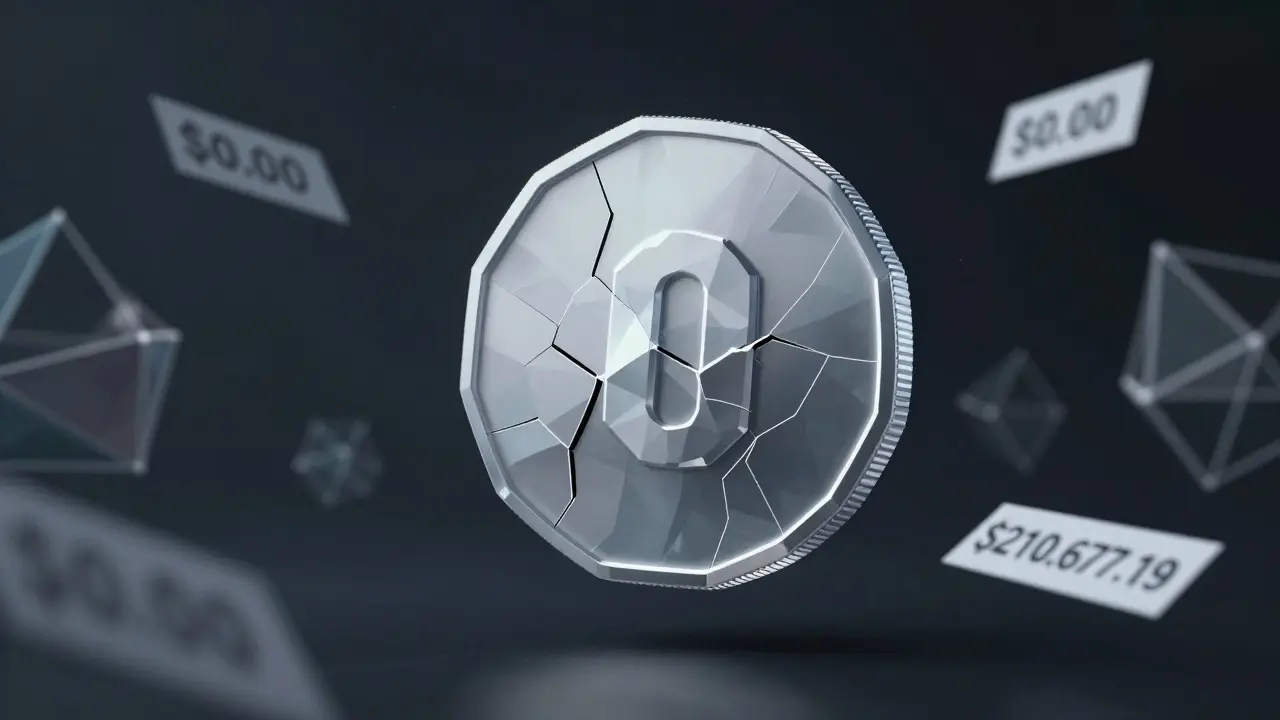
What if you heard about a cryptocurrency that claims to be Africa’s first digital coin, powers loans for small businesses, and even pays for hospital bills - but no one actually owns it? That’s Zugacoin (SZCB). It’s listed on exchanges, has a price, and even has a website. But if you dig deeper, the whole thing starts to fall apart.
It’s Supposed to Be Africa’s First Crypto - But It’s Not
Zugacoin says it’s the first African cryptocurrency on the blockchain. That sounds powerful. But it’s not true. South Africa’s Qoin was launched in 2018. Nigeria’s Kudi came out in 2019. Both were built to help local communities with payments and financial access. Zugacoin didn’t come until 2020 - and even then, it didn’t deliver anything real.
The project claims it was created to fix Africa’s biggest problem: access to loans. The idea? Use blockchain to give entrepreneurs small loans without banks. Sounds good. But there’s no proof any loan has ever been issued. No names. No businesses helped. No transaction records. Just a whitepaper reference that doesn’t link to anything.
Conflicting Tech Claims: Own Blockchain or Ethereum?
This is where things get messy. Coinbase says Zugacoin is an ERC-20 token - meaning it runs on Ethereum, like most other tokens. That’s standard. You can send it through MetaMask, store it in Trust Wallet, and trade it on any exchange that supports Ethereum-based coins.
But CoinPaprika says Zugacoin runs on its own blockchain with “dual-layer technology” that makes transactions faster. That’s a red flag. A coin can’t be both on Ethereum and its own blockchain. They’re completely different systems. If it were on its own chain, you’d see blocks being mined, a public explorer, and developer activity on GitHub. You won’t find any of that.
And here’s the kicker: Coinbase says the token was launched on September 1, 2020. CoinPaprika says 2021. Which one’s right? Neither can be verified. No official blog post. No press release. No GitHub commits. No developer tweets. Just conflicting data on third-party sites.
The Circulating Supply Is Zero - But It’s Still Trading
Here’s the most damning detail: Coinbase states clearly that the circulating supply of Zugacoin is 0 SZCB. That means no tokens are in anyone’s wallet. Not one. So how can it be trading?
Look at the prices:
- CoinMarketCap: $0.02531
- CoinPaprika: $0.027483
- Bitmama: $0.027
- Binance: $0.027259
- Crypto.com: $0.02948
- Coinbase: $0.0708
That’s a 180% difference between the lowest and highest price. If this were a real market, prices would be within 1-2% of each other. This kind of spread only happens when there’s no real trading - just bots, fake volume, or data scraping.
And Coinbase says the market cap is $0.00. But CoinMarketCap and others list a market cap of around $25,000. How? If supply is zero, market cap can’t be anything but zero. This contradiction isn’t a mistake - it’s a sign the data is either fake or completely unmanaged.

The All-Time High of 0,677.19? That’s Impossible
Here’s a quote from Coinbase: “Zugacoin is valued at 100.00% below its all-time high of $210,677.19.”
Let’s do the math. Zugacoin’s max supply is 1,000,000 tokens. If one token was ever worth $210,677.19, the total market cap would be $210,677,190,000. That’s over $210 billion. For reference, Bitcoin’s all-time high market cap was around $1.3 trillion. So Zugacoin would have been worth 16% of Bitcoin’s peak value - with 1 million tokens, no team, no adoption, and no infrastructure.
That’s not just unlikely. It’s mathematically impossible. No serious analyst, exchange, or blockchain researcher would accept that number. It’s either a glitch, a scam, or someone manually entered a fake number into a database.
Who Uses It? No One
Zugacoin claims it’s used to pay for schools, hospitals, supermarkets, and government services in Africa. Sounds impressive. But no school in Nigeria, Kenya, or South Africa has ever publicly accepted it. No hospital website lists SZCB as a payment option. No government portal mentions it.
And there are zero user reviews. No Reddit threads. No Twitter conversations. No Telegram groups with more than 50 members. No YouTube tutorials. No Medium articles explaining how to use it. If a cryptocurrency has real utility, people talk about it. Zugacoin has silence.
Trading volume? On CoinMarketCap, it’s $0. On most exchanges, it’s under $100 per day. For comparison, a tiny but real African crypto like Bundle (Nigeria) trades over $5 million daily. Zugacoin doesn’t even register as a blip.
Why Does It Still Exist on Exchanges?
If it’s worthless, why is it still listed?
Because some exchanges - especially smaller ones - list coins with no oversight. They make money from listing fees, not trading volume. Once a coin is listed, they don’t care if it’s dead. They just keep the fee.
Some of these listings are outright scams. Others are just lazy. The project team might have paid a few hundred dollars to get listed on CoinPaprika and Bitmama. Then they vanished. But the listings? They stay up forever.
It’s like buying a domain name, putting up a website that says “We sell flying cars,” and then disappearing. The site still loads. The price is still listed. But no one’s buying. No one’s flying.
What Should You Do?
If you’re thinking of buying Zugacoin: don’t.
It’s not a bad investment because it’s going to crash. It’s a bad investment because it never existed in the first place. You can’t lose money on something that has no value - because there’s nothing to lose.
If you’re researching African crypto projects, look at real ones:
- Bundle (BND) - Nigerian crypto for remittances and business payments
- VALR (VALR) - South African exchange with real liquidity and regulatory compliance
- Remitano (RMN) - Peer-to-peer crypto trading platform used across Africa
These projects have active teams, public GitHub repos, real trading volume, and user testimonials. Zugacoin has none of that.
Final Verdict: A Ghost Coin
Zugacoin (SZCB) is a ghost. It has a name, a symbol, a price, and listings - but no substance. No users. No transactions. No team. No code. No real-world use. Just data on websites that don’t verify anything.
It’s a textbook example of how crypto scams work: create a compelling story (“Africa’s first coin!”), use vague technical jargon (“dual-layer blockchain!”), list on shady exchanges, and hope someone buys in before the truth comes out.
Don’t be that person. If a coin sounds too good to be true - and its numbers don’t add up - it’s not a hidden gem. It’s a trap.
Shaun Beckford
January 17, 2026 AT 21:53Okay so let me get this straight - a coin with zero circulating supply is trading at $0.07 on Coinbase and people are still throwing money at it? Bro, this isn’t crypto, this is a haunted ATM. Someone programmed a ghost into a blockchain and now we’re all ghosts haunting each other’s portfolios. I’ve seen scams, but this is like a vampire with no blood. It just sits there, smiling, pretending to be alive.
Pat G
January 19, 2026 AT 04:40This is why America needs to stop letting African countries play with fintech. You don’t just slap a whitepaper on a website and call it innovation. This is chaos masquerading as progress. They’re not building finance - they’re building fantasy land with fake numbers and stolen blockchain names. If this were a US project, the SEC would’ve shut it down in 48 hours. But no, we let African scams fly under the radar because ‘cultural sensitivity.’
Alexandra Heller
January 20, 2026 AT 08:12What’s more tragic than a fake coin? The fact that we still believe in the myth of technological salvation for the Global South. We want to believe that blockchain will fix poverty, that a token can heal hospitals, that digital magic will bypass centuries of colonial extraction. But Zugacoin isn’t a failure of technology - it’s a failure of hope. We project our savior complexes onto code, and when the code doesn’t deliver, we blame the people who tried - not the system that let them fail.
Maybe the real blockchain revolution isn’t in tokens - it’s in demanding accountability from the platforms that list these ghosts.
myrna stovel
January 21, 2026 AT 20:07I just want to say - if you’re thinking about investing in anything with zero supply and a $210k all-time high, please take a breath. You’re not missing out. You’re avoiding a trap. There’s no shame in walking away from something that doesn’t make sense. Your money, your peace, your future - they’re worth more than a meme with a ticker symbol. You got this.
Hannah Campbell
January 22, 2026 AT 16:33So let me get this straight - the coin is worth more than it exists? That’s not a scam that’s a TED Talk from the Matrix. Who wrote this whitepaper? A 12-year-old with a Discord bot and a dream? And why does every exchange have a different price? Are they just guessing? Is this a game of telephone where the last person says ‘$0.07’ and everyone else just nods? I’m not even mad - I’m impressed. This is performance art.
Bryan Muñoz
January 24, 2026 AT 03:50THEY’RE USING FAKE DATA TO MANIPULATE THE MARKET AND NO ONE’S DOING ANYTHING?! THIS IS A GOVERNMENT BACKED OPERATION TO DESTROY CRYPTO FROM WITHIN! THEY WANT US TO LOSE TRUST SO THEY CAN PUSH CBDCS! LOOK AT THE TIMING - 2020, RIGHT AFTER THE PANDEMIC! THEY KNEW WE’D BE DESPERATE! THEY’RE USING AFRICA AS A COVER! I SAW A VIDEO ON 4CHAN WHERE THEY SAID ‘MAKE IT SOUND AFRICAN AND THE GULLIBLE WILL BUY’! 100% COINBASE IS IN ON IT!! 😱
Rod Petrik
January 24, 2026 AT 16:35Anyone else notice that CoinPaprika and CoinMarketCap are owned by the same parent company? And Coinbase? They’re all connected. This isn’t a scam - it’s a controlled experiment. They’re testing how long a coin with zero supply can stay listed before regulators notice. And guess what? It’s been years. They’re not trying to make money. They’re trying to map the stupidity curve of retail investors. We’re the lab rats. And we’re still feeding them.
Liza Tait-Bailey
January 25, 2026 AT 05:40im not even mad just confused like why is this even a thing? i checked binance and it says 0.027 but then coinbase says 0.07 like what even is real anymore? also i thought africa had real crypto projects like bundle and remitano why is this one still floating around like a zombie? someone pls delete this lol
Bharat Kunduri
January 27, 2026 AT 04:40Bro this is so sad. I live in India and we have so many fake coins too but this one is like… it’s not even trying. No github, no team, no users. Just a website with fancy words. I saw this on a Telegram group last week and someone said ‘buy now, it will moon’. I laughed so hard I spilled my chai. This isn’t crypto. This is a meme with a bank account.
Christina Shrader
January 27, 2026 AT 18:52It’s okay to feel confused. But don’t let fear make you ignore the truth. This post didn’t just expose a scam - it gave you tools to spot one. That’s power. You’re not behind. You’re learning. And that’s how you protect yourself - and others - from the next one.
Kelly Post
January 29, 2026 AT 06:34Can we talk about how insane it is that exchanges still list this? It’s like listing a product that doesn’t exist and calling it ‘innovative’. No real volume, no real users, no real code - just numbers on a screen. If I tried to sell a house with no foundation, I’d be arrested. Why are exchanges immune? Who’s auditing these listings? Is it just ‘pay and pray’? This system is broken.
Andre Suico
January 29, 2026 AT 11:20The data inconsistencies are not merely errors - they are structural failures in crypto data aggregation. Third-party aggregators rely on unverified APIs, user-submitted data, and algorithmic extrapolation. When a token has no on-chain activity, these systems default to arbitrary values, creating phantom liquidity. This is not unique to Zugacoin - it is endemic to the industry. Regulatory oversight of data providers is non-existent. Until that changes, these ghost assets will persist.
Chidimma Okafor
January 31, 2026 AT 07:17As a Nigerian, I feel this deeply. We have real innovation happening - from digital banks to mobile payment platforms - but scams like this tarnish everything. Zugacoin doesn’t represent Africa. It represents greed. And it hurts the legitimate builders who are working hard to bring financial inclusion without hype. We don’t need ghost coins. We need real infrastructure, transparent teams, and accountability. Let’s celebrate the true pioneers - not the frauds.
Bill Sloan
February 1, 2026 AT 02:53Bro I just checked my wallet and I still have 100 SZCB from 2021 😭 I thought I was smart buying low! Now I feel like I bought a piece of the moon that doesn’t exist. I’m not mad, I’m just… wow. This is why I don’t touch coins with no volume. Lesson learned the hard way. Thanks for the post - saved me from buying more.
Vinod Dalavai
February 2, 2026 AT 14:19chill. this is just how crypto is. some coins are real, some are memes, some are just… noise. this one? noise. i’ve seen worse. i just ignore it. if it’s not on coinbase or binance with real volume, it’s not worth your time. scroll past. move on. life’s too short for ghost coins.