
What is Wrapped AVAX (WAVAX)? A Simple Guide to Its Role in DeFi
Imagine you have a $100 bill, but the only store that accepts cash doesn't take your specific currency. You need a universal wrapper to make it work everywhere. In the crypto world, Wrapped AVAX (WAVAX) is exactly that wrapper. It takes the native AVAX token from the Avalanche network and converts it into a format that works seamlessly with Ethereum-compatible apps. If you are holding AVAX and wondering why you can't use it in certain decentralized finance (DeFi) protocols, WAVAX is likely the missing link.
This guide breaks down what WAVAX actually is, how the wrapping mechanism works under the hood, and why it matters for your portfolio. We will look at the technical side without getting bogged down in jargon, focusing on practical utility and security.
The Problem With Native AVAX
To understand WAVAX, you first need to understand the limitation of its parent asset, AVAX. AVAX is the native cryptocurrency of the Avalanche blockchain, used to pay for transaction fees and secure the network through staking. While Avalanche is incredibly fast and cheap compared to Ethereum, it has a different architecture. Most DeFi applications were built for the Ethereum Virtual Machine (EVM).
Here is the catch: not every app on the Avalanche network speaks the same language as the native AVAX token directly. Many smart contracts expect tokens that follow the ERC-20 standard. ERC-20 is a technical specification for fungible tokens on Ethereum-compatible blockchains, ensuring they can be easily integrated into wallets and exchanges. Without this standard compliance, your AVAX might be stuck, unable to participate in liquidity pools or lending platforms that strictly require ERC-20 inputs.
This creates a friction point. You want to earn yield on your AVAX, but the best opportunities are locked behind an ERC-20 gate. That is where WAVAX steps in.
How the Wrapping Mechanism Works
Wrapping is a process of converting a native token into a standardized version. Think of it like exchanging physical gold bars for gold certificates. The value remains the same, but the form changes to fit a new system.
When you wrap AVAX, here is what happens technically:
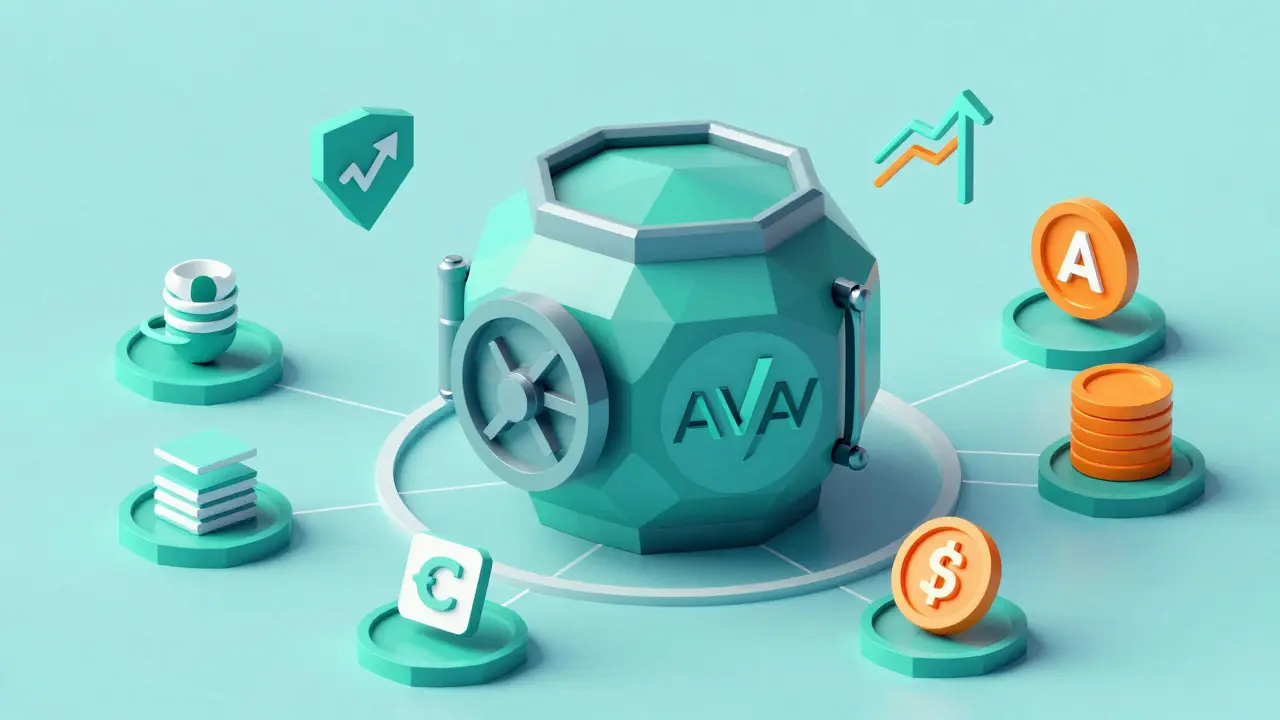
- Locking: You send your native AVAX to a secure smart contract on the Avalanche C-Chain. This contract acts as a vault.
- Minting: For every 1 AVAX you lock, the contract mints 1 WAVAX token. This maintains a strict 1:1 peg.
- Usage: You now hold WAVAX, which behaves like any other ERC-20 token. You can swap it, lend it, or provide liquidity in any EVM-compatible protocol.
- Unwrapping: When you are done, you send the WAVAX back to the contract. The contract burns (destroys) the WAVAX and releases your original AVAX.
This process is fully collateralized. There is no counterparty risk in the traditional sense because the WAVAX exists only because there is an equal amount of AVAX sitting in the vault backing it up. The total supply of WAVAX is limited by the amount of AVAX deposited. As of recent data, the circulating supply hovers around 15.5 million WAVAX, representing a significant portion of the ecosystem's active capital.
Why Use WAVAX Instead of Native AVAX?
If you are just sending money to a friend, stick with native AVAX. It is faster and cheaper. However, if you are engaging in complex DeFi strategies, WAVAX offers distinct advantages.
| Feature | Native AVAX | Wrapped AVAX (WAVAX) |
|---|---|---|
| Token Standard | Native Coin | ERC-20 / ARC-20 |
| Primary Use Case | Gas fees, Staking | DeFi interactions, Liquidity Pools |
| Interoperability | Limited to native apps | High (works with most EVM apps) |
| Value Peg | Market Price | 1:1 with AVAX |
| Complexity | Low | Medium (requires wrapping step) |
The key difference lies in compatibility. Many automated market makers (AMMs) and lending protocols are built to interact with ERC-20 tokens. By using WAVAX, you unlock access to a broader range of financial instruments. For example, if a new DeFi protocol launches on Avalanche but only supports ERC-20 collateral for loans, your native AVAX is useless until wrapped. WAVAX bridges this gap instantly.
Security and Trust in the System
In crypto, trust is everything. Since WAVAX relies on a smart contract to hold the underlying AVAX, users often ask: "Is it safe?"
The security model of WAVAX is robust because it leverages the Avalanche C-Chain. The C-Chain is the Contract Chain within the Avalanche network, designed to be compatible with the Ethereum Virtual Machine (EVM) for executing smart contracts. This chain benefits from Avalanche's sub-second finality and high throughput. Unlike some cross-chain bridges that rely on centralized validators or external networks, WAVAX operates entirely within the Avalanche ecosystem.
However, no code is perfect. The risk here is primarily smart contract risk. If the WAVAX contract has a bug, funds could theoretically be compromised. To mitigate this, the contract undergoes rigorous audits by leading cybersecurity firms. Additionally, the transparency of the blockchain allows anyone to verify the balance of the vault at any time. If the number of WAVAX tokens in circulation exceeds the AVAX in the vault, the peg breaks. So far, the system has maintained its integrity, demonstrating the reliability of the wrapping mechanism.
Real-World Use Cases for WAVAX
Let's look at practical scenarios where WAVAX shines.
- Yield Farming: You want to provide liquidity to a trading pair on a decentralized exchange (DEX) like Trader Joe or Pangolin. These platforms often offer higher incentives for ERC-20 pairs. Wrapping your AVAX allows you to enter these pools and earn rewards.
- Cross-Chain Trading: Suppose you want to trade AVAX for a token that originated on Ethereum but is bridged to Avalanche. Using WAVAX simplifies the swap process, as the DEX can treat both assets as standard tokens.
- Lending Protocols: Platforms like Aave or Benqi allow you to borrow stablecoins against your crypto holdings. Some interfaces prefer or exclusively support ERC-20 collateral. WAVAX ensures your AVAX qualifies for these loans.
- NFT Interoperability: Some NFT marketplaces require payment in ERC-20 tokens. If you only have native AVAX, you would need to bridge out or wrap. WAVAX provides a seamless way to purchase digital art or collectibles without leaving the Avalanche network.
Costs and Considerations
Wrapping isn't free. Every interaction with a smart contract requires gas fees. On Avalanche, these fees are typically fractions of a cent, making them negligible for most users. However, if you are moving small amounts frequently, the cost of wrapping and unwrapping adds up.
Another consideration is slippage. While WAVAX is pegged 1:1 to AVAX, trading it on a decentralized exchange might involve slight price differences due to liquidity depth. Always check the current pool rates before swapping large volumes. Generally, the deviation is minimal, but it is something to keep in mind for precision trading.
Finally, remember that WAVAX does not generate dividends or staking rewards on its own. It is purely a utility token. If you want to stake AVAX for network security rewards, you must unwrap it first. Holding WAVAX means you are optimizing for flexibility, not passive income from staking.
Future Outlook for Wrapped Tokens
As the multi-chain ecosystem grows, the demand for interoperability solutions like WAVAX will likely increase. Developers are building more complex DeFi primitives that require standardized token formats. WAVAX serves as the backbone for this integration on Avalanche.
Industry analysts note that wrapped tokens are becoming essential infrastructure. Just as WETH is ubiquitous on Ethereum, WAVAX is becoming the standard for AVAX-based interactions in DeFi. Future updates to the Avalanche network aim to further reduce transaction costs and improve finality, which will only enhance the efficiency of wrapping operations.
For users, this means easier access to global liquidity. You won't need to choose between speed and compatibility. WAVAX ensures you get both, allowing you to participate in the broader crypto economy while staying within the high-performance Avalanche environment.
Is WAVAX the same value as AVAX?
Yes, WAVAX maintains a strict 1:1 peg with AVAX. For every 1 WAVAX in circulation, there is 1 AVAX locked in a smart contract. Their values should always be identical, barring minor temporary fluctuations during high volatility or low liquidity events.
Can I lose my money when wrapping AVAX?
The primary risk is smart contract vulnerability. If the WAVAX contract is hacked, funds could be lost. However, the contract is audited and widely used. Another minor risk is user error, such as sending WAVAX to a wallet that doesn't support it. Always double-check addresses and use reputable platforms.
Do I need WAVAX to use Avalanche?
No. You need native AVAX to pay for gas fees (transaction costs) on the Avalanche network. WAVAX is specifically for interacting with DeFi protocols that require ERC-20 compliant tokens. For simple transfers, native AVAX is sufficient.
How do I convert AVAX to WAVAX?
You can wrap AVAX using various decentralized exchanges (DEXs) on Avalanche, such as Trader Joe, Pangolin, or Curve. Simply connect your wallet, select the AVAX/WAVAX pair, and execute the swap. Many wallets also offer a built-in "wrap" function for convenience.
Does WAVAX earn staking rewards?
No, WAVAX itself does not earn staking rewards. Staking requires locking native AVAX to secure the Avalanche network. To stake, you must first unwrap your WAVAX back into native AVAX. WAVAX is used for DeFi yields, not network staking.