
What is Shiden Network (SDN) Crypto Coin? A Clear Breakdown of Its Purpose, Tech, and Market Position
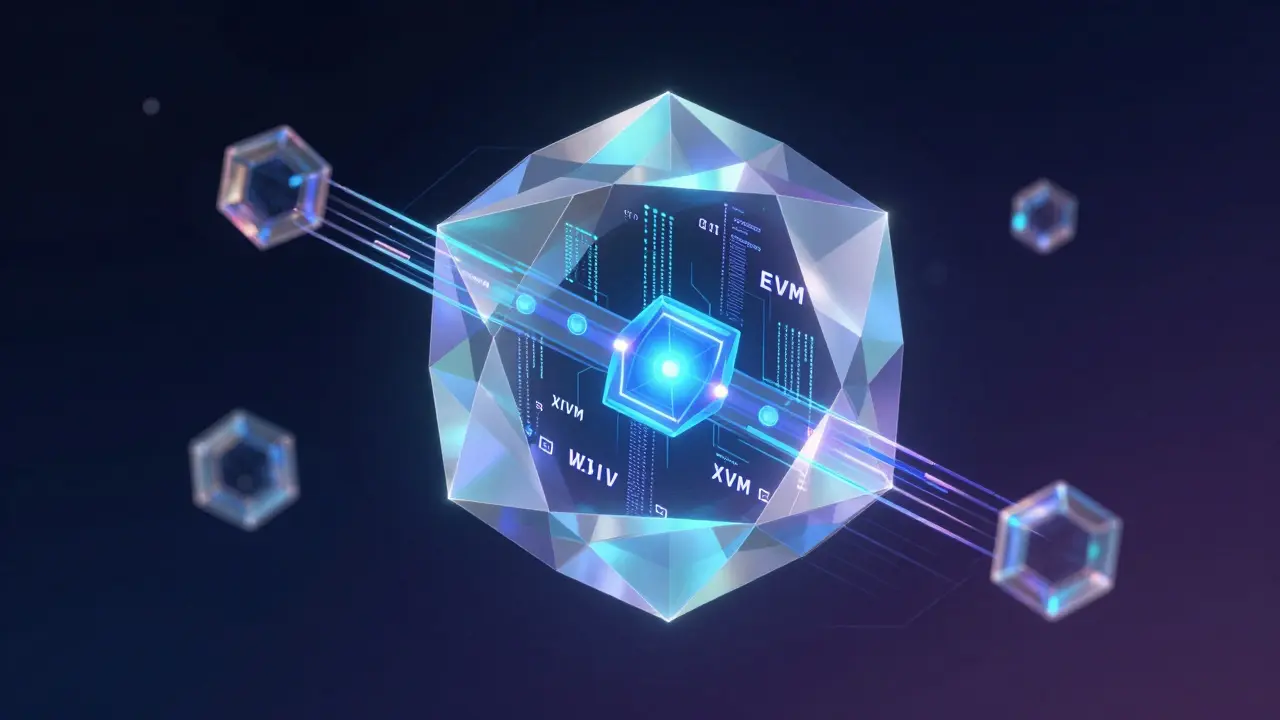
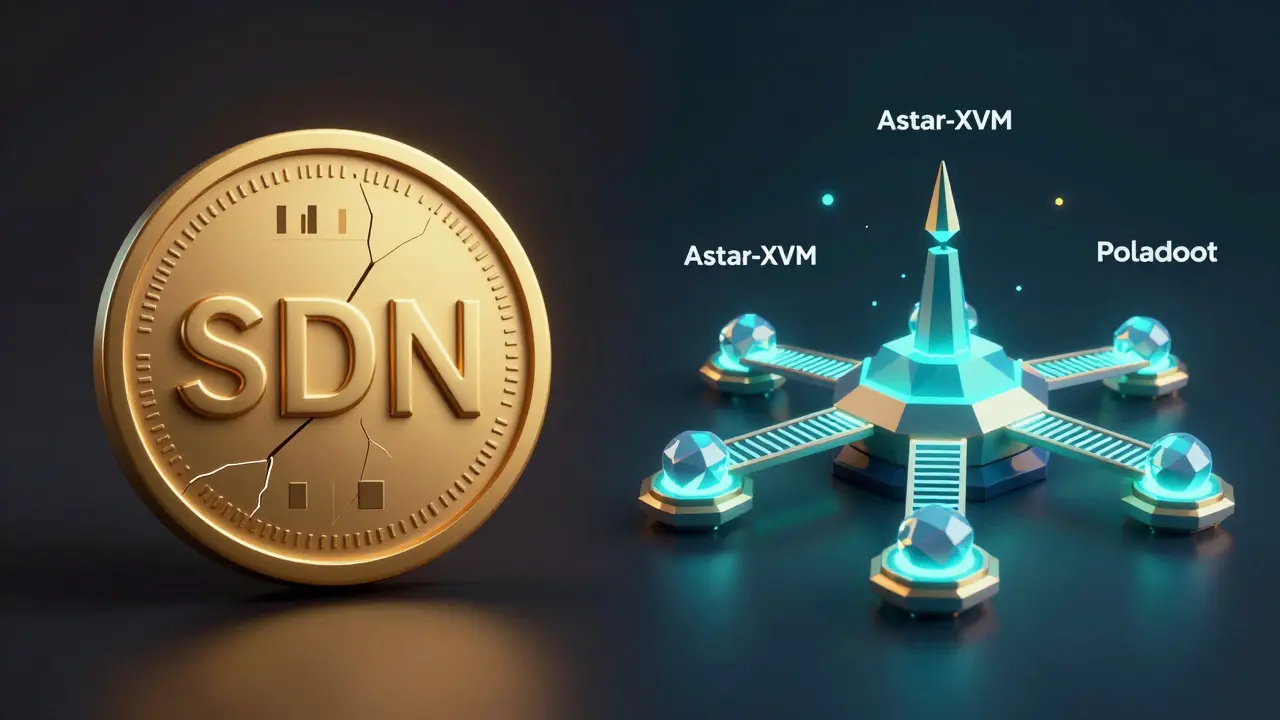
Shiden Network (SDN) isn’t just another cryptocurrency. It’s a critical piece of infrastructure in the Polkadot ecosystem - specifically, the smart contract engine for Kusama. If you’ve heard of Ethereum but wondered how blockchains like Kusama handle decentralized apps without native smart contract support, Shiden is the answer. It’s not a standalone chain. It’s a parachain, meaning it’s directly connected to Kusama’s main relay chain, borrowing its security while adding functionality Kusama lacks. Think of it as a plug-in that turns Kusama from a basic blockchain into a full-blown platform for DeFi, NFTs, and Web3 apps.
What Problem Does Shiden Solve?
Kusama, often called Polkadot’s "canary network," is designed for testing new ideas before they go live on Polkadot. But here’s the catch: Kusama itself doesn’t support smart contracts. That means developers couldn’t build Ethereum-style apps like decentralized exchanges or NFT marketplaces directly on Kusama. Shiden Network was created to fix that. Launched in June 2021 by the same team behind Plasm Network, Shiden added smart contract capabilities to Kusama. Now, developers can deploy apps that run on Kusama’s fast, low-cost environment - and test them before moving to Polkadot.
How Does Shiden Work?
Shiden runs as a parachain on Kusama, meaning it shares Kusama’s security and consensus. But unlike Kusama, it supports multiple virtual machines:
- Ethereum Virtual Machine (EVM) - lets you deploy Solidity smart contracts, just like on Ethereum.
- WebAssembly (WASM) - allows developers to write apps in Rust or other languages for better performance.
- Astar XVM - Shiden’s custom hybrid engine that combines both EVM and WASM, making cross-chain compatibility smoother.
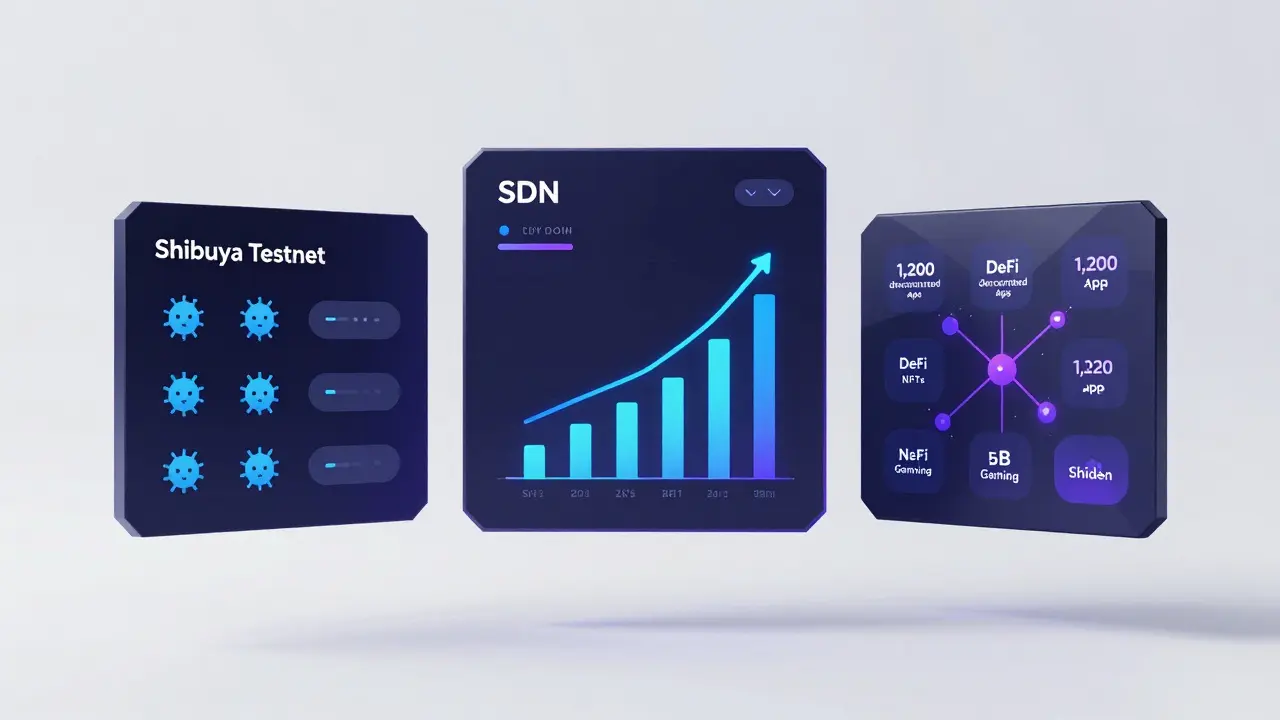
It also has a test network called Shibuya, which mirrors Shiden’s mainnet. Developers use Shibuya to test apps before going live - catching bugs early, avoiding costly mistakes. This setup makes Shiden the go-to testing ground for projects planning to launch on Polkadot later.
What Is SDN Used For?
The SDN token is the lifeblood of the network. It does three main things:
- Pays transaction fees - each transaction on Shiden costs around $0.039, paid in SDN.
- Staking - holders can lock up SDN to help secure the network and earn rewards.
- Validator rewards - node operators who validate blocks are paid in SDN.
There are 82 million SDN tokens total, with about 63 million in circulation as of late 2023. That means roughly 77% of the supply is already out in the market. Unlike some tokens that lock away most of their supply, Shiden’s model is fairly open - which can be good for liquidity, but also means more selling pressure if holders decide to cash out.
How Does Shiden Compare to Other Chains?
Shiden doesn’t compete with Ethereum or Solana. It competes with other Polkadot parachains that offer smart contracts:
| Network | Smart Contract Support | Market Cap (Jan 2024) | 24h Volume | Key Strength |
|---|---|---|---|---|
| Shiden Network (SDN) | EVM, WASM, XVM | $13M | $47,407 | Multi-chain flexibility for testing |
| Moonbeam | EVM-only | $450M | $28M | Best Ethereum compatibility |
| Acala | EVM, WASM | $180M | $15M | DeFi-focused, stablecoins |
Shiden’s biggest advantage? It’s the only parachain on Kusama that supports EVM, WASM, and Layer 2 tools together. Moonbeam is more Ethereum-friendly, but it’s on Polkadot, not Kusama. Acala is strong in DeFi, but doesn’t prioritize multi-chain testing like Shiden does. If you’re building something and want to test it on Kusama first, Shiden is your only real option.
Why Is SDN’s Market Performance So Weak?
Here’s the tough part: SDN’s price has struggled. As of May 2024, it traded around $0.0415 - down over 95% from its IEO price in 2021. The 24-hour trading volume is tiny: just $47,407. That’s less than 0.2% of Moonbeam’s daily volume. Why does this matter?
- Liquidity problems - when you try to sell a large amount of SDN, the price crashes because there aren’t enough buyers. One trader on Gate.io reported an 8% slippage during a market dip.
- Exchange limits - SDN is listed on only five exchanges: Kraken, Gate.io, CoinEx, MXC, and KuCoin. That’s not enough for serious institutional interest.
- Developer activity - while Shiden has around 1,200 monthly GitHub contributors, Moonbeam has nearly 5,000. More developers mean more apps, more users, more demand for the token.
Community feedback is split. On Reddit, developers praise Shiden for catching bugs early. But on Trustpilot, 72% of negative reviews blame poor exchange support. If you’re holding SDN, you’re betting on its future utility - not its current price.
Who Uses Shiden Network?
Right now, about 1,200 decentralized apps run on Shiden. Here’s how they break down:
- 47% DeFi - lending, yield farming, swaps
- 32% NFTs - marketplaces, collectibles
- 21% Gaming - blockchain games, in-game asset trading
Notably, only three Fortune 500 companies are experimenting with Shiden, according to Gartner. That’s low. But that’s not the point. Shiden isn’t built for big corporations - it’s built for early-stage Web3 teams who need a fast, low-cost test environment. Its value isn’t in big-name adoption. It’s in being the most reliable playground for Kusama-based projects.
What’s Next for Shiden?
In January 2024, Shiden upgraded to Astar XVM 2.0, which improved cross-chain communication by 40%. That’s a big technical win. The bigger news? Shiden is now fully integrated into the Astar ecosystem after Plasm Network rebranded in late 2023. This means future updates - like the upcoming Polkadot Agile Coretime model (coming in Q2 2025) - will directly benefit Shiden.
Analysts disagree on its future:
- VanEck predicts SDN could hit $0.12 by 2026 - a 207% increase.
- Bernstein thinks it could fall to $0.025 due to stiff competition.
But here’s the real question: Do you care about the price? Or do you care about the infrastructure? If you’re a developer, Shiden is already essential. If you’re an investor, you’re betting on long-term ecosystem growth - not short-term gains.
How to Get Started with Shiden
If you’re a developer:
- Set up a Polkadot.js wallet and add the Shiden network.
- Use Shibuya testnet to deploy and test your smart contracts.
- Deploy on mainnet once tests pass.
For users:
- Buy SDN on Kraken or Gate.io.
- Stake it to earn rewards.
- Use it to pay fees on Shiden-based apps.
The learning curve is moderate. If you’ve used MetaMask before, you’ll adapt quickly. If you’ve never touched a blockchain wallet, expect a 15-20 hour onboarding process.
Is Shiden Network the same as Astar?
No. Shiden is the Kusama parachain. Astar is its Polkadot counterpart. They’re sister networks built by the same team. Shiden tests new features on Kusama; Astar deploys them on Polkadot. Think of Shiden as the testing lab and Astar as the production line.
Can I stake SDN tokens?
Yes. You can stake SDN through the Shiden Network dashboard or via supported wallets like Polkadot.js. Staking helps secure the network and earns you rewards in SDN. Rewards vary based on total staked supply and network activity, but typically range between 5%-12% annually.
Why is SDN’s price so low compared to other tokens?
SDN’s low price comes from low trading volume, limited exchange listings, and a lack of major DeFi or NFT projects on its network. Unlike Moonbeam or Acala, which have hundreds of active apps, Shiden has around 1,200 - and many are still in testing. Investors are wary because there’s little demand to buy SDN, and selling pressure remains high.
Is Shiden Network safe to use?
Yes, as long as you’re using official tools. Shiden runs on Kusama, which uses the same security model as Polkadot - one of the most secure blockchain architectures. The Shibuya testnet has caught over 80% of bugs before they reached mainnet. Just avoid third-party wallets or unofficial bridges - stick to Polkadot.js and the official Shiden website.
Should I invest in SDN?
Only if you believe in long-term ecosystem growth, not short-term price swings. SDN is not a speculative asset - it’s infrastructure. If you’re a developer building on Kusama, SDN is necessary. If you’re an investor, you’re betting that more apps will move to Shiden, increasing demand. Right now, that’s a risky bet. But if the Astar ecosystem expands, SDN could see a major rebound.
Shiden Network isn’t flashy. It doesn’t have viral memes or celebrity endorsements. But in the quiet world of blockchain infrastructure, it’s doing something vital: enabling innovation on Kusama. For developers who need to test, build, and deploy without waiting for Polkadot, Shiden is indispensable. For everyone else, it’s a reminder that not all crypto value comes from price charts - sometimes, it comes from code.
Howard Headlee
March 11, 2026 AT 04:05Also, SDN at $0.04 is a steal if you believe in infrastructure over hype. Buy the dip. Hold for 3 years. You’ll thank me.
PIYUSH KOTANGALE
March 11, 2026 AT 06:09vishnu mr
March 13, 2026 AT 01:57Chelsea Boonstra
March 14, 2026 AT 03:52Julie Tomek
March 15, 2026 AT 18:10And yes, the market cap is low. But that’s because liquidity is artificially constrained by exchange listings. Kraken, Gate.io, KuCoin-these are respectable, but they’re not enough to sustain institutional interest. Imagine if Shiden were listed on Binance or Coinbase. The volume would spike overnight. The real issue isn’t the tech-it’s the marketing. The team needs to aggressively engage developer communities, not just rely on GitHub activity. They’re sitting on a goldmine and acting like it’s a garage project.
Grace van Gent-Korver
March 17, 2026 AT 11:34Zephora Zonum
March 17, 2026 AT 13:47ann neumann
March 18, 2026 AT 18:37Brandon Kaufman
March 19, 2026 AT 11:32Anthony Marshall
March 20, 2026 AT 05:58Lindsay Girvan
March 20, 2026 AT 15:09Tina Keller
March 21, 2026 AT 21:23Also, the XVM hybrid engine? Pure art. It’s like having both a manual and automatic transmission in one car. You get flexibility without sacrifice.
Alex Thorn
March 22, 2026 AT 09:35Craig Gregory
March 23, 2026 AT 14:02Douglas Anderson
March 24, 2026 AT 21:18vasantharaj Rajagopal
March 26, 2026 AT 07:15William Montgomery
March 28, 2026 AT 03:39Anshita Koul
March 29, 2026 AT 08:14Mara Alves Mariano
March 31, 2026 AT 03:42