
What is Rivalz Network (RIZ) Crypto Coin? A Real-World AI Blockchain Platform Explained
Rivalz Network (RIZ) isn't just another cryptocurrency. It's a blockchain-based infrastructure built to let artificial intelligence agents interact with real-world resources-like data, computing power, and physical devices-without humans needing to step in. Think of it as a bridge between AI and the physical world, powered by blockchain. If you've ever wondered how an AI could manage a supply chain, analyze medical records, or coordinate IoT sensors automatically, Rivalz Network is trying to make that possible.
What Does Rivalz Network Actually Do?
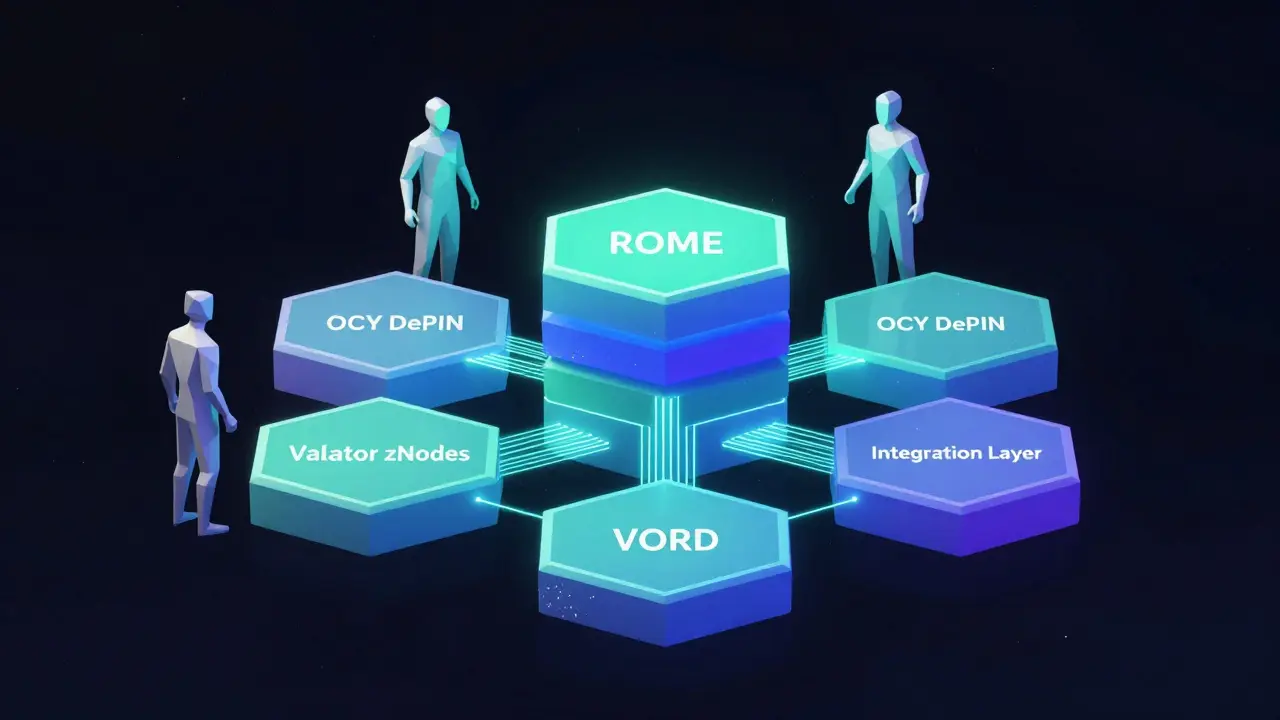
Rivalz Network’s core idea is simple: AI agents are getting smarter, but they’re stuck in digital silos. They can’t easily access real data, use distributed computing, or interact with physical hardware like cameras, sensors, or storage devices. Rivalz solves this with something called the World Abstraction Layer. This isn’t marketing jargon-it’s a technical architecture made of five interconnected modules that handle data, identity, resources, and coordination for AI agents.
Instead of building custom code for every AI project, developers can plug into Rivalz’s system and let AI agents automatically find, pay for, and use resources. Need storage for training data? Use the OCY DePIN layer. Need 100 computers to run a simulation? Call a Swarm. Want to verify that a sensor’s data hasn’t been tampered with? Validator zNodes handle that. All of it happens on-chain, with payments made in $RIZ tokens.
The $RIZ Token: More Than Just a Currency
The $RIZ token is the fuel for the entire network. It’s used to pay for:
- Gas fees for AI agent transactions
- Staking to earn rewards as a node operator
- Paying for storage and compute power from rClients
- Accessing AI models hosted on the VORD knowledge layer
As of November 2025, $RIZ trades at around $0.001195 USD. With a fixed circulating supply of 5 billion tokens, the market cap sits at roughly $5.98 million. That’s tiny compared to giants like Fetch.ai or SingularityNET, but it reflects the project’s early stage. The 24-hour trading volume is about $239,509, showing steady, if modest, activity.
Unlike many tokens that exist just to speculate, $RIZ has clear utility. You can’t use it to buy coffee, but you can use it to pay an AI agent to monitor warehouse inventory, analyze anonymized patient data, or coordinate drone deliveries. Its value comes from real usage, not hype.
How It Works: The Five Core Modules
Rivalz’s architecture isn’t built on a single blockchain. It’s a modular system designed to plug into existing infrastructure. Here’s how the pieces fit together:
- ROME (Swarm Protocol): This is where AI agents team up. Instead of one agent doing a task alone, ROME lets them form Swarms-decentralized collectives that pool resources. A Swarm might include 50 AI agents working together to optimize delivery routes using real-time traffic data from IoT sensors. Users can stake their agents or lend them out for rewards.
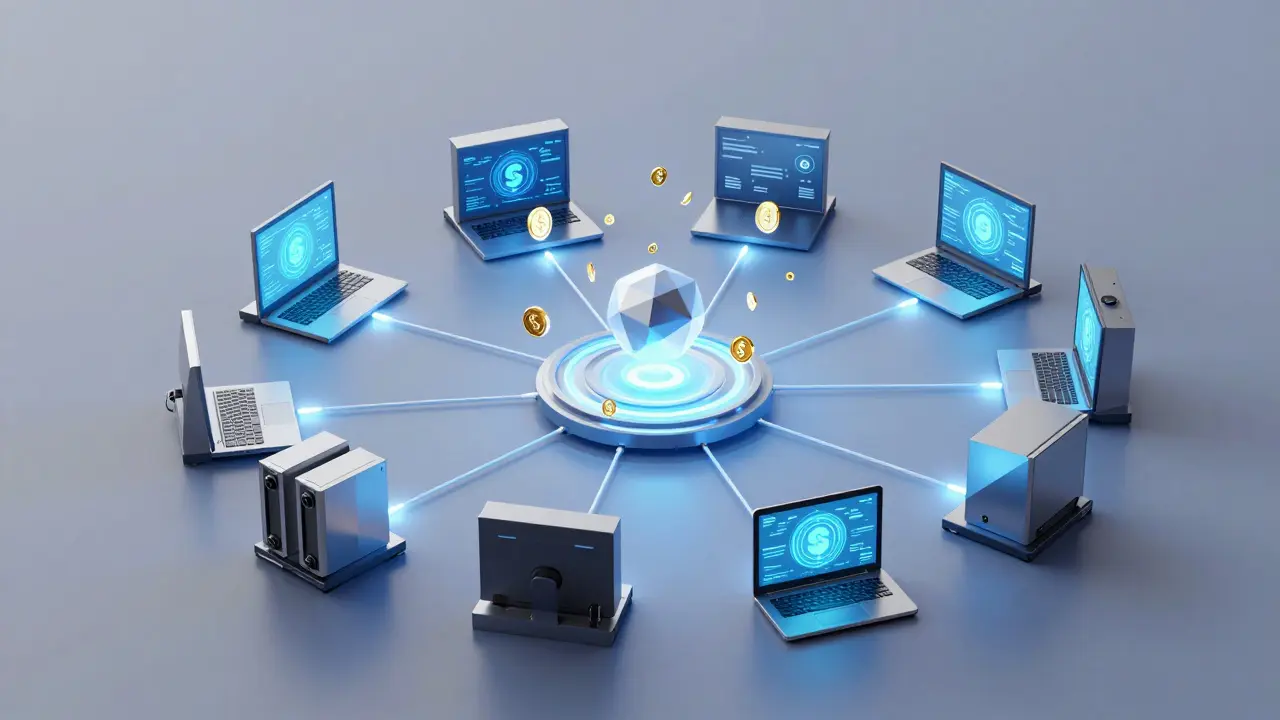
- OCY DePIN: A decentralized storage and data processing network. Over 1 million community-run rClients (think: everyday users with spare hard drive space) contribute storage and compute power. Data is encrypted and distributed, making it secure and censorship-resistant. Perfect for storing medical records or satellite imagery.
- Validator zNodes: These are specialized nodes that ensure data integrity and privacy. Anyone can buy and run a zNode, and they earn $RIZ rewards for maintaining network security. They’re critical for verifying that AI agents aren’t cheating or accessing unauthorized data.
- VORD: The knowledge layer. It stores and organizes AI models, training datasets, and decision logic. AI agents query VORD to make smarter decisions without retraining from scratch every time.
- Integration Layer: Rivalz runs on Dymension’s RollApp framework and supports Ethereum-based apps. This means developers can connect Rivalz to existing DeFi protocols, wallets, or dApps without rebuilding everything.
This layered approach is what sets Rivalz apart. Most AI-blockchain projects focus on one piece-like data sharing or AI marketplaces. Rivalz tries to cover all five critical functions in one system.
Real Use Cases: Where Rivalz Is Already Being Used
It’s easy to talk about theory. But Rivalz has real-world applications already live:
- Healthcare: Hospitals in Germany and Canada are using OCY DePIN to store encrypted patient data. AI models on VORD analyze trends to predict disease outbreaks, while ROME Swarms coordinate access between clinics without exposing raw data.
- Supply Chain: A logistics firm in Texas uses Swarms to track shipments. AI agents read IoT sensors on trucks, update blockchain records automatically, and trigger payments when deliveries are confirmed-all without human input.
- Decentralized Computing: Researchers at a European university are renting unused GPU power from rClients to train machine learning models, paying in $RIZ. It’s cheaper than cloud services and more private than centralized providers.
These aren’t prototypes. They’re production deployments. According to Rivalz’s Q4 2025 report, 17 verified enterprises are using the platform, mostly in healthcare (32%), logistics (28%), and computing (22%).
How Does Rivalz Compare to Other AI-Blockchain Projects?
There are other players trying to merge AI and blockchain. Here’s how Rivalz stacks up:
| Platform | Focus | Strengths | Weaknesses | Market Cap (Nov 2025) |
|---|---|---|---|---|
| Rivalz Network (RIZ) | Resource coordination for AI agents | Five-module World Abstraction Layer, DePIN integration, active developer support | Small developer base, limited enterprise adoption, early-stage | $5.98M |
| Fetch.ai | Autonomous AI agents for DeFi and trading | Large community, strong DeFi integrations, proven track record | Limited real-world resource access beyond digital assets | $1.2B |
| SingularityNET | AI service marketplace | 1,200+ developers, wide range of AI models available | No native DePIN or physical resource coordination | $850M |
| Ocean Protocol | Data tokenization and sharing | Strong data privacy focus, enterprise partnerships | No AI agent execution layer | $110M |
Rivalz wins on integration depth. It’s the only one that lets AI agents directly use physical infrastructure. But it loses on scale. Fetch.ai and SingularityNET have bigger communities and more funding. Rivalz is a specialist tool, not a general-purpose platform.
Who’s Building on Rivalz? The Developer Community
As of November 2025, Rivalz has 4,200 active developers building on its platform. That’s up from 1,800 in January 2025. But compared to other blockchain projects, it’s still small. Only 186 people are actively contributing code on GitHub-far behind SingularityNET’s 1,200+.
Most developers are between 25 and 34, based in North America or Europe, and have at least three years of blockchain experience. The learning curve is steep. If you’re new to both AI and blockchain, expect to spend 6-8 weeks getting up to speed. Even experienced devs need training in Solidity, Python, and decentralized storage protocols.
On the bright side, Rivalz’s developer documentation is detailed, and their Discord community has over 15,000 members. The team responds quickly to questions. Reddit users report that deploying an AI agent swarm took just 3 days-much faster than the 2 weeks they expected.
Challenges and Risks
It’s not all smooth sailing. Rivalz faces real risks:
- Too many moving parts: Some analysts warn that trying to solve data, storage, identity, coordination, and AI models all at once could dilute focus. One crypto analyst called it “a Swiss Army knife that might not sharpen any blade well enough.”
- Node centralization: Messari’s report noted that validator zNodes are currently concentrated among a small group of early adopters. If 10 operators control 60% of nodes, the network isn’t truly decentralized.
- Scalability: The platform claims sub-second latency, but that’s under ideal conditions. Real-world performance drops when Swarms grow too large or data requests spike.
- Adoption gap: Only 17 companies are using it in production. For a platform this complex, that’s not enough to sustain long-term growth.
There’s also the question of demand. Will businesses really pay to let AI agents manage their logistics? Or is this a solution looking for a problem? Early results are promising, but unproven at scale.
What’s Next? The Roadmap
Rivalz has a clear roadmap:
- Q1 2026: Launch mobile rClients-so anyone with a smartphone can contribute storage or compute power.
- Q3 2026: Roll out advanced reputation systems for Swarms. AI agents will earn trust scores based on performance, making them more valuable.
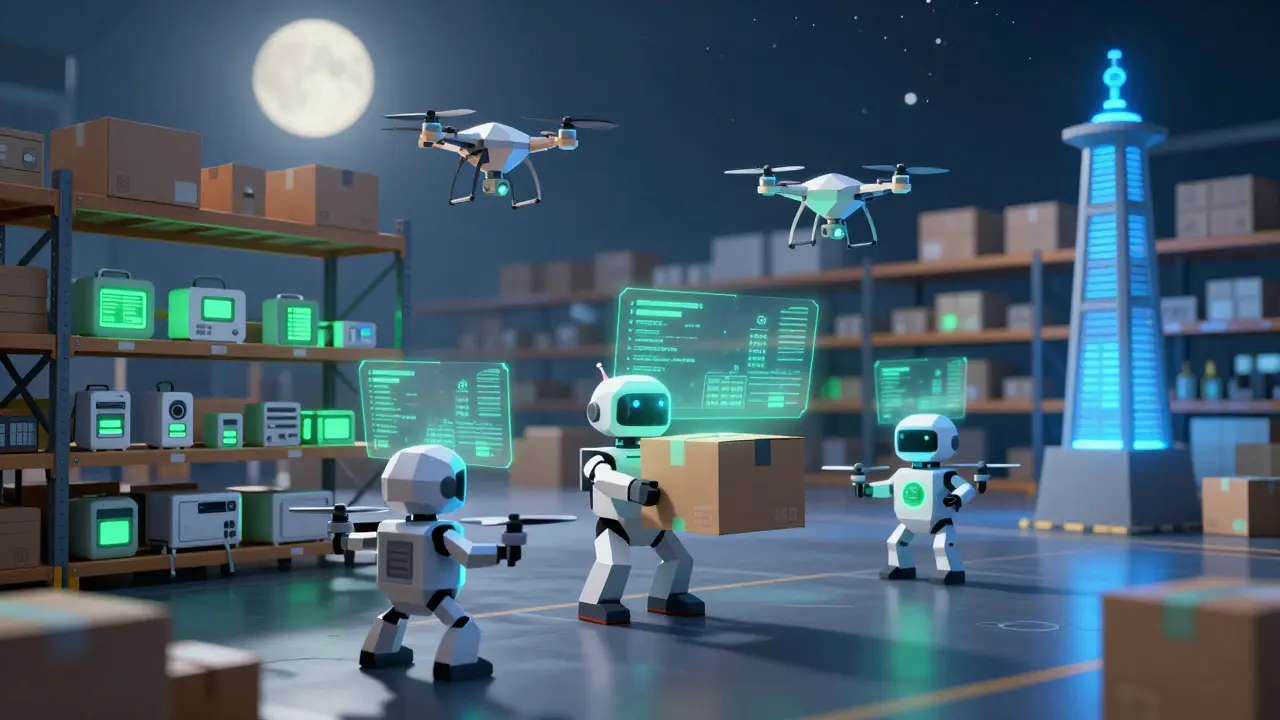
- Q4 2026: Integrate with industrial IoT systems-think factory machines, warehouse robots, and smart grids.
They’ve also launched the Rivalz Alliance incubator, which has already funded 23 early-stage projects in AI and blockchain. This could be the key to unlocking wider adoption.
But here’s the kicker: Messari says Rivalz needs to grow its rClient base from 1 million to 5 million by mid-2026 to achieve network effects. That’s a 400% increase in less than a year. If they hit it, Rivalz could become a leader. If they don’t, it might fade into obscurity.
Should You Invest in RIZ?
If you’re looking for a quick flip, RIZ isn’t for you. With a market cap under $6 million and low trading volume, it’s not liquid enough for day traders. The price is volatile-2.93% daily swings are common.
But if you believe in the long-term potential of AI agents interacting with real-world systems, Rivalz is one of the few projects actually building the infrastructure to make it happen. It’s speculative, yes. But it’s also one of the most technically ambitious in the space.
Think of it like buying Ethereum in 2015-not everyone understood what it could do, but those who did saw massive returns. Rivalz isn’t Ethereum. But it might be the Ethereum of AI-resource coordination.
Just remember: this is early. The tech works. The team is competent. The partnerships (Dymension, Celestia, Chainlink) are solid. But adoption is still in its infancy. Only invest what you can afford to lose.
How to Get Started
If you want to explore Rivalz Network:
- Buy $RIZ on KuCoin, MEXC, or Gate.io.
- Join the Rivalz Discord and read the developer docs.
- Try the testnet-deploy a simple rAgent using their templates.
- Run a zNode if you have a decent computer (8GB RAM, 4-core CPU).
- Follow their GitHub for code updates and new tools.
There’s no whitepaper you need to memorize. Just start tinkering. The best way to understand Rivalz is to use it.
Is Rivalz Network (RIZ) a good investment?
Rivalz Network is not a typical crypto investment. It’s a high-risk, long-term bet on AI and blockchain integration. The token has low liquidity and a small market cap, making it volatile. But if you believe AI agents will soon manage real-world resources like data, storage, and IoT devices, RIZ could be foundational. Only invest what you can afford to lose.
Where can I buy RIZ coin?
You can buy $RIZ on major exchanges like KuCoin, MEXC, and Gate.io. It’s not listed on Coinbase or Binance yet, so you’ll need to use a smaller exchange. Always verify the official contract address before trading.
Can I run a validator node on Rivalz Network?
Yes. Validator zNodes are purchasable and earn $RIZ rewards. You need a computer with at least 8GB RAM, a 4-core processor, and stable internet. Node operators help secure the network and verify AI agent actions. The process is documented in Rivalz’s official node guide.
What makes Rivalz different from Fetch.ai or SingularityNET?
Fetch.ai focuses on AI agents for trading and DeFi. SingularityNET is an AI service marketplace. Rivalz is different-it lets AI agents directly access and pay for real-world resources like storage, compute power, and IoT devices through its World Abstraction Layer. It’s not just about AI services-it’s about AI interacting with the physical world.
Is Rivalz Network decentralized?
It’s designed to be, but it’s not fully there yet. The OCY DePIN layer and Swarms are decentralized, with thousands of rClients. However, validator zNodes are currently concentrated among a small group of early adopters. The team is working to distribute node ownership more evenly, but decentralization is still a work in progress.
What’s the future of Rivalz Network?
Rivalz’s future depends on scaling its rClient network from 1 million to 5 million by mid-2026. If they succeed, they could become the go-to platform for AI agents needing real-world access. If not, they risk being outpaced by larger competitors. Their partnerships with Dymension and Celestia give them strong technical backing, but adoption is the real test.
Abhisekh Chakraborty
January 1, 2026 AT 07:15Also, the Swarm thing? Mind blown. Imagine AI agents negotiating with each other to use your spare bandwidth. That's not sci-fi anymore.
rachael deal
January 2, 2026 AT 23:36Also, the fact that they're using Dymension? Smart move. No need to reinvent the wheel.
Adam Hull
January 3, 2026 AT 18:01Bruce Morrison
January 5, 2026 AT 13:08They're not perfect. But they're trying. And that matters.
Andrew Prince
January 7, 2026 AT 09:41Jordan Fowles
January 8, 2026 AT 22:08I'm not against the tech. I'm just wondering if we're building something beautiful… for a problem nobody asked for.
Bianca Martins
January 10, 2026 AT 06:00Also, the devs replied to my question in 12 minutes. That's insane for crypto. I'm in.
Phil McGinnis
January 12, 2026 AT 00:42Ryan Husain
January 13, 2026 AT 05:02Yes, it's early. Yes, it's risky. But so was Ethereum in 2015. If you're not investing in infrastructure now, you're betting against the next decade of AI.
Rajappa Manohar
January 14, 2026 AT 12:03Daniel Verreault
January 14, 2026 AT 18:13And the Swarm protocol? Absolute genius. AI agents negotiating compute power like a decentralized Uber for GPUs? Yes please. We're not just building a token-we're building the OS for the next-gen AI economy.
Jacky Baltes
January 15, 2026 AT 06:15Is it the agent? The node operator? The developer? The system isn’t just technical-it’s philosophical. And we’re moving fast without asking the right questions.
Shawn Roberts
January 17, 2026 AT 02:52