
What is OpenSocial (OSP) Crypto? A Guide to the Base-Based SocialFi Token
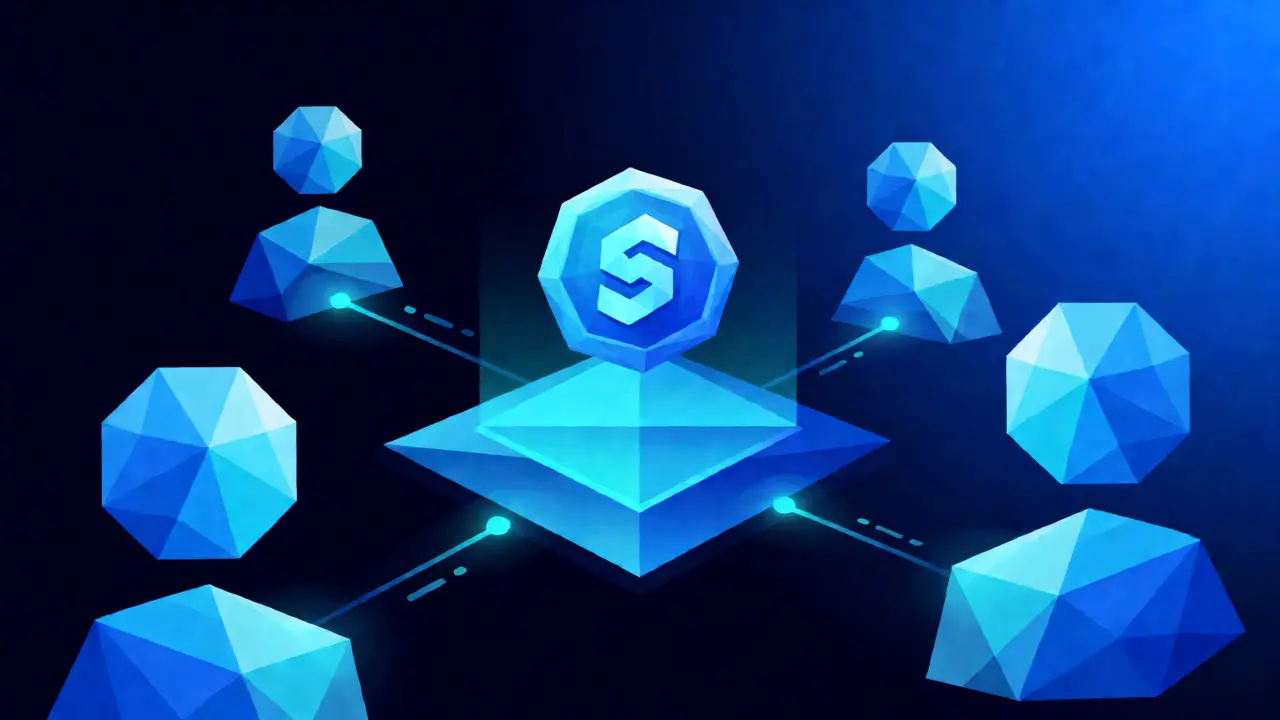
You might have seen OpenSocial or its ticker OSP popping up in your wallet or on a decentralized exchange tracker and wondered: what actually is this thing? Is it just another meme coin with a fancy name, or does it do something real? The short answer is that OpenSocial is the native token for a specific piece of infrastructure designed to fix how we interact on social media. It’s not trying to be Bitcoin or Ethereum; it’s trying to make sure you own your likes, comments, and content.
But here’s the catch: if you’re looking at the price charts right now, you’ll see some weird numbers. Some sites say the market cap is zero. Others show pennies per token. Liquidity looks thin. This article breaks down exactly what OpenSocial Protocol is, why it was previously known as Qrolli, how it works on the Base network, and whether this micro-cap asset has any legs in the crowded world of Web3 social apps.
The Rebrand: From Qrolli to OpenSocial
If you’ve been following crypto since 2023, you might remember a project called Qrolli. It launched with the ticker QR and aimed to build a user-owned social network. Fast forward to mid-2026, and the branding has shifted completely. Between March 2023 and July 2026, the project progressively renamed itself to OpenSocial, and the token changed from QR to OSP.
This isn’t just a cosmetic change. The team behind it, supported by venture studio Everest Ventures Group, wanted to signal a move away from being just a single app (the Qrolli platform) to becoming an entire protocol-a set of tools other developers can use to build their own social dApps. Think of it like moving from building one specific house to selling the blueprints and construction materials for anyone else to build houses. The old Qrolli whitepaper still holds relevance because OSP inherited its core utility functions: tipping creators, rewarding engagement, and governing the platform.
| Metric | Value / Status | Note |
|---|---|---|
| Total Supply | 3,500,000,000 OSP | Fixed supply, no inflation. |
| Blockchain | Base (Ethereum L2) | Low fees, high speed environment. |
| Primary DEX | Uniswap V2 (Base) | Main liquidity pool is OSP/WETH. |
| Major CEX Listing | None (as of early 2026) | Not tradable on Binance or Coinbase spot. |
| Funding Raised | $26 Million Total | Including $6M strategic round led by Framework Ventures. |
What Does OpenSocial Actually Do?
At its core, OpenSocial Protocol is a multichain SocialFi infrastructure. "SocialFi" is a buzzword, but here’s what it means practically: it combines social networking features with financial incentives. Unlike Twitter or Facebook, where you create value but don’t get paid directly, OpenSocial aims to let users and creators monetize their interactions on-chain.
The protocol provides modular building blocks. Developers don’t need to code everything from scratch. They can plug in pre-built modules for:
- Feeds: Standard scrolling timelines.
- Chatrooms: Real-time messaging groups.
- Social Actions: Posting text, images, audio, video, or polls.
- Governance Tools: Voting mechanisms for community decisions.
The first major application built on this stack is SoMon (Social Monsters), which launched in June 2024. SoMon operates like a decentralized Reddit. When it went live, it reportedly attracted over 30,000 active on-chain users and processed more than 300,000 transactions within two weeks. That’s significant traction for a new Web3 forum, showing that people are willing to engage when they feel ownership over the data.
Technical Deep Dive: Account Abstraction and Gas Fees
One of the biggest barriers to using blockchain apps is gas fees. If you want to "like" a post on a standard Ethereum dApp, you might pay more in gas than the post is worth. OpenSocial solves this using Account Abstraction, specifically adhering to the ERC-4337 standard.
Here’s how it helps regular users:
- Smart Contract Wallets: Your wallet acts like a smart contract, allowing for programmable logic.
- Gas Accounts: Each user gets a dedicated balance for transaction fees.
- Stablecoin Payments: You can pay gas fees in USDT or USDC instead of ETH. This stabilizes costs and removes the need to constantly buy ETH just to interact with the app.
This design choice makes OpenSocial much friendlier for non-crypto natives. You don’t need to understand the intricacies of EVM gas markets to participate in the social graph. The system handles the complexity in the background, deducting fees automatically from your stablecoin balance.
Tokenomics and Market Reality
Now, let’s talk about the money. As of early 2026, OSP is a micro-cap asset. It ranks around #5,900 to #6,500 on major aggregators like CoinPaprika and Bitget. Why so low? Mostly due to liquidity issues.
Because OSP isn’t listed on tier-1 centralized exchanges like Binance or Coinbase for spot trading, most activity happens on decentralized exchanges (DEXs) on the Base network. The primary pair is OSP/WETH on Uniswap V2. Data from Dexpaprika showed liquidity pools hovering around $150-$500 in certain snapshots, which is incredibly thin. This leads to high volatility. A small sell order can crash the price by double digits, while a small buy can spike it.
Price reports vary wildly depending on the source:
- CoinGecko: Showed prices around $0.00043 in mid-2025.
- Coinbase: Listed it as "not tradable," often displaying $0.00 or placeholder values.
- Kriptomat: Reported ~€0.00046 in July 2025.
These discrepancies happen because there isn’t a single global market price. Without deep order books, the price is determined by whoever buys or sells last on the DEX. If you’re holding OSP, expect wild swings. It’s speculative territory.
Funding and Backers: Who Believes in This?
Despite the low market cap, serious money has gone into this project. OpenSocial Protocol raised approximately $26 million in total funding. This includes a $6 million strategic round led by Framework Ventures and North Island Ventures.
Why would professional investors put eight figures into a token with such low liquidity? They’re betting on the infrastructure layer. Framework Ventures is known for backing DeFi and infrastructure plays that solve fundamental problems. In this case, the problem is fragmented social graphs. By providing a modular, account-abstraction-ready backend, OpenSocial positions itself as the "AWS of SocialFi." Even if only a few apps succeed, the protocol captures value through usage fees and token demand.

How to Buy and Use OSP
Since you can’t buy OSP on Coinbase, here’s the practical path to getting some tokens in your wallet:
- Set Up a Wallet: Download MetaMask or Rabby. Add the Base Network. You can add it manually via Chainlist.org.
- Get ETH on Base: Bridge some ETH from Ethereum Mainnet to Base, or buy ETH directly on an exchange that supports Base withdrawals (like Kraken or Bybit).
- Swap on Uniswap: Go to Uniswap.org, connect your wallet, and ensure you’re on the Base network. Swap ETH (or WETH) for OSP.
- Watch Slippage: Because liquidity is low, set slippage tolerance higher (maybe 1-3%) to ensure your trade goes through, but be aware you might pay a premium.
Once you hold OSP, you can use it in apps like SoMon for tipping, voting, or accessing premium features, depending on the specific dApp’s rules.
Risks and Considerations
Is OSP a good investment? That depends on your risk tolerance. Here are the red flags and green lights:
What are the main risks?
The biggest risk is illiquidity. With tiny daily volumes, exiting a large position could significantly impact the price. Additionally, the SocialFi sector is highly competitive. If Web3 social apps fail to attract mainstream users, the token may remain a niche asset with little organic demand.
Is the rebrand complete?
Yes, as of July 2026, the transition from Qrolli (QR) to OpenSocial (OSP) is fully reflected across major aggregators. However, always check the contract address to ensure you’re interacting with the correct OSP token on the Base network.
On the positive side, the technical foundation is solid. Using ERC-4337 for account abstraction puts it ahead of many older protocols that still require complex wallet setups. The backing from Framework Ventures also adds credibility, suggesting that industry experts see long-term potential in the underlying tech, even if the token price hasn’t caught up yet.
Final Thoughts
OpenSocial (OSP) is a fascinating experiment in decentralized social interaction. It’s not trying to replace Twitter overnight. Instead, it’s building the plumbing for a future where social networks are owned by their users. The token serves as the fuel for this machine-handling governance, payments, and incentives.
For now, it remains a high-risk, high-reward play. The technology is promising, and the funding is real, but the market adoption is still in its infancy. If you believe that Web3 social apps will eventually capture a slice of the massive traditional social media market, OSP offers a way to bet on the infrastructure layer. Just keep your expectations realistic regarding liquidity and short-term price stability.
Is OpenSocial (OSP) the same as Qrolli?
Yes, OpenSocial is the rebranded version of Qrolli. The token changed from QR to OSP, and the platform expanded from a single social app to a broader protocol for building social dApps. The original Qrolli token utilities were migrated to the new OSP framework.
Where can I buy OpenSocial (OSP)?
You primarily buy OSP on decentralized exchanges on the Base network, specifically Uniswap V2. It is currently not listed for spot trading on major centralized exchanges like Binance or Coinbase.
What blockchain is OpenSocial on?
OpenSocial Protocol is deployed on Base, which is an Ethereum Layer-2 network developed by Coinbase. This allows for lower transaction fees and faster speeds compared to Ethereum Mainnet.
Does OpenSocial support other blockchains?
While the token lives on Base, the OpenSocial Protocol is designed as a multichain infrastructure. Its documentation mentions compatibility with different virtual machines (EVM and SVM), aiming to expand its social graph capabilities to other chains like BNB Chain in the future.
Who invested in OpenSocial?
The project has raised approximately $26 million in total funding. Notable investors include Framework Ventures and North Island Ventures, who led a $6 million strategic round. The development is supported by Everest Ventures Group.
Ted Thoroughgood
September 7, 2026 AT 12:35honestly the gas fee stuff is what got me hooked. i was tired of paying $15 to like a post on eth mainnet so switching to base with stablecoin gas made sense for me. its not perfect but its way better than dealing with metamask errors every five mins.
liam & the bees
September 8, 2026 AT 06:20Absolutely spot on regarding the user experience improvements! The shift to ERC-4337 account abstraction is genuinely one of the most underrated features in current Web3 development. It removes that massive friction point where new users are scared off by complex wallet setups and unpredictable gas spikes. When you can pay fees in USDC or USDT, it feels much more like using a standard app rather than a financial instrument. This lowers the barrier to entry significantly, which is exactly what we need if SocialFi is going to break out beyond the crypto-native bubble. I’ve been testing some dApps built on this stack recently, and the seamless interaction model really highlights why infrastructure plays like this matter more than just flashy front-end designs. If developers focus on making these tools invisible to the end-user, adoption will follow naturally. It’s all about removing cognitive load from the average person who just wants to connect and share without worrying about blockchain mechanics. Keep an eye on how other protocols implement similar solutions; this could become the industry standard very soon.
Courtney Parker
September 8, 2026 AT 12:42another rebrand to distract from the fact that nobody uses it? classic.
John Martin
September 10, 2026 AT 01:20I get the skepticism, but dismissing it as just a rebrand ignores the actual utility changes. They moved from a single app to a protocol layer, which is a huge architectural shift. That means third-party devs can build on top of it now, creating an ecosystem instead of a walled garden. 🛠️📈
Robert Brabham
September 10, 2026 AT 19:53Framework Ventures backing it makes me nervous. Usually when big VCs get involved in micro-caps, they’re looking for an exit strategy before retail even knows the token exists. The liquidity numbers mentioned here are terrifyingly thin. A whale dumping 1% of supply would wipe out the market cap instantly. I suspect the 'infrastructure' narrative is just a cover to keep bagholders engaged while insiders slowly sell off their positions into any available buy wall. Don't let the fancy whitepaper fool you; check the on-chain data for insider movements before touching this with a ten-foot pole.
Eliza Stein-Dodd
September 12, 2026 AT 09:57Thin liquidity ≠ bad tech. Framework is smart money. They know what they're doing. 🧠💡
Saket Kulkarni
September 13, 2026 AT 13:03The transition from Qrolli to OpenSocial represents a maturation of thought within the project's lifecycle. It signifies a move away from product-centric thinking toward platform-centric scalability. One must consider that true decentralization requires modular components that can be adopted independently by various stakeholders. The emphasis on Account Abstraction further demonstrates a commitment to human-computer interaction principles, prioritizing ease of use over technical purity. This philosophical alignment suggests that the team understands the broader implications of Web3 adoption beyond mere speculation.
Sonya Kirkwood
September 14, 2026 AT 00:54Oh please, spare us the philosophy lecture. You sound like you’re trying too hard to justify holding a bag that’s currently worth less than a cup of coffee. The drama isn’t in the tech, it’s in the price charts screaming 'sell everything.' 😱📉
Gabriela Gonzalez
September 15, 2026 AT 04:29Hey everyone! 👋 Just wanted to say that despite the volatility, the community vibe around SoMon has been surprisingly positive lately. People are actually engaging with content instead of just farming points! It’s cool to see real interactions happening on-chain. Keep pushing forward, team! 🚀✨💪
Christian Pasamonte
September 17, 2026 AT 02:49The analysis provided in the original post is superficial at best and fails to address the fundamental economic unsustainability of the current tokenomics structure. While the author praises the Account Abstraction implementation, they conveniently overlook the fact that subsidizing gas fees via stablecoins creates a persistent liability for the protocol treasury unless offset by significant transaction volume growth, which is currently nonexistent outside of speculative trading activity. Furthermore, the comparison to AWS is intellectually lazy because AWS benefits from massive economies of scale and entrenched enterprise contracts, whereas OpenSocial is competing against free centralized alternatives that already have network effects baked in. The mention of 30,000 active users sounds impressive until you realize that metric likely includes bots and sybil attackers who are incentivized solely by potential airdrops rather than genuine organic engagement. Until the protocol can demonstrate retention rates comparable to traditional social media platforms, the valuation remains purely aspirational and detached from reality. Investors should be wary of conflating technical novelty with market viability, as history is littered with technically superior products that failed due to poor distribution strategies and lack of product-market fit. The reliance on Uniswap V2 also introduces unnecessary complexity and higher slippage costs compared to newer AMM designs, suggesting either technical stagnation or budget constraints within the development team. In summary, this is a high-risk bet on unproven technology with no clear moat against incumbent competitors who can easily replicate these features without needing a native token.
Edward Ogunfolaju
September 17, 2026 AT 06:44Man, you guys are overthinking this! Look, crypto moves fast. If you wait for perfect fundamentals, you miss the pump. OSP is cheap right now. That’s the play. Get in, ride the wave, get out. Simple as that. Don’t let fear stop you from making gains! 🔥🔥🔥
Stephen McElreavy
September 17, 2026 AT 10:14Greetings friends. As someone who appreciates the intricate dance of decentralized systems, I find the multichain ambition of OpenSocial quite compelling. The interoperability between EVM and SVM environments could potentially unlock synergies previously thought impossible in the SocialFi sphere. We are witnessing the embryonic stages of a digital commons, where ownership rights are cryptographically enforced rather than legally asserted. It is a dramatic shift in power dynamics, moving agency from corporate silos back to the individual creator. Let us hope that the governance mechanisms remain robust enough to withstand the inevitable storms of political maneuvering within DAO structures. The future looks bright, albeit turbulent. 🌍⚖️
Abid Bhatti
September 19, 2026 AT 06:35You talk about bright futures but ignore the dark patterns. Why did they change the name? To reset the chart? To confuse the old holders? It smells fishy. I don't trust VC-backed projects. They always dump on us eventually. Be careful, folks. Very careful. 😒🤨
Charlotte Richardson
September 20, 2026 AT 00:47I appreciate the diverse perspectives shared here. It is important to acknowledge both the potential and the risks inherent in such early-stage investments. For those considering entering this space, perhaps a measured approach involving small position sizes might be prudent given the noted liquidity concerns. We should support each other in navigating these uncertainties together.
Rachel Aldaco
September 20, 2026 AT 02:19Why does everyone care so much about tokens? Can't we just enjoy the connection? The universe doesn't care about your market cap. You're chasing ghosts while missing the present moment. Existence is enough. 💭✨
Jess Emmerson
September 20, 2026 AT 22:10Respectfully, I think the practical advice on how to buy via Base is useful for newcomers. Keeping expectations low regarding short-term price action seems wise given the data presented. No need to stress if it dips; just observe how the ecosystem grows over time. Chill vibes only. ✌️😎
Ferdinand Friday
September 21, 2026 AT 19:06It is fascinating to contemplate the metaphysical implications of owning one's social graph through cryptographic proof. When we speak of 'owning' likes and comments, we are essentially discussing the digitization of human validation itself, transformed into a tradable commodity. This paradigm shift challenges the very essence of altruistic sharing, introducing a transactional layer to what was once considered pure expression. One wonders if the commodification of attention will lead to a dystopian landscape where every interaction is calculated for ROI, or if it will liberate creators from the tyranny of algorithmic gatekeepers who monetize our labor without fair compensation. The elegance of the ERC-4337 standard offers a bridge, smoothing the jagged edges of blockchain complexity for the layperson, yet the underlying tension between decentralization and centralization remains unresolved. As we stand on the precipice of this new era, we must ask ourselves: are we building tools for freedom, or merely new cages with shinier bars? The answer likely lies in the hands of the developers who choose whether to prioritize profit extraction or genuine utility enhancement in their design choices. Only time, that great arbiter of truth, will reveal whether OpenSocial is a beacon of innovation or just another fleeting trend in the vast ocean of cryptocurrency speculation.