
What is Not Pixel (PX)? The Telegram Crypto Game Explained
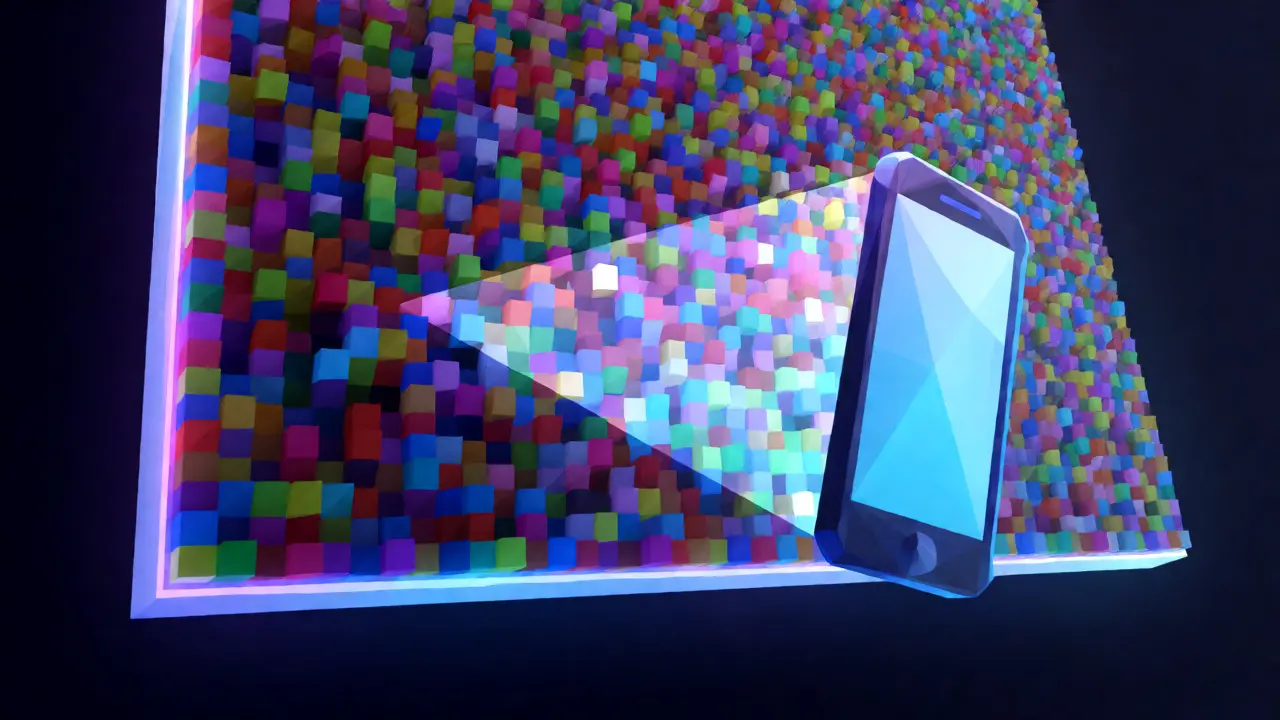
Imagine a global canvas where millions of people are painting at the same time. You don't need to be an artist or have a fortune in your bank account to join in. You just need a smartphone and a bit of creativity. This is the core concept behind Not Pixel, a decentralized marketplace for digital art hosted directly inside Telegram. But it’s more than just a game; it’s powered by its own cryptocurrency, the $PX token, which rewards players for their skill rather than their spending power.
If you’ve been following the rise of "tap-to-earn" games on Telegram, you likely know about Notcoin. Not Pixel is its spiritual successor, shifting the focus from simple tapping to creative expression. Launched by Sasha Plotvinov, the same founder who brought us Notcoin, this project leverages the massive user base of Telegram to create a borderless ecosystem for digital collectibles. If you’re wondering what makes $PX different from other meme coins or utility tokens, stick around. We’ll break down exactly how it works, why it matters, and whether it has real staying power in the volatile world of crypto.
The Core Concept: Win-to-Earn, Not Pay-to-Earn
Most blockchain games require you to buy an NFT character or land before you can start earning. That barrier to entry kills the fun for many casual users. Not Pixel flips this model on its head with a win-to-earn philosophy. Here, you earn $PX tokens based on your dedication, creativity, and activity on the shared pixel canvas. You aren’t buying into the economy; you’re building it.
The platform operates as a multiplayer environment. Players compete to place pixels on a giant, shared board. By completing tasks, participating in tournaments, and contributing to the visual landscape, you accumulate points that convert into $PX. This approach democratizes access. A student in Wellington with a free Telegram account has the same opportunity to earn as a whale investor, provided they put in the effort. It shifts the value proposition from financial speculation to active participation.
Technical Foundation: Built on TON
To understand the speed and cost efficiency of Not Pixel, you have to look at its infrastructure. The game runs on the The Open Network (TON) blockchain. TON was originally developed by Telegram engineers but is now maintained by a global community of developers. It is designed specifically for high throughput, capable of processing thousands of transactions per second.
This choice of blockchain is critical for two reasons:
- Low Fees: Micro-transactions are common in gaming. On Ethereum, placing a single pixel might cost more in gas fees than the pixel itself is worth. On TON, transaction costs are negligible, allowing for seamless interaction.
- Integration: Because TON is natively integrated with Telegram, users don’t need to download separate wallets or learn complex DeFi protocols. The wallet is built right into the app, making the onboarding process frictionless for non-crypto natives.
Tokenomics: Scarcity and Distribution
Cryptocurrency projects often fail because of poor token distribution. Too much supply leads to inflation; too little goes to insiders causes distrust. Not Pixel addresses this with a capped supply and a community-first allocation strategy. The total supply of $PX is hard-capped at 250 million tokens. This scarcity mimics rare physical artworks, creating a baseline value driven by demand.
The conversion rate is straightforward: 1,000 pixels earned equals 1 $PX token. But how are these tokens distributed? The team avoided pre-sales and pre-mining entirely, meaning no early investors got a discount at the expense of the community. Instead, the bulk of the supply went to the users.
| Category | Allocation % | Details |
|---|---|---|
| Community & Miners | 70% - 80% | Distributed via gameplay, tournaments, and active participation. |
| Team | 8% - 10% | Locked for 2 months post-launch, then vested over 10 months. |
| Marketing | 7% | Funds for partnerships, promotions, and ecosystem growth. |
| Liquidity | 5% | Ensures smooth trading on exchanges like STON.fi and Binance. |
Notice the emphasis on the community. Up to 80% of the tokens are destined for the hands of those actually using the product. The team’s tokens are locked, preventing them from dumping their holdings immediately after launch. This alignment ensures that the developers succeed only if the community grows and remains engaged.
Utility: What Can You Do With $PX?
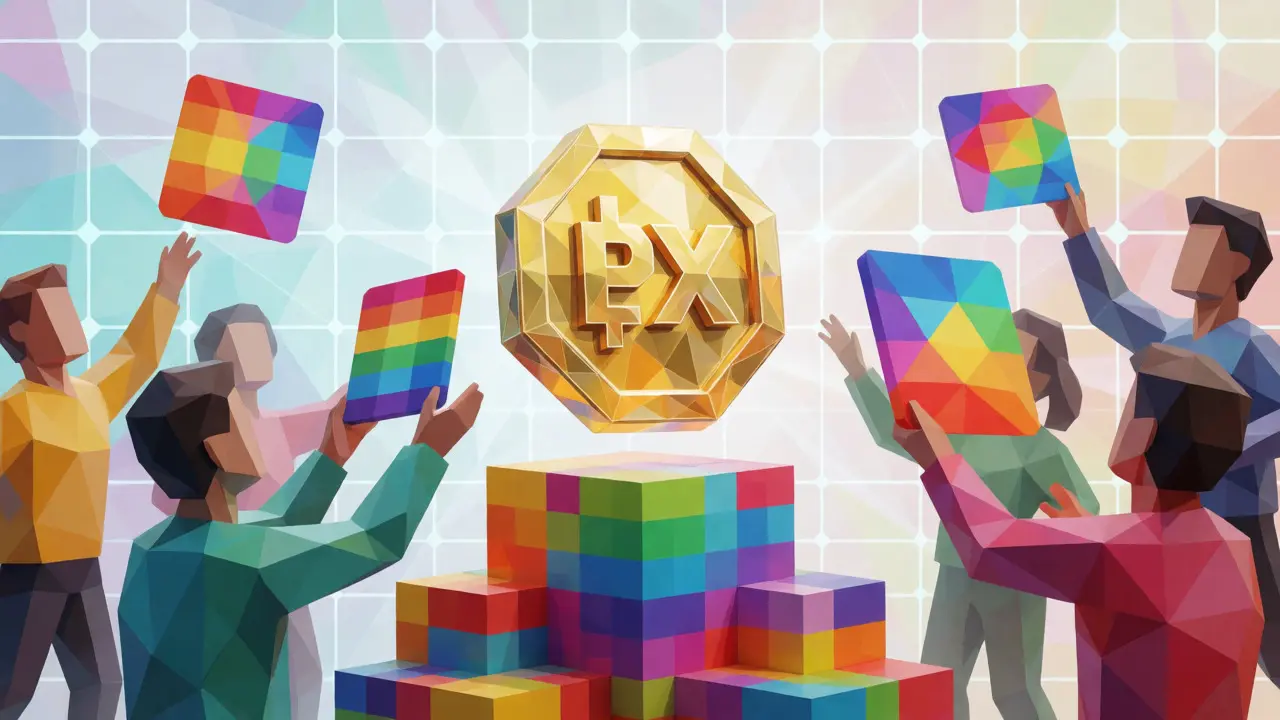
A token without use cases is just a number on a screen. $PX serves several functional roles within the Not Pixel ecosystem, bridging the gap between gaming rewards and digital asset ownership.
First, it acts as the primary currency for the marketplace. Users can spend $PX to purchase exclusive digital art, collectibles, and premium features within the game. As the platform expands, this will include bidding in auctions for rare pixel art pieces. Imagine owning a unique piece of collaborative art created by thousands of users-you can trade it as an NFT, with ownership verified on the blockchain.
Second, it enables governance and support. While currently focused on utility, the decentralized nature of the project suggests future voting rights for token holders. Additionally, artists can use $PX to crowdfund new projects, allowing collectors to back creators directly without intermediaries taking large cuts.
Market Performance and Accessibility
As of late August 2026, $PX trades at approximately $0.0158 USD. While this price point is low compared to established giants, it reflects the token’s young age and high circulating supply relative to market cap. Trading volume hovers around $8,700 daily, indicating steady but not yet explosive liquidity. Major exchanges like Binance have listed the token, providing credibility and easy access for retail investors.
Analysts predict potential growth through 2030, citing the expanding user base and the broader adoption of Web3 gaming. However, volatility remains a factor. The price is heavily influenced by community sentiment and the success of upcoming feature releases, such as the decentralized pixel canvas expansion mentioned in recent roadmaps.
Why Not Pixel Stands Out
In a crowded field of crypto projects, Not Pixel carves out a niche by combining three high-growth trends: social media, gaming, and digital art. Unlike generic metaverse projects that feel empty, Not Pixel has hundreds of thousands of active users interacting daily. The integration with Telegram’s 900 million user base provides an unfair advantage in accessibility. You don’t need to convince someone to download a new app; you just ask them to open Telegram.
Furthermore, the lack of paywalls lowers the psychological barrier to entry. People are hesitant to invest money in unproven games, but they are happy to invest time. Once they hold $PX, they become stakeholders in the ecosystem, incentivized to promote it and keep playing.
Risks and Considerations
No investment is risk-free. Regulatory scrutiny on crypto assets is increasing globally, particularly regarding securities classifications. If regulators decide $PX is a security rather than a utility token, it could face listing restrictions in certain jurisdictions. Additionally, the project relies heavily on sustained user engagement. If the novelty of pixel art fades and users churn, demand for the token could drop sharply.
Competition is also fierce. Other Telegram mini-apps are vying for attention, and traditional gaming platforms are slowly integrating blockchain elements. Not Pixel must continuously innovate-adding new game modes, better tools for artists, and deeper social features-to retain its audience.
Is Not Pixel a scam?
No, Not Pixel is a legitimate project backed by Sasha Plotvinov, the founder of Notcoin, and supported by the TON ecosystem. It has transparent tokenomics, no pre-sale, and a verifiable on-chain presence. However, like all cryptocurrencies, it carries market risk.
How do I buy $PX tokens?
You can buy $PX on major centralized exchanges like Binance and decentralized exchanges on the TON network, such as STON.fi. You will typically need TON or USDT to swap for $PX.
Do I need to pay to play Not Pixel?
No. The game uses a win-to-earn model. You can participate and earn tokens for free by being active on the canvas. Premium features may exist, but basic earning does not require upfront payment.
What is the maximum supply of $PX?
The total supply is capped at 250 million tokens. This fixed supply creates scarcity, similar to Bitcoin or limited-edition physical art prints.
Can I turn my pixel art into an NFT?
Yes. The platform integrates with NFT standards, allowing users to tokenize unique creations or achievements on the TON blockchain, making them tradable assets outside the game.