
What Is Marv (MARV) Crypto? Tokenomics, Price & Risks Explained
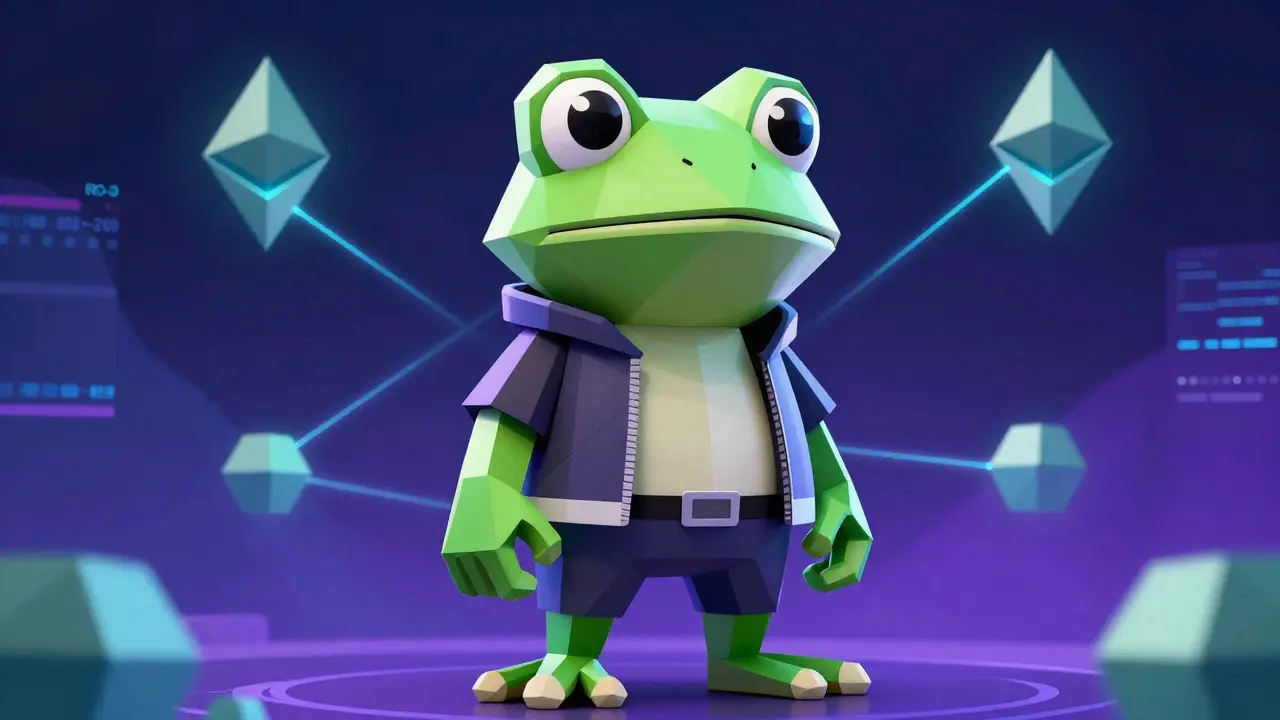
Ever scrolled past a frog-themed cryptocurrency and wondered if it’s worth your time? That’s exactly what happens with Marv (MARV), an anthropomorphic frog meme token built on the Ethereum blockchain. It sits somewhere between internet humor and high-stakes speculation. You’ve probably seen bigger names like Dogecoin or Shiba Inu dominate headlines, but Marv operates in the shadows of the micro-cap market. With a market capitalization hovering around $52,000 USD and a price so low it requires scientific notation to display accurately, this isn’t your average portfolio staple.
If you’re asking whether Marv is a legitimate investment or just another fleeting trend, you aren’t alone. The crypto space is flooded with thousands of tokens that appear overnight and vanish just as quickly. Understanding what drives Marv-and why it might be risky-requires looking past the cute branding and digging into the technical reality. This guide breaks down the token’s origins, its economic structure, and the real-world implications of holding such a volatile asset in mid-2026.
The Origin Story: More Than Just a Meme
At its core, Marv is a derivative of the famous Pepe the Frog meme culture. However, unlike many generic copycats, Marv has a specific backstory rooted in Finnish internet history. The character was born on Ylilauta, a popular imageboard in Finland known for its unique brand of dark humor and community-driven content. The narrative describes Marv as slightly shy but fond of dressing up in various outfits, positioning him as an "ideal digital frog" striving for perfection.
This cultural origin matters because meme coins thrive on community identity. When a token ties itself to a specific subculture-in this case, the niche humor of Ylilauta-it attracts a dedicated, albeit small, group of supporters. Launched in 2024, Marv didn’t start with massive venture capital funding or celebrity endorsements. Instead, it grew organically within these online circles before appearing on major tracking platforms like CoinMarketCap and CoinGecko. This grassroots beginning explains both its loyal following and its lack of mainstream recognition.
| Attribute | Details |
|---|---|
| Blockchain Network | Ethereum (ERC-20 Standard) |
| Launch Year | 2024 |
| Total Supply | ~420.69 Trillion MARV |
| Circulating Supply | 420 Trillion MARV |
| Primary Theme | Finnish Imageboard Meme (Pepe Derivative) |
| Consensus Mechanism | Inherits Ethereum Proof-of-Stake (PoS) |
Technical Structure: How Marv Works on Ethereum
Technically speaking, Marv is an ERC-20 token. This means it doesn’t have its own blockchain; instead, it lives on top of Ethereum. Think of Ethereum as the highway and Marv as a car driving on it. Because it relies on Ethereum’s infrastructure, Marv inherits the security and consensus mechanisms of the broader network. Ethereum uses a Proof-of-Stake (PoS) system where validators lock up 32 ETH to secure transactions. This ensures that while Marv itself may be experimental, the underlying ledger recording your balance is highly secure.
However, being an ERC-20 token comes with trade-offs. Every time you send or receive MARV, you must pay gas fees in ETH. During periods of high network congestion, these fees can spike significantly, potentially costing more than the value of the tokens you’re moving. For a micro-cap coin priced at fractions of a cent, transaction costs can become a major barrier to entry. Unlike larger projects that might build their own Layer-2 solutions or operate on cheaper chains like Solana, Marv remains tethered to Ethereum’s mainnet economics.
It’s also worth noting a common point of confusion: some aggregators mistakenly list MARV as a Solana-based token. This discrepancy likely stems from automated data errors or the existence of a different, unrelated token using the same ticker symbol. Always verify the contract address. The authentic Marv associated with the frog meme narrative is strictly an Ethereum ERC-20 asset. Mixing up chains could lead to sending funds to the wrong network, resulting in permanent loss.
Tokenomics and Supply Dynamics
When analyzing any cryptocurrency, supply dynamics are crucial. Marv features a massive circulating supply of 420 trillion tokens, with total supply figures reaching approximately 420.69 trillion. Why such huge numbers? This is a common tactic in meme coin design. By creating trillions of units, the price per token appears incredibly cheap-often less than one billionth of a dollar. Psychologically, this makes investors feel they can buy "millions" of coins for a few dollars, fostering a sense of ownership even when the actual monetary value is negligible.
Because nearly the entire supply is already in circulation, there is little room for inflationary pressure from new minting. This fixed supply model means that price changes depend almost entirely on demand shifts. If more people want to buy MARV, the price rises; if holders sell off, it drops. Given the lack of utility-such as staking rewards, governance rights, or integration into decentralized finance (DeFi) protocols-demand is driven purely by sentiment and speculation. There are no burn mechanisms or deflationary features mentioned in primary sources, meaning the token count stays static unless manually destroyed by users.
Market Performance and Volatility Risks
Let’s talk about the elephant in the room: volatility. As of early June 2026, Marv trades at approximately $0.000000000132 USD. To put that in perspective, you would need billions of MARV tokens to equal a single US dollar. Its market capitalization hovers around $52,000, ranking it roughly #6,967 on CoinMarketCap. While this seems respectable compared to unlisted junk, other trackers place it much lower, sometimes beyond rank #50,000. These discrepancies highlight the fragmented nature of micro-cap data.
Trading volume for Marv is exceptionally thin. Some days see zero recorded volume, while others might show a few thousand dollars in activity. Low liquidity is dangerous for traders. Imagine trying to sell $1,000 worth of MARV in a pool that only holds $5,000 total. Your sale could crash the price instantly, leaving you with far less cash than expected. This slippage risk is inherent to low-market-cap assets. Additionally, technical indicators like the Relative Strength Index (RSI) often fluctuate wildly. A recent RSI reading of 71.74 suggested the token was "overbought," yet sentiment remained neutral due to broader market greed. Predictive models from analysts like those at CoinCodex have projected potential declines of over 20% in short windows, underscoring the unpredictability.

Who Should Consider Marv?
Marv is not designed for conservative investors seeking steady returns. It lacks the fundamental backing of established cryptocurrencies like Bitcoin or Ethereum, nor does it offer the utility of platform tokens like Chainlink or Uniswap. Instead, it appeals to a specific type of participant: the speculative trader who understands meme culture and accepts extreme risk. If you enjoy the thrill of chasing viral trends and can afford to lose your entire investment, Marv fits that profile.
For most people, however, the risks outweigh the rewards. The absence of a public team, whitepaper, or legal entity adds another layer of uncertainty. Without identifiable developers, there is no accountability if issues arise. Furthermore, since major centralized exchanges like Crypto.com do not support trading MARV, you are limited to decentralized exchanges (DEXs). Navigating DEXs requires technical knowledge, including managing private keys and understanding smart contract interactions. One mistake in copying a contract address can drain your wallet.
Practical Steps for Due Diligence
If you decide to explore Marv further, follow these steps to protect yourself:
- Verify the Contract Address: Never rely solely on the ticker symbol "MARV." Copy the official ERC-20 contract address directly from trusted aggregators like CoinMarketCap or CoinGecko. Paste this into your wallet interface to ensure you are interacting with the correct token.
- Check Liquidity Pools: Use block explorers like Etherscan to view the liquidity pools associated with MARV. Ensure there is sufficient depth to enter and exit positions without excessive slippage.
- Monitor Community Channels: Since there is no formal company, the Telegram or Discord groups serve as the de facto news source. Look for active discussion and transparency from community leaders, though remain skeptical of hype.
- Start Small: Treat any initial purchase as entertainment money. Do not allocate funds you cannot afford to lose completely.
Remember, the crypto market moves fast. What looks promising today can collapse tomorrow. Marv’s status as a niche meme token means it will always be vulnerable to sudden shifts in attention. Keeping emotions in check and sticking to strict risk management rules is essential for survival in this segment.
Is Marv (MARV) a safe investment?
No, Marv is considered a high-risk speculative asset. It has a tiny market cap, low liquidity, and no clear utility beyond meme culture. Prices can swing dramatically, and there is no guarantee of long-term value retention.
Which blockchain does Marv use?
The primary Marv token associated with the frog meme is an ERC-20 token on the Ethereum blockchain. Be cautious of conflicting reports mentioning Solana, which may refer to a different token or data errors.
Where can I buy MARV?
Marv is not listed on major centralized exchanges like Binance or Crypto.com. Trading typically occurs on decentralized exchanges (DEXs) compatible with Ethereum, such as Uniswap, requiring users to connect Web3 wallets.
What is the total supply of MARV?
The total supply is approximately 420.69 trillion tokens, with a circulating supply of 420 trillion. This massive number keeps the individual token price extremely low.
Does Marv have any real-world utility?
Currently, no. Marv functions primarily as a speculative meme token. It does not offer staking rewards, governance rights, or integration into broader DeFi ecosystems based on available information.
Lee Paige
June 5, 2026 AT 15:47They are watching. The frog is a symbol of surveillance, not humor. Ylilauta? Finnish data harvesting operations disguised as meme culture. It is all connected to the globalist agenda to drain your wallet via gas fees while they monitor your blockchain activity. Do not fall for it.
Caitlin Donahue
June 7, 2026 AT 08:23i mean its just a frog lol but yeah dont put ur rent money in this
aaliyah zahid
June 7, 2026 AT 16:56The irony of paying Ethereum gas fees to buy a token worth less than a dust mote is absolutely hilarious. You are literally burning more money on the transaction than you could ever hope to gain from the asset itself. It is a masterclass in financial self-sabotage wrapped in cute packaging.
Erik Kirana
June 8, 2026 AT 16:54🐸 This is exactly why you need to be careful with these micro-caps. The liquidity is non-existent and the slippage will eat you alive. Always check the contract address because scammers love to clone tickers. 📉💀
dan kaffeman
June 9, 2026 AT 02:46Another useless piece of digital trash created by degens who have no real skills. If you are buying this instead of investing in American industry or Bitcoin, you are part of the problem. Wake up and stop playing casino games with fake frogs.
Meg Gran
June 10, 2026 AT 01:08so like if i buy marv am i supporting finnish art or just funding some anon's yacht? the existential dread of meme coins is real tbh. also typos r everywhere but idc
Alexander DeVries
June 11, 2026 AT 21:16You must understand that volatility is the price of admission for high-risk assets. However, discipline is key. Do not let emotions drive your trading decisions. Stick to your risk management protocols and never invest capital you cannot afford to lose completely.
Mark Corpuz
June 12, 2026 AT 09:26The technical analysis provided in the article is accurate regarding the ERC-20 standard. It is important to note that Marv relies entirely on Ethereum's infrastructure, which means security is inherited but costs are passed directly to the user without mitigation.
Steven Jacobowitz
June 14, 2026 AT 07:04What about the smart contract audit status? I need to know if there are any backdoors before I even think about connecting my wallet. The jargon here is heavy but the risk profile seems extreme for casual investors.
Yogendra Dwivedi
June 16, 2026 AT 00:34I appreciate the detailed breakdown of the supply dynamics. It helps to understand why the price appears so low due to the massive circulating supply. Patience and research are essential in this space.
Sylvia Mossman
June 17, 2026 AT 23:54Everyone says it is risky but that is exactly how you make millions. Being contrarian means buying when others are scared. The market cap is tiny so any hype could send it mooning. Stop being so cautious.
Alexis Abster
June 19, 2026 AT 07:02Oh my gosh, imagine losing everything on a frog! That would be such a tragedy. But hey, at least you got a story to tell at parties. Please stay safe out there everyone!
Brad Ranks
June 21, 2026 AT 00:58I tried to buy some last week and the gas fee was higher than the trade value. Absolutely ridiculous. The whole ecosystem is broken for small players.
Karthikeyan S
June 22, 2026 AT 00:29lol u guys r so naive 💀 this is pure rug pull waiting to happen. the devs will vanish with the liquidity pool and leave u holding worthless tokens. typical crypto scam pattern 😂
Dinesh Pattigilli
June 22, 2026 AT 16:34Only idiots fall for these meme coins. Real investors look at fundamentals not cartoons. The lack of utility is glaringly obvious to anyone with basic financial literacy. Stay away from this garbage.
Madhu Menon
June 24, 2026 AT 09:26The concept of value is subjective. In a way, Marv represents the collective consciousness of internet absurdity. Perhaps that has intrinsic worth in a post-modern economy. 🤔
Narendra Kulkarni
June 25, 2026 AT 06:11thanks for the info man. i was wondering about the solana confusion. good to know its strictly ethereum based now. will keep an eye on the contract address.