
What is KalyChain (KLC)? Tokenomics, Ecosystem, and Risks Explained

Imagine a blockchain that doesn't just chase meme coins or NFT trends but focuses on paying bills at local shops. That is the promise of KalyChain, an EVM-compatible Layer 1 network built for real-world finance. Its native token, KLC, serves as the fuel for this ecosystem, handling transaction fees, staking rewards, and governance. But does it deliver on its high-speed, low-cost claims? Or is it another speculative micro-cap project with more hype than utility?
As we navigate through mid-2026, KalyChain occupies a unique niche. It started as a simple token on Binance Smart Chain in 2020 and evolved into its own sovereign chain in 2022. This shift wasn't just about branding; it was about control. By moving to its own infrastructure, the team behind Kalyssi aimed to create a platform specifically tailored for small businesses, public institutions, and everyday payments. Let's break down what KalyChain actually is, how it works, and whether the KLC token has any staying power.
The Evolution: From BSC Token to Sovereign Chain
To understand where KalyChain is today, you have to look at where it came from. In 2020, the project launched as "Kalycoin" on the Binance Smart Chain (BSC). Back then, it was just another BEP-20 token relying on BSC's infrastructure. While this made development easy, it also meant the project had no say over network fees, security, or upgrades.
In 2022, the team executed a significant migration. They moved KalyCoin onto its own dedicated blockchain: KalyChain. This new chain uses a Proof-of-Staked-Authority (PoSA) consensus mechanism. Think of PoSA as a hybrid model. It combines the energy efficiency of Proof-of-Stake with the speed and finality of Proof-of-Authority. Instead of thousands of anonymous validators competing to make blocks, a smaller set of trusted entities secures the network. This design choice prioritizes fast transaction finality-meaning your payment confirms almost instantly-and keeps costs rock bottom.
This architecture is built on Hyperledger Besu, a robust enterprise-grade Ethereum client. For developers, this means full compatibility with the Ethereum Virtual Machine (EVM). You can write smart contracts in Solidity, use MetaMask, and deploy dApps without rewriting your code. It’s a familiar environment for anyone who has worked with Ethereum, Polygon, or BSC.
Tokenomics: Supply, Distribution, and Staking
If you are considering holding KLC, understanding the supply dynamics is crucial. Unlike some cryptocurrencies that inflate endlessly, KalyChain has a fixed maximum supply cap.
| Metric | Value |
|---|---|
| Maximum Supply | 7,000,000,000 KLC |
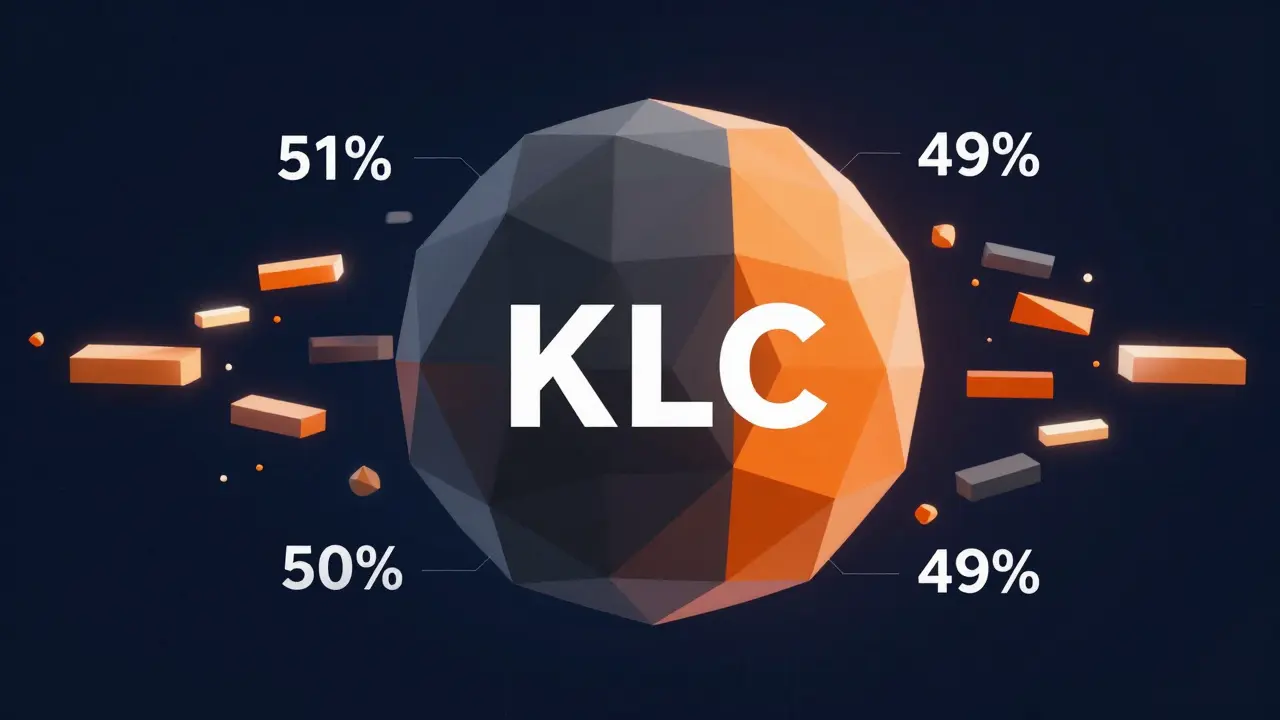
| Initial Pre-mine | 3,570,000,000 KLC (51%) |
| Staking Rewards Pool | 49% of Total Supply |
| Reward Duration | ~50 Years |
| Consensus Mechanism | PoSA (Proof-of-Staked-Authority) |
Here is the catch: over half the supply (51%) was pre-mined at launch. This is common for projects that need funds for development and marketing, but it concentrates early ownership. The remaining 49% is reserved for staking rewards, distributed slowly over five decades. This long-tail emission schedule aims to prevent sudden inflation spikes while keeping validators incentivized.
For holders, there are two main ways to earn passive income: standard staking and the KalyChain Vault. The Vault product allows users to buy "packs" and earn 3 KLC per block. Advertised yields range from 15% to 35%. However, remember that these rewards are paid in KLC. If the price of KLC drops, your dollar-denominated return shrinks. Given the token's historical volatility, chasing high APY requires careful risk management.
The Real-World Finance Ecosystem
Most blockchains talk about "utility," but few build actual financial tools. KalyChain distinguishes itself by integrating traditional finance (TradFi) features directly into its Web3 stack. The ecosystem is modular, designed to help merchants and consumers move money seamlessly.
- KalyWallet: A non-custodial wallet for managing assets securely.
- KalyRamp: Provides compliant fiat on-ramps and off-ramps. This is critical for mainstream adoption, allowing users to convert USD or EUR into KLC legally and easily.
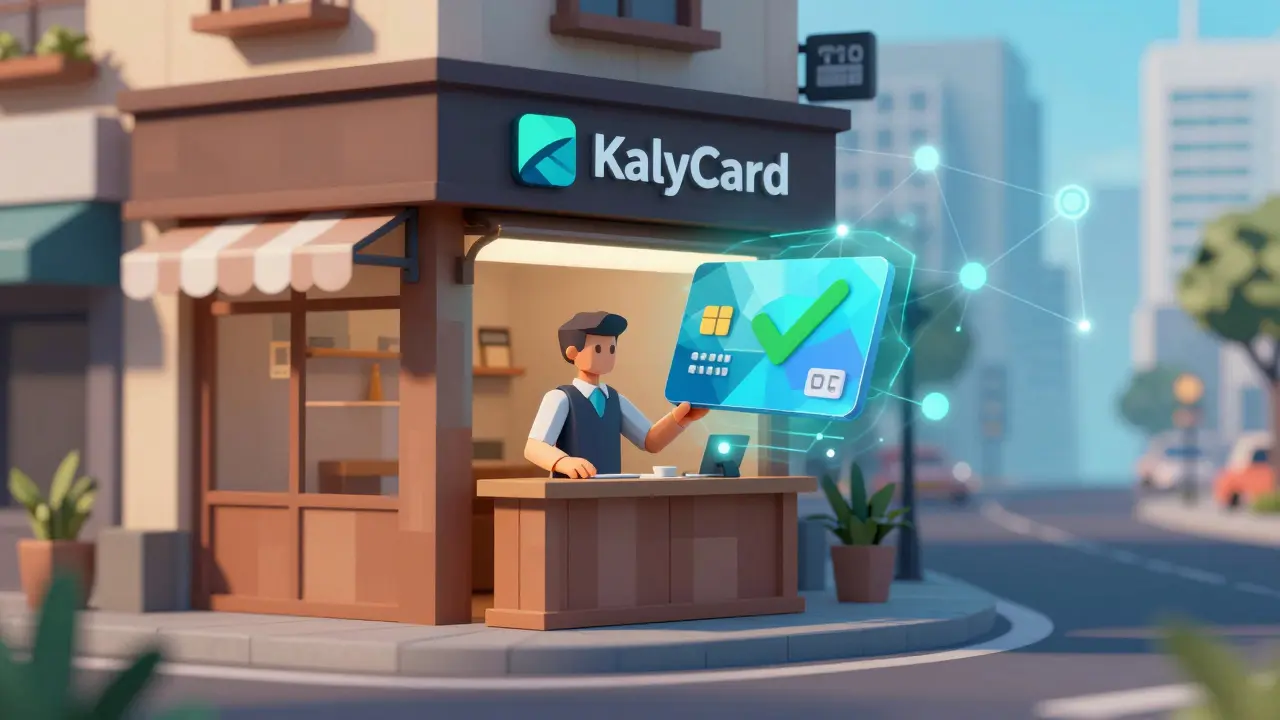
- KalyCard: A physical or virtual card that lets you spend your crypto balance anywhere Visa or Mastercard is accepted.
- KalyPOS: Point-of-sale terminals for merchants. Imagine buying coffee and paying with KLC instantly, with the merchant receiving stable value.
- Kalypay: A peer-to-peer payment solution focused on speed and low fees for everyday transactions.
- KalyAgent: A network of human agents who assist users in physical locations, bridging the gap for those less tech-savvy.
This suite of products targets Small and Medium Enterprises (SMEs) and public institutions. By offering tools like POS terminals and cards, KalyChain attempts to solve the biggest hurdle in crypto adoption: usability. You don't need to understand gas limits or private keys to swipe a KalyCard.
Market Performance and Liquidity Risks
Let's address the elephant in the room: liquidity. As of mid-2026, KalyChain remains a micro-cap asset. Price data across aggregators like CoinGecko and CoinMarketCap shows KLC trading in the sub-cent range, typically between $0.0010 and $0.0022.
Daily trading volumes hover around $150,000 to $200,000. While this indicates active interest, it is thin compared to major chains like Ethereum or Solana, which see billions in daily volume. Thin liquidity means larger trades can significantly impact the price, leading to slippage. If you try to sell a large amount of KLC quickly, you might not get the market price.
Historically, KLC has experienced extreme volatility. It hit an all-time high of roughly $0.12 before dropping over 99% from that peak. Such drawdowns are typical for early-stage, low-market-cap tokens. Investors should view KLC as a high-risk, high-reward play rather than a stable store of value. The fully diluted valuation (FDV) sits near $3.9 million at current prices, highlighting its tiny footprint in the broader crypto market.
Technical Architecture and Security
Under the hood, KalyChain relies on Byzantine Fault Tolerance (BFT) algorithms. Documentation references both QBFT (Quorum Byzantine Fault Tolerance) and IBFT 2.0 combined with Proof-of-Authority. These are variations of the same core concept: a permissioned validator set that agrees on the state of the ledger through voting.
This approach offers deterministic finality. When a transaction is confirmed, it is done. There are no reorgs or probabilistic confirmations waiting for six blocks. For enterprise applications and payments, this reliability is essential. However, it comes with a trade-off: decentralization. Because the validator set is limited and likely known, the network is more centralized than open Proof-of-Stake networks like Cardano or Tezos. This makes it efficient and secure against certain attacks but less resistant to censorship if the validators collude.
The integration of Artificial Intelligence (AI) capabilities into the core infrastructure is another claimed differentiator. While specific implementations are still emerging, the goal is to use AI for enhanced analytics, fraud detection, and optimized routing within the fintech ecosystem. This aligns with broader industry trends toward AI-driven financial services.
Who Is KalyChain For?
KalyChain isn't trying to be everything to everyone. It targets three specific groups:
- SMEs and Merchants: Businesses looking to accept crypto payments without the headache of volatile settlement times or high fees. KalyPOS and Kalypay cater directly to this need.
- Developers: Teams building DeFi, GameFi, or RWA (Real World Asset) applications who want EVM compatibility with lower costs and faster speeds than Ethereum mainnet.
- Passive Income Seekers: Users interested in staking or vault yields, provided they understand the risks associated with token price volatility.
If you are a casual trader looking for quick flips, the low liquidity might frustrate you. If you are a developer needing massive global decentralization, the PoSA model might feel too restrictive. But for those focused on practical, everyday financial applications, KalyChain offers a specialized toolkit.
Future Outlook and Challenges
The roadmap for KalyChain includes expanding its AI integrations and potentially launching a native decentralized stablecoin. These moves would strengthen its position in the RWA sector, where tokenizing invoices, supply chain assets, and real estate is gaining traction.
However, challenges remain. The project needs to increase its exchange listings to improve liquidity and discoverability. Currently, being listed on only a handful of exchanges limits access for global investors. Additionally, regulatory scrutiny on crypto payments and stablecoins is intensifying worldwide. KalyRamp's compliance focus is a positive step, but navigating diverse jurisdictions will require ongoing effort.
Ultimately, KalyChain's success depends on adoption. Technology alone doesn't drive value; usage does. If SMEs start using KalyPOS and consumers begin swiping KalyCards, the demand for KLC as a utility token will grow organically. Until then, it remains an experimental project with promising tools but unproven scale.
Is KalyChain (KLC) a good investment in 2026?
KLC is a high-risk, micro-cap asset. It has shown extreme volatility, including a 99% drop from its all-time high. While its ecosystem offers real-world utility, its low liquidity and limited exchange presence mean it is suitable only for investors with a high risk tolerance and a long-term horizon. Never invest more than you can afford to lose.
How does KalyChain differ from Ethereum?
Ethereum is a general-purpose, highly decentralized network with higher fees and slower confirmation times during congestion. KalyChain is an EVM-compatible Layer 1 focused on payments and enterprise use cases. It uses a PoSA consensus mechanism for faster finality and lower costs, making it more suitable for everyday transactions but less decentralized than Ethereum.
What is the KalyChain Vault?
The KalyChain Vault is a yield-generating product where users purchase packs to earn KLC rewards every block. Advertised yields range from 15% to 35%. Rewards are paid in KLC, so the actual dollar return depends on the token's market price. It is designed for passive income but carries the risk of token depreciation.
Can I use KalyChain for everyday payments?
Yes, that is its primary goal. Through tools like KalyCard, KalyPOS, and Kalypay, users can make purchases at merchants, send peer-to-peer payments, and convert fiat to crypto via KalyRamp. However, merchant adoption is still growing, so availability may vary by region.
Is KalyChain secure?
KalyChain uses Hyperledger Besu and a PoSA consensus model, which provides strong security against double-spending and ensures fast finality. However, because it relies on a smaller set of validators, it is more centralized than open networks. Users should always practice standard security hygiene, such as using hardware wallets and verifying contract addresses.