
What is HoDooi.com (HOD) Crypto Coin? A Clear Guide to the NFT Marketplace Token
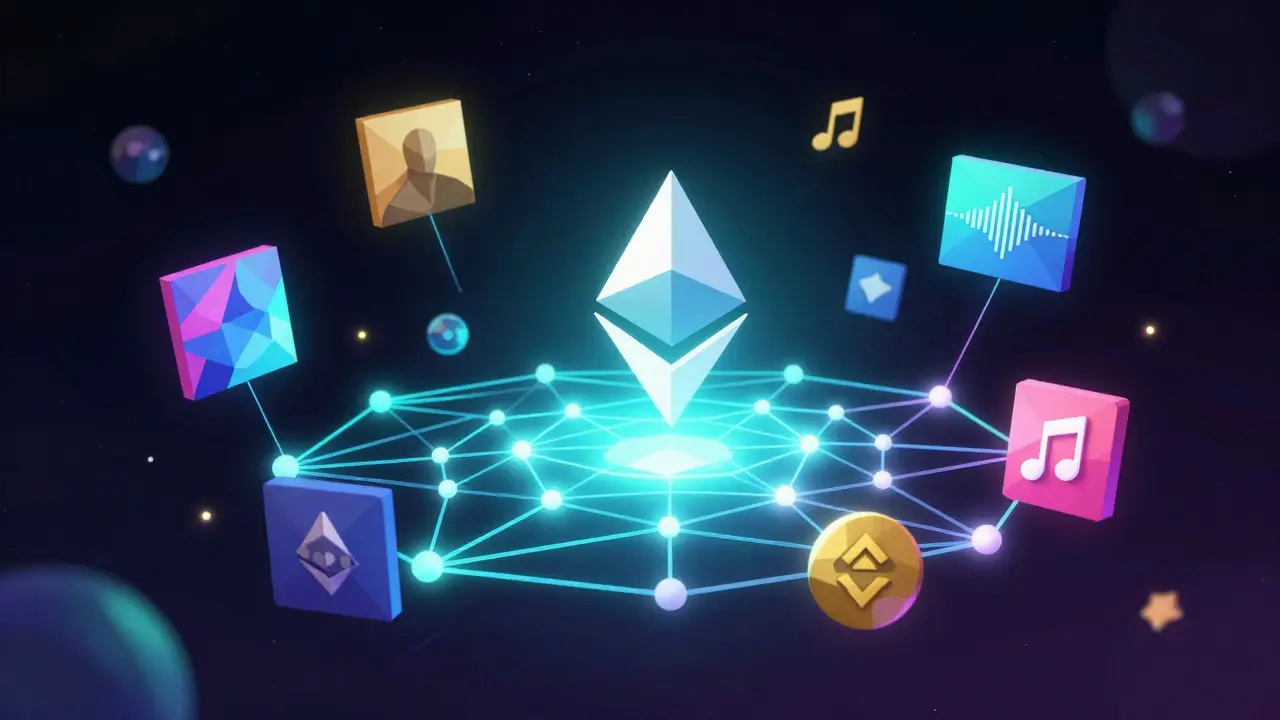
HoDooi.com isn’t just another crypto coin. It’s the engine behind a real NFT marketplace that lets people create, buy, and sell digital art across multiple blockchains. If you’ve heard of HOD as a token, you’re probably wondering: is this just another meme coin, or does it actually do something useful? The answer isn’t simple, but here’s the straight-up truth: HOD isn’t a currency you use to buy coffee. It’s a utility token built to power a decentralized NFT platform - and that makes all the difference.
What Is HoDooi.com?
HoDooi.com launched in 2021 as a multi-chain NFT marketplace. That means you can list your digital art, music, or collectibles on it whether you’re using Ethereum, Binance Smart Chain, or Polygon. Most NFT platforms lock you into one blockchain. HoDooi.com doesn’t. It connects them all. Think of it like a global marketplace where buyers and sellers don’t need to agree on which payment system to use - the platform handles the bridge.
The platform was built to remove friction. You don’t need approval to list an NFT. No middlemen. No gatekeepers. If you can mint a token, you can sell it here. That’s why creators - especially those outside the mainstream - are drawn to it. It’s permissionless. And that’s rare in a space full of curated galleries and exclusive drops.
What Is the HOD Token?
The HOD token is the native currency of HoDooi.com. It’s not just for paying fees. It unlocks features you can’t get otherwise. Here’s what it actually does:
- Transactions: Buy, sell, or auction NFTs using HOD. Some listings require payment in HOD only.
- Membership Tiers: Hold more HOD, unlock better perks. Higher tiers get reduced fees, early access to drops, and VIP support.
- Exclusive Access: Certain NFT collections are only available to HOD holders. These aren’t random - they’re curated drops tied to community voting.
- Governance: If you own HOD, you can vote on platform updates. Want to add Solana support? Should they cut listing fees? Token holders decide.
That’s not speculation. That’s how the platform works right now. It’s not a theoretical promise. It’s live. People are using HOD for these things every day.
How Many HOD Tokens Are There?
As of March 2026, there are 491.86 million HOD tokens in circulation. The total supply is capped at 1 billion. That means over half the supply is already out there. The remaining tokens are either locked in team wallets, reserved for future rewards, or held in the platform’s treasury.
The price of HOD has been wild. It hit an all-time high of $0.213 in 2022. Today, it trades between $0.000085 and $0.00012. That’s a drop of over 99% from its peak. But here’s the thing: price doesn’t tell the whole story. The token’s value comes from its use, not its chart. If 100,000 creators start using HoDooi.com next year, and they all need HOD to list their work, demand could rise - even if the price is low now.

Where Can You Buy HOD?
You won’t find HOD on Coinbase or Kraken. It’s too small for those platforms. But it’s live on several exchanges:
- Gate.io: The most active trading pair is HOD/USDT. This is where over 80% of daily volume happens. 24-hour volume here is around $75,000.
- Uniswap (Polygon): For users on Polygon, this is the go-to decentralized exchange.
- Binance Smart Chain DEXs: PancakeSwap and other BSC-based swaps also list HOD.
Trading volume fluctuates. One day it’s $9,000 across all exchanges. The next, it’s $2,000. That’s normal for a token this size. But Gate.io’s consistent volume shows real, ongoing trading activity - not just bots.
Why Does HoDooi.com Use Multiple Blockchains?
Most NFT platforms stick to one chain. HoDooi.com doesn’t. Why? Because users hate gas fees and slow transactions.
On Ethereum, minting an NFT can cost $50 or more. On Binance Smart Chain, it’s $1. On Polygon, it’s pennies. HoDooi.com lets creators pick the chain that fits their budget. Buyers get more options. The platform handles the cross-chain syncing behind the scenes.
This isn’t just a technical trick. It’s a user-first design. You don’t need to be a blockchain expert to use it. You just need a wallet. That’s why the platform’s user base keeps growing - even as bigger names like OpenSea struggle with fees and complexity.
Is HoDooi.com Legit?
Yes - but not because of hype. It’s legit because it works.
There are no fake partnerships. No celebrity endorsements. No promises of “100x returns.” The team has stayed quiet, focused on building. They’ve released updates: staking, governance voting, multi-chain listings, and tiered memberships - all live and functional.
The platform has no central authority. No one controls the smart contracts. No CEO can freeze your NFT. That’s decentralization in practice, not in marketing.
That said, HOD is a low-market-cap coin. It’s ranked #3173 by market cap. That means it’s risky. Prices can swing 30% in a day. Don’t invest money you can’t afford to lose. But if you’re an NFT creator or collector, it’s worth trying - even with a small amount.
What’s Next for HoDooi.com?
The roadmap is simple: scale and simplify.
- Adding more blockchains (Solana and Aptos are rumored).
- Integrating Layer 2 solutions to slash gas fees even further.
- Launching a mobile app for easier access.
- Expanding governance to include creator rewards and community grants.
They’re not chasing trends. They’re fixing real problems: high costs, fragmented ecosystems, and lack of access. That’s why they’re still here in 2026 - when so many NFT platforms vanished.
Who Is This For?
HOD isn’t for traders looking for quick flips. It’s for:
- Digital artists: Who want to sell without paying $50 in fees per listing.
- Collectors: Who want access to exclusive drops without being on a whitelist.
- Blockchain builders: Who care about interoperability and open access.
If you’re just here to gamble on price, walk away. But if you want to use an NFT platform that actually listens to users - HOD might be worth a closer look.
Is HOD a good investment?
HOD isn’t a traditional investment. Its value comes from usage, not speculation. If you’re buying it to flip, you’re likely to lose money. But if you’re using it to create or buy NFTs on HoDooi.com, then holding HOD makes sense. The token’s utility - not its price - is what matters.
Can I stake HOD tokens?
Yes. HoDooi.com offers a staking program where you can lock up HOD tokens to earn rewards. Rewards come from platform fees and are distributed weekly. The APY varies based on how many tokens are staked and the total rewards pool, but it’s typically between 5% and 12% annually.
Do I need a wallet to use HoDooi.com?
Yes. You need a compatible crypto wallet like MetaMask, Trust Wallet, or WalletConnect. The platform supports wallets on Ethereum, Binance Smart Chain, and Polygon. Once connected, you can browse, buy, or list NFTs without signing up for an account.
Is HoDooi.com safe?
The platform is decentralized, so there’s no central server to hack. Smart contracts have been audited by third-party firms, and no major exploits have been reported since launch. But as with any crypto project, you’re responsible for your own security. Never share your private keys, and only interact with the official website.
How do I get HOD tokens?
Buy HOD on Gate.io using USDT or BNB. You can also swap for HOD on Uniswap (Polygon) or PancakeSwap (BSC). Never buy from unofficial sources or social media ads - scams are common with low-cap tokens.
Diane Overwise
March 19, 2026 AT 02:39I’ve seen so many projects claim ‘decentralized’ and then vanish in 3 months. This one’s been around since 2021? That’s longer than my last relationship.
And you’re saying creators can list without approval? No gatekeepers? No ‘verified artist’ badge you have to pay for? That’s… actually kind of radical.
I’m not saying I trust it yet, but I’m also not rolling my eyes. That’s progress.
Dionne van Diepenbeek
March 20, 2026 AT 03:10Graham Smith
March 20, 2026 AT 09:04The governance model, particularly the weighted voting based on staked HOD supply, introduces a form of quadratic finance that incentivizes long-term commitment over speculative dumping. This isn’t just a token - it’s a socio-economic protocol embedded within a decentralized marketplace infrastructure.
Katrina Smith
March 21, 2026 AT 13:16Next they’ll be handing out free wifi to the homeless and calling it ‘decentralized community access’.
I’m sure this isn’t just another ‘community-driven’ project that’s been dead since 2023.
Also why is the price lower than my regret?
Bruce Doucette
March 22, 2026 AT 01:21Bro I’ve seen 100 ‘utility tokens’ and they all end up in the same place - a graveyard of abandoned Discord servers and abandoned GitHub repos.
And now you’re saying people are ACTUALLY using it? To list NFTs? Like real ones? With art?
I’m not saying you’re lying. I’m saying I need to see a screenshot of someone buying a cat meme with HOD before I believe this isn’t AI-generated fanfiction.
Marie Vernon
March 23, 2026 AT 21:57I know someone in rural Ohio who makes digital illustrations of her grandma’s quilts. She tried OpenSea, got rejected because her ‘style wasn’t premium enough’.
Then she used HoDooi.com with HOD, listed her first piece for 0.05 HOD - that’s like 5 cents - and sold it to a collector in Japan.
No one told her she wasn’t ‘worthy’. She just did it. That’s the kind of web3 we need.
Ross McLeod
March 24, 2026 AT 08:41The fact that over 80% of daily volume occurs on Gate.io with a stable $75k 24h volume suggests non-bot activity - a rare signal in low-cap altcoins.
Furthermore, the token’s capped supply at 1 billion with nearly half in circulation implies a controlled inflationary trajectory, which, combined with staking rewards and governance participation, creates a multi-layered incentive structure that aligns holder behavior with platform growth.
Most investors fail to recognize that utility tokens derive value not from price speculation but from embedded demand - the more NFTs transacted on the platform, the more HOD is consumed, which in turn increases scarcity pressure. This is not a pump. This is a system.
rajan gupta
March 24, 2026 AT 09:33When I first saw HOD on my wallet, I cried. Not because of the price - no - because I felt the vibration of true decentralization.
It’s not just a token. It’s a portal. A bridge between souls who create and souls who seek beauty beyond the corporate galleries.
The blockchain is alive. And HOD? HOD is its heartbeat. 💓
I dreamt last night that my NFTs were dancing on Polygon. They were laughing. They said thank you.
Billy Karna
March 25, 2026 AT 01:07If you’re an artist, you should have at least 100 HOD in your wallet. Why? Because the tiered membership system gives you reduced fees and early access to drops. That alone saves you hundreds in gas if you list even 10 NFTs.
If you’re a collector, you’re missing out if you’re not checking the exclusive drops. Some of these are curated by community votes - meaning you’re not just buying art, you’re helping decide what gets spotlighted.
And staking? 5-12% APY? That’s better than most savings accounts. Plus, you’re locking up tokens that support platform stability.
This isn’t a gamble. It’s a tool. Treat it like one.
Cheri Farnsworth
March 25, 2026 AT 21:31The absence of a CEO who can freeze assets is not a flaw - it is the very foundation of trustless systems
That so many dismiss this as insignificant due to its low market cap reveals a profound misunderstanding of value in decentralized ecosystems
Utility is not measured in USD - it is measured in adoption
Ann Liu
March 26, 2026 AT 04:51The platform handles the syncing, yes, but users still need to bridge their tokens manually via official bridges.
Misunderstanding this leads to lost funds. Always verify the contract address before sending. There are fake HOD tokens on Uniswap with similar names. The real one has 18 decimals and was audited by CertiK in Q4 2023.
Jerry Panson
March 28, 2026 AT 03:19The fact that the team has remained quiet while shipping updates speaks volumes about their priorities.
It’s rare to encounter a crypto project that doesn’t rely on influencer marketing or hype cycles to survive.
This isn’t a get-rich-quick scheme - it’s a quietly resilient infrastructure. That deserves recognition.
Anastasia Danavath
March 28, 2026 AT 15:43anshika garg
March 29, 2026 AT 10:39No flashy ads. No whitepaper full of buzzwords. No promises of mooning.
Just a simple idea: let artists create, let collectors collect, and let the system work without needing permission.
In a world where everything is sold, this feels like a quiet act of resistance.
Gene Inoue
March 29, 2026 AT 11:11You think the team is ‘quiet’? They’re probably sitting on 40% of the supply and waiting for retail to buy in before they dump.
The ‘audit’? Probably a paid one. The ‘real usage’? Bot-traded on Gate.io.
And don’t get me started on staking - it’s just a way to lock up your coins so they can’t sell. Classic rug-pull prep.
If you’re not a whale, you’re just the sucker holding the bag while the insiders exit.
Ricky Fairlamb
March 30, 2026 AT 08:21You know who controls the HOD treasury? A group of anonymous devs with no KYC.
You know who controls the governance votes? Wallets that were created 30 seconds ago using burner addresses.
This isn’t decentralization - it’s a shell game with blockchain as the curtain.
And the fact that people are actually buying into this? It’s proof that humanity has abandoned reason.
We’re not building a future. We’re building a cult.
Diane Overwise
March 31, 2026 AT 09:39The smart contracts are open. The transactions are public. The NFTs are live.
If they wanted to rug, they could’ve done it two years ago. Why wait until now?
Maybe they’re just… building. Quietly. Slowly. Without hype.
And honestly? That’s the most dangerous thing of all.