
What is HashAI (HASHAI) Crypto Coin: Comprehensive Guide 2026

If you've been scrolling through crypto news lately, you've probably seen buzzwords like "Artificial Intelligence" and "Blockchain" being tossed together as the next big thing. But does this actually mean something tangible for an investor? HashAI is a cryptocurrency token that sits right at the intersection of advanced machine learning and real-world digital asset mining. Unlike many projects that promise AI integration without showing actual infrastructure, this project claims to run 500+ GPU mining rigs controlled by an intelligent algorithm. Let’s unpack exactly what this means for your potential exposure to the space.
The Core Value Proposition: Real-Time AI Mining
Traditional mining operations are often static. You set up hardware to mine Bitcoin or Ethereum Classic, and you stick with it until the price makes it unprofitable. HashAI changes this by using AI-enhanced mining algorithms. The system doesn't just mine; it decides what to mine based on live market data. Every hour-or even every minute-the software evaluates profitability across multiple Layer 1 blockchains.
This dynamic switching is crucial. If one coin's profit margin dips due to network congestion or price volatility, the system pivots to another asset instantly. This automation removes the guesswork usually involved in managing a farm of 500 GPUs. The goal isn't just to process transactions; it's to maximize revenue per watt consumed. By automating these decisions, the project reduces human error and energy waste, which are two major pain points in the sustainability debate surrounding crypto.
How the HASHAI Token Works Economically
You can think of the HASHAI Token as a participation pass. It operates on the Ethereum Blockchain, which provides the security and smart contract capability needed to distribute revenue fairly. When the mining rigs earn profits, a portion flows back to the ecosystem. Holders who choose to stake their tokens effectively lock them up for periods ranging from 7 to 30 days. In return, they receive additional tokens generated from the operational surplus.
This creates a loop where the value of the network activity theoretically supports the underlying asset. However, you need to look closely at the numbers. As of late March 2026, the circulating supply hovers around 89 billion tokens. The total supply is capped at 100 billion. Market data fluctuates depending on which platform you check-CoinGecko showed a price near $0.00084, while other exchanges listed it lower. These discrepancies happen because of liquidity fragmentation across different trading venues. Understanding this spread is vital before executing any trade.
| Attribute | Value |
|---|---|
| Circulating Supply | ~89 Billion Tokens |
| Total Supply Cap | 100 Billion Tokens |
| Staking Duration | 7-30 Days |
| Primary Chain | Ethereum |
Infrastructure and Operational Milestones
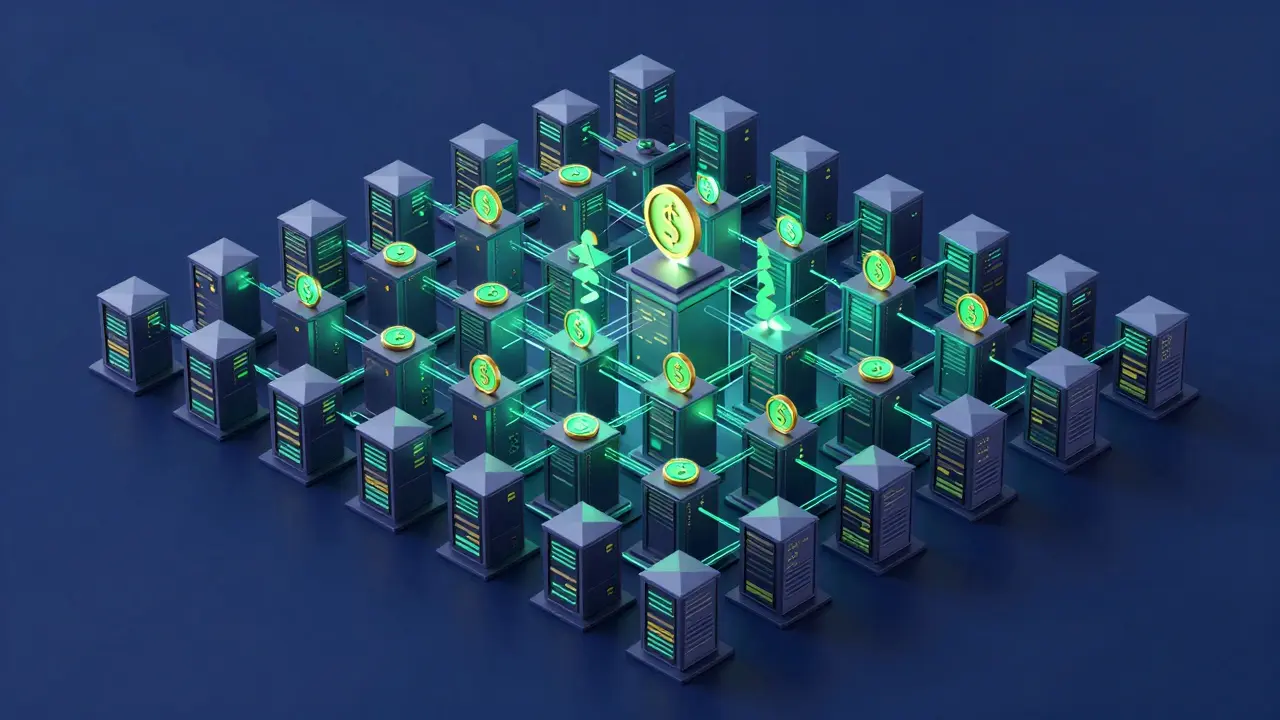
A whitepaper can sound good on paper, but hardware is hard to fake. HashAI has reported deploying over 500 physical GPU rigs. These aren't virtual representations; they are physical machines consuming electricity to solve cryptographic puzzles. Early reports indicate a successful beta test for their "Node" functionality. This allows future users to rent out compute power or stake tokens without owning the heavy machinery themselves.
The speed of growth so far offers some interesting signals. In the first week of operation alone, the system reportedly generated roughly $48,000 in mining revenue. Within a month, the liquidity pool swelled by nearly $1.9 million. While these figures should always be viewed with a critical eye regarding verification, they demonstrate significant capital inflow in the early stages. This rapid accumulation suggests there is genuine demand from retail traders looking for exposure to the AI-mining narrative.
Market Performance and Exchange Availability
Navigating the price discovery phase of a new token requires patience. Since its launch approximately a month prior to March 2026, the asset has shown typical high-volatility characteristics common in emerging crypto projects. Prices have varied significantly between centralized exchanges (CEX) like MEXC and decentralized platforms. Some traders see short-term gains of nearly 4% in a single day, while others track weekly declines closer to double digits. This choppy movement is normal for early-stage assets as the market seeks a fair valuation floor.
Liquidity is generally healthy for a new launch, with daily volumes crossing half a million dollars across major trackers. Access is also convenient for investors. You don't need to navigate complex wallet configurations to get started. Major platforms like MEXC offer spot trading and futures contracts. This flexibility means you can hold the asset long-term or hedge against price drops using derivatives, provided you understand the risks involved in leveraged positions.

Staking Mechanics and User Participation
Participating in the ecosystem isn't just about holding and hoping. The project introduced specific staking windows to reward loyalty. When you stake, you are essentially locking liquidity into the protocol. This helps stabilize the circulating supply during volatile periods. Rewards are distributed periodically based on the mining profits generated during the lock-up period.
Beyond basic staking, the roadmap hints at a "Hash & Node Rental" service. Imagine a scenario where you want to utilize computing power but don't want to buy $20,000 worth of graphics cards. You could potentially use HASHAI tokens to lease access to the project's existing rig fleet. This utility expands the token's use case beyond simple speculation into a functional tool for computational needs.
Risk Factors and Sustainability
No investment comes without risk. The primary concern here is the novelty of combining AI optimization with decentralized revenue sharing. If the AI fails to predict market trends correctly, mining efficiency drops, and payouts to stakers decrease. Furthermore, the cryptocurrency market is highly cyclical. Even the most efficient miners struggle when broader crypto prices crash, rendering certain coins unprofitable to mine regardless of algorithmic optimization.
Regulatory clarity around mining tokens remains a gray area globally. While Ethereum-based tokens benefit from established legal precedents compared to obscure proprietary chains, local laws regarding mining revenue distribution can vary wildly depending on where you reside. Always consult local financial regulations before committing significant capital to projects involving automated mining revenue.
Can I buy HashAI directly with USD?
Most crypto exchanges require you to trade from a crypto pair (like USDT or ETH) rather than direct fiat off-ramps. You typically buy stablecoins first, then swap them for HASHAI on the exchange platform.
What happens if the AI stops finding profitable coins?
If mining becomes unprofitable due to market conditions, the revenue share decreases proportionally. However, the core value remains in the technology and the hardware assets backing the project.
Is HashAI available on mobile wallets?
Yes, since HASHAI runs on the Ethereum blockchain, you can store it in any compatible EVM wallet such as MetaMask or Trust Wallet once transferred off an exchange.
Does HashAI support NFTs?
Currently, the focus is strictly on tokenomics and mining operations. There are no official NFT integrations announced as of early 2026.
How often are staking rewards paid out?
Rewards are typically distributed according to the chosen staking duration, either after 7, 14, or 30 days depending on your initial selection during the deposit process.
Zackary Hogeboom
March 29, 2026 AT 20:39Great find! Really digging the idea of AI picking the coins for us instead of manual labor. Could be huge if they actually deliver on the 500 rig promise. Looks like a lot of people are looking into stacking in already. The roadmap sounds promising for early adopters.
Addy Stearns
March 30, 2026 AT 00:15I have been contemplating the implications of automated trading strategies on individual investor psychology for quite some time now. The notion of surrendering decision-making authority to a distributed algorithm challenges the very essence of personal responsibility in finance. One might argue that this shift democratizes access to institutional grade tools previously reserved for hedge funds. However it simultaneously erodes the learning curve that traditionally builds resilience against market volatility. We are entering an era where execution speed supersedes strategic insight entirely. Whether this is progress or regression depends entirely on how we define success in wealth accumulation. The philosophical weight of outsourcing profit generation warrants serious consideration by any rational participant. We must evaluate if the loss of agency leads to greater systemic fragility in the long run.
Raymond K
March 30, 2026 AT 22:01i reallly love how thsi project is pushign the boundries of ai and blockcahin. its super cool to see teh hardere being used smartly instad of just brute force. hopefullly we see more prjects like this soon. good luck everyone!
Jamie Riddell
March 31, 2026 AT 09:15interesting read thanks for sharing the info seems like a solid plan even if the market is wild right now hopefully things calm down soon nice work on the guide
Lisa Walton
April 1, 2026 AT 11:37another AI scam wrapped in buzzwords typical of this garbage season
Shubham Maurya
April 2, 2026 AT 23:54hey you sound so wrong lol the charts show gains 💰🚀 why do u care man just invest dont listen to hate 😒😂
Callis MacEwan
April 3, 2026 AT 06:05The narrative around yield optimization via neural net integration is fundamentally flawed without proof of decentralised audit trails. Smart contracts on ETH cannot verify off-chain hardware states without oracle bloat. This tokenomics model suffers from infinite inflation risks inherent in staking rewards disconnected from actual deflationary burns. You're ignoring the halving event implications on profitability.
Michael Nadeau
April 3, 2026 AT 14:32The fundamental nature of artificial intelligence interacting with financial markets represents a paradigm shift that we have rarely witnessed in history. When algorithms begin to dictate value rather than human consensus we enter a realm of philosophical uncertainty regarding what constitutes truth in economics. The machine does not feel greed or fear in the way a traditional trader might experience these emotions during a crash. Yet the system described relies heavily on the accuracy of external data feeds which creates a dependency vulnerability. If the input data is compromised then the entire output strategy collapses into chaos regardless of computational power. We must consider whether delegating financial sovereignty to code is ethically sound for society at large. History teaches us that centralization often creeps into systems claiming to be decentralized eventually. This project claims to be open but the control of fifty mining rigs suggests otherwise. Power inevitably concentrates in the hands of those who maintain the hardware infrastructure required for operation. It becomes difficult to determine if users are merely renting a service disguised as ownership of a digital asset in this scenario. The question remains deeply relevant as we move further into the digital age. Trust is becoming a scarce resource in an environment where transparency is sold as a feature. One must wonder if the sustainability of such models extends beyond the initial hype cycle of the current market boom. Without true decentralization the network remains vulnerable to regulatory seizure of physical nodes abroad. The philosophical implication of valuing an asset based on predictive capability rather than intrinsic utility is profound indeed.
Leah Lara
April 4, 2026 AT 10:55sounds like another rug pull waiting to happen
Disha Patil
April 5, 2026 AT 02:55i cant believe people trust these guys so easily. my heart hurts knowing so many lose money. please be careful friends. it feels dangerous out here today.
Chris R
April 5, 2026 AT 21:06The data presented here is quite fascinating regarding the GPU deployment. I appreciate the detailed breakdown of the tokenomics. It is always encouraging to see tangible infrastructure in crypto projects. Safety first though. We must remain cautious.
Alex Kuzmenko
April 7, 2026 AT 20:34i think its safe enough if u do ur reseach but dont put everything in one basket tho. looks interesting to me personally
Markus Church
April 8, 2026 AT 19:09The technical specifications regarding the Layer 1 blockchain evaluation protocols appear robust. However, further empirical evidence regarding the energy efficiency claims would be beneficial. I intend to monitor the quarterly reports closely before making any decisions. Thank you for the compilation.
Tiffany Selchow
April 10, 2026 AT 11:41american ingenuity never dies but these foreign exchanges are shady. buy what works here or go back to your home currency. crypto is supposed to be for us patriots.
Cara Boyer
April 12, 2026 AT 09:59Thiss cannot be trusteed because the deep state controls the algoirthims. They want us to fail in order to collapase our economy. Be verry carrefull with these new tokens.
Katrina Tate
April 14, 2026 AT 05:05Token distribution metrics indicate high concentration risk among early wallets. Staking incentives are unsustainable without constant price appreciation. Liquidity fragmentation suggests manipulation potential on lower tier venues. Proceed with caution.