
What is ChainOpera AI (COAI)? A Deep Dive into the Crypto AGI Protocol

Imagine a world where artificial intelligence isn't controlled by a single tech giant but is built, owned, and operated by a global community. That is the promise behind ChainOpera AI, also known as COAI. It is not just another cryptocurrency; it is a Layer 1 blockchain protocol designed to create what its founders call "crypto AGI"-a collectively built and owned artificial general intelligence system.
If you have been watching the intersection of blockchain and AI, you might have seen the ticker symbol COAI. But what exactly does it do? How does it work? And why did its price swing so dramatically in late 2025? This guide breaks down the technology, the ecosystem, and the market reality of ChainOpera AI as we move through mid-2026.
The Core Concept: Crypto AGI and Decentralized Intelligence
Most AI models today are centralized. Big companies train them on proprietary data and sell access to them. ChainOpera AI flips this model. It aims to create a decentralized network where AI agents and models are co-created and co-owned by the community. The central entity here is the concept of Crypto AGI, which suggests an artificial intelligence that grows organically as more users, developers, and compute resources join the network.
The platform integrates three major technologies: blockchain for transparency and ownership, federated AI operating systems for secure collaboration, and decentralized platforms for data sovereignty. In simple terms, it allows anyone to contribute data or computing power to train AI models, and get rewarded fairly for their contribution. This shifts the power dynamic from corporate servers to individual participants.
Ecosystem Architecture: The Four Pillars of ChainOpera AI
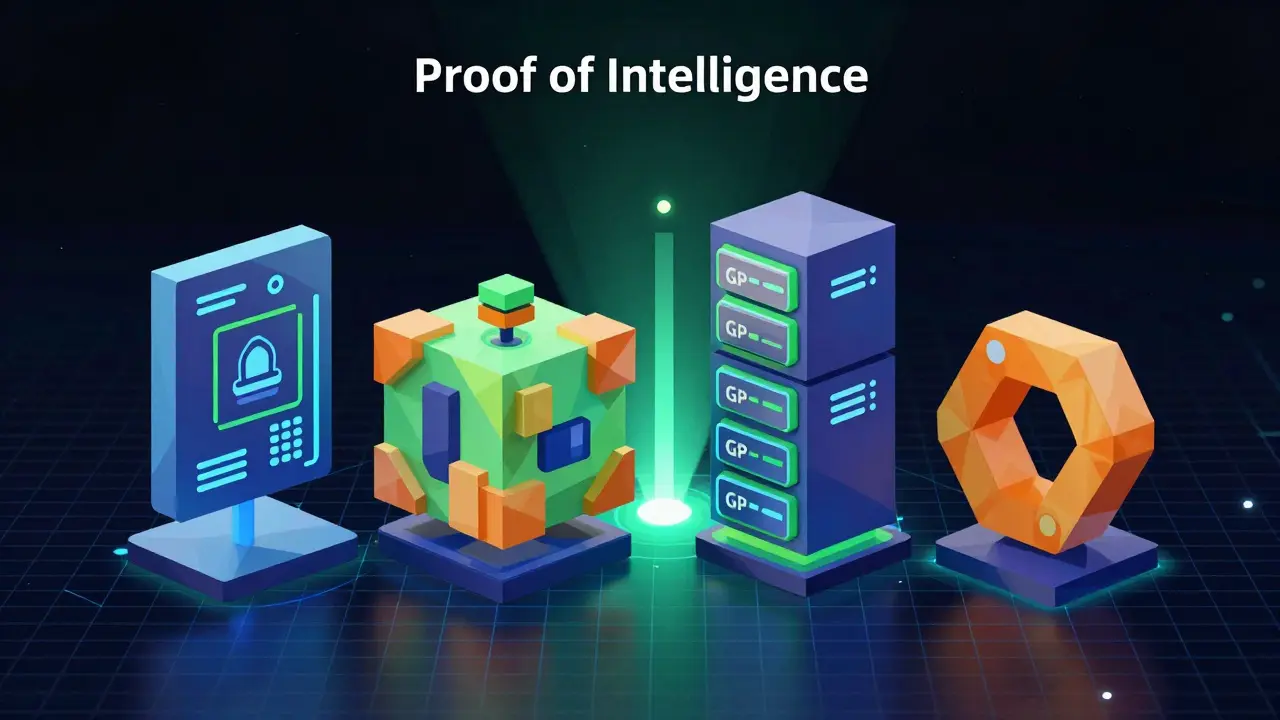
To understand how ChainOpera AI functions, you need to look at its four main components. These pillars support the entire decentralized AI economy.
- The AI Terminal Super App: Think of this as your gateway to the ecosystem. It is a decentralized application (dApp) that has reportedly attracted over 2 million users. Inside this terminal, a "Super Agent" coordinates specialized AI bots to handle complex tasks. You can chat with these agents in a shared social environment, blending human interaction with machine efficiency.
- Developer Platform: This toolset allows developers to build new AI agents within the ChainOpera network. If you have code that solves a specific problem, you can package it as an agent and deploy it on the chain.
- Decentralized Model and GPU Platform: Training AI requires massive computing power. This component acts as a marketplace. It routes training and inference tasks across various devices and cloud providers. Instead of renting one expensive server, the network taps into distributed resources, making performance scalable and verifiable.
- AI-Native Blockchain Protocol: This is the backbone. It uses a unique consensus mechanism called Proof of Intelligence. Unlike traditional Proof of Work or Stake, this measures the actual value and quality of contributions made by users, developers, and resource providers. It records interactions between agents, data sources, and compute nodes to ensure reliability.
| Component | Function | Key Feature |
|---|---|---|
| AI Terminal | User Interface & Gateway | Super Agent coordination |
| Dev Platform | Agent Creation | Open-source agent building |
| GPU Marketplace | Compute Resource Routing | Distributed training tasks |
| Blockchain Protocol | Consensus & Validation | Proof of Intelligence |
Tokenomics and Market Reality in 2026
Let’s talk numbers, because they tell a stark story. As of April 2026, the COAI token trades around $0.28 USD. The circulating supply sits between 188 million and 196 million tokens, with a hard cap of 1 billion. This gives it a market capitalization hovering near $52-$55 million.
However, the most striking data point is the historical context. On October 11-12, 2025, COAI hit an all-time high (ATH) of $38.45. Comparing that peak to the current price of ~$0.28 reveals a decline of approximately 99.3%. For any investor, this volatility is extreme. It suggests either a speculative bubble burst during the late 2025 AI hype cycle or significant fundamental shifts in market sentiment.
Daily trading volume ranges from $3.9 million to $6 million, indicating active but niche interest. The token is traded on platforms like Coinbase, Crypto.com, and listed on aggregators like CoinGecko and TradingView. Notably, it is not listed on Binance, which may limit liquidity for some traders.

Use Cases: Beyond Speculation
Why would someone use ChainOpera AI besides buying the token? The architecture supports several practical applications:
- Decentralized Finance (DeFi): AI agents can automate trading strategies, risk assessment, and portfolio management within DeFi protocols, using the transparent ledger for auditability.
- Real-World Asset (RWA) Tokenization: The platform can verify and manage digital twins of physical assets, ensuring data integrity through the Proof of Intelligence mechanism.
- Payment Systems: As AI agents perform services, they need a medium of exchange. COAI facilitates microtransactions between humans and agents, or between agents themselves.
The long-term goal is to lower barriers for mainstream adoption. By making AI tools accessible via a decentralized terminal, users don’t need to rely on big-tech subscriptions. They pay with crypto, keep their data sovereign, and benefit from a network effect that improves the AI for everyone.
Risks and Limitations to Consider
No investment is without risk, and ChainOpera AI has notable gaps in public information. While the technical vision is ambitious, detailed data on the founding team’s background, specific security audit results, and regulatory compliance status is scarce. There are few independent expert reviews or extensive community feedback loops visible on major forums like Reddit compared to more established projects.
The massive price drop from $38 to $0.28 is a red flag for many. It indicates high susceptibility to market sentiment rather than steady utility-driven growth. Additionally, the complexity of "Proof of Intelligence" is still unproven at scale. Can it truly measure the quality of AI contributions better than traditional metrics? Time will tell.
If you are considering interacting with ChainOpera AI, approach it as a high-risk, high-potential venture in the nascent field of decentralized AI. Do your own research, check the latest whitepaper updates, and monitor development activity closely before committing funds.
What is the current price of ChainOpera AI (COAI)?
As of mid-2026, COAI trades approximately between $0.27 and $0.29 USD. Prices fluctuate daily based on trading volume and market sentiment.
Is ChainOpera AI a good investment?
Investing in COAI carries significant risk due to its extreme volatility, including a 99% drop from its 2025 all-time high. It is considered a high-risk asset suitable only for those who understand decentralized AI markets and can tolerate large losses.
What is Proof of Intelligence?
Proof of Intelligence is ChainOpera AI's consensus mechanism. It validates and rewards participants based on the quality and impact of their AI contributions, such as data, compute power, or agent performance, rather than just computational work or stake size.
Can I buy COAI on Binance?
No, ChainOpera AI is not currently listed on Binance. However, it is available on other exchanges like Coinbase, Crypto.com, and various decentralized platforms.
What is the maximum supply of COAI tokens?
The maximum supply of ChainOpera AI tokens is capped at 1 billion COAI. Currently, roughly 188 to 196 million tokens are in circulation.