
What Does HODL Mean in Cryptocurrency? The Full Story Behind the Meme That Changed Investing
Back in 2013, a guy named GameKyuubi typed a drunken post on BitcoinTalk that accidentally changed how millions of people think about money. He meant to write "I am holding" - but he typed "I AM HODLING." He didn’t fix it. No one expected it to stick. But it did. And now, HODL is one of the most powerful words in cryptocurrency.
Where HODL Actually Came From
It wasn’t a smart investment tip. It wasn’t a strategy written by a finance expert. It was a typo. A drunk typo, made on December 18, 2013, during a Bitcoin price crash. Bitcoin had dropped from $13 to $9 in a few days. GameKyuubi, frustrated and probably a little tipsy, posted: "I AM HODLING. I HAVE BEEN HODLING SINCE THE BEGINNING." He went on to say he wouldn’t sell, no matter how low the price fell. The post was full of bad grammar, all caps, and typos. But something about it clicked. People started copying it. Then they started laughing about it. Then they started using it seriously. Within months, "HODL" became a battle cry for anyone who refused to panic-sell during a crash. The misspelling stuck because it was simple, memorable, and rebellious - the perfect meme for a new kind of money. Later, the crypto community gave it a backronym: "Hold On for Dear Life." That phrase fits. Because holding through a crypto crash isn’t just a strategy - it’s a mental test.What HODLing Actually Means
HODL isn’t just about buying crypto and forgetting about it. It’s about making a conscious decision to ignore short-term price swings and believe in the long-term value of what you own. You buy Bitcoin, Ethereum, or another coin. You put it in your own wallet - not on an exchange. And then you do nothing. Not for weeks. Not for months. Not for years. You don’t check the price every hour. You don’t sell when it drops 20%. You don’t buy more when it spikes 30%. You don’t chase the next hot altcoin. You just hold. And you trust that, over time, the asset will grow in value. This is the opposite of day trading. Day traders watch charts all day, use technical indicators, and try to profit from tiny price moves. HODLers don’t care about those moves. They care about the big picture. They believe Bitcoin, for example, will be worth more in 5, 10, or 20 years - not because it’s trendy, but because it’s scarce, decentralized, and growing in use.Why HODL Works - And Why It Doesn’t
HODL has delivered incredible returns for Bitcoin. If you bought $1,000 worth of Bitcoin in January 2017, when it was around $1,000 per coin, and held until its peak in November 2021, you’d have over $200,000. That’s a 20,000% return. Even if you bought at the top of that rally and held through the 2022 crash, where Bitcoin fell 75%, you’d still be up over 100% by late 2023. But here’s the catch: HODL only works if you hold the right things. Bitcoin has proven itself over time. Ethereum has too. But thousands of other coins have vanished. Cardano, for example, hit $3 in September 2021. By April 2022, it was below $0.40. If you HODLed Cardano through that crash, you lost 87%. And it still hasn’t recovered to its high. That’s why experts warn against blind HODLing. You need to understand what you’re holding. Is it a real project with users and development? Or is it a meme coin with no utility? HODLing Bitcoin is different from HODLing Dogecoin. One has institutional backing, a fixed supply, and growing adoption. The other? It’s a joke with a price tag.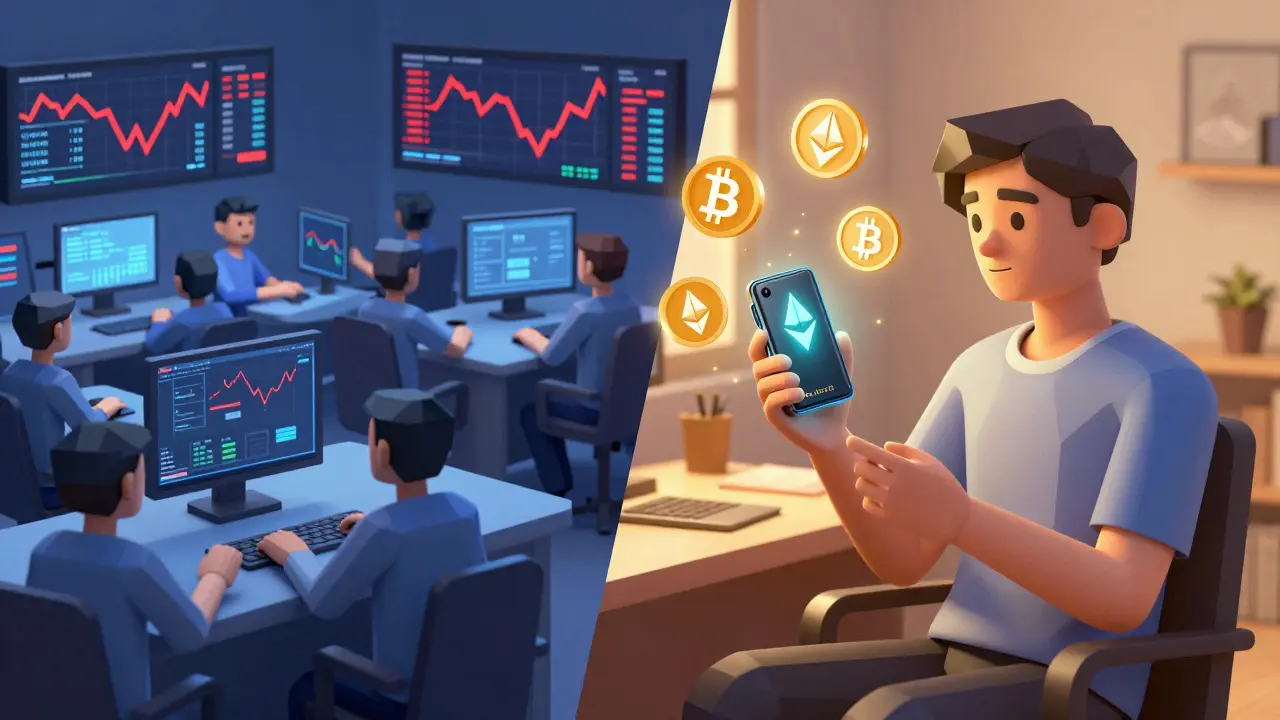
The Psychology of HODLing
The hardest part of HODLing isn’t the tech. It’s your brain. Crypto moves fast. One day, you see a tweet that says "Bitcoin will hit $100,000 next week!" The next day, you wake up to a 15% drop. Your phone buzzes with alerts. Your friends ask if you’re selling. You start doubting yourself. That’s when "diamond hands" and "paper hands" come in. Diamond hands are the people who hold through the worst crashes. Paper hands are the ones who sell at the bottom. A 2023 Twitter poll of over 15,000 crypto investors showed 57% had diamond hands - they held through the 2022 bear market. The rest? They sold, often at a loss. A 2023 survey by CryptoCompare found that 63% of long-term holders felt severe anxiety during market drops over 50%. But 78% of those who stuck it out said it was worth it. The pain is real. The reward? Sometimes life-changing.How to Start HODLing
You don’t need to be a tech expert. You don’t need to know how blockchain works. You just need to do three things:- Buy a cryptocurrency you believe in - Bitcoin is the safest starting point.
- Transfer it to your own wallet (not an exchange). Use a hardware wallet like Ledger or Trezor, or a trusted software wallet like BlueWallet or Exodus.
- Ignore the price. Seriously. Don’t check it daily. Set a reminder to review your portfolio once a year.
HODL vs. Other Strategies
HODL isn’t the only way to invest in crypto. Here’s how it compares:- Day Trading: You buy and sell daily. You need skills, time, and nerves. Studies show 90% of day traders lose money over time.
- Staking: You lock up your crypto to help secure a network and earn rewards (3-15% per year). It’s passive income, but you risk losing funds if the project fails.
- Yield Farming: You lend crypto to DeFi platforms for high returns. High risk. High chance of losing everything.
- HODL: Zero daily effort. No complex tools. Just patience. Lower returns than staking in the short term, but far less risk if you pick the right asset.
Real Stories: Success and Regret
One Reddit user, "LongTermHodler87," bought 5 Bitcoin in 2012 for $100 each. In 2023, those coins were worth over $250,000. He said the journey was "emotionally brutal" - he watched his investment drop 80% twice - but he never sold. Another user on Coinbase wrote in 2022: "I held through the 2018 crash. My $20,000 dropped to $4,000. I panicked. Sold. Missed the next 5x rally. Still kicking myself." The difference? Discipline. The ones who win don’t have better info. They just don’t panic.Is HODL Still Relevant in 2025?
Yes - but it’s changing. More institutions are HODLing. BlackRock filed for a Bitcoin ETF in 2023. Grayscale held over $28 billion in Bitcoin at its peak. MicroStrategy owns over 214,000 Bitcoin. These aren’t speculators. They’re treasury managers treating Bitcoin like digital gold. Regulators are also shaping HODL. The IRS treats crypto as property. If you hold for over a year, you pay lower capital gains tax. That makes HODLing not just a belief - it’s a smart tax move. But here’s the warning: The crypto market is no longer just a wild frontier. It’s becoming regulated, institutional, and complex. Blind HODLing - buying any coin because "everyone else is" - is more dangerous than ever. The coins that survive will be the ones with real use, strong teams, and adoption. HODL isn’t dead. But it’s evolved. The new HODL isn’t just "buy and forget." It’s "buy the right thing, then forget - but only if you know why you bought it."Final Thought: HODL Is a Mindset, Not a Trick
HODL didn’t become a global phenomenon because it’s a financial formula. It became one because it’s a human story. It’s about resisting fear. It’s about trusting your own judgment when everyone else is panicking. It’s about having the patience to wait for something big - even when the world tells you it’s nonsense. If you’re thinking about HODLing, ask yourself: Do you believe in this asset? Or are you just scared of missing out? If it’s the latter, don’t buy. If it’s the former - and you can handle the ride - then hold on. For dear life.Is HODL still a good strategy in 2025?
Yes, but only if you’re holding Bitcoin or other well-established cryptocurrencies with strong fundamentals. HODLing works best for assets with limited supply, growing adoption, and institutional support. Blindly holding random altcoins is risky - many have no real use and could drop to zero. The strategy isn’t dead, but it requires smarter selection now than in 2017.
Do I need to be tech-savvy to HODL?
No. You don’t need to understand blockchain, smart contracts, or wallets. All you need is to buy crypto on a trusted exchange, transfer it to your own wallet (like Ledger or Exodus), and then ignore the price. The hardest part isn’t technical - it’s emotional. Staying calm when prices crash is the real challenge.
Can I HODL on an exchange?
You can, but you shouldn’t. Exchanges can be hacked, frozen, or shut down. If you HODL on Coinbase or Binance, you don’t actually own your crypto - the exchange does. For true HODLing, move your coins to a personal wallet where you control the private keys. It’s safer, and it’s the only way to truly "hold" your assets.
How long should I HODL crypto?
At least 3-5 years. Crypto markets move in cycles that last 4-7 years. If you sell too early, you might miss the biggest gains. Most successful HODLers hold through at least one full bull and bear cycle. Some hold for decades. The longer you hold Bitcoin, the more likely you are to see strong returns - if you pick the right asset.
What’s the difference between HODL and staking?
HODL means you hold your crypto and wait for price appreciation. Staking means you lock your crypto to help run a blockchain network and earn rewards (usually 3-15% per year). Staking gives you income while you hold, but it’s riskier - if the network fails or the project collapses, you could lose your stake. HODL is simpler and safer if you’re not sure about the tech.
Is HODLing Bitcoin better than investing in stocks?
It depends on your goals. Bitcoin has delivered higher returns than most stocks over the last 10 years, but it’s far more volatile. Stocks are more stable and regulated. HODLing Bitcoin is a bet on digital scarcity and decentralization. Investing in stocks is a bet on companies and economies. Many people do both. HODLing Bitcoin isn’t a replacement for a diversified portfolio - it’s a high-risk, high-reward addition to it.
What happens if I forget my wallet password?
If you lose your private key or password and don’t have a backup, your crypto is gone forever. No one can recover it - not the exchange, not the wallet maker, not the government. An estimated 3.8 million Bitcoin (worth over $76 billion) are already lost this way. That’s why writing down your recovery phrase on paper and storing it safely is more important than buying the crypto in the first place.
Patricia Amarante
December 17, 2025 AT 04:57Just bought my first 0.05 BTC last week. Took me 3 years to work up the courage. Still check the price like a nervous habit, but I’m trying to HODL. Diamond hands, baby 💪
Mark Cook
December 18, 2025 AT 14:03HODL is just a scam for people who can’t trade. 🤡 The market’s rigged. You think Elon’s not manipulating it? Wake up.
Sean Kerr
December 18, 2025 AT 19:38bro you said it right!! 🤝 i used to panic sell every time it dipped 10%... then i read this post and moved my coins to my ledger. now i dont even open my wallet for months. life changed. diamond hands forever!! 💎🙌
Madhavi Shyam
December 20, 2025 AT 09:26Unless you’re staking on a PoS chain with yield, you’re leaving money on the table. HODL is passive, but suboptimal. You need DeFi exposure to truly maximize alpha.
George Cheetham
December 21, 2025 AT 16:31HODL isn’t about money. It’s about resisting the noise of a world that tells you to consume, chase, and panic. It’s a quiet rebellion. The real asset isn’t Bitcoin-it’s your discipline.
Shruti Sinha
December 21, 2025 AT 19:34Interesting how the term originated from a typo. Language evolves through error, and this is a perfect example of organic cultural adoption in digital spaces.
Dionne Wilkinson
December 23, 2025 AT 05:18I remember buying Dogecoin in 2021 because it had a dog picture. I lost everything. Now I only hold Bitcoin. Sometimes the dumbest thing you do is the lesson you need.
Rebecca Kotnik
December 24, 2025 AT 23:49The psychological dimension of HODLing cannot be overstated. Behavioral economics demonstrates that loss aversion is a deeply rooted cognitive bias, and the volatility of cryptocurrency markets amplifies this effect to extreme levels. The fact that 78% of long-term holders report satisfaction despite severe anxiety indicates a profound alignment between personal values and financial behavior. This is not investing-it is identity formation.
Greg Knapp
December 25, 2025 AT 12:33They say HODL is about patience but really it’s about being too scared to sell. I sold at 15k. Now I see it at 60k and I’m just sitting here like a dummy. My therapist says I have crypto trauma. I think she’s right
Emma Sherwood
December 26, 2025 AT 16:22In India, we call this "dheere dheere"-slow and steady. My grandmother used to say the same thing about saving rupees. HODL isn’t crypto magic. It’s just wisdom wrapped in internet slang.
Heather Turnbow
December 27, 2025 AT 19:24It is imperative to note that the transfer of cryptocurrency assets to a non-custodial wallet constitutes a critical fiduciary act. Failure to maintain secure access to private keys may result in irreversible loss, as evidenced by the estimated 3.8 million Bitcoin currently inaccessible. This is not merely a technical consideration-it is a matter of personal responsibility.
Sammy Tam
December 29, 2025 AT 11:51Remember when HODL was just a meme? Now it’s in textbooks. The crypto community turned a drunken typo into a philosophy. That’s the power of internet culture. We didn’t just coin a word-we built a movement.
Terrance Alan
December 31, 2025 AT 03:36HODL is a cult. The government knows Bitcoin will kill the dollar so they’re letting it rise to trap more suckers. When they crack down, your coins vanish. You think the IRS cares about your "diamond hands"? They’ll freeze everything. Wake up.
Abby Daguindal
January 1, 2026 AT 23:27Most people who HODL don’t even know what blockchain is. That’s not a strength-it’s a liability. You can’t believe in something you don’t understand. This is why so many get wiped out.
Kayla Murphy
January 2, 2026 AT 03:31You got this. Every time you resist selling, you’re building something stronger than money-you’re building character. Keep going. You’re not alone.
Jesse Messiah
January 3, 2026 AT 17:01bro i was right there with you. i sold at 18k. cried for a week. then i bought back at 32k. now i just set a calendar alert for once a year. peace is everything. you’re doing great 😊
Cheyenne Cotter
January 5, 2026 AT 07:07Look, I’ve been in crypto since 2015. I’ve seen every cycle. I’ve watched people HODL Dogecoin, Shiba Inu, Luna, Pepe, and a dozen other joke coins that went to zero. The problem isn’t HODLing-it’s HODLing the wrong thing. Bitcoin has proven itself. Ethereum has too. The rest? They’re gambling chips with a blockchain logo. Don’t confuse conviction with delusion. The market doesn’t reward hope. It rewards fundamentals. If you don’t know what you’re holding, you’re not HODLing-you’re just hoping.
Craig Nikonov
January 6, 2026 AT 04:58They say Bitcoin is digital gold but they’re lying. It’s a weapon. The Fed hates it. The banks fear it. That’s why they’re pushing CBDCs. HODLing isn’t investing-it’s resisting the new financial slavery. You think the government wants you to own something they can’t track or control? No. So they’ll tax you, regulate you, ban you. But you? You’ll still HODL. Because you know the truth. And they can’t take that.
Sue Bumgarner
January 7, 2026 AT 18:30HODL is a liberal scam. In America we don’t just sit around waiting-we build. We innovate. We trade. This HODL nonsense is for people who don’t want to work. Real Americans make moves, not memes.
Jesse Messiah
January 8, 2026 AT 18:23hey i just wanted to say thank you for saying that. i was scared to even say this out loud but i started HODLing after losing my job last year. it’s not about the money anymore. it’s about believing in something that no one else gets. and honestly? that’s kinda beautiful.