
What Are Validator Nodes in Blockchain: A Complete Guide to PoS Security
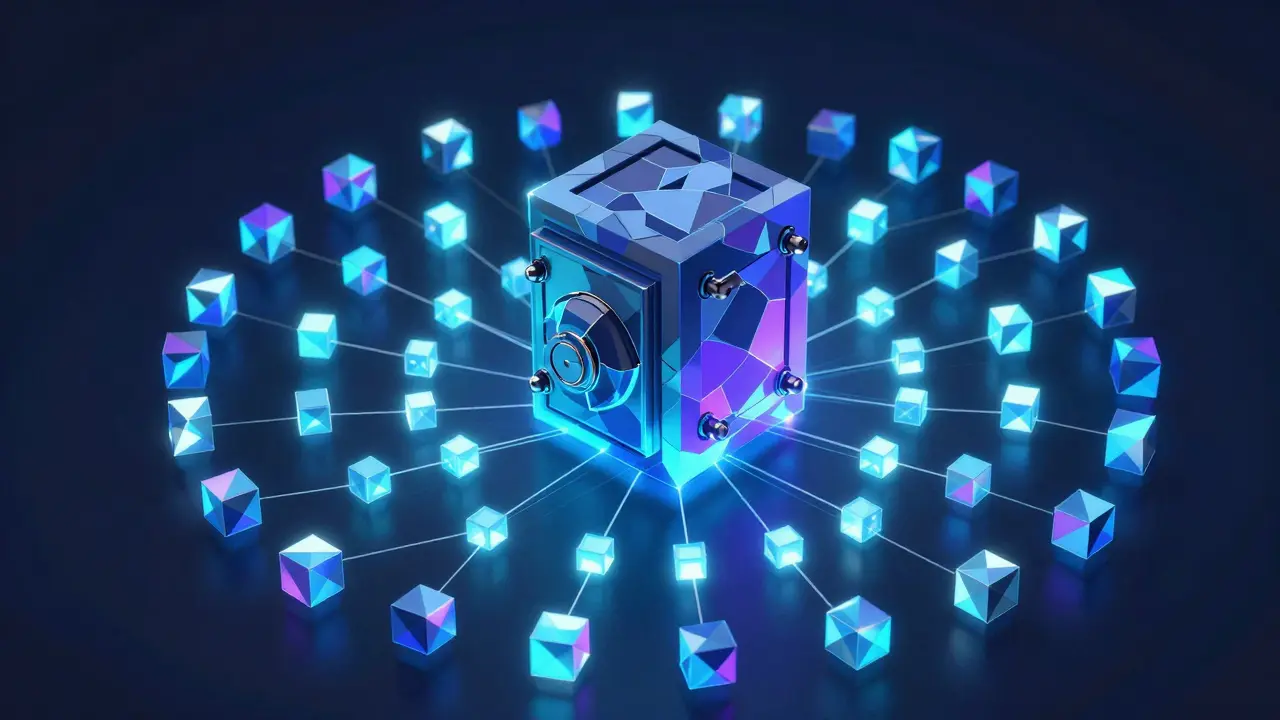
Imagine a bank where no single person holds the keys to the vault. Instead, thousands of people hold pieces of the puzzle, and they all have to agree on every transaction before it gets recorded. That is essentially how modern blockchain networks operate, and Validator Nodes are the people-or rather, the computers-holding those puzzle pieces.
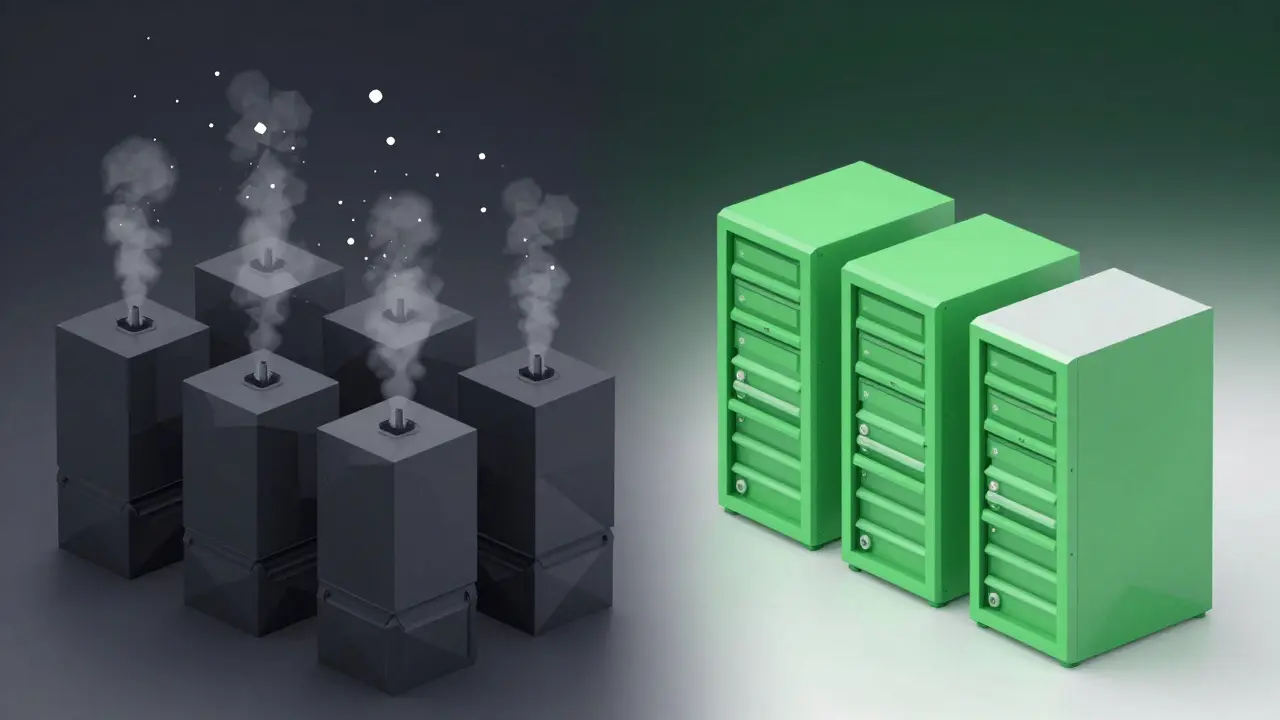
If you have heard about Bitcoin mining, you might be wondering why we are talking about validators instead of miners. The short answer is efficiency. As blockchain technology evolved, the industry moved away from energy-hungry mining rigs toward more sustainable systems. Validator nodes are the backbone of this new era, specifically within Proof-of-Stake (PoS) networks. They verify transactions, secure the network, and ensure that no one cheats the system, all without burning through electricity like old-school miners did.
How Validator Nodes Actually Work
To understand what a validator does, you need to look at the four main jobs they handle every second. It isn’t just about sitting there waiting for data; it is an active process of verification and agreement.
- Transaction Validation: When you send crypto, a validator checks your digital signature. They make sure you actually own the funds and that the transaction follows the network’s strict rules. If the math doesn’t add up, the transaction gets rejected.
- Block Creation: Validators group valid transactions together into blocks. Think of it like packing boxes for shipping. Once a box is full, the validator proposes this block to the rest of the network.
- Consensus Participation: This is the most critical step. Other validators review the proposed block. If they agree it is valid, they sign off on it. This collective agreement is called consensus. Without it, the blockchain would be just a list of unverified claims.
- Network Security: By constantly verifying and agreeing on the state of the ledger, validators prevent double-spending. You cannot spend the same coin twice because the network of validators has already agreed on where that coin lives.
This process ensures that the blockchain remains immutable. Once a block is added and confirmed by enough validators, changing it becomes computationally impossible. This is what gives digital assets their value and trustworthiness.
Validators vs. Miners: The Big Shift
You might be familiar with Proof-of-Work (PoW), the system used by Bitcoin. In PoW, miners compete to solve complex mathematical puzzles using powerful hardware. The first one to solve it gets to add the next block and earns a reward. This process consumes massive amounts of electricity.
Proof-of-Stake (PoS) changes the game entirely. Instead of competing with computing power, validators are selected based on how much cryptocurrency they have locked up as a deposit. This is known as staking. Here is how they compare:
| Feature | Miners (PoW) | Validators (PoS) |
|---|---|---|
| Selection Method | Computing power race | Token stake amount |
| Energy Consumption | Very High | Low |
| Hardware Requirements | Specialized ASICs/GPUs | Standard Server Hardware |
| Risk Factor | Electricity costs | Slashing (loss of stake) |
| Environmental Impact | Significant carbon footprint | Minimal |
The shift to validators was driven by the need for scalability and sustainability. Networks like Ethereum completed their transition to PoS in 2022, dramatically reducing energy usage while increasing transaction throughput. For the average user, this means faster confirmations and lower fees. For the environment, it means a significant reduction in the carbon footprint of the crypto industry.
The Role of Staking and Slashing
So, how do you become a validator? You don’t buy expensive graphics cards. Instead, you need tokens. Every PoS network has a minimum staking requirement. For example, on Ethereum, you need 32 ETH to run a solo validator node. On other networks like Solana or Cardano, the requirements differ but follow the same principle.
Staking acts as a skin-in-the-game guarantee. If a validator behaves honestly, they earn rewards in the form of new tokens or transaction fees. But if they act maliciously-say, trying to validate invalid transactions or going offline for too long-they face penalties.
This penalty system is called slashing. If a validator breaks the rules, a portion of their staked tokens is destroyed or confiscated. This creates a strong economic incentive to behave correctly. It aligns the interests of the validators with the health of the network. You want the network to succeed because your money is literally tied to its security.
Not everyone can afford to stake 32 ETH or meet high thresholds on other chains. This is where delegation comes in. Token holders can delegate their tokens to existing validators. In return, they share in the rewards. This allows smaller investors to participate in network security without running complex infrastructure themselves.
Requirements for Running a Validator Node
Running a validator is not a passive hobby. It requires technical knowledge and reliable infrastructure. Here is what you typically need to get started:
- Hardware: You don’t need supercomputers, but you do need a reliable server. Most validators use cloud servers or dedicated physical machines with decent RAM, CPU, and fast SSD storage. Uptime is crucial.
- Software: You must install the specific client software for the blockchain you are validating. This includes the execution layer client and the consensus layer client. Keeping these updated is vital for security.
- Connectivity: A stable, high-speed internet connection is non-negotiable. If your node disconnects during a block proposal, you could miss rewards or even face slashing depending on the network’s rules.
- Security Practices: Your private keys must be kept secure. Many validators use hardware security modules (HSMs) or cold storage solutions to protect their signing keys from hackers.
The learning curve can be steep. You need to understand Linux command lines, network configuration, and blockchain-specific protocols. However, many communities provide detailed guides and support forums to help newcomers navigate the setup process.

Why Decentralization Matters
The true power of blockchain lies in its decentralized nature. If only a few large entities controlled the validator nodes, the network would effectively become centralized again. We would be back to trusting banks or corporations.
Validator networks aim to distribute control across thousands of independent participants worldwide. This distribution makes the network resilient to attacks, censorship, and single points of failure. If one validator goes down or acts maliciously, the others continue to secure the chain.
However, there is a tension between security and decentralization. Large institutional players often run massive validator operations because they have the capital and expertise. This can lead to concentration of power among a few top validators. To counter this, some networks implement limits on how much stake a single validator can hold, or they encourage community-driven delegation to spread influence more evenly.
Projects like Radix Babylon Mainnet, for instance, limit the number of active validators to 100 at any given time, selected based on stake delegation. This approach tries to balance performance with fairness, ensuring that no single entity dominates the consensus process.
The Future of Validator Nodes
As blockchain adoption grows, the role of validators will continue to evolve. Liquid staking derivatives are becoming popular, allowing users to stake their tokens and receive a receipt token that can be used in other DeFi applications. This increases liquidity but also raises questions about centralization if a few large providers dominate the liquid staking market.
Additionally, cross-chain interoperability is pushing validators to secure multiple networks simultaneously. Shared security models are emerging, where a single set of validators secures several different blockchains. This improves efficiency but introduces new complexities in risk management.
Despite these changes, the core function remains the same. Validators are the guardians of truth in the digital world. They ensure that every transaction is legitimate, every block is valid, and the ledger remains intact. As we move further into the age of Web3, understanding how validators work is essential for anyone looking to participate in the decentralized economy.
Can I run a validator node on my home computer?
Technically yes, but it is not recommended for major networks like Ethereum. Home connections often lack the stability required, and power outages can lead to missed rewards or slashing. For serious participation, dedicated servers or cloud hosting with redundant power and internet connections are preferred.
What happens if a validator goes offline?
If a validator goes offline, they stop earning rewards. Depending on the network’s slashing conditions, prolonged downtime or malicious behavior can result in a partial loss of their staked tokens. Short-term issues usually just mean missed income, not penalties.
Is staking safer than keeping coins in a wallet?
It depends on how you stake. Self-staking requires managing private keys securely, which carries risk if you are not tech-savvy. Delegating to a reputable validator reduces technical risk but introduces counterparty risk. Always research validators thoroughly before delegating your tokens.
How much profit can I make from running a validator?
Profits vary widely based on the network, total staked supply, and your operational costs. Annual Percentage Yields (APY) can range from 3% to over 10%. Remember to subtract server costs, electricity, and potential slashing risks when calculating net returns.
Do all blockchains use validator nodes?
No. Only blockchains using Proof-of-Stake or similar consensus mechanisms use validators. Bitcoin and Litecoin still use Proof-of-Work with miners. Some newer networks experiment with hybrid models or Proof-of-History, but PoS is currently the dominant model for validator-based security.
Albert Lee
May 11, 2026 AT 19:20Wow this is actually incredibly helpful for someone like me who has been staring at terminal windows for three hours straight trying to get my beacon client to sync. I was so worried that I missed some crucial step about the hardware requirements but seeing that standard server specs are enough gives me a ton of relief. The part about slashing really hit home because I read somewhere that you can lose your entire stake if you act maliciously or even just go offline for too long depending on the network rules. It makes sense why security practices are so emphasized here especially with private keys being the linchpin of everything. I am definitely going to look into HSMs now because my current setup feels way too exposed to potential threats. Thank you for breaking down the difference between miners and validators it finally clicked in my head why PoS is considered more sustainable. The environmental impact angle is huge for me personally and knowing that Ethereum made this switch helps justify holding onto my tokens a bit longer. I hope more networks follow suit because the energy consumption of PoW was always a major turnoff for me. Running a node feels like such a meaningful contribution to the ecosystem rather than just gambling on price action. Keep up the great work with these guides they are exactly what the community needs right now.
Matt Davis
May 12, 2026 AT 07:58You are completely missing the point of decentralization here by pretending that institutional validators are not effectively centralizing the network again. This whole narrative about sustainability is just greenwashing designed to make retail investors feel good while big banks take over the consensus layer. Look at the table provided and tell me honestly if you think average users have any real power when compared to entities running thousands of nodes. The idea that staking is safer than keeping coins in a wallet is laughable given the counterparty risks involved with delegating to unknown operators. We are essentially trusting a few large providers to not collude or censor transactions which defeats the entire purpose of blockchain technology. Do not fall for this hype machine that claims validators are guardians of truth when they are often just profit-driven corporations optimizing for yield. The slashing mechanism is not a guarantee of honesty it is merely a financial deterrent that wealthy actors can easily absorb. You need to wake up and realize that this shift to PoS has only concentrated power further into the hands of the elite. The article fails to address how liquid staking derivatives create massive points of failure in the DeFi ecosystem. Stop pretending that everyone can run a validator when the barrier to entry is still prohibitively high for most people.
Michelle Bonahoom
May 12, 2026 AT 10:38another generic tech bro post trying to explain basic concepts that anyone with half a brain could figure out themselves. i dont care about your little puzzle piece analogy it sounds childish and unprofessional. the fact that you need 32 eth just to participate shows how broken this system truly is for regular americans. we should be focusing on domestic industries not some foreign crypto schemes that promise nothing but volatility. this whole proof of stake thing is just a way for insiders to rig the game without burning electricity. nobody asked for this guide and frankly it adds zero value to the conversation. keep dreaming about decentralized utopias while the rest of us deal with reality.
Ankush Pokarana
May 12, 2026 AT 17:28i think we need to look deeper into the philosophical implications of trustless systems and how validator nodes represent a shift in human cooperation models. the transition from proof of work to proof of stake is not merely technical but also ethical as it reduces the environmental burden on our planet which is a moral imperative for all participants. by locking up capital as a form of collateral we are creating a system where economic incentives align with honest behavior which is a beautiful concept in theory. however one must consider whether this alignment truly holds up under pressure or if it simply creates new forms of inequality among those who can afford to stake versus those who cannot. the role of delegation is fascinating because it allows for broader participation yet it introduces layers of dependency that were not present in the original mining model. perhaps we should view validators not just as computers but as stewards of digital integrity who bear a heavy responsibility. the idea that immutability is achieved through collective agreement resonates with democratic ideals where consensus is reached through dialogue and verification. we must ensure that this decentralization remains genuine and does not devolve into oligarchy controlled by a few large stakeholders. every transaction validated is a testament to the resilience of the network and the commitment of its participants. let us continue to explore these ideas with an open mind and a willingness to learn from each other.
Bianca Vilas Boas Lourenço
May 14, 2026 AT 09:46oh wow another day another blockchain tutorial 🙄 like do you guys ever stop talking about validators? i mean sure they verify transactions but do they really care about us little people? 😒 the whole concept of slashing sounds like a threat rather than a safety feature. why should i trust these random servers to keep my money safe? 🤔 maybe if they paid better rewards i would care less about the technical details. but no instead we get lectures on environmental impact and carbon footprints. spare me the guilt trip please 🌍💸
Yash Lodha
May 15, 2026 AT 16:10the true architects of this system are clearly planning to monitor every single transaction through these validator nodes under the guise of security. who do you think benefits from this centralized surveillance state disguised as decentralization? the government agencies are likely already tracking the ip addresses of all active validators to identify dissenters. your private keys are not safe because the software itself contains backdoors inserted by shadowy organizations. do not be fooled by the talk of efficiency and sustainability it is all a distraction from the loss of privacy. they want you to believe that staking is voluntary but once you lock your tokens you are trapped in their web. the slashing conditions are just excuses to confiscate assets from those who question the narrative. stay vigilant and remember that nothing in this digital world is truly anonymous anymore.
Jesse Alston
May 16, 2026 AT 22:23Great breakdown! 👏 I wanted to add a quick tip for anyone looking to start validating on Ethereum specifically. Make sure you check the official documentation for the latest client diversity recommendations. Running multiple clients helps prevent network-wide failures if one client has a bug. Also, consider using a monitoring tool like Grafana to keep an eye on your node’s performance metrics. It’s super helpful for catching issues before they lead to downtime or slashing. Don’t forget to set up alerts for disk space usage since logs can fill up quickly. Happy validating! 🚀
Sarah C
May 18, 2026 AT 13:40I appreciate the clear explanation of how validators work. It helps demystify the process for newcomers like myself. The section on hardware requirements was particularly useful as I was unsure about what specifications were needed. I plan to delegate my tokens to a reputable validator rather than running my own node due to the technical complexity. Thanks for sharing this information!
Kimberly Herbstritt
May 19, 2026 AT 01:42I disagree with the notion that PoS is inherently better than PoW. Bitcoin’s security model has stood the test of time and its energy consumption is often overstated when considering renewable sources. Validators introduce a new layer of complexity with slashing risks that miners never faced. Why fix something that isn’t broken?
Sharada Vakkund
May 20, 2026 AT 02:34This is a fantastic resource for understanding the mechanics of Proof-of-Stake networks. I love how it breaks down the four main jobs of a validator. It empowers individuals to participate in network security regardless of their technical background. Let’s support more educational content like this to foster a knowledgeable community.
Sudarshan Anbazhagan
May 22, 2026 AT 00:21it is imperative that one understands the profound implications of validator nodes in the context of modern cryptographic protocols. the shift from proof of work to proof of stake represents a paradigm change in how we conceptualize consensus mechanisms. one must consider the economic incentives carefully as they dictate the behavior of network participants. the risk of slashing serves as a critical deterrent against malicious activity thereby ensuring the integrity of the ledger. however the concentration of stake among a few entities poses a significant threat to decentralization. we must remain vigilant against centralization tendencies that undermine the foundational principles of blockchain technology. the hardware requirements may seem modest but the operational demands are substantial. connectivity stability is paramount for maintaining uptime and avoiding penalties. security practices cannot be overlooked as the protection of private keys is essential. the future of validator nodes lies in their ability to adapt to evolving threats and challenges.
Shelby Cantu
May 23, 2026 AT 12:34Love this guide! So clear and concise. I’m ready to start staking.
Bradley Geldenhuys
May 23, 2026 AT 21:13hey folks lets talk about the bigger picture here. validators arent just nodes they are the backbone of trust in a digital age. we gotta embrace this change even if it feels weird at first. the environment thanks us for moving away from those power hungry miners. sure there are risks like slashing but thats life in the wild west of crypto. we learn we grow we adapt. dont let fear stop you from participating. delegate if you cant run a node yourself. every bit of stake helps secure the network. together we build a stronger future. keep pushing forward and never stop learning.
Kiran CS
May 25, 2026 AT 09:19How utterly tedious. One would assume that the fundamental principles of distributed ledgers are common knowledge among the educated masses. Yet here we are reading elementary explanations of validator functions as if addressing children. The pretense of accessibility is insulting to those who have mastered these concepts. Your attempt at simplification strips away the nuance required for true understanding. Do not mistake brevity for clarity. The elitist nature of this discourse is palpable and off-putting.
Bijan Das
May 25, 2026 AT 22:50boring stuff. another article telling us how validators work. like we dont know already. the graphics cards mention is outdated nonsense. nobody cares about your little tables comparing miners and validators. just give me the alpha on which coin will pump next. this is useless information for anyone making money. waste of time.
Ashley Rodriguez
May 27, 2026 AT 01:16i found this article really interesting and it helped me understand why validators are important for the network. i had always wondered how transactions get verified without miners and now i see that it is all about staking tokens. the part about slashing was scary though because i did not realize that you could lose your money if you behave badly. it makes me think twice about delegating to just anyone. i want to make sure i choose a validator that is reliable and has a good track record. the hardware requirements seem manageable for most people which is good news. i might try running a small node on a raspberry pi just to see how it works. it seems like a fun project to learn more about blockchain technology. thanks for writing this guide it was easy to follow.
Bridget Coogle
May 27, 2026 AT 17:33great info! i love how this explains the benefits of pos for the environment. lets keep supporting sustainable tech. staying positive and informed is key.
Zara Zaman
May 28, 2026 AT 16:05This is all foreign nonsense imported by globalists to undermine our national sovereignty. American citizens should not be entrusting their finances to overseas validator nodes that answer to no one. We need domestic solutions built by Americans for Americans. The reliance on international blockchain infrastructure is a security risk that threatens our economic independence. Stop promoting these weak alternatives to traditional banking systems. Our country deserves better than this chaotic digital experiment.