
What Are Music NFTs? A Beginner's Guide to Digital Ownership

Imagine buying a song. Not just streaming it on Spotify or downloading an MP3 file that sits in your folder like any other copy. Imagine owning the actual digital token that proves you bought that specific track from the artist, directly, with no middlemen taking a cut forever. That is the core promise of Music NFTs. It sounds abstract, maybe even a bit confusing if you haven't dived deep into crypto yet. But at its heart, it’s about shifting power back to creators and giving fans a stake in their favorite artists' success.
You might have heard headlines about musicians selling single songs for millions or fans making fortunes by reselling early tickets. These stories are real, but they often miss the everyday utility. For most people, Music NFTs aren’t about getting rich quick; they’re about supporting artists in a way that actually puts money in their pockets immediately. Let’s break down what these tokens actually are, how they work, and why they matter more now than ever before.
The Core Concept: What Exactly Is a Music NFT?
To understand Music NFTs, you first need to grasp what an NFT is. Non-Fungible Token (NFT) is a unique digital certificate stored on a blockchain, which is essentially a shared, unchangeable public ledger. Unlike Bitcoin, where one coin is identical to another, each NFT has distinct identification codes that make it one-of-a-kind. When applied to music, this technology allows artists to sell unique versions of their audio files, videos, or albums as digital collectibles.
Think of it like owning an original painting versus a poster of that painting. Anyone can look at a print of the Mona Lisa, but only one person owns the original canvas hanging in the Louvre. In the digital world, copies are infinite and free. An NFT creates artificial scarcity. It attaches a verifiable proof of ownership to a specific digital file. When you buy a Music NFT, you aren’t necessarily buying exclusive listening rights-most platforms allow anyone to stream the track-but you are buying the verified receipt that says you own the original digital asset issued by the artist.
How Do They Actually Work?
The mechanics behind Music NFTs rely on smart contracts. These are self-executing contracts with the terms of the agreement directly written into code. Here is the typical lifecycle of a Music NFT:
- Minting: The artist uploads their audio file and metadata (title, artist name, release date) to a blockchain platform. This process is called "minting." It turns the digital file into a token.
- Purchasing: Fans use cryptocurrency (usually Ethereum or Solana) to buy the NFT through a marketplace like OpenSea, Rarible, or specialized music platforms like Audius or Sound.xyz.
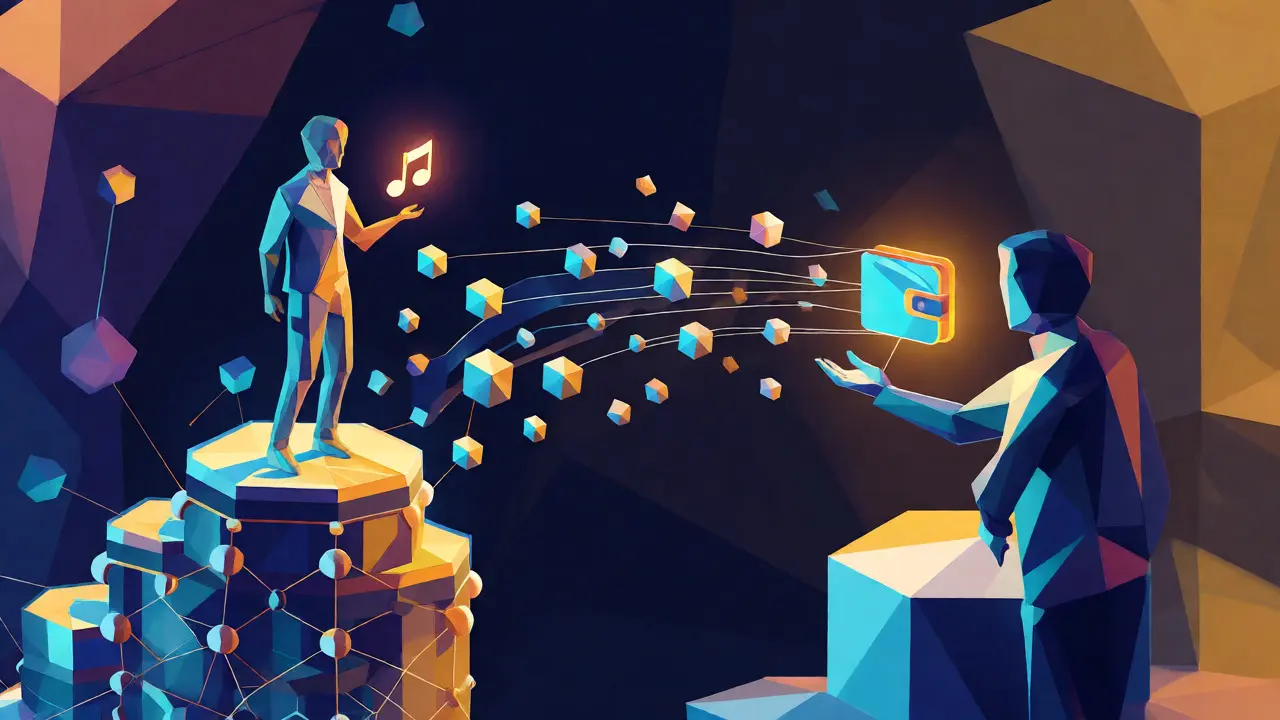
- Ownership Transfer: The blockchain records the transaction. The artist receives payment instantly, minus a small network fee. The fan receives the NFT in their digital wallet.
- Secondary Sales: If the fan decides to sell the NFT later, the smart contract can automatically send a percentage of the sale price back to the original artist. This is known as a royalty.
This royalty system is a game-changer. In traditional music sales, once you buy a vinyl record, the artist gets paid once. If you resell that vinyl ten years later for $500, the artist sees zero dollars. With Music NFTs, the smart contract ensures the artist gets paid every time the asset changes hands. This aligns the incentives of the collector and the creator perfectly.
Why Artists Love Them (And Why You Should Care)
The modern music industry is broken for many independent artists. Streaming services pay fractions of a cent per play. To earn a living wage, an artist needs millions of streams. Music NFTs bypass this volume-based model entirely. They allow artists to monetize their super-fans directly.
Consider the concept of patronage. Historically, patrons supported artists financially so they could create. Music NFTs digitize this relationship. By buying an NFT, you are funding the artist’s next project. Many platforms take this further by offering perks. Buying a Music NFT might get you access to private Discord channels, early album releases, merchandise discounts, or even voting rights on future creative decisions. It transforms passive listeners into active stakeholders.
| Feature | Traditional Streaming/Purchase | Music NFT Model |
|---|---|---|
| Ownership Proof | None (License to listen) | Verifiable Blockchain Record |
| Artist Revenue | Fractions of cents per stream | Direct sales + Secondary Royalties |
| Resale Value | Zero for artist on resale | Artist earns % on every resale |
| Community Access | Passive consumption | Active participation & perks |
Different Types of Music NFTs
Not all Music NFTs are just a single .mp3 file attached to a token. The creativity here is exploding. Here are the common formats you’ll encounter:
- Single Track NFTs: One song, one token. This is the most straightforward format.
- Album Collections: An entire album released as a set of NFTs. Sometimes, holding all tracks unlocks a bonus hidden track.
- Dynamic NFTs: These change based on external data. For example, a song’s visualizer might change color based on the current price of Bitcoin, or the lyrics might unlock different verses depending on the time of day.
- Utility NFTs: These act as tickets. Owning the NFT grants entry to a virtual concert, a meet-and-greet, or physical merchandise drops.
- Generative Music: Algorithms create unique audio pieces. Each buyer gets a slightly different version of the same composition, ensuring uniqueness without human intervention.
Getting Started: How to Buy Your First Music NFT
If you want to try this out, you don’t need to be a tech wizard. The barriers to entry have dropped significantly since 2021. Here is a simple checklist to get you going:
- Set up a Crypto Wallet: Download a browser extension wallet like MetaMask or Phantom. This acts as your bank account for digital assets.
- Fund Your Wallet: Buy some cryptocurrency. Ethereum (ETH) is the most common for high-value art, while Solana (SOL) is cheaper and faster for smaller transactions. Use an exchange like Coinbase or Binance to buy crypto and transfer it to your wallet.
- Choose a Marketplace: Go to a platform like OpenSea, Rarible, or a niche site like Sound.xyz. Connect your wallet to the site.
- Browse and Buy: Search for artists you already love. Check the details: does it include royalties? What are the perks? Click "Buy Now" or place a bid.
- Listen: Most marketplaces have built-in players. Alternatively, you can download the audio file linked in the metadata to your local device.
Be aware of gas fees. These are transaction costs paid to the blockchain network. On Ethereum, these can sometimes be higher than the cost of the NFT itself during busy periods. Solana and Layer-2 solutions like Polygon offer much lower fees, making them better for smaller purchases.
Risks and Realities
It’s not all sunshine and high-fives. The space is volatile. Prices can swing wildly based on hype rather than intrinsic value. Just because an NFT sold for $10,000 yesterday doesn’t mean it will sell for $10,000 tomorrow. Liquidity can also be an issue. If you buy a rare NFT, finding a buyer quickly might be hard unless the artist becomes mainstream.
There is also the environmental concern. Blockchains consume energy. However, major networks like Ethereum moved to a "Proof-of-Stake" mechanism in 2022, reducing energy consumption by over 99%. Still, if eco-friendliness is your top priority, look for projects on carbon-neutral chains like Algorand or Tezos.
Finally, beware of scams. Always verify the artist’s profile. Look for blue checkmarks or verified links on social media. Scammers often clone popular artists’ profiles and sell fake NFTs. Never share your wallet’s seed phrase with anyone.
The Future of Fan-Artist Relationships
We are moving toward a model where fans are investors in culture. Music NFTs are just the beginning. Imagine owning a fraction of a hit song’s royalties via NFT, turning your playlist into a diversified investment portfolio. Or imagine attending a concert where your ticket is an NFT that evolves over time, recording memories of the event on-chain.
For now, the best approach is curiosity. Don’t invest money you can’t afford to lose. Treat it as a new form of collecting, like vinyl records or concert tees, but with the added potential of financial upside. Support artists you genuinely enjoy. If they grow, your support grows with them. That’s the real value proposition here-not speculation, but connection.
Do I get exclusive rights to listen to the music?
Usually, no. Most Music NFTs grant you ownership of the token and the underlying file, but the artist retains copyright and typically allows the music to remain publicly available on streaming platforms. Think of it like owning a signed copy of a book; everyone can read the story, but you own the special edition.
Which blockchain is best for Music NFTs?
Ethereum is the most established with the highest liquidity, but it has higher transaction fees. Solana is popular for music due to its low fees and fast speeds, making it ideal for frequent, smaller transactions. Other options include Polygon and Flow, which offer a balance of speed and cost.
Can I sell my Music NFT later?
Yes, absolutely. That is one of the main features. You can list your NFT on secondary markets like OpenSea or Blur. If the artist becomes more famous, the demand for their early works may rise, potentially increasing the resale value. Smart contracts usually ensure the original artist receives a royalty percentage from your sale.
Are Music NFTs safe to buy?
The blockchain technology itself is secure, but user error and scams exist. Always buy from reputable marketplaces and verify the artist's official links. Ensure you are interacting with the correct smart contract address. Using hardware wallets for larger amounts adds an extra layer of security.
What happens if the platform shuts down?
Your NFT exists on the blockchain, not on the platform's server. So, even if a website like Opulous or Sound.xyz goes offline, you still own the token in your wallet. However, accessing the audio file might be tricky if the file was hosted centrally. Decentralized storage systems like IPFS or Arweave help mitigate this risk by storing the file across multiple nodes.