
What Are Automated Market Makers (AMMs) in DeFi? A Simple Guide
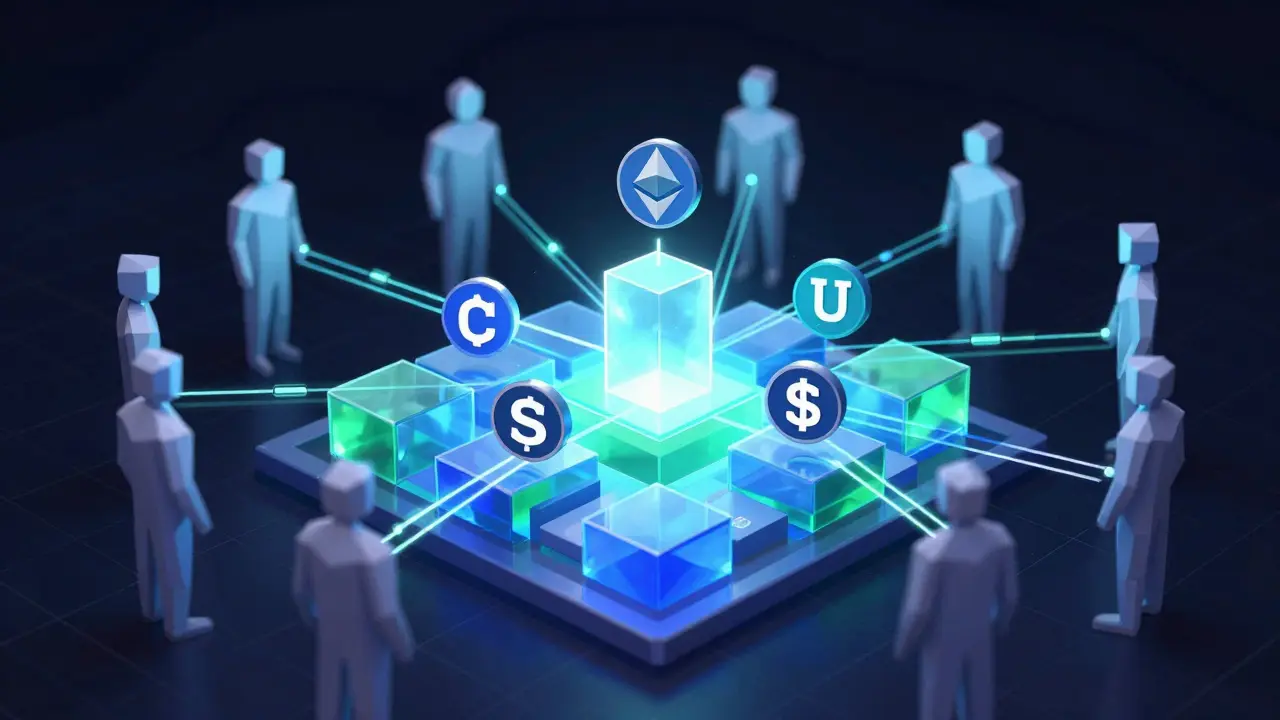
Imagine walking into a store where there is no cashier. Instead, you just leave your money on the counter and take what you want based on a simple rule written on a chalkboard. That sounds chaotic, right? But that is essentially how Automated Market Makers (AMMs) work in the world of cryptocurrency.
If you have ever heard about Decentralized Finance (DeFi) but felt confused by terms like "liquidity pools" or "slippage," you are not alone. Traditional stock markets rely on buyers and shouting their prices at each other. Crypto used to do the same with order books. Then came AMMs, which changed the game entirely by removing the need for two people to agree on a price at the exact same second.
This guide breaks down exactly what an AMM is, how it makes trading possible without a middleman, and why you should care if you plan to trade crypto in 2026 and beyond.
The Core Problem: Why Do We Need AMMs?
To understand why Automated Market Makers exist, you first need to see the problem they solve. In traditional finance, market makers are firms that stand ready to buy or sell assets to keep prices stable. On a blockchain, this model falls apart. Why? Because blockchains are pseudonymous. You don't know who you are trading with, and storing millions of individual buy and sell orders on-chain is incredibly expensive and slow.
The Bank for International Settlements noted in a 2021 report that managing an on-chain limit order book would be too costly due to the sheer volume of data. So, developers needed a new way to ensure someone was always available to trade with you, even if no human was watching the screen.
The solution was automation. Instead of matching buyer A with seller B, the system matches trader A with a smart contract. This is called peer-to-contract (P2C) trading. It means you can swap tokens instantly, 24/7, without waiting for a counterparty.
How Liquidity Pools Work
The heart of any Automated Market Maker is the liquidity pool. Think of a liquidity pool as a giant digital piggy bank filled with pairs of cryptocurrencies. For example, one pool might contain Ethereum (ETH) and US Dollar Coin (USDC).
Here is how it works step-by-step:
- Depositing Funds: Users, known as Liquidity Providers (LPs), deposit equal values of two tokens into the pool. If ETH is worth $3,000, an LP must deposit $3,000 worth of ETH and $3,000 worth of USDC.
- Receiving Receipts: In return, the LP gets LP tokens. These act like receipts proving their share of the pool. They can burn these later to withdraw their funds plus earned fees.
- Trading Against the Pool: When you want to swap ETH for USDC, you send ETH into the pool and take out USDC. The smart contract automatically calculates how much USDC you get based on the current ratio of assets in the pool.
You are not trading with another person. You are trading against the algorithm. This ensures continuous liquidity, meaning there is always something to buy or sell, regardless of the time of day.
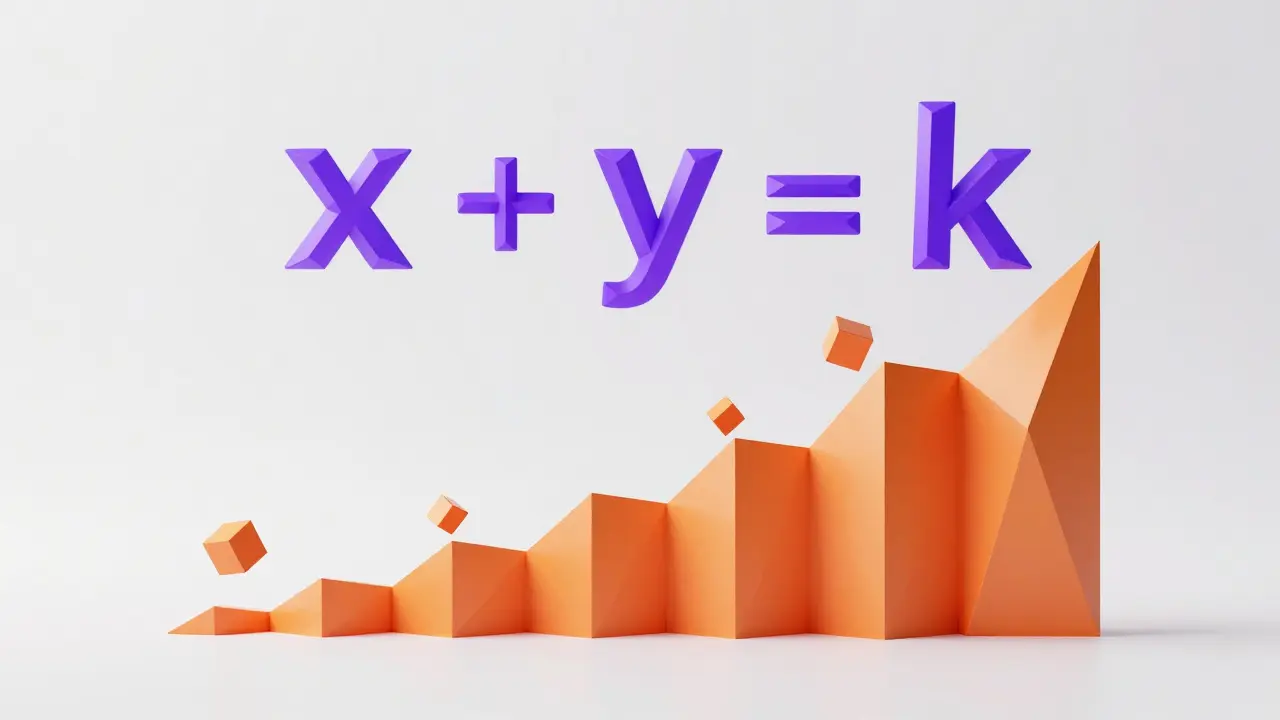
The Magic Formula: x * y = k
But how does the computer know the price? It uses a mathematical formula. The most famous one comes from Uniswap, the protocol that popularized AMMs in 2018. Their formula is simple: x * y = k.
In this equation:
xrepresents the amount of Token A in the pool.yrepresents the amount of Token B in the pool.kis a constant number that must never change.
Let’s say a pool has 100 ETH and 100,000 USDC. The constant k is 10,000,000 (100 * 100,000). If you want to buy ETH by adding 1 ETH to the pool, the total ETH becomes 101. To keep k the same, the amount of USDC must decrease. The math forces the price up slightly as you buy more, ensuring the pool doesn’t run out of assets too quickly. This mechanism creates a dynamic pricing curve that adjusts instantly to supply and demand.
Evolving Efficiency: From V2 to V3 and Beyond
Not all Automated Market Makers are created equal. Early versions, like Uniswap v2, spread liquidity across all possible price ranges. This was inefficient because most trades happen near the current market price, not at extreme highs or lows.
Enter Uniswap v3, launched in May 2021. It introduced "concentrated liquidity." This allows Liquidity Providers to choose specific price ranges for their deposits. If you believe ETH will stay between $2,800 and $3,200, you can deploy your capital only in that range. According to Uniswap’s whitepaper, this increases capital efficiency by up to 4,000 times compared to older models.
Other protocols have specialized further. Curve Finance focuses on stablecoins (assets pegged to the dollar). Because these assets rarely change value relative to each other, Curve uses a different invariant formula that results in extremely low slippage-often less than 0.01%. Meanwhile, Balancer allows pools with multiple tokens, not just pairs, offering more flexibility for portfolio diversification.
| Protocol | Key Feature | Typical Fee | Best For |
|---|---|---|---|
| Uniswap | Concentrated Liquidity (v3) | 0.05% - 1% | General trading, volatile pairs |
| Curve Finance | Stableswap Algorithm | 0.04% - 0.08% | Stablecoin swaps, low slippage |
| Balancer | Multi-token Pools | Variable | Portfolio rebalancing |
The Catch: Impermanent Loss
If AMMs sound like free money for providers earning fees, there is a catch. It is called Impermanent Loss. This is the biggest risk for anyone providing liquidity.
Impermanent loss occurs when the price of the deposited tokens changes significantly compared to when you deposited them. Because the pool maintains a balanced ratio, the protocol sells the appreciating asset and buys the depreciating one. If you had just held the tokens in your wallet instead, you might have made more profit.
For example, if you deposit ETH and USDC, and ETH doubles in value, the pool will sell some of your newly valuable ETH to buy more USDC to maintain balance. When you withdraw, you have more USDC but fewer ETH than if you had just held. Researcher Dan Robinson calculated in 2019 that during high volatility, this loss can reach 5-20%. It is "impermanent" only because if prices revert to your entry point, the loss disappears. If they don’t, the loss becomes permanent upon withdrawal.

Regulatory Landscape in 2026
As we move through 2026, the regulatory environment for Automated Market Makers has shifted. The U.S. Securities and Exchange Commission (SEC) has taken enforcement actions against platforms like Uniswap Labs, arguing that certain tokens traded on their platform qualify as unregistered securities. This creates uncertainty for users in the United States.
Conversely, the European Union’s Markets in Crypto-Assets (MiCA) framework, effective since January 2024, classifies AMMs as "crypto asset service providers." This requires licensing but provides clearer legal boundaries for operators and users within the EU. This divergence means your location matters more than ever when choosing which AMM to use.
Practical Steps to Use an AMM
Ready to try it yourself? Here is what you need to do to interact with an AMM safely.
- Set Up a Wallet: You need a non-custodial wallet. MetaMask remains the dominant choice, with over 30 million monthly active users. Ensure you have saved your seed phrase offline.
- Fund Your Wallet: Buy Ethereum (or the native token of the chain you are using, like BNB for PancakeSwap or SOL for Raydium) and transfer it to your wallet address.
- Connect to the Protocol: Go to the official website of the AMM (e.g., app.uniswap.org). Connect your wallet. Always double-check the URL to avoid phishing sites.
- Select a Pool: Choose the token pair you want to trade or provide liquidity for. Check the fee tier (0.05%, 0.3%, etc.).
- Set Slippage Tolerance: Slippage is the difference between the expected price and the executed price. For stablecoins, set this to 0.5-1%. For volatile pairs, 1-3% is common. If the price moves too much during your transaction, it will fail.
- Approve and Swap: You may need to approve the token spending first. Then confirm the swap. Be aware of gas fees; on Ethereum, these can range from $1.50 to $50+ depending on network congestion.
The Future of Automated Trading
Where do Automated Market Makers go from here? The latest iteration, Uniswap v4, launched in June 2024, introduces "hooks." These allow developers to customize trading logic directly within the pool, potentially integrating oracle data or custom fee structures without creating a new protocol.
Experts predict a hybrid future. Academic research from UC Berkeley suggests AMMs will increasingly incorporate elements of traditional order books to improve efficiency for large institutional trades. Meanwhile, the Bank for International Settlements forecasts that AMM-based trading will constitute 45-60% of all DeFi volume by 2026. While critics like economist Paul Krugman argue they create unnecessary risk for retail users, proponents like Vitalik Buterin maintain that AMMs are fundamental infrastructure that simply needs optimization.
Whether you are a casual trader or a liquidity provider, understanding AMMs is no longer optional-it is essential literacy in the modern financial ecosystem.
Is providing liquidity on an AMM safe?
Providing liquidity carries significant risks, primarily impermanent loss and smart contract vulnerabilities. While the technology is generally secure, bugs can exist in newer protocols. Additionally, if the value of one token drops significantly compared to the other, you may end up with less value than if you had simply held the assets. Always research the protocol's audit history and consider starting with small amounts.
What is the difference between an AMM and a centralized exchange?
A centralized exchange (like Coinbase or Binance) acts as a middleman, holding your funds and matching orders in an internal database. An AMM is a decentralized protocol where you trade directly against a liquidity pool via a smart contract. You retain custody of your funds until the moment of trade, and there is no central company controlling the platform.
How do I calculate impermanent loss?
Impermanent loss is calculated by comparing the value of your assets in the liquidity pool versus the value of those same assets if you had held them in your wallet. Online calculators are available for most major protocols. Generally, the greater the price divergence between the two tokens in the pool, the higher the impermanent loss.
Can I use an AMM if I live in the USA?
Yes, you can technically access most AMMs from the USA, but regulatory risks are higher. The SEC has pursued legal action against entities like Uniswap Labs. While individual users have not been broadly targeted, the legal landscape is uncertain. Using a VPN may mask your IP, but it does not change the underlying legal jurisdiction of the assets you hold.
Why do some AMMs charge lower fees than others?
Fees vary based on the risk and volatility of the assets. Stablecoin pairs (like USDC/USDT) have very low price variance, so protocols like Curve charge minimal fees (around 0.04%) to attract high-volume traders. Volatile pairs (like ETH/BTC) require higher fees (0.3% or more) to compensate liquidity providers for the higher risk of impermanent loss.