
US Crypto Regulations by State: Complete Guide (2026)
Why US States Have Different Crypto Rules
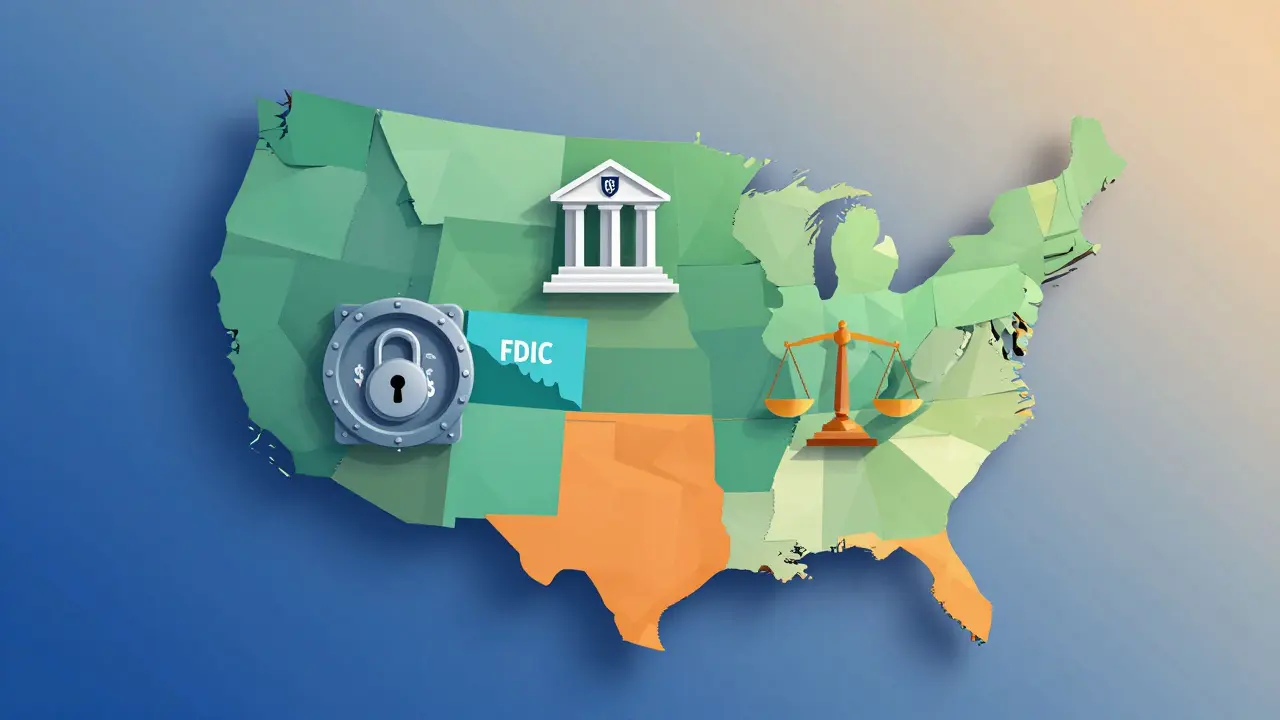
Right now, there’s no single set of federal rules for cryptocurrency in the United States. Instead, each state has built its own system. This means a business operating in New York might need a completely different license than one in Wyoming. As of 2026, 47 states have some form of crypto regulation, but the rules vary wildly. The Stevens Center at Wharton explains this patchwork is because "the United States has no federal regulatory framework for digital assets." Without clear national rules, states stepped in to fill the gap. This creates headaches for companies trying to operate across multiple states. The US state crypto regulations patchwork is a major challenge for the industry.
New York’s BitLicense: A Tough Road for Crypto Businesses
New York’s BitLicense, created by the Department of Financial Services (NYDFS) in 2015, is one of the strictest systems. To get it, companies need to pay a $5,000 application fee, show $2 million in capital, and submit detailed business plans. The process takes over a year on average-14.3 months to be exact. As of September 2025, only 37 licenses were approved out of 104 applications. Many companies, like Coinbase and Circle, left New York because of these high barriers. Reddit user u/CryptoTraderNYC said, "I closed my NYC-based exchange in 2023 after spending $187,000 on compliance for zero revenue-moved to Wyoming and tripled volume in 18 months." NYDFS Regulation 200 (23 NYCRR 200) requires 80% of assets to be in cold storage, biometric access controls, and annual audits. These rules make compliance expensive and slow. Only 1 in 3 applicants gets approved, and many never recover their initial investment. For businesses, this means choosing between staying in New York and struggling or moving elsewhere.
Wyoming’s Crypto-Friendly Bank Model
Wyoming took a different approach. They created Special Purpose Depository Institutions (SPDI), allowing crypto firms to operate as state-chartered banks. This means they can offer services like custody and lending with full FDIC insurance. Companies like Kraken Bank and Avanti Financial Group are using this model. In 2024, Wyoming’s crypto banks processed $12.7 billion in transactions. The annual compliance cost is much lower-around $42,000 per business. This has made Wyoming a hotspot for crypto startups. The Atlantic Council noted that "states with innovation-friendly frameworks like Wyoming have captured 63% of new crypto banking jobs since 2020." Wyoming’s SPDI framework requires $25 million in minimum capital and FDIC insurance, but it’s still easier than New York’s system. Businesses get a clear path to banking services, which most crypto companies struggle to find elsewhere. This has attracted over 100 crypto-related jobs to the state since 2022.

California’s Balance: Low Barriers, Strict Enforcement
California’s Department of Financial Protection and Innovation (DFPI) requires registration for businesses handling over $500,000 in crypto annually. The process takes 45-60 days, much faster than New York. As of Q3 2025, 142 businesses are registered. However, the DFPI has launched 17 enforcement actions against unregistered firms. Users report 38% faster dispute resolution compared to New York’s 217-day average. While the entry is easier, California still enforces rules strictly to protect consumers. The DFPI’s approach focuses on transparency. Businesses must file detailed transaction reports, but they avoid the high costs of New York’s system. This balance has made California the second most popular state for crypto startups after Wyoming. Still, enforcement actions show regulators won’t tolerate non-compliance.
State-by-State Regulation Comparison
| State | Regulatory Framework | Annual Compliance Cost | Business Impact |
|---|---|---|---|
| New York | BitLicense (NYDFS Regulation 200) | $350,000 | Only 37 licenses issued out of 104 applications; companies like Coinbase moved out |
| California | DFPI Registration | $85,000 | 142 registered businesses; 17 enforcement actions in 2024 |
| Wyoming | SPDI Charter | $42,000 | 12 crypto banks; $12.7B in transactions processed in 2024 |
Real Costs of Compliance Across States
Compliance costs vary drastically by state. A Goodwin Law analysis found that New York’s BitLicense costs $350,000 annually per business, California’s DFPI costs $85,000, and Wyoming’s SPDI is $42,000. For companies operating in multiple states, the average cost jumps to $287,000 yearly. This is a major burden-Crypto exchange representatives told Congress that maintaining compliance across 47 states eats up 22-35% of operational budgets. That’s money that could go toward security upgrades or customer support instead. States like Texas and Arizona have lower costs but less clarity. Texas requires only basic cybersecurity plans under Finance Code Chapter 152, while Arizona’s regulatory sandbox lets startups test products without full licensing. However, the lack of clear rules in these states creates uncertainty for businesses. The Blockchain Association’s September 2025 survey found 68% of crypto businesses see state regulatory uncertainty as their top challenge.
What’s Changing in 2026? Federal vs State Battle
The GENIUS Act, signed in September 2025, tries to create federal standards for stablecoins while keeping state authority. It requires 100% reserve backing for stablecoins and shifts oversight from the SEC to the CFTC. But 22 states are suing over it, claiming it violates the 10th Amendment. Massachusetts Secretary William Galvin warned in his October 2025 letter that "the current state patchwork creates regulatory arbitrage opportunities that fraudsters exploit." Meanwhile, the SEC’s Spring 2025 agenda says the current system "creates compliance challenges disproportionate to benefits." States like Wyoming and South Dakota are aligning with federal guidelines, while Massachusetts and New York are strengthening their own rules. Experts predict either federal preemption or a formal partnership between state and federal regulators by 2027. For now, businesses must navigate this messy transition.
Frequently Asked Questions
Why doesn’t the US have federal crypto rules?
The US lacks a federal framework because lawmakers haven’t agreed on how to regulate digital assets. The SEC and CFTC have overlapping jurisdictions, leading to confusion. President Trump signed the GENIUS Act in September 2025 to address this, but it’s still being challenged in court. Until there’s a clear federal law, states will continue setting their own rules.
Which state is best for crypto businesses?
Wyoming is widely considered the most crypto-friendly. Its SPDI framework allows crypto firms to operate as banks with FDIC insurance. Compliance costs are low ($42,000 annually), and it has attracted companies like Kraken Bank. Wyoming also has no state income tax, making it even more appealing. However, the best choice depends on your business type-some states offer specific exemptions or benefits for certain activities.
How do state regulations affect everyday users?
State rules impact users through exchange availability and customer service. For example, New York users face longer dispute resolutions (217 days on average), while California users get faster help (38% quicker). Wyoming’s banking model means users can access insured crypto services. However, inconsistent rules can also lead to scams-Massachusetts recovered $2.1 billion from crypto fraud between 2020-2025 due to regulatory gaps.
What’s the GENIUS Act and why does it matter?
Signed into law in September 2025, the GENIUS Act aims to create federal standards for stablecoins and crypto custody. It requires stablecoins to be fully backed by liquid assets and shifts some oversight from the SEC to the CFTC. However, 22 states are suing to block it, arguing it infringes on state sovereignty. This law could either harmonize regulations or deepen the state-federal conflict, depending on court outcomes.
Are there any states with no crypto regulations?
As of 2026, all 50 states have some form of crypto regulation. Even states without specific laws have general financial regulations that apply to crypto activities. For example, Montana and Oklahoma have minimal rules but still require businesses to follow anti-money laundering laws. The only exception is if a state explicitly exempts certain activities, but no state has a complete lack of oversight.
Alisha Arora
February 6, 2026 AT 00:04New York's BitLicense is a disaster. It's too strict and drives companies out. Wyoming is too lax. There's no middle ground. This guide ignores the real issues. States should work together instead of competing. It's all about protecting consumers without killing innovation. But right now, it's a mess. Companies can't handle 47 different rules. The government needs to step in and create a national standard. Until then, it's chaos. I've been in this industry for years, and this is just bad policy. Someone needs to fix this before it gets worse.
Michael Sullivan
February 6, 2026 AT 21:37New York's BitLicense is a joke. $350k/year? No wonder companies leave. 🤦♂️
perry jody
February 7, 2026 AT 21:33Hey, I totally agree! States need to collaborate. Wyoming's model is great, but New York's security is important too. Maybe a federal baseline with state-specific tweaks? Let's make it work together! 😄
Reda Adaou
February 8, 2026 AT 10:10It's fascinating how each state has taken a different approach to crypto regulation.
New York's BitLicense is super strict, which is great for security but makes it hard for startups.
Wyoming's SPDI model is way more flexible, allowing crypto banks to operate smoothly.
California strikes a balance with lower barriers but strict enforcement.
The key is finding a middle ground where states can collaborate instead of competing.
A unified federal framework would help, but until then, we need to work together.
Maybe states could share best practices.
For example, Wyoming's low compliance costs could be a model for others.
New York's security measures could be adapted without the high costs.
California's transparency requirements are a good example too.
It's all about balancing innovation and safety.
Right now, the patchwork is confusing for businesses.
Imagine running a company that has to comply with 47 different sets of rules.
That's not sustainable.
We need a national standard, but states should still have some input.
Maybe a federal baseline with state-specific additions.
That way, we keep the flexibility but reduce the burden.
It's a tough problem, but collaboration is the only way forward.
Let's see what happens in 2027.
Paul Jardetzky
February 8, 2026 AT 16:35Hey, I've worked with crypto businesses in NY. The BitLicense is tough, but it's necessary for security. Without it, there'd be more scams. Yes, costs are high, but it's worth it for consumer protection. Maybe we can find ways to reduce the burden without sacrificing safety. Let's not throw the baby out with the bathwater! 💪
Udit Pandey
February 9, 2026 AT 16:53As an Indian citizen, I find it absurd that the United States cannot establish a coherent regulatory framework for cryptocurrency. The current state-by-state patchwork is a testament to American inefficiency. India has a clear regulatory approach with the RBI and SEBI overseeing digital assets. Why can't the US do the same? This fragmentation is a self-inflicted wound that hinders innovation. The GENIUS Act is a step in the right direction, but it's too little too late. It's time for the US to learn from other nations and establish a unified system. Otherwise, the country risks losing its leadership in the crypto space to more organized jurisdictions. The lack of federal oversight is a glaring flaw that needs immediate attention. States like Wyoming and California are doing their best, but without federal coordination, the system remains broken. This is why India has been able to make progress while the US stumbles. It's a shame that such a powerful nation can't get its act together. The world is watching, and the US is falling behind. It's time for decisive action.
Sharon Lois
February 10, 2026 AT 10:01India's regulations? More like a surveillance state. At least the US has some freedom. 💀
mahikshith reddy
February 12, 2026 AT 03:16Seriously? India's regulations are a model of efficiency. You're just paranoid. The US system is a mess. Wake up! 😂
Brendan Conway
February 12, 2026 AT 21:07man, this whole state-by-state thing is so confusing. like, why can't they just have one set of rules? wyoming's cool but new york is too strict. california's okay but still. maybe the feds should step in. i'm just a chill observer but this is messed up. gotta fix it before it gets worse. peace out. 🤷♂️
Katie Haywood
February 14, 2026 AT 21:02Yeah, man. It's all about balance. Wyoming's low costs but NY's security. Maybe a federal standard with state-specific tweaks? Not rocket science. 🤷♀️
Matt Smith
February 15, 2026 AT 09:48Oh, sure. "Federal standard with state tweaks" sounds great. But the feds will just make it worse. They always do. This is why we need to ditch crypto entirely. 💢
Josh Flohre
February 16, 2026 AT 13:46That's a nonsensical statement. The problem isn't the federal government-it's the lack of one. Without federal oversight, states create conflicting regulations that harm innovation. The solution is clear: a unified framework. Your contrarian stance is unhelpful and uninformed.