
THORChain Review: The Best Decentralized Exchange for Native Bitcoin Swaps
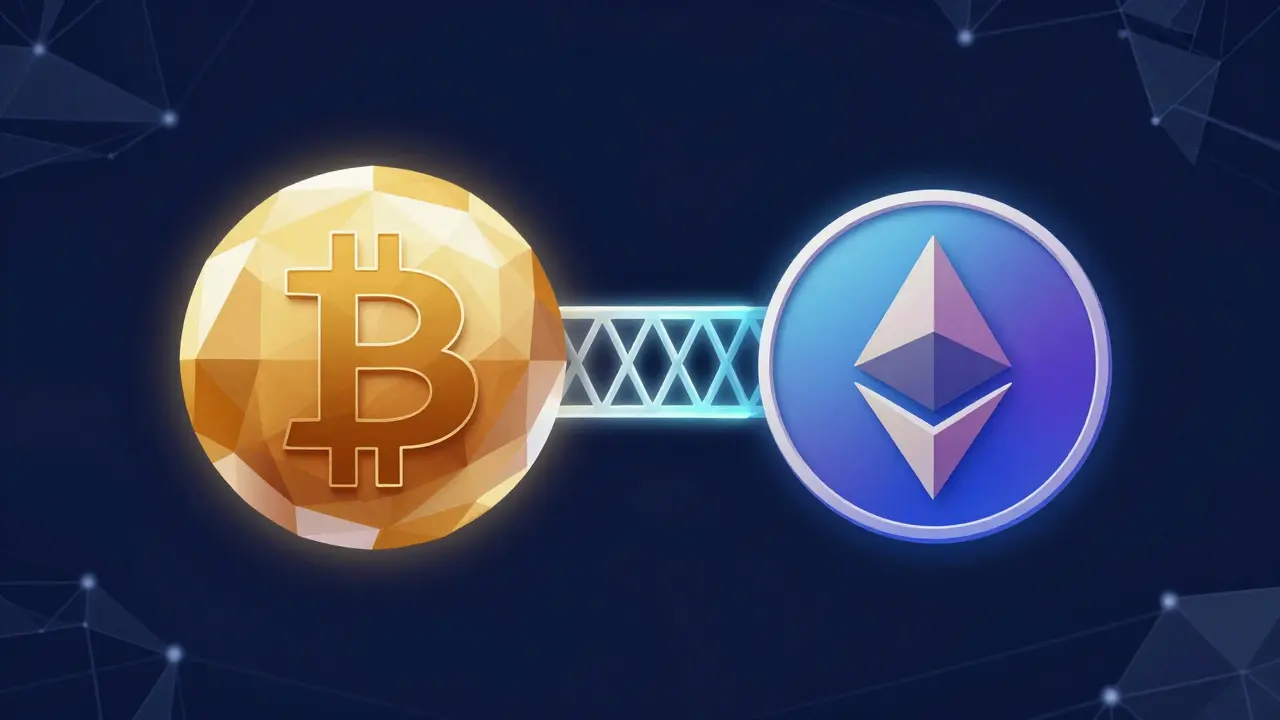
Have you ever tried to swap Bitcoin for Ethereum without sending your coins to a centralized exchange? If so, you know the pain. You usually have to wrap your BTC into a synthetic version like WBTC, trusting a third party to hold the real keys. It’s messy, risky, and feels wrong. THORChain is a decentralized liquidity protocol that allows users to swap assets across different blockchains without wrapping them or giving up custody. It solves this problem by enabling direct, trustless swaps between native assets. But does it actually work well in 2026? Is it safe enough for large amounts? Let’s break down how THORChain works, what makes it unique, and whether it deserves a spot in your crypto toolkit.
How THORChain Works Without Wrapping Assets
The biggest selling point of THORChain is its ability to handle native assets. When you use most other decentralized exchanges (DEXs), you are stuck on one blockchain. To move value from Bitcoin to Ethereum, you typically need a bridge or a wrapped token. Wrapped tokens rely on custodians who hold the underlying asset. If that custodian gets hacked or goes rogue, your "wrapped" token becomes worthless paper.
THORChain changes this dynamic. It uses a network of nodes to facilitate swaps directly between blockchains. Here is the simple flow:
- You send native Bitcoin from your wallet to a THORChain node.
- The node locks your Bitcoin and sends an equivalent value in another asset (like Ethereum or Solana) from its liquidity pool to your destination wallet.
- No intermediaries touch your funds during the transfer, and no wrapped tokens are created.
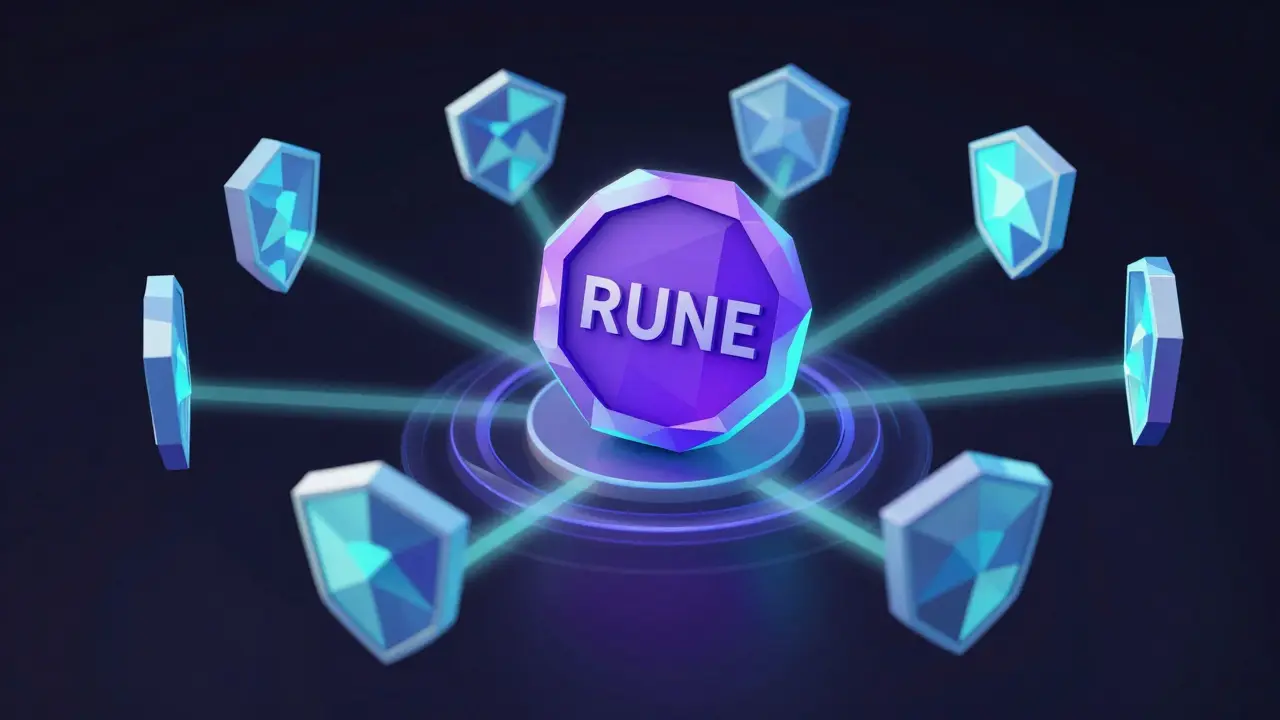
This process relies on the RUNE token, which serves as the native utility and governance token of the THORChain network, essential for securing the system through node bonding. Every swap involves RUNE because it acts as the common denominator for pricing and security. This means you can’t just swap BTC for ETH directly; the protocol routes the trade through RUNE pools. This design ensures that all participants have skin in the game, making attacks economically unviable.
The Role of RUNE and Node Security
To understand THORChain, you must understand RUNE. Unlike many projects where the token is just for speculation, RUNE is critical for the network's survival. The security model is based on "bonding." Nodes that want to participate in the network must lock up significant amounts of RUNE as collateral. If a node behaves maliciously-for example, by stealing user funds-it loses its entire bond. This is known as slashing.
This creates a powerful incentive alignment. Node operators are motivated to keep the network secure because their livelihood depends on it. As of late 2025, the protocol has over 12 supported blockchains, including Bitcoin, Ethereum, Binance Smart Chain, Avalanche, and Polkadot. The more chains are added, the more complex the security landscape becomes, but the bonding mechanism remains the anchor.
However, this reliance on RUNE introduces volatility risks. If the price of RUNE crashes, the economic security of the network drops. Conversely, if RUNE spikes, fees might increase. The team has worked hard to balance this, especially after the January 2025 crisis, where they introduced TCY (THORChain Yield) tokens to manage debt without minting more RUNE. This move helped stabilize confidence in the network.
User Experience: Speed, Fees, and Interfaces
Let’s talk about the actual experience of using THORChain. You don’t interact with the backend directly. Instead, you use frontends like THORSwap or user-friendly interfaces that connect to the THORChain network to execute cross-chain swaps. These platforms are clean, intuitive, and require no KYC (Know Your Customer) verification. That’s a huge plus for privacy-focused users.
But there are trade-offs. Speed is not THORChain’s strong suit. Because it waits for confirmations on both the source and destination blockchains, a swap can take anywhere from 30 seconds to several minutes. During periods of high congestion on Ethereum or Bitcoin networks, transactions can slow down significantly. One user reported waiting 45 minutes for an ETH-to-BTC swap due to network delays. For day traders looking for instant execution, this friction is annoying. For long-term holders moving large sums, it’s a small price to pay for security.
Fees are also higher than on centralized exchanges. You pay two types of fees: a trading fee (usually around 0.3%) and a network gas fee. Additionally, since every swap involves RUNE, you’re exposed to slippage if the market moves quickly. However, these fees go to liquidity providers, not a central company, which aligns with the decentralized ethos.
THORChain vs. Centralized Exchanges and Competitors
Is THORChain better than Binance or Coinbase? It depends on what you value. If you prioritize speed and low fees, centralized exchanges win hands down. They can process thousands of transactions per second. THORChain handles only 3-5 transactions per second. But if you prioritize custody and censorship resistance, THORChain is superior. You never leave your wallet, and no single entity can freeze your account.
| Feature | THORChain | Centralized Exchanges (e.g., Binance) | Wrapped Asset Bridges (e.g., WBTC) |
|---|---|---|---|
| Custody | Non-custodial (You hold keys) | Custodial (Exchange holds keys) | Custodial (Bridge operator holds keys) |
| Asset Type | Native Assets | Native or Internal Balances | Wrapped/Synthetic Assets |
| Speed | Slow (Minutes) | Instant (Seconds) | Medium (Depends on bridge) |
| KYC Required? | No | Yes | No (but counterparty risk exists) |
| Security Risk | Smart Contract/Node Risk | Hack/Insolvency Risk | Custodian Compromise Risk |
Compared to other cross-chain protocols like Cosmos IBC or Wormhole, THORChain is specialized. IBC requires both chains to implement the protocol, limiting compatibility. THORChain connects to existing blockchains without requiring changes to their code. This gives it broader immediate utility. However, competitors like Multichain still hold larger market share in some segments. THORChain currently holds about 8.2% of the cross-chain DEX market, trailing behind some giants but growing steadily.
Risks and Limitations You Must Know
No technology is perfect. THORChain has faced serious challenges. In January 2025, the protocol suffered a crisis related to THORFi debt repayments. Excessive minting of RUNE to cover liabilities caused the token price to drop sharply. While the team resolved this with the TCY implementation, it highlighted the fragility of complex DeFi mechanics. Always remember: smart contracts can have bugs, and oracle manipulation is a constant threat.
Another risk is regulatory uncertainty. While the SEC has hinted that decentralized networks might not be classified as securities exchanges, the legal landscape is shifting. Using THORChain could attract scrutiny depending on your jurisdiction. Additionally, the learning curve is steep. New users often struggle with managing multiple wallets and understanding slippage settings. A survey showed that 63% of new users needed three or more attempts to complete their first successful swap.

Who Should Use THORChain?
THORChain isn’t for everyone. If you are a casual trader who wants to flip coins quickly, stick to centralized exchanges. The fees and wait times will frustrate you. But if you fall into one of these categories, THORChain is a powerful tool:
- Privacy Advocates: No KYC means no personal data stored on exchange servers.
- Large Holders: Moving $50k+ of Bitcoin? Trusting a centralized exchange with that amount is risky. THORChain keeps custody in your hands.
- DeFi Purists: If you believe in non-custodial finance, THORChain is one of the few viable options for cross-chain swaps.
- Bitcoin Maximalists: You can interact with DeFi without leaving the Bitcoin network or using wrapped versions.
Future Outlook and Final Thoughts
Looking ahead, THORChain is expanding. Plans for 2026 include integrations with Tron, TON, and the XRP Ledger. The goal is to become the universal layer for cross-chain liquidity. With TVL exceeding $80 million and a growing ecosystem of dApps, the momentum is positive. However, success depends on maintaining security and balancing tokenomics. The decision to pause token burning in favor of marketing investments in mid-2025 was controversial but may help drive adoption.
In short, THORChain offers a unique solution to a real problem. It lets you swap native Bitcoin for other assets safely and privately. It’s slower and more expensive than centralized alternatives, but the trade-off is control. If you value sovereignty over convenience, THORChain is worth exploring. Just start small, read the docs, and never invest more than you can afford to lose.
What is the difference between THORChain and Uniswap?
Uniswap operates within a single blockchain (primarily Ethereum) and uses liquidity pools for same-chain swaps. THORChain enables cross-chain swaps between different blockchains (like Bitcoin to Ethereum) without wrapping assets, using a network of bonded nodes and the RUNE token as a settlement layer.
Is THORChain safe to use?
THORChain is generally considered safe due to its non-custodial nature and node bonding security model. However, it carries smart contract risks and has experienced past crises (like the Jan 2025 event). Users should always verify addresses, start with small amounts, and understand that no DeFi protocol is immune to exploits.
Why do I need RUNE to swap Bitcoin?
Why do I need RUNE to swap Bitcoin?
RUNE acts as the common denominator for all trading pairs on THORChain. It secures the network by incentivizing node operators to behave honestly. Every swap routes through RUNE pools to ensure price equilibrium and economic security across different blockchains.
How long does a THORChain swap take?
Swap times vary based on blockchain congestion. Typically, swaps take between 30 seconds and 2 minutes. However, during high traffic on Bitcoin or Ethereum networks, it can take longer, sometimes up to 45 minutes or more for confirmations.
Does THORChain require KYC?
No, THORChain is fully non-custodial and permissionless. You do not need to provide any personal identification (KYC) to use the protocol or its frontends like THORSwap. You only need a compatible crypto wallet.
What happened during the January 2025 crisis?
The protocol faced issues with THORFi debt repayments leading to excessive RUNE minting, which dropped the token price. The team resolved this by introducing TCY (THORChain Yield) tokens to manage liabilities without further diluting RUNE supply, stabilizing the network.