
Banking Crypto Restrictions: What’s Banned, Why, and How Traders Adapt
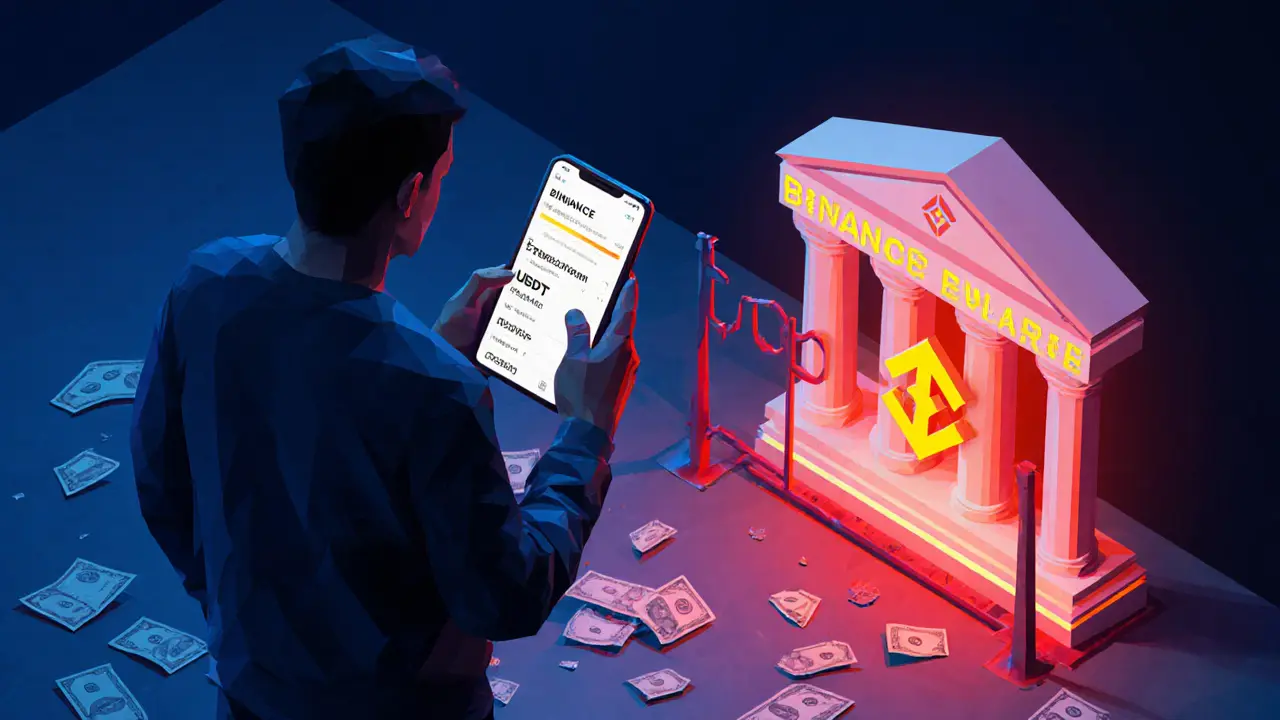
When your bank blocks a crypto purchase, it’s not just a technical glitch—it’s a banking crypto restriction, a policy decision by financial institutions to limit or cut off access to cryptocurrency transactions. Also known as crypto financial censorship, this is happening across the U.S., India, China, and parts of Europe—not because crypto is illegal everywhere, but because banks fear regulatory backlash, money laundering risks, or simply don’t understand it. These restrictions don’t always come with a public announcement. You might just wake up to a declined transfer, a frozen account, or a message saying "transactions to crypto exchanges are not permitted."
Behind every crypto banking ban, a deliberate move by banks to prevent customers from buying, selling, or holding digital assets through their services is a mix of pressure from regulators, outdated compliance systems, and fear of being fined. In China, the ban is total—banks are legally required to cut off all crypto-related activity, and violations can lead to criminal charges. In India, banks don’t outright block accounts, but they make it nearly impossible by flagging every crypto transaction as high-risk, forcing users to jump through hoops just to move money. Even in the U.S., major banks like Chase and Wells Fargo quietly block transfers to platforms like Binance or Kraken, while allowing others like Coinbase—creating a two-tier system where only certain exchanges get access.
These restrictions aren’t just about money—they’re about control. When banks cut off crypto, they’re trying to keep you inside their system. But people are finding ways out. Some use peer-to-peer platforms like LocalBitcoins or Paxful to trade directly with others. Others turn to decentralized exchanges that don’t require bank links, like Honeyswap or AirSwap, where you trade directly from your wallet. In China, underground traders use gift cards, cash deals, and even QR code swaps to bypass the system entirely. And in places like Portugal or El Salvador, people use crypto precisely because it lets them operate outside the traditional banking grid.
What you’ll find below isn’t theory. It’s real stories from people who’ve been blocked, banned, or forced to adapt. You’ll see how China’s crypto ban led to an $86 billion black market. You’ll learn why India’s non-custodial wallet rumors are misleading—but the tax rules are real. You’ll see how exchanges like MDEX and Pearl v1.5 disappeared because they couldn’t survive the banking squeeze. And you’ll find out why some projects, like VikingsChain or PlatinumBAR, never had a chance—no one could get their money in or out.
Ecuador bans banks from processing crypto transactions, forcing users into risky P2P workarounds. Learn how the ban works, what you can do legally, and why it’s hurting financial inclusion in 2025.
- Read More