
Shibwifhat vs Shiba Inu (SHIB): What Is the Difference?
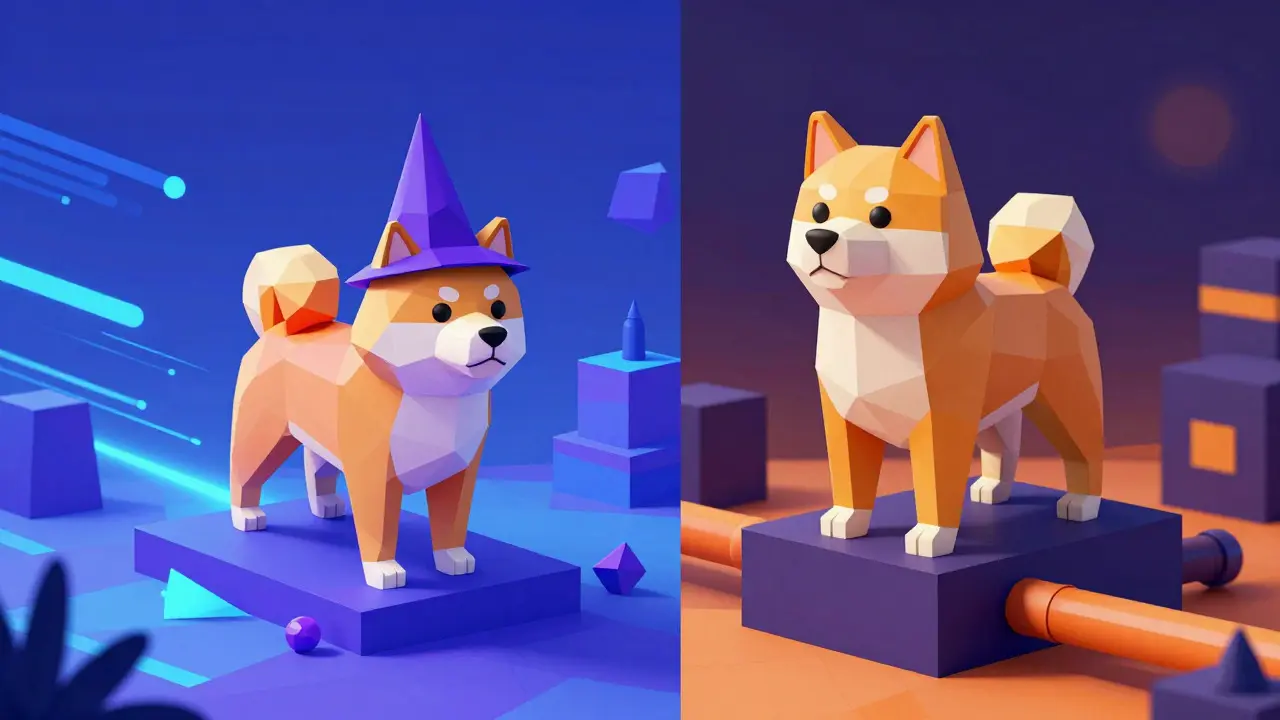
You might have seen two names floating around your feed: Shibwifhat and Shiba Inu (SHIB). They sound almost identical, both feature dogs in their branding, and both promise high returns. But here is the catch: they are completely different animals living on different blockchains with vastly different risks.
If you click on a link for "SHIB" expecting to buy the famous Ethereum token but end up holding a low-cap Solana meme coin, you could be in for a surprise. This guide breaks down exactly what Shibwifhat is, how it differs from the original Shiba Inu, and why that distinction matters before you put any money into either.
The Core Confusion: Two Names, Two Worlds
Shibwifhat is a speculative meme coin built on the Solana blockchain that emerged in late 2023 as a competitor to Dogwifhat. It does not have a formal whitepaper or a dedicated development team. Instead, it relies on community hype and the speed of the Solana network to attract traders. Its ticker symbol is distinct from SHIB, though the name deliberately borrows the "Shib" prefix to ride the wave of Shiba Inu’s massive brand recognition.
In contrast, Shiba Inu (SHIB) is an ERC-20 token launched on the Ethereum blockchain in August 2020 by an anonymous creator known as Ryoshi. SHIB was one of the first major dog-themed cryptocurrencies to gain global traction, establishing itself as a top-tier asset with a market capitalization often exceeding $1 billion. While Shibwifhat is a newer entrant trying to capitalize on Solana's current meme coin boom, SHIB has been around for over five years and has built out a complex ecosystem around its core token.
| Feature | Shibwifhat | Shiba Inu (SHIB) |
|---|---|---|
| Blockchain | Solana | Ethereum |
| Launch Date | Late 2023 / Early 2024 | August 2020 |
| Market Cap Scale | Micro-cap (< $100M) | Large-cap (~$1.8B+) |
| Primary Utility | Pure speculation | Ecosystem (DEX, L2, NFTs) |
| Transaction Speed | High (50,000+ TPS potential) | Moderate (15-30 TPS mainnet) |
| Risk Profile | Extreme volatility | High volatility, but established |
Technical Foundations: Solana vs. Ethereum
The biggest technical difference lies in the infrastructure underpinning each coin. Shibwifhat runs on Solana, which is a high-performance blockchain capable of processing tens of thousands of transactions per second with fees typically under a penny. For traders, this means fast entry and exit points without worrying about gas fees eating into profits. If you want to flip a position quickly, Solana’s speed is a significant advantage.
Shiba Inu operates on Ethereum, which is the most secure and widely adopted smart contract platform but suffers from higher congestion and variable transaction costs. However, SHIB holders can use Shibarium, which is an Ethereum Layer-2 solution launched in August 2023 designed to reduce costs and increase throughput. According to developer data, Shibarium processes roughly 12,000 daily transactions, offering a cheaper alternative to mainnet Ethereum for interacting with the SHIB ecosystem. While Solana is faster natively, Ethereum’s security model provides a deeper level of trust for long-term holders who view SHIB as more than just a meme.
Ecosystem Depth: Utility vs. Hype
This is where the two projects diverge most sharply. Shiba Inu has evolved from a simple token into a multi-component ecosystem. It includes ShibaSwap, a decentralized exchange where users can swap tokens and earn rewards using BONE and LEASH tokens. There are also NFT projects and ongoing developments like "Shib: The Metaverse," which aims to create virtual land plots for users. This depth gives SHIB multiple utility layers beyond just price appreciation.
Shibwifhat, on the other hand, lacks comparable infrastructure. It functions primarily as a speculative vehicle. There is no official DEX, no Layer-2 solution, and no substantial roadmap for utility features. The project is driven by community sentiment and the broader trend of Solana meme coins. Analysts note that while SHIB has institutional interest and merchant adoption through platforms like BitPay, Shibwifhat remains largely confined to niche online communities and short-term traders. If you are looking for a project with tangible products and services, SHIB offers far more ground to stand on.
Risk Assessment: Volatility and Liquidity
Both coins are risky, but the nature of that risk differs. Shibwifhat exhibits extreme volatility. Data from DappRadar suggests that 92% of Shibwifhat holders keep their tokens for less than 72 hours. This indicates a "hot potato" dynamic where liquidity can dry up quickly. One user reported making 300% in two hours only to lose it all in 15 minutes when liquidity was pulled. This is typical of micro-cap Solana tokens where the top 10 wallets hold a significant portion of the supply, creating concentration risk.
Shiba Inu is also volatile, but it has survived multiple market cycles since 2020. Its larger market cap provides a buffer against sudden crashes compared to micro-caps. However, SHIB faces its own set of challenges, including regulatory scrutiny from the SEC regarding whether it constitutes a security. Despite these hurdles, SHIB maintains a large, active community with over 1.2 million members on Reddit alone, providing a stronger social safety net than Shibwifhat’s smaller, more transient user base.
How to Get Started: Wallets and Exchanges
If you decide to explore either coin, your setup process will depend on the blockchain.
- For Shiba Inu (SHIB): You need an Ethereum-compatible wallet like MetaMask. Setup takes about 15 minutes. Be prepared to manage gas fees, especially during peak network usage. You can buy SHIB on major exchanges like Binance or Coinbase, or swap for it on ShibaSwap.
- For Shibwifhat: You need a Solana wallet like Phantom. Setup is quicker, around 10 minutes. However, new users often face issues with seed phrase management. You will likely need to use decentralized exchanges like Raydium to trade Shibwifhat, where slippage can be a concern for large orders.
Always check the contract address on CoinGecko or CoinMarketCap before buying. Because Shibwifhat is a smaller project, there is a higher risk of scam tokens with similar names appearing on exchanges. Verify the source every time.
Future Outlook and Viability
Industry analysts are divided on the long-term viability of these assets. Messari predicts that while SHIB will maintain relevance due to its ecosystem utility, 90% of Solana meme coins, including Shibwifhat, may become irrelevant within 18 months unless they achieve sustained high engagement. Galaxy Digital notes that Solana’s meme culture creates unique virality opportunities, which could sustain Shibwifhat if daily active users exceed 50,000. Currently, it falls short of that threshold.
SHIB continues to push forward with upgrades, such as Shibarium V2, which promises improved throughput. It also has enterprise partnerships and a track record of charitable donations, such as Vitalik Buterin’s donation to the India COVID-Crypto Relief Fund. These factors contribute to a perception of stability and legitimacy that Shibwifhat has yet to match. For now, SHIB remains a major player in the meme coin sector, while Shibwifhat is a high-risk bet on the continued popularity of Solana-based memes.
Is Shibwifhat the same as Shiba Inu?
No, they are entirely separate cryptocurrencies. Shibwifhat is a Solana-based meme coin launched in late 2023, while Shiba Inu (SHIB) is an Ethereum-based token launched in 2020. They have different creators, blockchains, and ecosystems.
Which blockchain is better for trading meme coins?
Solana is generally preferred for frequent trading due to lower fees and higher speed. Ethereum is considered more secure and has a larger ecosystem, but transaction costs can be higher during congestion. Shibarium helps mitigate Ethereum costs for SHIB users.
Does Shibwifhat have any real-world utility?
Currently, Shibwifhat has minimal utility beyond speculation. It lacks a dedicated DEX, Layer-2 solution, or merchant adoption. Its value is driven primarily by community hype and short-term trading activity.
What is the main risk of holding Shibwifhat?
The main risks are extreme volatility and liquidity concentration. A large portion of the supply is held by a few wallets, and liquidity can disappear quickly, leading to sharp price drops. Most holders sell within three days.
Can I buy Shibwifhat on Coinbase or Binance?
Availability varies. Shibwifhat is often traded on decentralized exchanges like Raydium. Major centralized exchanges may list it occasionally, but you should always verify the listing status on the specific exchange you plan to use.
Nia Franklin
August 17, 2026 AT 05:44Oh my gosh!! I was literally about to buy this 'Shibwifhat' thingy yesterday because the name sounded so cute and doggy-ish!!! 🐶✨ But then I read this post and realized it's basically a Solana meme coin with no real substance?? 😱
I always get confused by these similar names, it's like trying to tell apart different breeds of hamsters when they all look like fuzzy balls of chaos! The fact that SHIB has been around since 2020 makes it feel way more... legit? Or at least less likely to vanish into thin air tomorrow morning. Who knew there were two whole worlds of shiba inu crypto?!? 💸🤯
Mohamed Shoaeb
August 17, 2026 AT 10:13Good breakdown. The distinction between micro-cap volatility on Solana and the established ecosystem of Ethereum is crucial for any retail investor looking to allocate funds here.
Often people confuse brand recognition with project maturity. Just because a token uses the 'Shib' prefix does not mean it shares the same utility or risk profile as the original ERC-20 asset. It is important to check the contract address before executing any trade.
Sonia Gomez Gomez
August 19, 2026 AT 01:57:P You really need to stop trusting every shiny new object that pops up in your feed. It’s not just about being smart, it’s about having basic financial hygiene. If you don’t know the difference between a $1.8B market cap and a micro-cap scam waiting to happen, maybe stick to savings accounts until you learn better. Don't be a victim of your own greed!
SHIV SHANKAR KANTA
August 20, 2026 AT 10:39The duality of man is reflected in the duality of these tokens. One is the ghost of the past, heavy with history and the weight of Ethereum's gas fees. The other is the phantom of the future, light, fast, and perhaps destined to disappear like a dream upon waking. We are all just holding bags of digital hope, aren't we? The pain of loss is the teacher of wisdom.
Quang Thai Tran
August 21, 2026 AT 19:17It is imperative to note that the narrative surrounding Shibwifhat is largely constructed by decentralized finance enthusiasts who seek to exploit the arbitrage opportunities presented by Solana's low latency infrastructure. However, one must remain vigilant against the potential for rug pulls, a phenomenon frequently observed in high-volatility micro-cap assets where liquidity providers withdraw their reserves without warning. The correlation between social media hype and price action in such instruments is often spurious, leading to significant drawdowns for late entrants.
Dianne Ritter
August 22, 2026 AT 01:40Just another day in the circus. I guess we should be grateful they didn't call it 'Shibafraud'. At least the dog is still cute. I'm sure my portfolio will thank me for not touching either of them. Probably.
Kate Staab
August 22, 2026 AT 21:51Ugh, finally someone explained it properly. I was so tired of people arguing in the comments section about which dog coin is 'the real one' without actually reading the whitepaper (or lack thereof). It’s exhausting dealing with the noise. Let’s just appreciate the clarity for what it is. No more drama needed. 🙄
Calliope Clio
August 23, 2026 AT 22:50This is so helpful!! I was totally lost on which one to pick. Now I know Shibwifhat is super risky but fast and SHIB is slower but safer. I think I’ll stick with SHIB for now because I want to keep my money safe. Thanks for making it easy to understand! 🐕💖
Tasha Davis
August 25, 2026 AT 15:04Listen up, you’re missing the point. The blockchain doesn't care about your feelings. Solana is faster, yes, but speed means nothing if the exit liquidity vanishes. Look at the top 10 wallets holding Shibwifhat. That is concentration risk. If you think you can outsmart the whales in a micro-cap, you are deluding yourself. Do your homework or stay out of the game entirely.
Abigail Sparks
August 26, 2026 AT 05:03Great insight here. For those just starting out, remember that diversification is key. Don't put all your eggs in one basket, especially when that basket is a meme coin. Check the liquidity pools on Raydium or Uniswap before you jump in. Always verify the contract address on CoinGecko to avoid buying a fake token. Stay safe out there!
OLIVER CHRISTIAN
August 26, 2026 AT 12:35Agreed. The technical differences are stark. Ethereum offers security through proof-of-stake and a massive developer community. Solana offers speed and low cost. Neither is inherently 'better,' they just serve different use cases. If you want to build an app, Ethereum might be more robust. If you want to trade quickly, Solana is superior. Context matters.
Kelsey Anne
August 27, 2026 AT 08:12You guys are overthinking it. It's all just numbers on a screen. The only real value is what you believe it to be. If you believe in the dog, the dog wins. If you doubt the dog, the dog loses. Simple as that. The blockchain is just a tool, the belief is the engine. Keep faith, friends. 🚀
Mike Baca
August 29, 2026 AT 00:09Let us delve deeper into the ontological implications of these tokens. Are they truly assets, or merely artifacts of collective hallucination? The market capitalization is a metric, but is it a measure of worth? Perhaps the true value lies in the narrative itself. We are constructing reality through our trades. Embrace the uncertainty. It is liberating.
Rod Sidoroff
August 29, 2026 AT 08:36Most people here are too stupid to understand the actual mechanics of DeFi. They see a dog and they buy. They don't look at the order book depth. They don't check the tokenomics. They just follow the herd. It's pathetic. Only the elite few who understand liquidity provision and slippage tolerance will survive this cycle. The rest are just bag holders waiting to bleed out.
Jay Johhnston
August 29, 2026 AT 08:50Actually, I think Shibwifhat has more potential because Solana is the future. Ethereum is old news. Gas fees are killing it. Why would anyone pay $50 to send a transaction when you can do it for a penny on Solana? The speed is unmatched. I’m all in on the new wave. Don't sleep on this one.
Niall O'Rourke
August 30, 2026 AT 09:28Yeah right. Solana is the future. Sure. Until it halts again. Which it did last year. And the year before. I’ve seen plenty of 'future' tech fail spectacularly. Ethereum is boring but it works. Boring is good. Fast is dangerous. I prefer my coins slow and steady. No surprises. Just like my life. Predictable. Safe.
miranda gamboa
August 31, 2026 AT 01:20From a macroeconomic perspective, the adoption curve for Layer-2 solutions like Shibarium is critical for reducing friction in the SHIB ecosystem. If transaction costs continue to drop below $0.01, we may see increased merchant acceptance. This could fundamentally alter the utility thesis from pure speculation to functional currency. Watch the daily active user metrics closely; they are the leading indicator for sustained growth.
Kiran Jayaram
September 1, 2026 AT 14:36Stop with the jargon. You sound like a robot. The only metric that matters is price. Up or down. Everything else is fluff. If it goes up you're a genius. If it goes down you're a loser. Simple. Don't waste my time with 'macroeconomic perspectives'. Just tell me when to buy. That's all I care about. Get to the point.
Claudio Perrone
September 2, 2026 AT 00:59WOW!!! Did you guys even read the part about the 92% of holders selling within 72 hours?? That is crazy!! It's like a hot potato party but with money!! I almost bought it yesterday but my cat knocked over my phone and I missed the chart spike. Maybe the universe was protecting me from losing everything in 15 mins?? Scary stuff!! 🐈💸😱