
Security of Wrapped Asset Bridges: Risks, Protections, and What You Need to Know in 2026
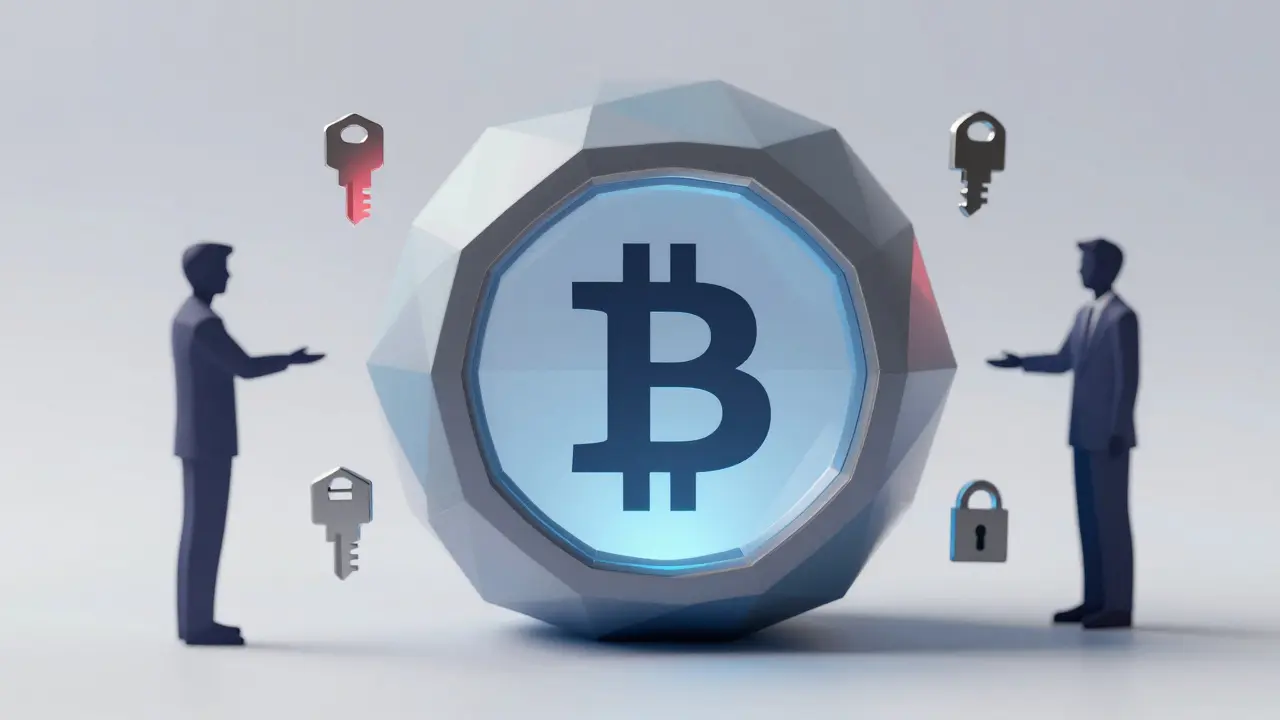
When you move Bitcoin to Ethereum as WBTC, you’re not really sending Bitcoin. You’re locking it up somewhere and getting a token that acts like it. That’s the core idea behind wrapped asset bridges. They let you use Bitcoin, Ethereum, or other assets on chains they weren’t designed for - like using BTC in DeFi apps on Ethereum. Sounds simple. But the security of these bridges? It’s not simple at all. In fact, it’s one of the most fragile parts of the entire crypto ecosystem.
How Wrapped Asset Bridges Actually Work
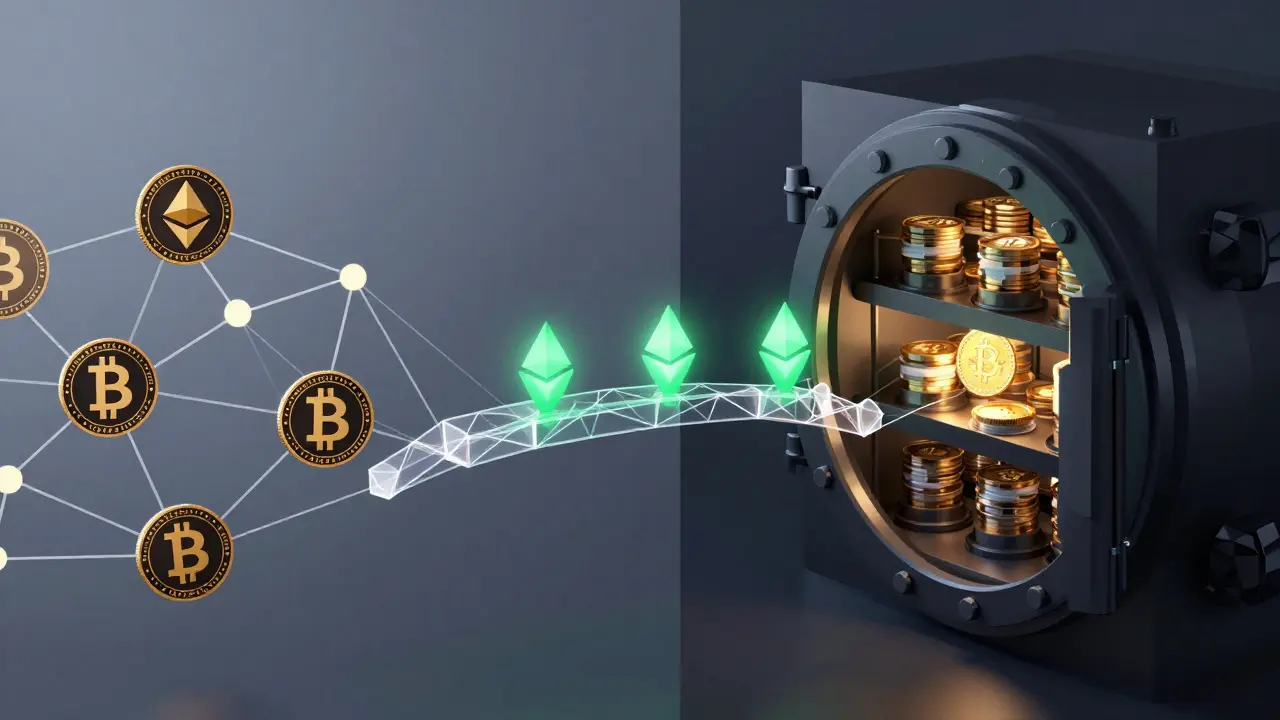
Here’s how it works in practice: you send 1 BTC to a bridge. That BTC gets locked in a digital vault - usually a multi-signature wallet controlled by a group of trusted parties. In return, you get 1 WBTC on Ethereum. That WBTC can be traded, lent, or used in yield farms just like any other ERC-20 token. When you want your BTC back, you burn the WBTC, and the vault releases your original Bitcoin.
The whole system depends on one thing: the vault doesn’t steal your Bitcoin. If the vault disappears, or gets hacked, or refuses to release your assets, your WBTC becomes worthless paper. That’s why people call these bridges “custodial.” They rely on trust - not code.
Early versions of wrapped tokens, like the first WBTC in 2019, used single custodians. One company held all the keys. That was a disaster waiting to happen. And in 2021, it did - a $32 million exploit happened because one key holder got compromised. Since then, the industry has tried to fix this. But the core problem hasn’t changed.
The Security Model: Multi-Sig, MPC, and Cold Storage
Today’s serious wrapped asset bridges - like ChainPort, RenBridge, and Multichain - don’t use single keys anymore. They use multi-signature wallets (like Gnosis Safe) combined with Multi-Party Computation (MPC) from providers like Fireblocks. What does that mean? Instead of one person holding a key, the key is split into pieces. Five different organizations hold those pieces. To move funds, you need at least three of them to sign off. And those pieces are stored in different countries, in offline vaults, not online servers.
This isn’t just marketing. It’s a real technical upgrade. Fireblocks’ MPC tech means no single party ever sees the full private key. Even if one server is hacked, the attacker can’t move the funds. Gnosis Safe adds another layer - it logs every transaction, requires time delays, and lets token holders vote on changes. ChainPort, for example, keeps over 95% of assets in cold storage. Only a tiny fraction sits in hot wallets for daily transactions.
But here’s the catch: these systems are only as strong as their weakest participant. If one of the five signers gets pressured, bribed, or compromised, the whole thing can collapse. And there’s no way for you, the user, to know if they’re all doing their job.
Proof of Reserves: The Missing Transparency
Here’s what most users don’t realize: there’s no automatic, real-time check that says “1 WBTC = 1 BTC in the vault.” You have to trust that the bridge operator is telling the truth.
Some bridges, like ChainPort, publish monthly proof-of-reserves reports from independent accounting firms. These reports show the total BTC held in custody versus the total WBTC in circulation. That’s good. But only 37% of wrapped asset bridges do this regularly, according to a 2023 Immunefi study. The rest? Silent. You’re left guessing.
And even when reports are published, they’re not foolproof. An auditor can verify the balance on a specific day. But what about the next day? What if the operator borrows BTC from someone else to fake the reserve? Or if they use the assets for lending and get liquidated? There’s no live feed. No blockchain proof. Just a PDF.
Security expert Georgios Konstantopoulos put it bluntly: “Users have no practical way to verify that 1:1 backing is maintained at all times.” That’s not a bug - it’s the design.
Why This Is Still a High-Risk System
Trail of Bits, one of the most respected blockchain security firms, rated multi-sig wrapped bridges as “medium-high risk” (6.2/10). Single-sig bridges? “High risk” (8.5/10). That’s progress - but still not safe.
Compare this to non-custodial bridges like THORChain or Axelar. Those don’t lock your assets. Instead, they swap them directly using liquidity pools. No vaults. No custodians. But they have their own risks - like slippage, impermanent loss, and complex smart contract bugs.
Wrapped bridges are easier to understand. They feel safer because the token is always worth exactly 1 of the original asset. But that’s the illusion. The real value is locked in a black box controlled by a handful of companies. If those companies fail - legally, financially, or technically - your wrapped tokens vanish.
In 2023, $187 million was lost across all crypto bridges. Wrapped bridges accounted for 28% of that - down from 45% in 2022. That’s better. But it’s still the second-largest source of bridge losses after liquidity pool exploits.
Regulation Is Changing the Game
In February 2024, the U.S. SEC took action against a wrapped asset bridge operator, declaring that tokens representing off-chain assets could be classified as securities. That means these bridges now need to follow financial compliance rules - KYC, AML, reporting. That’s not just about legality. It’s about accountability.
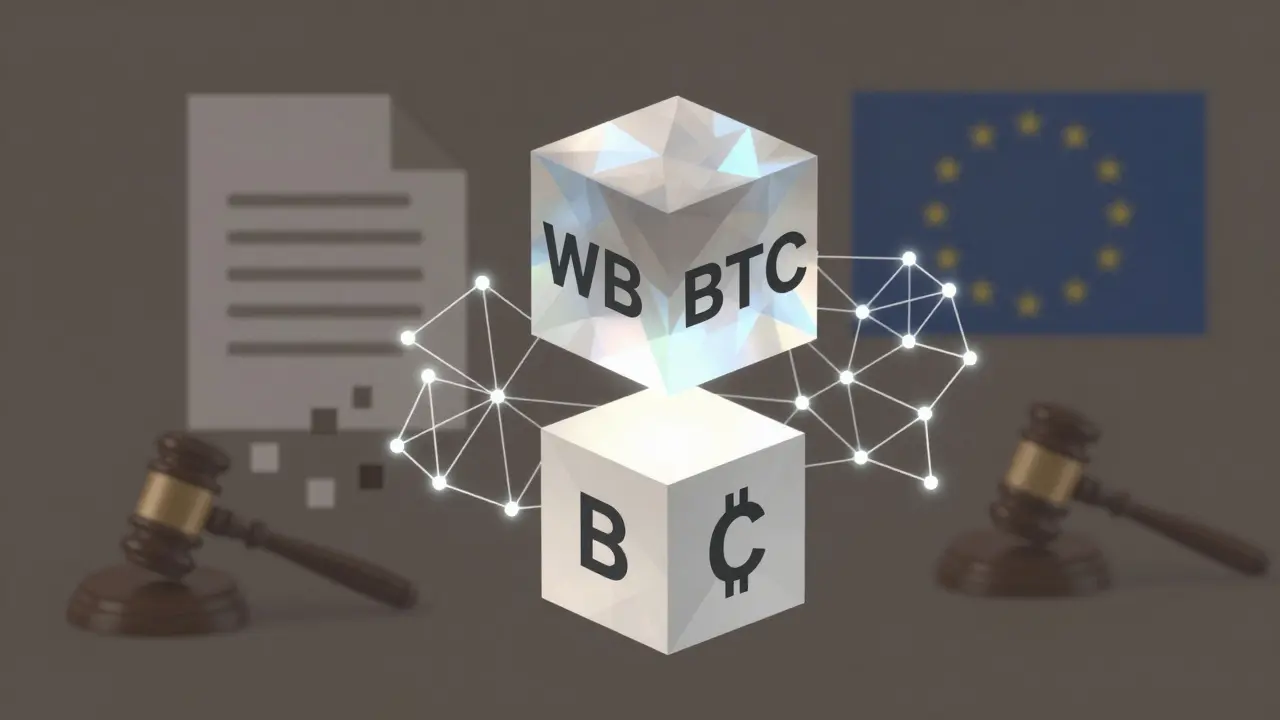
Then came the EU’s MiCA regulations, effective June 2024. They require every bridge operator to hold 100% of the assets backing their wrapped tokens - at all times. No lending. No rehypothecation. No borrowing. If you mint 10,000 WBTC, you must have 10,000 BTC locked, and you can’t touch them.
This is the first real regulatory pressure to fix the core flaw: the lack of asset backing guarantees. It’s forcing operators to be more transparent. But it’s also making it harder for small players to compete. Only big firms with deep pockets - like ChainPort, BitGo, and Multichain - can afford the audits, legal teams, and reserve requirements.
New Tech Is Helping - But Not Fixing the Core Problem
There are exciting upgrades. ChainPort integrated Chainlink’s CCIP protocol in early 2024 to allow real-time cross-chain verification. WBTC now uses a “Proof of Solvency” system based on zero-knowledge proofs. This lets the bridge prove it has enough reserves without revealing the exact wallet addresses. It’s clever. It’s cryptographic. It’s still not perfect.
Because ZK proofs can only show you that the total matches. They can’t tell you if the BTC is actually locked, or if it’s been moved to a different vault and borrowed out. They can’t prevent a custodian from going bankrupt. They can’t stop a government from seizing the vault.
As security researcher Dan Robinson said in January 2024: “The fundamental security model of wrapped assets hasn’t changed - they remain vulnerable to custodial failure, regardless of the cryptographic window dressing.”
Zero-knowledge proofs are like putting a lock on a safe that’s guarded by someone who can walk away with the key anytime they want.
What Should You Do?
If you’re using wrapped assets:
- Only use bridges with public, monthly proof-of-reserves - ChainPort, BitGo, and RenBridge are the most transparent.
- Avoid small, unknown bridges - if you’ve never heard of them, they’re probably not audited.
- Don’t leave large amounts locked for long - treat wrapped tokens like a temporary bridge, not a long-term store of value.
- Understand that your asset isn’t on the blockchain - it’s in a vault somewhere. You’re trusting humans, not code.
- Watch for regulatory changes - if a bridge suddenly requires KYC or stops supporting certain chains, it’s a red flag.
If you’re a developer building a bridge: use MPC with at least five geographically distributed signers. Require multi-sig with time delays. Publish monthly attestations. Get audited by OpenZeppelin and Trail of Bits. Don’t cut corners.
What’s Next?
By 2025, Delphi Digital predicts 75% of wrapped asset bridges will use some form of cryptographic proof-of-reserves. That’s a huge leap from 22% in 2023. But even then, the model remains custodial. The assets aren’t on-chain. The trust is still centralized.
The real future of cross-chain interoperability may lie in non-custodial bridges - ones that don’t lock your assets at all. But until then, wrapped tokens are here to stay. They’re convenient. They’re liquid. And they’re still the easiest way to bring Bitcoin into DeFi.
Just remember: when you hold WBTC, you’re not holding Bitcoin. You’re holding a promise. And promises can be broken.
Are wrapped assets safe to use?
Wrapped assets like WBTC are only as safe as the custodians holding the original assets. While modern bridges use multi-sig and MPC to reduce risk, they still rely on centralized parties. If those parties fail, your wrapped tokens can become worthless. They’re safer than early single-custody bridges, but not risk-free.
Can I verify that my wrapped token is fully backed?
You can only verify backing if the bridge publishes monthly proof-of-reserves reports from independent auditors. Chains like ChainPort and BitGo do this. Most don’t. There’s no live on-chain verification. You’re trusting a PDF, not a blockchain.
What’s the difference between WBTC and BTC?
WBTC is a token on Ethereum that represents Bitcoin locked in a vault. It behaves like BTC on DeFi apps, but it’s not Bitcoin itself. You can’t send WBTC to a Bitcoin wallet. To get real BTC back, you must burn the WBTC and rely on the bridge to release your original coins.
Why do wrapped bridges still exist if they’re risky?
Because they’re the only way to bring Bitcoin’s liquidity into Ethereum’s DeFi ecosystem. Bitcoin doesn’t support smart contracts. Wrapped tokens let you use BTC in lending, staking, and trading apps - something native Bitcoin can’t do. The convenience outweighs the risk for many users - especially institutions.
Is MiCA regulation making wrapped bridges safer?
Yes. MiCA, effective June 2024, forces bridge operators to hold 100% of the assets backing their tokens at all times. This prevents them from lending, borrowing, or reusing your locked assets. It’s the first binding rule that directly addresses the core security flaw: lack of reserve guarantees.
What should I look for in a secure wrapped asset bridge?
Look for: 1) Public monthly proof-of-reserves from reputable auditors, 2) Use of Fireblocks MPC or similar multi-party tech, 3) Gnosis Safe or equivalent multi-sig with 3+ signers, 4) Audits from OpenZeppelin or Trail of Bits, 5) No history of hacks or regulatory actions. ChainPort, BitGo, and RenBridge meet these criteria.
Brenda Platt
January 27, 2026 AT 07:01Just used ChainPort for the first time last week - 100% chill. Their monthly reports are legit, and I checked the MPC signers. Five different orgs across three continents? Yeah, I’m sleeping better now. 🛌🔐
Mark Estareja
January 27, 2026 AT 18:42From a protocol architecture standpoint, the custodial abstraction layer introduces a non-trivial attack surface vector - even with MPC and Gnosis Safe, the trust assumption remains non-distributed. ZK proofs don’t solve the oracle problem; they merely obfuscate it. We’re still relying on off-chain attestations. The entire model is fundamentally misaligned with DeFi’s trustless ethos.
carol johnson
January 29, 2026 AT 06:44OMG I can’t believe people still use WBTC 😭 Like, it’s 2026 and we’re still trusting SOMEONE’S VAULT?? I mean, if I had a dollar for every time someone said ‘but it’s backed!’ I’d have enough ETH to buy a yacht. 🛥️💸 #CustodialIsDead
Paru Somashekar
January 30, 2026 AT 10:20Dear all, I would like to emphasize the importance of adhering to regulatory compliance standards when utilizing wrapped asset bridges. As per MiCA regulations effective June 2024, operators are mandated to maintain 100% reserve backing at all times. This is a significant advancement in consumer protection. I recommend only engaging with platforms that publish audited reports from internationally recognized firms such as PwC or Deloitte. Safety first, always.
Steve Fennell
February 1, 2026 AT 04:48Just want to say - thank you for writing this. So many people treat wrapped tokens like they’re the same as native assets. They’re not. They’re IOUs. And IOUs can be defaulted on. I’ve been in crypto since 2017, and I still get nervous when I see WBTC in my wallet. It’s not the tech that scares me - it’s the humans behind the keys. 🙏
Melissa Contreras López
February 2, 2026 AT 17:09Y’all are overthinking this. 🌈 Look - wrapped tokens are the gateway drug to DeFi. They’re not perfect, but they’re the bridge (pun intended) that got Bitcoin into Ethereum’s playground. Use them like you’d use a rental car - don’t leave your grandma’s diamond necklace in the glovebox. Keep it short-term, keep it small, and always check the audit report. You got this! 💪✨
Mike Stay
February 4, 2026 AT 11:42It’s worth noting that the decline in wrapped bridge exploits from 45% to 28% of total bridge losses between 2022 and 2023 is not merely coincidental. It reflects a maturation of operational security practices, increased institutional oversight, and the slow but steady adoption of multi-party computation frameworks. While the custodial model remains inherently flawed, the rate of catastrophic failure has demonstrably decreased. This is progress, albeit imperfect. The industry is evolving - and it’s doing so under regulatory pressure, which, while burdensome, is ultimately constructive. We are moving from a Wild West to a regulated financial infrastructure - slowly, but surely.
Tammy Goodwin
February 4, 2026 AT 18:01I just don’t get why people are so mad about this. If you don’t like it, don’t use it. There are plenty of non-custodial options now. But for the average user? WBTC is easy. It works. It’s liquid. It’s not the end of the world if you trust a few companies with your BTC. We trust banks - why not this?
Andy Simms
February 6, 2026 AT 08:35One thing no one’s talking about: the real risk isn’t the bridge - it’s the auditors. If the same firm audits 80% of these bridges, and they get pressured or compromised, every single ‘proof of reserves’ becomes meaningless. We need independent, rotating auditors - not just the usual suspects. ChainPort’s choice of Deloitte? Good. But we need diversity in auditing firms. Otherwise, it’s just theater.
Shamari Harrison
February 7, 2026 AT 08:06Agreed with @Andy Simms - auditors are the hidden weak link. Also, if you’re holding WBTC long-term, you’re already playing with fire. I’ve been using RenBridge for over a year. Monthly reports. MPC. Cold storage. Still, I never keep more than 0.5 BTC worth in it. It’s a bridge, not a vault. Treat it like a temporary shuttle, not a savings account. And always, always check the signers. If you can’t name them, walk away.