
SEC Philippines Crypto Enforcement: What Happens to Unregistered Exchanges in 2026
The landscape for cryptocurrency trading in the Philippines changed dramatically in mid-2025. If you have been using international exchanges like OKX, Bybit, or KuCoin, you might be wondering if your account is still safe. The short answer is that the regulatory environment has tightened significantly. The Securities and Exchange Commission (SEC) of the Philippines has moved from a period of observation to active enforcement, targeting platforms that operate without proper authorization.
This isn't just bureaucratic red tape. It is a direct response to investor losses seen globally, particularly after high-profile collapses like FTX in 2022. The SEC aims to protect Filipino investors by ensuring that every platform handling their money meets strict safety standards. For traders, this means fewer options but potentially safer markets. Let's break down exactly what these new rules mean for you, which exchanges are at risk, and how the enforcement process actually works on the ground.
Understanding the CASP Framework
To understand the enforcement actions, you first need to know what the regulators are enforcing. In May 2025, the SEC issued two critical documents: Memorandum Circular No. 4 and No. 5. Together, they created the Crypto Asset Service Provider (CASP) framework. This is the legal license required to operate any crypto business in the Philippines.
Before these rules, many foreign exchanges operated in a gray area. They had users in Manila, Cebu, and Davao, but no physical presence or legal accountability in the country. The CASP framework changes that. Any entity providing crypto services to Filipinos must now register as a domestic corporation with the SEC. This means the company must be legally incorporated in the Philippines, not just have a website accessible from here.
The requirements are stringent by design. A CASP must have a minimum paid-up capital of 100 million Philippine pesos (roughly $1.8 million USD). They must maintain a physical office within the country and submit monthly financial reports to the SEC's PhiliFintech Innovation Office. Crucially, they must segregate customer funds from company assets. This last point is vital because it prevents exchanges from using your deposits to cover their own operational losses-a common cause of exchange bankruptcies.
If an exchange fails to meet these criteria, it is considered unregistered. And if it is unregistered, it is subject to enforcement action. This distinction is the core of the current crackdown. The SEC clarified in August 2025 that these rules do not ban cryptocurrency trading itself. Instead, they ban *unregulated* entities from facilitating that trade.
The Precedent: How Binance Was Removed
You don't have to guess how the SEC will handle non-compliant exchanges because they already did it once. In 2024, the SEC took decisive action against Binance, the world's largest crypto exchange. Binance was operating in the Philippines without a CASP license. The SEC didn't just send a warning letter; they initiated a full blockade.
The enforcement strategy involved three main steps. First, the SEC issued public warnings about the risks of using unlicensed platforms. Second, they coordinated with local internet service providers (ISPs) to restrict access to the Binance website and app. Third, they requested removal of the Binance app from major app stores for users in the Philippines. The result was a complete withdrawal of Binance from the Philippine market after a 90-day exit period allowed users to withdraw their funds.
The impact was measurable. According to the Philippine National Police's Cybercrime Division, reported crypto-related fraud cases dropped by 67% in the year following Binance's exit. While some users complained about the inconvenience, the data suggests that removing the largest unregulated player significantly reduced scams. This success gave the SEC the confidence to expand its enforcement efforts in 2025.
Current Targets: Who Is Next?
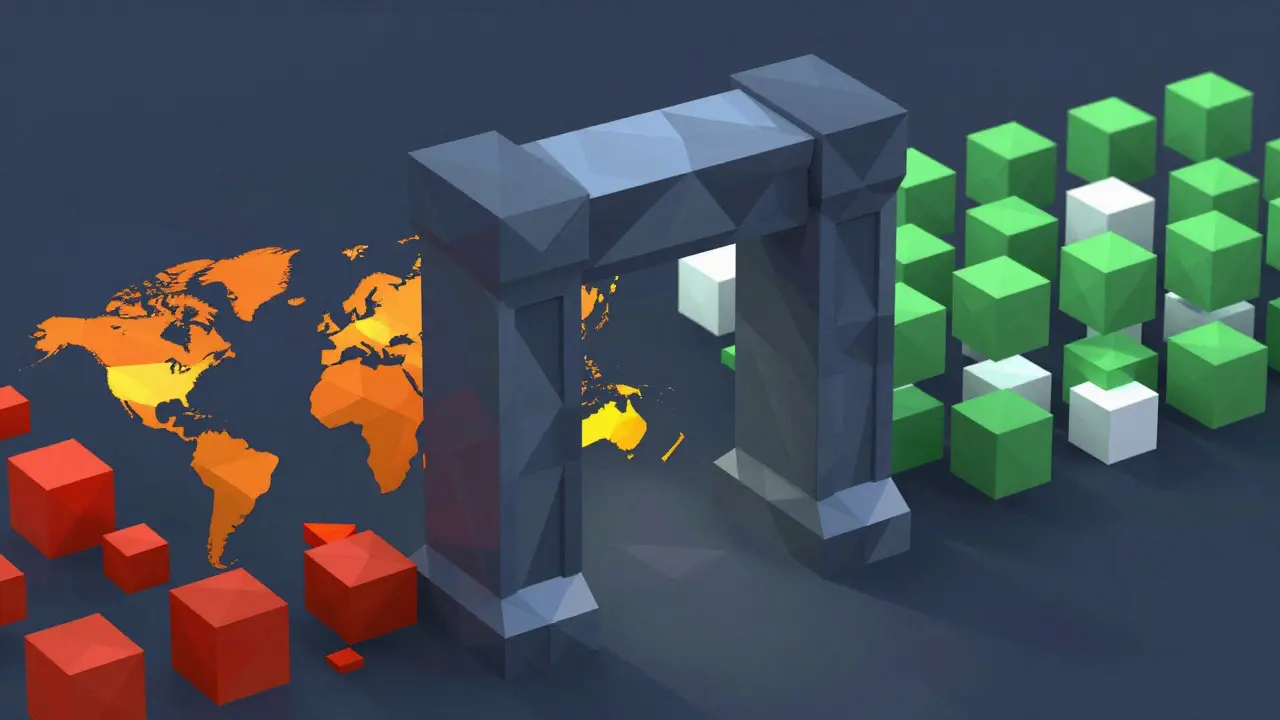
In August 2025, the SEC published a public advisory naming ten major global exchanges that were operating without authorization. The list included OKX, Bybit, KuCoin, Kraken, LBank, and CoinW. These platforms are now under scrutiny and face the same fate as Binance unless they comply.
The SEC's approach is multi-pronged. They are working with the National Telecommunications Commission (NTC) to block access to these sites. Website blocking is expected to begin around September 2025, following a 30-day notice period. Additionally, the SEC is pushing for these apps to be removed from the Google Play Store and Apple App Store for Philippine users.
For traders currently holding assets on these platforms, the situation is tense. The SEC has urged users to withdraw their funds while they still can. However, unlike the Binance case where a clear exit window was provided, the timeline for other exchanges is less defined. Some platforms may choose to fight the ruling, while others may simply pull out of the market to avoid the cost of compliance.
Penalties and Legal Consequences
The penalties for non-compliance are severe. Under the Securities Regulation Code, operating an unregistered crypto exchange can lead to fines ranging from 50,000 to 10 million PHP per violation. That's approximately $900 to $180,000 USD. But the fines don't stop there. There are additional daily penalties of 10,000 PHP ($180 USD) for every day the violation continues.
More importantly, criminal liability is on the table. Executives of non-compliant companies could face up to five years in prison and a maximum fine of 2 million PHP ($36,000 USD). Atty. Paolo Ong, Assistant Director of the SEC's Enforcement Department, stated that the new rules give the team "more teeth" to pursue these cases aggressively. This shift from civil fines to potential criminal charges signals a serious intent to clean up the market.
| Requirement | CASP Compliant | Unregistered Exchange |
|---|---|---|
| Corporate Structure | Philippine Domestic Corporation | Foreign Entity (e.g., Seychelles, BVI) |
| Minimum Capital | 100 Million PHP | None Required |
| Fund Segregation | Mandatory (Customer vs Company) | Optional/Unverified |
| Physical Presence | Required in Philippines | Remote Operations Only |
| Regulatory Oversight | Monthly Reporting to SEC | No Direct Oversight |
Impact on Retail Investors
How does this affect you as a regular trader? The immediate effect is reduced choice. With major global exchanges facing bans, you have fewer places to buy and sell Bitcoin, Ethereum, or altcoins. Academic analysis from the University of the Philippines suggests that retail investor participation could drop by 30-40% initially as people leave the market due to friction.
However, the long-term goal is stability. The SEC argues that unregulated platforms pose higher risks of fraud, market manipulation, and sudden insolvency. By forcing exchanges to hold more capital and segregate funds, the likelihood of losing your entire investment drops significantly. Social media sentiment reflects this divide. On Reddit's r/PhilippinesCrypto, many users expressed support for the rules, citing past losses on collapsed platforms like Celsius. One user noted, "I lost 150,000 PHP on Celsius in 2022 - these rules might be strict but they'll save others from the same fate."
On the flip side, critics argue that blocking international platforms drives activity to riskier, harder-to-regulate channels like peer-to-peer (P2P) markets or decentralized finance (DeFi) protocols. The SEC acknowledges this risk. Their Cybersecurity Bureau estimates that 15-20% of crypto activity could migrate to these less visible channels. To combat this, the SEC is planning to expand regulations to cover DeFi protocols by 2027.
What Should You Do Now?
If you are currently trading on an unregistered exchange, time is running out. Here are practical steps to protect your assets:
- Check Your Exchange Status: Verify if your platform is on the SEC's list of non-compliant entities. If it is, assume it will be blocked soon.
- Withdraw Funds Early: Don't wait for the website to go down. Withdraw your crypto to a personal wallet (like a hardware wallet) or transfer it to a compliant local exchange if possible.
- Verify Identity Documents: Ensure your KYC (Know Your Customer) documents are up to date. Delays in verification can freeze your withdrawals during critical times.
- Consider Local Alternatives: Look for exchanges that have already obtained CASP licenses. These platforms will remain accessible and offer greater legal protection.
- Monitor Official Channels: Follow updates from the SEC's PhiliFintech Innovation Office. They provide weekly town halls and official advisories regarding enforcement timelines.
The transition to a regulated market is painful in the short term but necessary for long-term growth. The Philippines has one of the largest crypto user bases in Southeast Asia, with 15 million active users. Protecting this ecosystem requires tough decisions. As Commissioner Kelvin Lee stated, the rules are not about prohibiting crypto, but about establishing safeguards.
Is cryptocurrency banned in the Philippines?
No, cryptocurrency is not banned. The SEC explicitly states that trading and investing in crypto are legal. However, only registered Crypto Asset Service Providers (CASPs) can legally facilitate these transactions. Unregistered exchanges are being blocked to enforce consumer protection laws.
Which exchanges are affected by the SEC enforcement?
In August 2025, the SEC named several major exchanges including OKX, Bybit, KuCoin, Kraken, LBank, and CoinW as non-compliant. These platforms face website blocking and app store removal unless they secure a CASP license.
When will the website blocks start?
The SEC announced a 30-day notice period following the August 2025 advisory. Website blocking for non-compliant platforms is expected to begin around September 2025, coordinated with the National Telecommunications Commission.
What is the CASP license requirement?
To operate legally, a crypto exchange must register as a domestic corporation in the Philippines, have a minimum paid-up capital of 100 million PHP, maintain a physical office, and segregate customer funds from company assets. They must also report monthly to the SEC.
Are my funds safe on unregistered exchanges?
Funds on unregistered exchanges are at higher risk. Without mandatory fund segregation, exchanges can use customer deposits for their own operations. If the exchange faces legal trouble or bankruptcy, recovering your funds becomes difficult. The SEC recommends withdrawing assets to personal wallets.
Will DeFi protocols be regulated next?
Yes, the SEC plans to expand regulations to cover decentralized finance (DeFi) protocols by 2027. Current CASP rules exclude DeFi, but officials have indicated that smart contract risks and liquidity pool vulnerabilities will be addressed in future phases.
How does this compare to Thailand's regulations?
Thailand requires local registration for crypto businesses, but the Philippines goes further by requiring full domestic incorporation. This makes the Philippine framework one of the strictest in Asia, second only to China's outright ban, according to comparative analyses by firms like Baker McKenzie.
What happened to Binance in the Philippines?
Binance was forced to withdraw from the Philippine market in 2024 after failing to obtain a CASP license. The SEC blocked access to its website and app, resulting in a significant drop in crypto-related fraud cases. This serves as the precedent for current enforcement actions against other exchanges.