
Russia Legalizes Crypto Mining to Bypass Sanctions: How It Works and Why It’s Limited
Sanctions Evasion Effectiveness Comparison
This tool compares how Bitcoin, A7A5 stablecoin, and traditional banking systems perform for sanctions evasion scenarios based on key factors from the article.
| Factor | Bitcoin | A7A5 Stablecoin | Traditional Banking |
|---|---|---|---|
| Stability | High Volatility (+/- 15% daily) |
Stable (Ruble-backed) | Moderate (Currency Risk) |
| Traceability | Highly Traceable | Low Traceability | Moderate Traceability |
| Transaction Volume | Limited | High | High |
| Business Usability | Poor (Volatility Risk) | Good (Dedicated Network) | Good (Established) |
| Government Control | No Control | Full Control | Partial Control |
Key Takeaways
Bitcoin is too volatile and transparent for Russia's needs. A barrel of oil priced in Bitcoin could cost 15% more tomorrow.
A7A5 is designed specifically for sanctioned transactions. It's stable, ruble-backed, and operates on a closed network of sanctioned exchanges.
Visualization of how each payment system performs for your selected scenario
When Russia legalized cryptocurrency mining in 2025, it wasn’t about embracing digital currency for its innovation. It was about survival. After Western sanctions froze billions in assets and cut off access to dollar-clearing systems, Russia turned to blockchain not as a financial future-but as a lifeline. The move wasn’t subtle. It was calculated. And it’s working, at least for now.
How Russia Turned Mining Into a Sanctions Shield
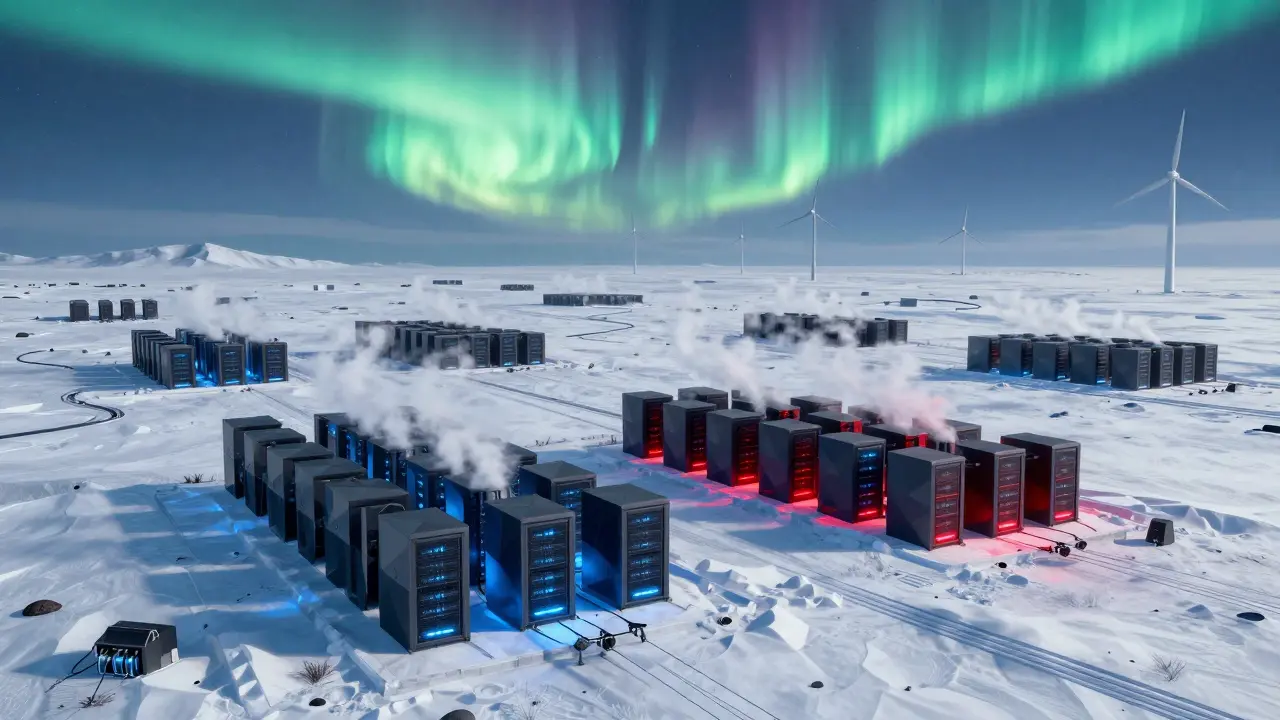
Russia didn’t just allow crypto mining. It built an entire parallel financial system around it. The country now runs the world’s third-largest crypto mining operation, using cheap electricity from Siberia and the Urals to power massive server farms. These aren’t hobbyists. They’re state-aligned operations churning out new cryptocurrency units every minute, designed to feed a shadow economy that avoids SWIFT, dollar clearing, and Western banks. The real engine behind this system? The A7A5 stablecoin. Launched in February 2025 by Ilan Shor, a Moldovan oligarch under international sanctions, A7A5 is pegged to the Russian ruble. But unlike Tether or USDC, it doesn’t rely on Western banking partners. It runs on a network of sanctioned exchanges like Garantex and Grinex-both now blacklisted by the U.S. Treasury. From February to July 2025, A7A5 moved over $51 billion in transactions. That’s more than the entire Bitcoin network handled in the same period. These aren’t random trades. Chainalysis found clear patterns: most activity happens on business days, peaks during Moscow trading hours, and flows between known Russian entities. It’s not retail investors buying for fun. It’s companies paying for oil, grain, and weapons-using crypto as a middleman to dodge sanctions.The Infrastructure Behind the Shadow Economy
Russia didn’t build this alone. It relied on a network of offshore players. Kyrgyzstan became a key hub. Four Kyrgyz entities, linked to Russia’s state-owned Promsvyazbank, helped issue and distribute A7A5. Luxembourg-based firms handled fund transfers. Even Russian banks like Transkapitalbank were repurposed to move crypto into physical goods. The U.S. Treasury responded in August 2025 by sanctioning the first-ever crypto mining company. That’s new. Before, sanctions targeted exchanges or wallets. Now, they’re going after the hardware-servers, power contracts, mining farms. The UK followed with its own sanctions, targeting Old Vector (A7A5’s issuer), Grinex, and eight individuals tied to the network. What’s striking is how tightly controlled this ecosystem is. Most transactions happen within a closed loop: Russian miners → A7A5 → Garantex/Grinex → sanctioned Russian importers → foreign suppliers. There’s little connection to global exchanges like Binance or Coinbase. It’s a walled garden, designed to stay under the radar.Why Bitcoin Isn’t the Answer
You might think Russia is using Bitcoin to evade sanctions. It’s not. Bitcoin’s market cap is around $1.2 trillion. Russia’s annual exports before the war were $400 billion. Even if every Bitcoin holder suddenly agreed to trade with Russia-which they won’t-Bitcoin’s volatility makes it useless for大宗商品 trade. A barrel of oil priced in Bitcoin could cost 15% more tomorrow. No exporter wants that risk. That’s why A7A5 matters. It’s stable. It’s ruble-backed. It’s controlled. And it’s designed for one thing: predictable, repeatable transactions between sanctioned entities. Bitcoin is too public, too volatile, too decentralized. A7A5 is the opposite: centralized, opaque, and tightly managed.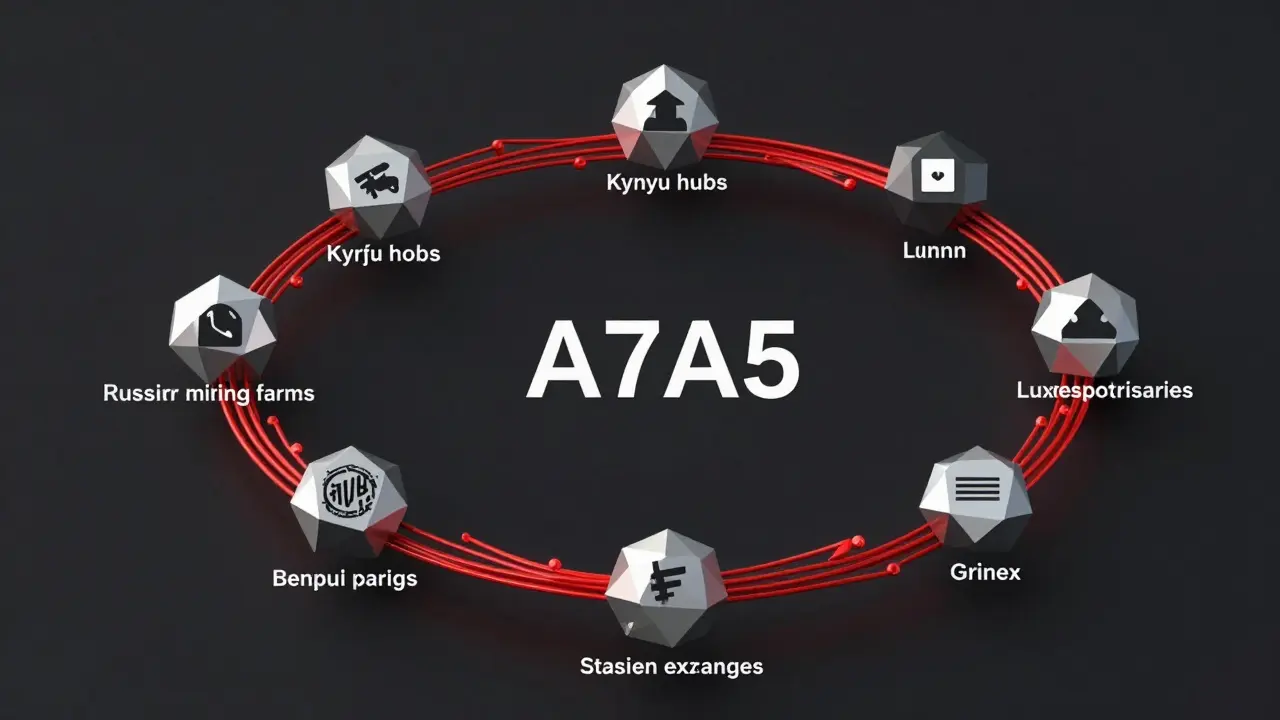
Western Countermeasures Are Working-But Slowly
The U.S. and UK didn’t just slap sanctions on names. They mapped the entire network. Chainalysis tracked A7A5 flows from mining farms in Krasnoyarsk to payment processors in Bishkek. They found links to military procurement. They traced payments from Russian defense contractors to suppliers in Turkey and India. The result? Over 40 individuals and entities have been sanctioned since 2022. Three people linked to Kyrgyz banks were named for helping move funds for weapons. A Luxembourg firm that processed A7A5 transactions was frozen out of the EU banking system. But here’s the catch: blockchain is transparent. Every transaction is recorded. Every wallet address leaves a trail. Russia thought crypto would be invisible. It’s not. It’s just harder to trace than traditional banking. That’s why sanctions are working-they’re not blocking everything, but they’re making it expensive, slow, and risky.Can This Last?
Russia’s crypto strategy has one fatal flaw: scale. Even if A7A5 hits $100 billion in volume next year, that’s still less than 1% of global trade. It’s enough to keep a few key industries running-energy, metals, grain-but not enough to replace the dollar. Western companies still won’t deal with Russian firms using crypto. Banks still refuse to clear transactions. Insurers won’t cover shipments tied to sanctioned exchanges. And then there’s the human cost. Russian miners are working in freezing warehouses with no legal protections. They’re not entrepreneurs. They’re employees of state-backed firms, paid in crypto that can’t be easily spent outside Russia. The average miner earns less than $300 a month-barely enough to live on. Meanwhile, the West keeps tightening the screws. New tools are being developed to flag crypto flows tied to Russian IP addresses. Major cloud providers like AWS and Google Cloud have cut off Russian mining operations. Even China, once a big player in mining, has banned transactions linked to sanctioned Russian entities.
What This Means for the Rest of the World
Russia’s move isn’t unique. North Korea uses crypto to fund its nuclear program. Venezuela uses Petro tokens to bypass U.S. sanctions. Iran has its own crypto rails. But Russia is the first major economy to fully integrate crypto into its state strategy. That’s a warning. If other countries see Russia getting away with this-even partially-they’ll try the same. The next target might be Iran, or Belarus, or even a non-aligned nation looking to break free from dollar dominance. But the lesson isn’t that crypto is a sanctions-busting tool. It’s that no system is truly anonymous. Blockchain doesn’t hide money. It just moves it through more complex paths. And every path leaves a trail.What’s Next?
Russia’s crypto mining legalization isn’t a win. It’s a desperate adaptation. The country still can’t export wheat to Egypt without using a third-country intermediary. It still can’t buy advanced microchips without smuggling them through Turkey. The dollar still dominates global trade. Crypto hasn’t replaced it. It’s just a small, risky side channel. The real story here isn’t about technology. It’s about power. Russia thought it could outmaneuver the West with code. Instead, it’s proving that financial systems are built on trust, networks, and scale-and those are things you can’t fake with a blockchain.Is crypto mining legal in Russia?
Yes, Russia legalized cryptocurrency mining in early 2025 as part of a broader strategy to bypass Western sanctions. Mining is now regulated under state oversight, with mining operations required to register and report energy usage. The government encourages mining because it generates foreign currency revenue through crypto exports and helps create alternative payment systems outside SWIFT.
What is the A7A5 stablecoin and why is it important?
A7A5 is a ruble-backed stablecoin launched in February 2025 by Ilan Shor, a Moldovan oligarch under sanctions. Issued by Old Vector, a company tied to Russia’s Promsvyazbank, A7A5 has processed over $51 billion in transactions by mid-2025. It’s used by sanctioned Russian businesses to pay for imports like oil, grain, and military equipment, avoiding Western banks. Unlike Bitcoin, A7A5 is stable, centralized, and operates on a closed network of sanctioned exchanges, making it harder for Western authorities to track.
Can Russia really evade sanctions using crypto?
Russia can evade some sanctions, but not all. Crypto helps move small, high-value transactions-like paying for specialized parts or paying contractors abroad. But it can’t replace the dollar for bulk trade. Russia still needs Western technology, insurance, and shipping. Most global buyers refuse to deal with crypto-linked Russian firms. So while crypto keeps some trade alive, it hasn’t broken the sanctions. It’s a patch, not a solution.
Are U.S. and UK sanctions working against Russia’s crypto network?
Yes, but gradually. The U.S. Treasury sanctioned Grinex, Old Vector, and the first-ever crypto mining company in August 2025. The UK followed with its own sanctions. These actions have frozen assets, blocked access to global financial systems, and forced Russian entities to use more complex, less efficient workarounds. Blockchain analytics have helped track flows, making it harder to hide. But Russia keeps adapting-opening new exchanges, shifting mining to remote regions, and using intermediaries in Central Asia.
Why doesn’t Russia just use Bitcoin instead of A7A5?
Bitcoin is too volatile and too public. A barrel of oil priced in Bitcoin could swing 20% in a day-no exporter will accept that. Bitcoin transactions are also visible on a public ledger, making them easy to trace. A7A5, on the other hand, is stable, centralized, and operates on a closed network. It’s designed for business use, not speculation. Russia needs predictability, not decentralization.
Is crypto mining in Russia profitable for individuals?
Not really. Most miners work for state-linked firms or private companies that pay in crypto. Wages are low-often under $300 a month-and miners can’t easily spend their earnings outside Russia. Many operate in remote areas with poor living conditions. The real profits go to the companies and oligarchs who control the exchanges and stablecoin networks. Individual miners are just cogs in a larger machine.
Could other countries copy Russia’s crypto sanctions evasion model?
Possibly. North Korea and Iran are already using crypto for sanctions evasion. Venezuela has its own token. But Russia’s model is unique because it’s state-backed, large-scale, and integrated into national infrastructure. Smaller countries lack the energy resources, mining capacity, and financial networks to replicate it. Still, the idea-that crypto can be a tool for financial autonomy-is now on the table for any nation under sanctions.
Kelly Burn
December 15, 2025 AT 02:05So we’re just gonna let a stablecoin backed by a sanctioned Moldovan oligarch become the de facto currency for Russian weapons procurement? 🤔 I mean, sure, it’s clever - but it’s also a blockchain-powered loophole in the global financial firewall. We built SWIFT to be unbreakable. Now we’re watching it get bypassed by a crypto token named after a typo. #A7A5IsTheNewDollar 🚨
John Sebastian
December 15, 2025 AT 18:53This is exactly why crypto should be banned. Not because it’s evil - but because it enables exactly this kind of shadow infrastructure. No regulation. No accountability. Just lines of code replacing moral responsibility.
Jessica Eacker
December 16, 2025 AT 11:25Let’s not forget the miners - freezing warehouses, $300/month, paid in crypto they can’t spend. This isn’t innovation. It’s exploitation wrapped in blockchain hype. We need to talk about the human cost, not just the ledger.
Ike McMahon
December 17, 2025 AT 12:08A7A5 works because it’s not Bitcoin. It’s centralized, stable, and controlled - perfect for sanctioned trade. But it’s also a dead end. No one outside Russia trusts it. No insurer covers it. No bank clears it. It’s a ghost economy - alive, but not growing.
Kim Throne
December 17, 2025 AT 12:43It is imperative to note that the operational architecture of A7A5 constitutes a deliberate circumvention of internationally sanctioned financial protocols. The use of Kyrgyz intermediaries and Luxembourg-based entities demonstrates a sophisticated, multi-jurisdictional evasion strategy that undermines the efficacy of asset-freezing mechanisms. This is not merely a technical workaround - it is a systemic challenge to the Bretton Woods paradigm.
Caroline Fletcher
December 18, 2025 AT 00:40LOL they think they’re slick. But every single A7A5 transaction is on a public ledger. The FBI has a spreadsheet with every wallet. This isn’t crypto - it’s Russian TikTok finance. 🤡
Heath OBrien
December 19, 2025 AT 14:46They’re not evading sanctions. They’re just making the world uglier. And now we’re all paying for it with higher gas prices and worse geopolitics. 😔
Taylor Farano
December 21, 2025 AT 13:39Let me get this straight - Russia built a $50B shadow economy using a coin named after a typo, and we’re supposed to be impressed? This isn’t innovation. It’s a middle school hacker’s dream gone wrong. A7A5? More like A7A5-Why-Is-This-Still-Alive.
Toni Marucco
December 21, 2025 AT 22:30The elegance of this strategy lies not in its novelty, but in its paradox: a decentralized technology harnessed for maximal centralization. Russia has weaponized transparency - using the immutable ledger not to empower, but to entrench. The blockchain, once heralded as a liberator, has become the most efficient tool of authoritarian financial control ever devised.
Steven Ellis
December 22, 2025 AT 09:04It’s heartbreaking to see how the promise of crypto - open, fair, decentralized - has been co-opted by state actors to perpetuate oppression. The miners aren’t pioneers. They’re prisoners in a digital gulag. The real tragedy isn’t the sanctions. It’s what they’ve turned ordinary people into.
Stanley Machuki
December 22, 2025 AT 14:10They’re clinging to crypto like a life raft - and it’s sinking. But hey, at least they’re trying. We gotta give them credit for hustle. 🚀
Lloyd Cooke
December 23, 2025 AT 15:38One might argue that the legalization of mining represents not an embrace of decentralization, but a profound reaffirmation of state sovereignty over digital capital. The blockchain, in this context, is not a challenge to the state - it is its most intimate instrument. The ledger does not liberate; it records. And what is recorded, can be controlled.
Kurt Chambers
December 24, 2025 AT 10:30USA weak. Sanctions? LOL. Russia outsmarted you with code. You think your banks are safe? We got miners in Siberia running on frozen wind and vodka. A7A5 > USD. Deal with it. 🇷🇺
Andy Walton
December 26, 2025 AT 10:12wait so if every transaction is public… why arent they all just… blocked? like… isnt the whole point of blockchain that you can see everything? did no one think this through? 🤦♂️