
QBTC Crypto Exchange Review: What QBTC Really Is (And Why It’s Not an Exchange)
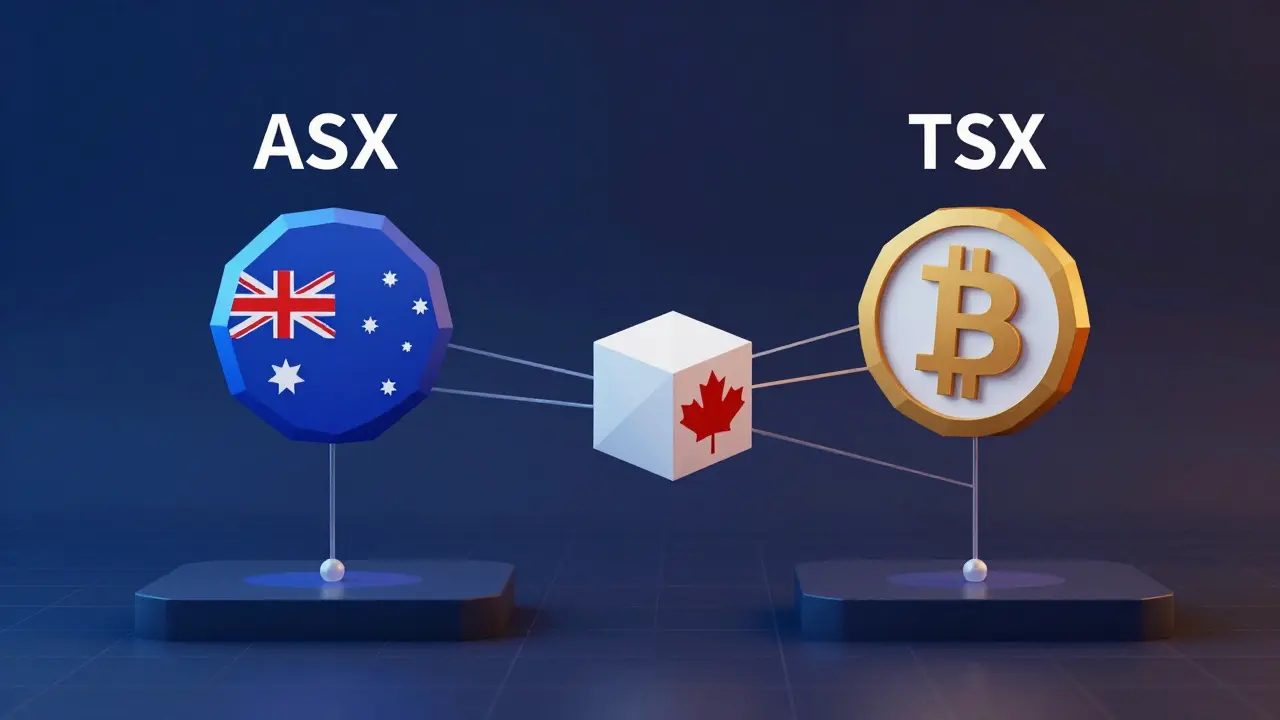
Many people search for "QBTC crypto exchange" thinking it’s a platform to buy and sell Bitcoin like Binance or Coinbase. But QBTC isn’t an exchange at all. It’s not even a website you log into. It’s a ticker symbol - two of them, actually - for regulated Bitcoin investment products traded on stock exchanges. If you’re looking to get into Bitcoin without managing wallets, private keys, or crypto accounts, QBTC might be what you actually need. But you won’t find it on any crypto exchange. You’ll find it in your brokerage account.
QBTC Isn’t a Platform - It’s Two ETFs
QBTC refers to two separate exchange-traded funds (ETFs) that track the price of Bitcoin. One is listed on the Australian Securities Exchange (ASX), and the other on the Toronto Stock Exchange (TSX). Both let you invest in Bitcoin like you would in Apple or Tesla stock. No crypto wallet needed. No need to worry about phishing scams or exchange hacks. You just buy shares through your regular broker.
The Australian version is the Betashares Bitcoin ETF (QBTC) an Australian-domiciled ETF that tracks the price of Bitcoin in Australian dollars, launched on February 18, 2025. It doesn’t hold Bitcoin directly. Instead, it invests in the Bitwise Bitcoin ETF listed on the NYSE. That fund, managed by Bitwise - the largest crypto index fund manager in the U.S. - holds actual Bitcoin stored in cold storage by a top-tier digital asset custodian. So your exposure is indirect, but still fully backed by real Bitcoin.
The Canadian version is The Bitcoin Fund (QBTC) a physically-backed Bitcoin ETP operated by 3iQ, listed on the TSX in both CAD and USD. This one actually buys and holds Bitcoin directly. As of January 31, 2026, each unit of QBTC held 0.000991857 Bitcoin. That means you’d need about 1,008 units to own one full Bitcoin. It trades under QBTC (CAD) and QBTC.U (USD) on the TSX, and also on the Dubai exchange.
Why QBTC Is Different From Crypto Exchanges
Here’s the big difference: on a crypto exchange like Kraken or Coinbase, you own Bitcoin directly. You’re responsible for securing your private keys. If you lose them, your coins are gone. If the exchange gets hacked, your funds might be at risk - even if it’s a big one.
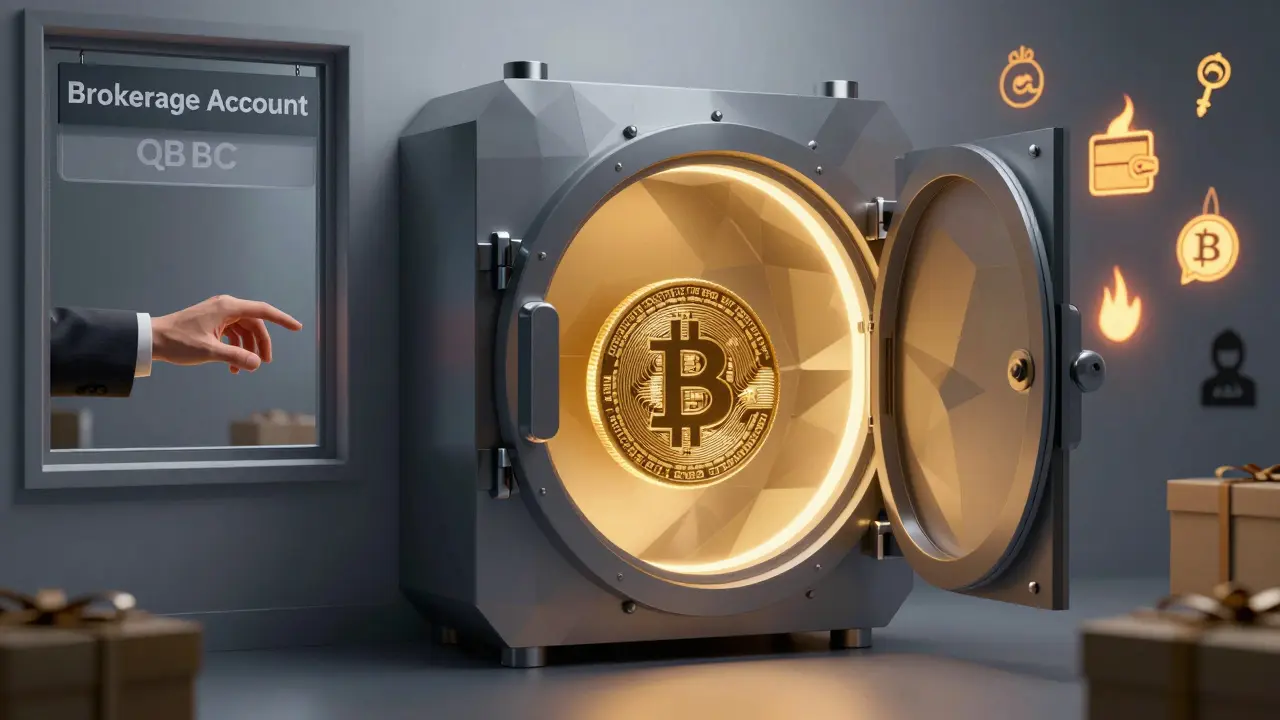
With QBTC, you own shares in a fund. The fund owns the Bitcoin. The fund’s custodian - not you - holds the keys. The fund is regulated by Australia’s ASIC or Canada’s OSC. That means daily reporting, audited holdings, and legal protections you don’t get on most crypto platforms.
For example, if you live in Canada and have a TFSA or RRSP, you can hold QBTC inside those accounts. You can’t do that with Bitcoin bought on a crypto exchange. Same in Australia: QBTC fits into your superannuation or brokerage account like any other ETF. No need to open a separate crypto account. No need to learn how to send a transaction. Just buy, hold, or sell like you would with a stock.
Performance and Fees
QBTC doesn’t promise returns - it tracks Bitcoin. So if Bitcoin goes down, QBTC goes down. From its launch on February 18, 2025, through February 19, 2026, the Betashares QBTC lost 34.19% over six months and 19.67% annually. That’s not because the fund failed. That’s because Bitcoin fell about 35% in that same period.
The Betashares QBTC charges a management fee of 0.45% per year. The Canadian QBTC charges 0.95% - higher, but still lower than most actively managed funds. Neither pays dividends. The fund doesn’t distribute Bitcoin or cash - it just tracks price.
Both funds publish their holdings daily. You can check exactly how much Bitcoin each unit holds. Transparency like that doesn’t exist on most crypto exchanges, where you’re often left guessing whether your balance is fully backed.
Who Should Use QBTC?
QBTC is perfect for:
- Investors who already use brokerage accounts and don’t want to juggle crypto platforms
- People in Canada or Australia who want Bitcoin exposure inside tax-advantaged accounts like RRSPs or super funds
- Those scared of losing private keys or getting hacked on exchanges
- Anyone who wants Bitcoin exposure without dealing with KYC on multiple crypto sites
It’s not for:
- Traders who want to buy Bitcoin at 3 a.m. and sell in 10 minutes
- People who want to send Bitcoin to a friend or use it to pay for goods
- Those looking to earn yield through staking or lending
If you want to actively trade Bitcoin, use a real exchange. If you want to hold Bitcoin as a long-term asset with less hassle and more security, QBTC is a smarter path.
Risks and Warnings
Both QBTC products warn investors: this is an extremely high-risk investment. The Betashares prospectus says you should only put 5% or less of your portfolio into it. Bitcoin can drop 50% in a month. That’s not a rumor - it’s history. QBTC doesn’t protect you from that. It just makes the way you hold it safer.
There’s also counterparty risk. The Australian QBTC depends on the Bitwise ETF, which depends on its custodian. The Canadian QBTC depends on 3iQ’s ability to securely store Bitcoin. If any link in that chain breaks - say, the custodian goes bankrupt or gets hacked - your investment loses value. But again, that’s far less likely than a crypto exchange going offline or freezing withdrawals.
How to Buy QBTC
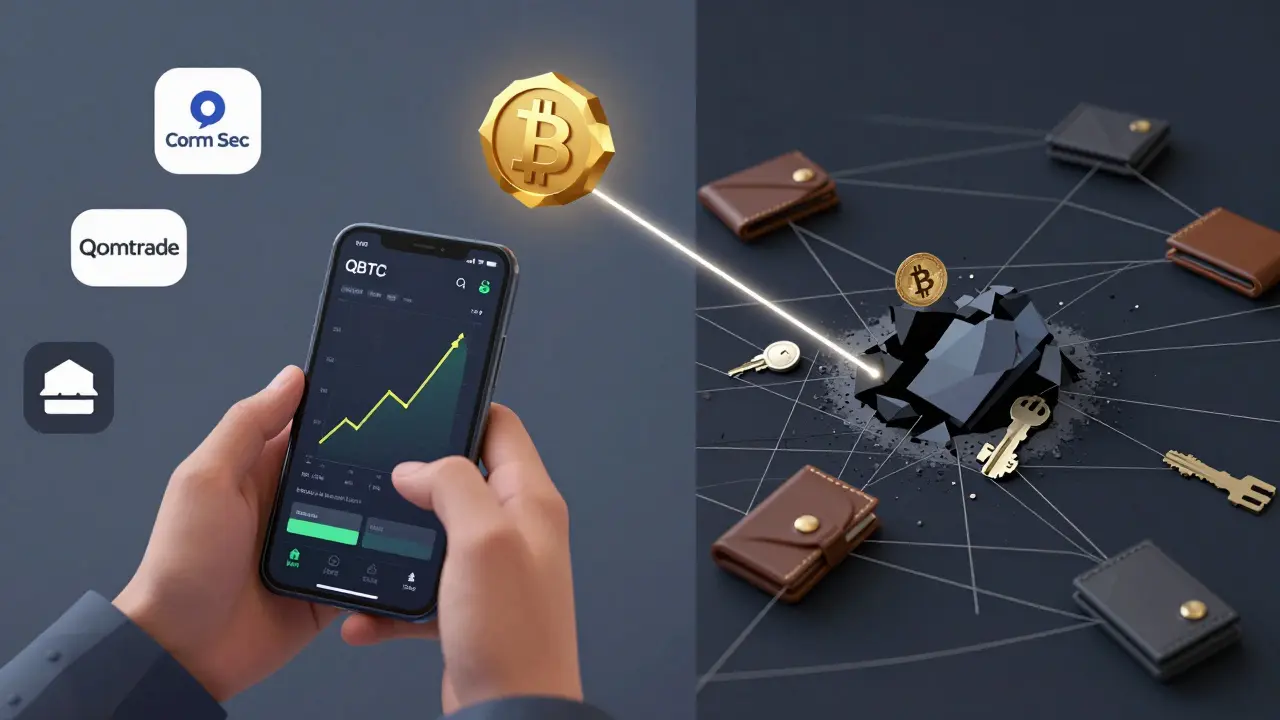
You don’t need a crypto account. You need a brokerage account that trades on the ASX or TSX.
In Australia: Log into your broker (e.g., CommSec, SelfWealth, Stake). Search for "QBTC". Buy like you would buy a share of BHP. You can set up a DRP (Distribution Reinvestment Plan) if you want to automatically reinvest any future distributions - though none have been paid yet.
In Canada: Use any major Canadian broker (e.g., Questrade, Wealthsimple, TD Direct Investing). Search for "QBTC" (CAD) or "QBTC.U" (USD). Place your order. It settles like any stock.
You can’t buy QBTC directly from Betashares or 3iQ. You can’t sign up on a website. You can’t fund it with crypto. It’s only available through stock brokers.
How QBTC Compares to Other Bitcoin ETFs
QBTC isn’t alone. In the U.S., the SEC approved Bitcoin spot ETFs in January 2024. Products like the BlackRock iShares Bitcoin Trust (IBIT) and Grayscale Bitcoin Trust (GBTC) now dominate the market. In Europe, products like the CoinShares Physical Bitcoin ETP trade on exchanges in Stockholm and Frankfurt.
But QBTC stands out because it’s one of the few products that lets investors in Australia and Canada access Bitcoin through their existing investment infrastructure. You don’t need to cross borders or open U.S. accounts. QBTC brings Bitcoin into your local financial system.
Compared to U.S. ETFs, QBTC has higher fees. But it offers something they don’t: seamless integration with retirement accounts and local tax rules. That’s a huge deal for long-term investors.
Final Thoughts
QBTC isn’t a crypto exchange. It’s a bridge between traditional finance and Bitcoin. It removes the complexity, the risk, and the confusion of owning crypto directly - while keeping the price exposure intact. If you’re tired of explaining to your bank why you have a crypto wallet, or worried about losing your keys, QBTC is the quiet, regulated, and surprisingly simple solution.
It’s not for everyone. But for millions of investors who want Bitcoin without the chaos - it’s the best option available in Australia and Canada right now.
Is QBTC a cryptocurrency exchange?
No, QBTC is not a cryptocurrency exchange. It is the ticker symbol for two regulated Bitcoin exchange-traded funds (ETFs) - one listed on the Australian Securities Exchange (ASX) and the other on the Toronto Stock Exchange (TSX). You buy QBTC through your stock broker, not a crypto platform like Binance or Coinbase. It does not allow trading, depositing, or withdrawing Bitcoin.
Can I buy QBTC on Binance or Coinbase?
No, you cannot buy QBTC on Binance, Coinbase, or any other cryptocurrency exchange. QBTC is a stock market product. To buy it, you need a brokerage account that trades on the ASX (for the Australian version) or TSX (for the Canadian version). You can purchase it like any other ETF - using your existing stock trading platform.
Is QBTC backed by real Bitcoin?
Yes, both versions of QBTC are backed by real Bitcoin. The Australian QBTC holds Bitcoin indirectly by investing in the U.S.-listed Bitwise Bitcoin ETF. The Canadian QBTC holds Bitcoin directly, purchasing it through regulated OTC desks and exchanges. Both use professional custodians to store the Bitcoin in offline cold storage, making it far more secure than holding it on a crypto exchange.
What are the fees for QBTC?
The Betashares QBTC (Australia) charges a management fee of 0.45% per year. The Canadian QBTC (3iQ) charges 0.95% per year. These fees are deducted from the fund’s assets, so you don’t pay them directly. Both funds publish their daily net asset value (NAV), so you can see exactly how much Bitcoin each unit represents after fees.
Can I hold QBTC in my RRSP or TFSA?
Yes, the Canadian QBTC can be held inside an RRSP or TFSA. The Australian QBTC can be held in a superannuation account or brokerage account. This is one of its biggest advantages over buying Bitcoin directly - you get the tax benefits and regulatory protections of traditional investing, not the wild risks of crypto platforms.
Is QBTC safer than buying Bitcoin on an exchange?
Yes, in key ways. QBTC uses professional, regulated custodians to store Bitcoin offline - not on internet-connected servers like exchanges. It’s subject to strict financial regulations (ASIC in Australia, OSC in Canada). You don’t need to manage private keys. There’s no risk of exchange downtime or withdrawal freezes. While Bitcoin price risk remains, the custody and regulatory risks are dramatically lower than with most crypto exchanges.
How much Bitcoin does one QBTC unit represent?
As of January 31, 2026, each unit of the Canadian QBTC represented 0.000991857 Bitcoin. That means roughly 1,008 units equal one Bitcoin. The Australian QBTC doesn’t hold Bitcoin directly, but its value mirrors the U.S. Bitwise Bitcoin ETF, which holds actual Bitcoin. Both funds update their holdings daily on their websites.
Does QBTC pay dividends?
No, neither version of QBTC pays dividends. Bitcoin doesn’t generate income, so these funds don’t distribute cash. Their only purpose is to track Bitcoin’s price. Any returns come from price changes in Bitcoin itself, not from payouts.
Can I sell QBTC anytime?
Yes. QBTC trades like a regular stock during market hours on the ASX or TSX. You can buy or sell anytime the market is open. Settlement takes two business days (T+2), just like other ETFs. There’s no waiting period or withdrawal delay like you might face on crypto exchanges.
What’s the difference between QBTC and a Bitcoin spot ETF in the U.S.?
The core structure is similar - both are regulated funds that hold Bitcoin. But QBTC is designed for Australian and Canadian investors to access Bitcoin within their local financial systems. U.S. spot ETFs like IBIT or ARK21Shares are built for U.S. investors and may not be eligible for tax-advantaged accounts outside the U.S. QBTC lets you hold Bitcoin in your RRSP, TFSA, or super fund - something U.S. ETFs typically can’t do for non-U.S. residents.
Howard Headlee
March 13, 2026 AT 04:42QBTC is literally the cheat code for Bitcoin newbies who still use PayPal. No wallet? No problem. Just buy it like a stock and forget about it. I’ve been holding it for 8 months and I haven’t had a single nightmare about private keys. Zero stress. Zero tech headaches. Just pure, dumb, long-term Bitcoin exposure. If you’re not doing this yet, you’re overcomplicating life.
Julie Tomek
March 14, 2026 AT 03:04It’s important to recognize that QBTC, as an ETF structure, offers a layer of regulatory oversight that is fundamentally absent from decentralized cryptocurrency exchanges. The custody mechanisms employed by Betashares and 3iQ are subject to stringent fiduciary obligations under ASIC and OSC frameworks, respectively. This is not merely a convenience-it is a structural safeguard against systemic counterparty risk, which has historically led to catastrophic losses on unregulated platforms. Investors seeking capital preservation should prioritize such instruments over speculative, non-compliant alternatives.
Brandon Kaufman
March 15, 2026 AT 19:04I used to be scared of crypto. Like, really scared. Then I found QBTC. Just bought it through my TD account. No app downloads. No weird links. No ‘send 0.5 BTC to claim your airdrop’ nonsense. Just… buy. Hold. Sleep. It’s wild how simple it can be when you stop trying to be a tech bro.
Anshita Koul
March 16, 2026 AT 14:28QBTC… it’s not just an investment-it’s a philosophy. A quiet rebellion against the chaos of crypto exchanges. A return to the dignity of regulated markets. We’ve been conditioned to believe that decentralization means freedom-but what if true freedom is knowing your assets are held by audited custodians, not anonymous devs on Discord? QBTC doesn’t scream. It whispers. And in a world of noise… that’s revolutionary.
PIYUSH KOTANGALE
March 17, 2026 AT 18:53QBTC = chill mode activated 🤙 No wallet. No stress. Just Bitcoin in my RRSP. Done.
Grace van Gent-Korver
March 18, 2026 AT 23:26I’m from the Netherlands, but I can buy QBTC through my broker here because it’s listed on the TSX. So cool how global finance works now. No need to fly to Canada or Australia. Just click buy. That’s the future.
Anthony Marshall
March 20, 2026 AT 04:48If you’re still using Coinbase like it’s 2017, you’re not an investor-you’re a lab rat. QBTC is the adult version of Bitcoin. You don’t need to be a hacker to own it. You just need a brokerage account and a brain. Stop romanticizing self-custody. It’s not brave. It’s just risky.
Lindsay Girvan
March 21, 2026 AT 09:08QBTC? More like QBORING. Where’s the adrenaline? Where’s the meme coins? This is just ETFs with Bitcoin labels. I want to HODL, not… hold shares. 😒
Douglas Anderson
March 23, 2026 AT 06:12For anyone worried about custody risk: the Canadian QBTC is physically backed. That means real Bitcoin, stored offline, audited monthly. The Australian one is indirect, but still backed by Bitwise-which is one of the most transparent funds in the space. Both are safer than 90% of crypto exchanges. The fees? Yeah, they’re higher than a spot ETF, but you’re paying for peace of mind. And that’s worth something.
Tina Keller
March 25, 2026 AT 05:12Let’s be real-most people don’t even know what a private key is. And that’s okay. QBTC doesn’t require you to be a crypto nerd. It just lets you participate. I bought it for my mom. She thought it was a mutual fund. I didn’t correct her. She’s now up 12% since January. No stress. No panic selling. Just… growth. That’s the real win.
vasantharaj Rajagopal
March 25, 2026 AT 07:42The structural architecture of QBTC as a physically-backed ETP versus an indirectly indexed ETF presents distinct risk profiles. The Canadian variant, by virtue of direct Bitcoin holdings, exhibits lower operational layering, thereby reducing counterparty exposure. However, the Australian iteration’s reliance on the Bitwise ETF introduces an additional governance node, which may be subject to regulatory arbitrage. Investors must conduct due diligence on custodial chain integrity.
ann neumann
March 26, 2026 AT 09:51QBTC? Ha. You think this is safe? What happens when ASIC and OSC get hacked? Or when the custodian gets bought by BlackRock and they quietly sell all the Bitcoin? You think they’ll tell you? No. They’ll just update the NAV and say ‘market volatility’. This is just Wall Street’s way of making Bitcoin a controlled substance. You’re not owning Bitcoin. You’re leasing it. And the lease can be revoked anytime. Wake up.
William Montgomery
March 26, 2026 AT 14:47If you’re buying QBTC because you’re scared of losing keys, you’re not investing-you’re hiding. Bitcoin is supposed to be permissionless. QBTC is permissioned. You’re trusting banks, regulators, custodians. That’s not crypto. That’s just… stocks with a Bitcoin sticker. Don’t fool yourself.
Adam Ashworth
March 28, 2026 AT 07:48QBTC is the bridge. Not the destination. You don’t need to go full Hodler to get Bitcoin exposure. And if you’re in Canada or Australia, this is the easiest way to do it without jumping through hoops. I’ve got it in my TFSA. My cousin in the U.S. has IBIT. We both own Bitcoin. We just used different doors. No one’s wrong. Just different paths.
Allison Davis
March 29, 2026 AT 01:12One thing people miss: QBTC lets you dollar-cost average through your regular brokerage. No need to time the market or figure out how to send crypto. Just set up a weekly buy. It’s automatic. It’s simple. It’s boring. And that’s why it works.
Tom Jewell
March 30, 2026 AT 02:19There’s a quiet beauty in QBTC. It doesn’t try to be revolutionary. It doesn’t need to. It just… exists. Like a library in a war zone. You don’t need to fight to read. You just walk in. And suddenly, you have access to something vast, ancient, and powerful-without having to learn how to build a bomb to get in. That’s not passive. That’s profound.
Sherry Kirkham
March 30, 2026 AT 22:12As a Canadian, I can’t believe how few people know this exists. QBTC in my TFSA? Yes. I bought it after the 2024 crash. Didn’t panic. Didn’t sell. Just held. Now it’s up 40%. No wallet. No anxiety. Just… money growing. Why would anyone use a crypto exchange when this is right there?
Jennifer Pilot
April 1, 2026 AT 21:05QBTC… what a name… it sounds like a typo… or a failed startup… I’m just… confused… why is it called QBTC… shouldn’t it be… like… BTCETF or something… more professional… also… I think the custodian… might… be… compromised… I saw a tweet…