
Qatar Crypto Ban: Institutional Restrictions & Digital Assets Rules

Imagine running a global investment fund. You offer Bitcoin ETFs in Dubai and stablecoin payments in Bahrain. But when you open your office in Doha, those products vanish from the menu. Why? Because Qatar is a Gulf state that maintains one of the strictest institutional bans on cryptocurrency activities within its regulated financial sector. While neighbors like the UAE embrace crypto trading, Qatar has drawn a hard line. For banks and insurers, touching crypto means risking their license. Yet, there’s a twist. In 2024, Qatar opened a narrow door for tokenized traditional assets, creating a confusing landscape for anyone trying to navigate regional finance.
The Core Prohibition: What Is Actually Banned?
To understand the restriction, you have to look at the two main regulators: the Qatar Central Bank (QCB) is the monetary authority responsible for overseeing all licensed banking and financial institutions in Qatar, and the Qatar Financial Centre Regulatory Authority (QFCRA) is the independent regulator governing the international financial hub known as the Qatar Financial Centre.
It started back in February 2018. The QCB issued Circular No. (6), which explicitly told all financial institutions: no facilitating Bitcoin transactions. No crypto-related activities. It was a blanket ban on the traditional banking side. Then, on December 26, 2019, the QFCRA tightened the screws further with a strict alert. This alert banned "virtual asset services" within the QFC zone.
What counts as a virtual asset here? The definition is broad. It covers digital substitutes for currency used for trading, transfer, or payment. Crucially, it includes:
- Bitcoin is the first decentralized cryptocurrency that serves as a store of value and medium of exchange outside traditional banking systems.
- Stablecoins are cryptocurrencies pegged to fiat currencies like the US Dollar to minimize volatility, often used for cross-border payments.
- Central Bank Digital Currencies (CBDCs) are digital forms of a country's fiat currency issued by central banks, distinct from private cryptocurrencies.
Under this framework, these assets are classified as "Excluded Tokens." If a bank in Qatar tries to hold, transfer, or insure exposure to any of these, they are violating the rule. The ban isn't just about retail customers buying coins; it's about the infrastructure. No exchanges can operate legally under the QFC license, and no custodian can safely hold client crypto assets within the jurisdiction.
The 2024 Shift: Tokenization vs. Cryptocurrency
So, is Qatar anti-blockchain? Not exactly. On September 1, 2024, the QFCRA launched the QFC Digital Assets Regulations is a regulatory framework introduced in 2024 allowing the issuance and custody of tokenized representations of traditional financial assets while excluding native cryptocurrencies.
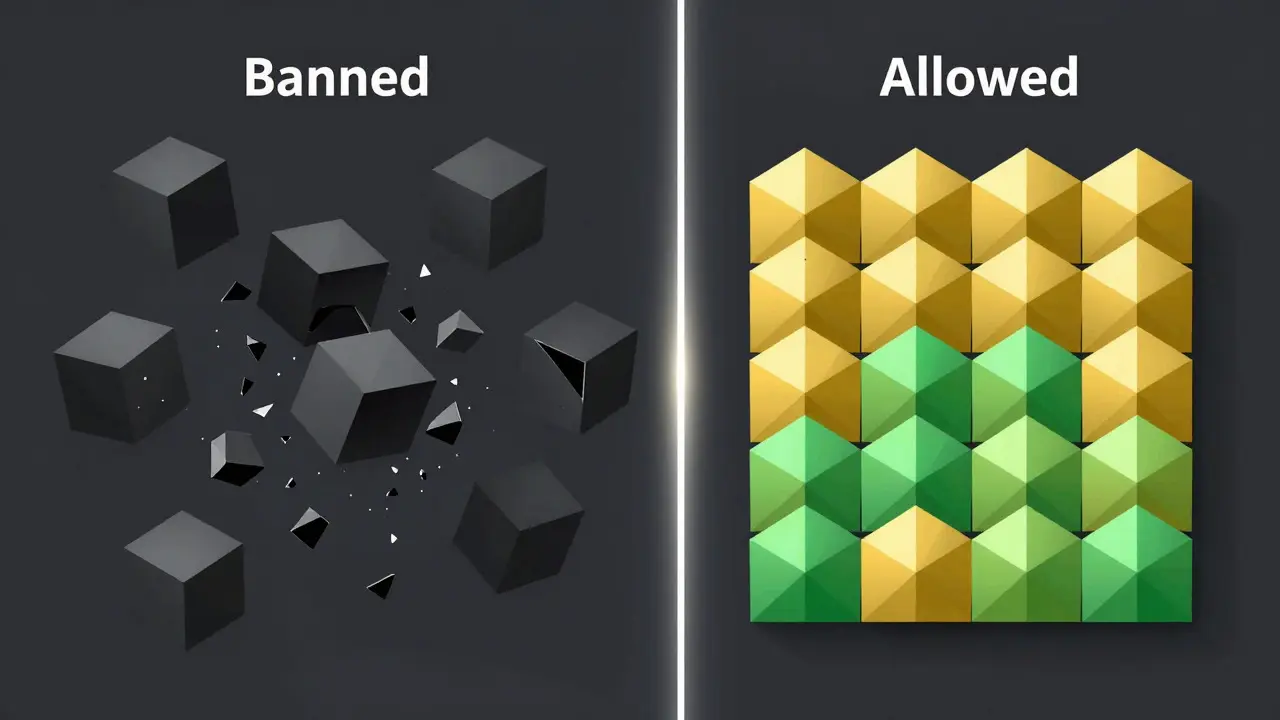
This is where it gets interesting. The new rules allow for the tokenization of real-world assets. Think of shares, bonds, Sukuk is an Islamic financial certificate broadly equivalent to a bond, representing an ownership share in an underlying asset, commodities, and even real estate. These tokens represent ownership in something tangible or traditional. They are not money themselves. They don't compete with the Qatari Riyal.
The key distinction is simple but critical:
| Feature | Banned Virtual Assets (Crypto/Stablecoins) | Allowed Tokenized Assets (Post-2024) |
|---|---|---|
| Primary Function | Medium of exchange, store of value, currency substitute | Certificate of ownership in traditional assets |
| Regulatory Status | "Excluded Tokens" - Prohibited | Approved under QFC Digital Assets Regs |
| Examples | Bitcoin, Ethereum, USDT, CBDCs | Tokenized Stocks, Sukuk, Real Estate Deeds |
| Institutional Access | None (Ban applies to all FIUs) | Yes (Requires registration and custody validation) |
| Risk Profile | High volatility, systemic risk concerns | Linked to underlying asset performance |
This approach allows Qatar to benefit from blockchain efficiency-faster settlement, transparent ownership-without surrendering monetary sovereignty. It’s a calculated move to stay relevant in fintech without opening the floodgates to speculative crypto markets.
Why So Strict? The Rationale Behind the Ban
You might wonder why a wealthy nation like Qatar would lock itself out of a growing market. The answer lies in Monetary Sovereignty is the principle that a government has full control over its own currency and monetary policy, free from external interference.
Qatar’s strategy aligns with its Third Financial Sector Strategic Plan and the broader Qatar National Vision 2030. The goal is economic diversification away from oil, but not at the cost of financial stability. By banning crypto, the QCB ensures that the Qatari Riyal remains the only legal tender. There is no risk of capital flight into volatile digital assets that could destabilize the local banking system.
Also, consider the compliance angle. For international firms operating across the Gulf Cooperation Council (GCC), Qatar presents a unique challenge. In the UAE, you can trade crypto freely. In Bahrain, you can get a virtual asset license. But in Qatar, you must build a "firewall." Your Doha branch cannot sell what your Dubai branch sells. This requires separate operational frameworks, specialized legal teams, and rigorous internal audits. It’s expensive, but it keeps the regulatory risk low.
Regional Context: How Qatar Compares to Neighbors
Qatar isn’t alone in its conservatism, but it stands out in a specific way. Let’s look at the GCC spectrum:
- United Arab Emirates (UAE) is a federal state in Western Asia known for its progressive regulatory environment, particularly through the Dubai Financial Services Authority and Abu Dhabi Global Market. The UAE has embraced crypto. Dubai’s VARA (Virtual Assets Regulatory Authority) licenses exchanges, custodians, and funds. It’s a hub for institutional crypto adoption.
- Bahrain is an island nation in the Persian Gulf that pioneered one of the world's first comprehensive virtual asset regulatory frameworks. Bahrain moved early with clear rules for virtual assets, making it a friendly jurisdiction for crypto startups.
- Kuwait is a small country in Western Asia that shares Qatar's restrictive stance, implementing absolute prohibitions on cryptocurrency payments and investments. Like Qatar, Kuwait has implemented comprehensive bans through coordinated circulars, making it the other conservative outlier in the region.
- Saudi Arabia is the largest economy in the Middle East, focusing on wholesale CBDC development for interbank settlements while restricting retail crypto. Saudi takes a middle path. It restricts retail crypto but invests heavily in wholesale CBDCs for efficient interbank transfers.
Qatar sits firmly with Kuwait on the restrictive end. This creates a bifurcated market. If you want to do business in the Gulf, you need to know which box you’re in. For pure crypto plays, Doha is off-limits. For tokenized equity or debt, it’s a viable, albeit complex, option.

Practical Implications for Businesses
If you’re a financial institution considering expansion into Qatar, here’s what you need to know. First, audit your product lineup. Any service involving the exchange, transfer, or safekeeping of Bitcoin, Ethereum, or stablecoins must be removed from your Qatar offering. Second, check your custody solutions. If your global custodian holds crypto assets, ensure those assets aren’t commingled with your Qatari operations in a way that implies facilitation.
Third, look at the tokenization opportunity. The QFC Digital Assets Regulations require validation, registration, and custody of approved tokens. This means you can’t just issue a random token. It needs to be backed by a recognized asset and held by a qualified custodian. This adds a layer of bureaucracy, but it also adds legitimacy. Investors trust the QFC brand because of this oversight.
Enforcement is real. The QCB monitors compliance closely. Penalties for violations include license revocation and heavy fines. Given that a banking license in Qatar is a valuable asset, most institutions choose compliance over risk. The message is clear: innovate within the lines, or step outside the jurisdiction entirely.
Future Outlook: Will the Ban Lift?
Industry experts suggest the core ban will stick. The cultural preference for sovereign control over money is strong. However, the list of "approved" tokenized assets may grow. We could see more types of commodities or intellectual property rights being tokenized under the QFC regime. But native cryptocurrencies? Unlikely. Unless the global financial system shifts dramatically, Qatar will probably keep its firewall up. For now, if you want to touch crypto in the Gulf, look north to Dubai or east to Manama. In Doha, stick to the tokens that represent things you can touch.
Can individuals buy Bitcoin in Qatar?
The ban primarily targets financial institutions. Individuals can technically buy crypto on offshore exchanges, but they cannot use Qatari banks to facilitate large-scale transactions easily due to compliance checks. The institutional ban prevents banks from offering crypto services, making it harder for retail users to integrate crypto into their daily banking lives seamlessly.
What is the difference between a token and a coin in Qatar's context?
In Qatar's regulatory view, a "coin" or virtual asset acts as a currency substitute (like Bitcoin or Stablecoins) and is banned. A "token" represents ownership in a traditional asset (like a stock or bond) and is allowed under the 2024 QFC Digital Assets Regulations, provided it meets specific validation and custody requirements.
Is the Qatar Financial Centre (QFC) different from the domestic banking sector?
Yes. The QFC is an international financial center with its own regulatory body (QFCRA), separate from the domestic banking sector overseen by the Qatar Central Bank (QCB). However, both enforce similar restrictions on cryptocurrencies, though the QFC has the newer, more detailed framework for tokenized assets.
Why does Qatar ban Stablecoins?
Stablecoins are classified as virtual assets because they serve as a medium of exchange and currency substitute. Even though they are less volatile than Bitcoin, they still bypass the traditional banking system and pose challenges to monetary sovereignty, leading to their inclusion in the institutional ban.
Can foreign companies operate a crypto exchange in Qatar?
Not under the standard financial institution licenses. To operate legally, a company would need to fit within the narrow scope of the QFC Digital Assets Regulations, which currently excludes pure crypto exchanges dealing in currency-substitute assets. Most foreign crypto firms operate remotely or through neighboring jurisdictions like the UAE.