
Play-to-Earn vs Traditional Gaming: A Real-World Comparison for 2026
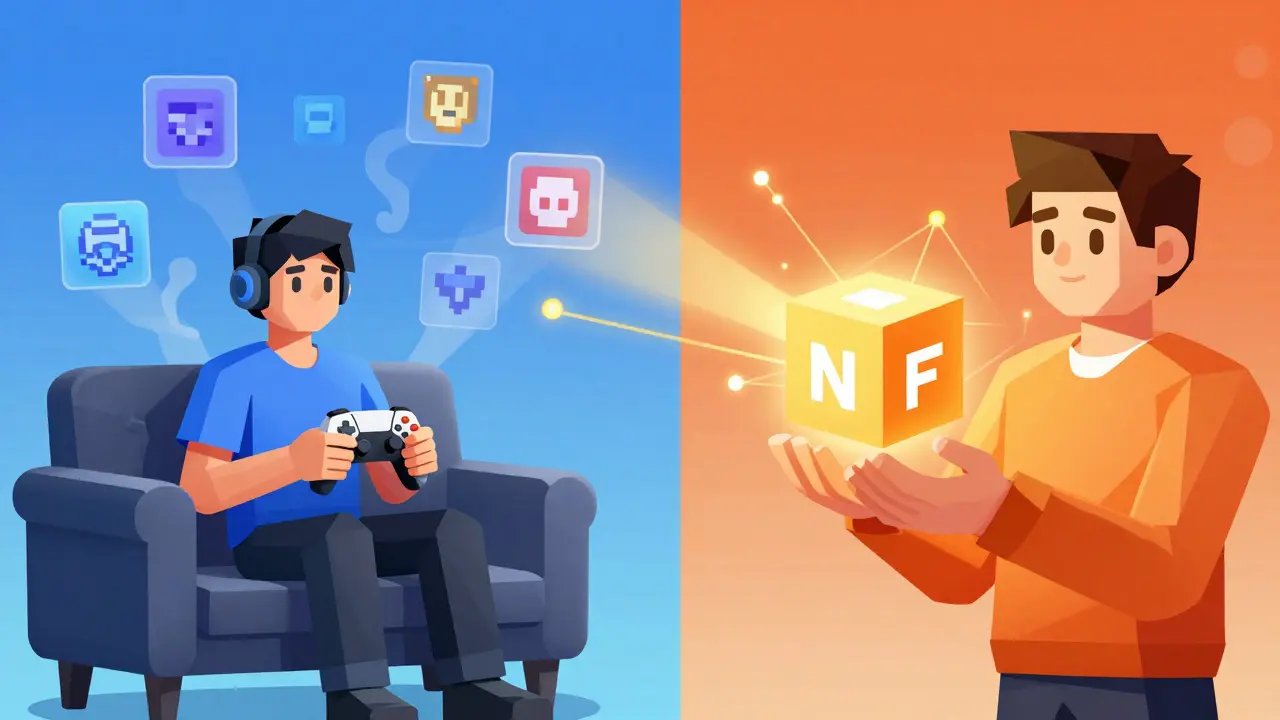
Remember when buying a skin in Fortnite was just a fun way to look cool? For most of us, that money vanished into the void of centralized servers. You got the pixels, but you didn’t own them. Now, imagine if that skin could be sold for real cash, or used as collateral for a loan. That is the promise of Play-to-Earn (P2E) gaming, a model built on blockchain technology where your time and skill can translate into actual income. But here is the catch: it’s not all free money. In fact, it can feel like a second job with no benefits package. As we move through 2026, the line between Traditional Gaming, which focuses on entertainment and narrative, and Web3 Gaming, which blends finance and play, is blurring. But they are still fundamentally different beasts. If you are trying to decide whether to dive into the crypto gaming space or stick to your PlayStation, you need to understand the real costs, rewards, and risks involved.
The Core Difference: Consumer vs. Owner
The biggest shift isn’t just about money; it’s about power. In traditional gaming, you are a consumer. You pay $70 for a new AAA title, and you rent access to that game. If the server shuts down, your progress disappears. According to a 2024 Consumer Reports survey, 92% of gamers don’t even realize they don’t legally own the content they buy. It’s more like subscribing to a digital theme park than owning a house.
In contrast, P2E games operate on a decentralized model. Your assets-characters, weapons, land-are stored on the blockchain as Non-Fungible Tokens (NFTs). This means true ownership. If a P2E game goes bankrupt, your NFT might still have value because it exists on the public ledger, not a private company’s server. You can sell it on marketplaces like OpenSea or use it in other compatible games. This flips the script from "paying to play" to potentially "earning while playing."
| Feature | Traditional Gaming | Play-to-Earn (P2E) / Web3 |
|---|---|---|
| Ownership | Licenses only (rental model) | Full ownership via NFTs |
| Economic Model | Closed loop (V-Bucks, Gems) | Open market (Crypto, Tokens) |
| Primary Goal | Entertainment & Fun | Earning + Entertainment |
| Barrier to Entry | Low ($60-$70 for game) | High (Wallet setup + Gas fees + NFT purchase) |
| Risk | Time investment only | Financial loss + Volatility |
The Economics: Who Actually Makes Money?
Let’s talk numbers. The global traditional gaming market hit $221 billion in 2024. Why? Because players love spending money on microtransactions. Companies like Activision Blizzard made $3.1 billion alone from Call of Duty in 2024. In this model, developers keep 90-100% of the profit. You buy the battle pass, they get rich. Simple.
P2E tries to redistribute that wealth. Games like Axie Infinity introduced a dual-token economy. One token (like SLP) is earned by playing, and another (like AXS) is used for governance. At its peak in 2021, Axie had 2.8 million daily active users. In countries like the Philippines and Venezuela, players were earning more than their local minimum wage just by grinding levels. A Filipino player reported making $12.50 a day in 2021, which was life-changing income.
But here is the reality check for 2026: those days are mostly gone. The initial hype cycle burned out many projects. BNB Chain’s 2025 report noted that 70% of early P2E games failed within 18 months because their tokenomics were unsustainable. They printed too much currency, causing inflation that wiped out earnings. Today, the sector has matured into "Web3 Gaming," focusing on quality over quick cash grabs. While players can still earn, it’s rarely enough to replace a full-time job unless you are an early investor or a top-tier competitor.
The Barrier to Entry: Is It Worth the Hassle?
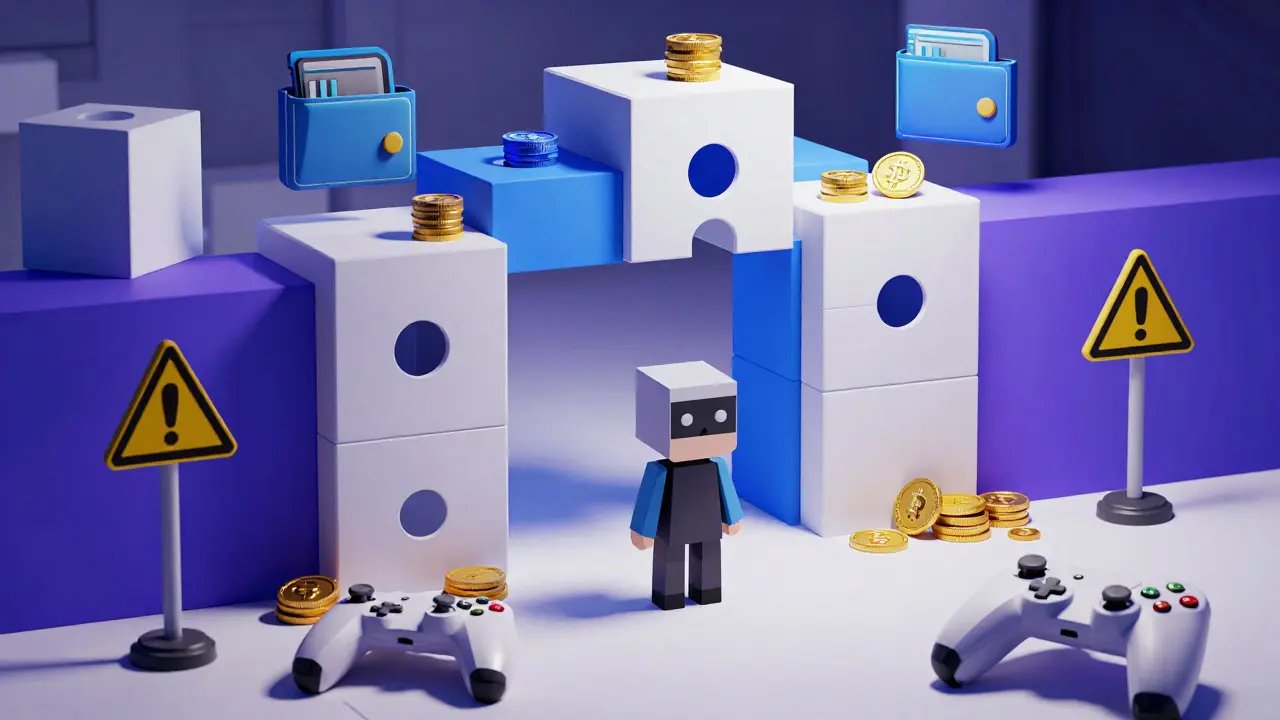
If you want to play Fortnite, you download it, log in, and start shooting. Done. For P2E, the journey is significantly longer and more complex. Before you even see the first frame of gameplay, you need to:
- Create a cryptocurrency wallet (like MetaMask or Trust Wallet).
- Buy cryptocurrency (ETH, BNB, or MATIC) to pay for gas fees.
- Navigate a decentralized exchange or marketplace.
- Purchase starter NFTs, which can range from $5 to $500 depending on the game.
This creates a 2-4 hour initial barrier. Add to that the risk of losing funds due to user error (sending tokens to the wrong address) or security breaches. Traditional games offer 24/7 customer support with average 2-hour response times. Many P2E projects rely on Discord communities with 24-hour response times and limited official help. If you lose your private key, your entire portfolio is gone forever. There is no "forgot password" link in the blockchain world.
Fun Factor: Are You Playing or Working?
This is the elephant in the room. When money is on the line, does the game stop being fun? A study from the University of California’s Blockchain Research Lab found that 43% of P2E players reported diminished enjoyment because financial pressure turned leisure into labor. It feels like a second job without benefits.
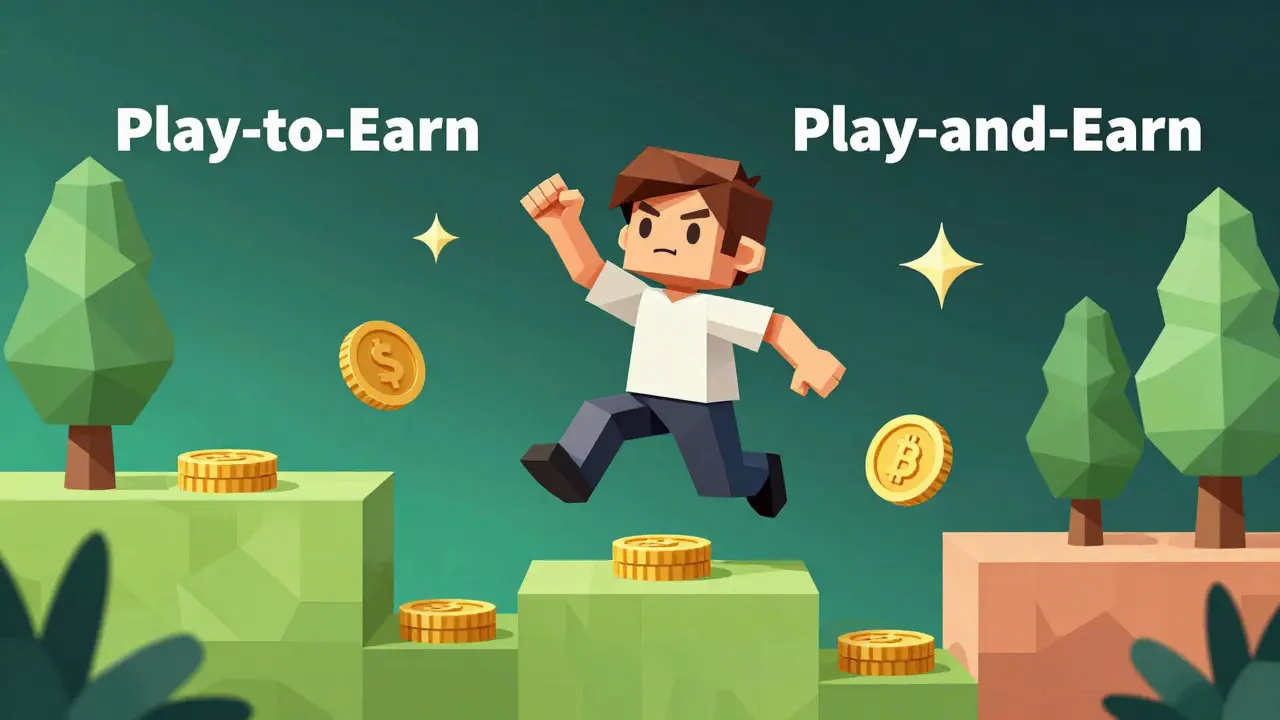
Traditional gaming prioritizes narrative, graphics, and social interaction. The Last of Us or Elden Ring succeed because they are immersive experiences. P2E games often struggle with this. Early titles looked like mobile clones with poor mechanics because the focus was entirely on the economic layer. However, the industry is shifting toward "Play-and-Earn" (P&E) models. Games like Big Time and Ember Sword prioritize high-quality gameplay first, with earning as a secondary reward. This hybrid approach is gaining traction, with P&E titles seeing 45% year-over-year growth in 2024.
Risks and Regulations: The Wild West
Traditional gaming is heavily regulated for age ratings and loot box transparency, but otherwise, it’s safe. P2E operates in a legal gray area. As of Q1 2025, 28 countries issued explicit warnings about P2E schemes. China banned it outright. The SEC in the US has investigated several gaming tokens, questioning whether they should be classified as securities.
Beyond regulation, there is market volatility. The token price of your game can crash overnight. Remember the Squid Game token collapse in 2022? Players lost $3.36 million in minutes. Even legitimate projects face risks. If the developer abandons the project, the NFTs may become worthless digital paperweights. Always do your own research (DYOR). Never invest money you cannot afford to lose.
Which Path Should You Choose?
Your choice depends on your goals. If you want pure relaxation, storytelling, and competitive esports without financial stress, stick to traditional gaming. It’s polished, accessible, and safe. You know exactly what you’re getting.
If you are tech-savvy, interested in blockchain technology, and willing to take calculated risks for potential upside, explore Web3 gaming. Look for projects with strong fundamentals, transparent teams, and a focus on gameplay quality. Avoid "get rich quick" schemes. The future of gaming likely lies in a hybrid model where ownership and fun coexist, but we aren’t fully there yet.
Is Play-to-Earn still profitable in 2026?
It is less predictable than in 2021. While some players still earn significant income, especially in emerging economies, the era of easy money is over. Most successful P2E players now treat it as a side hustle rather than a primary income source. Profitability depends heavily on market conditions and your initial investment in NFTs.
Do I need to buy expensive NFTs to start playing?
Not necessarily. While some games require high-value starter packs, many newer Web3 games offer free-to-play options or low-cost entry points. However, lower-cost entries often mean lower earning potential. Always check the specific requirements of the game before committing funds.
What happens if a P2E game shuts down?
Unlike traditional games where your progress is lost, your NFTs remain on the blockchain. You can try to sell them on secondary markets, but their value may drop to near zero if the game community disappears. Diversification across multiple games helps mitigate this risk.
Are P2E games safe from hacks?
No system is 100% safe. Smart contract vulnerabilities and phishing attacks are common threats. Use hardware wallets for storing valuable assets, enable two-factor authentication, and never share your seed phrase. Traditional games also face hacking risks, but the financial stakes in P2E are much higher.
How does Web3 Gaming differ from early P2E?
Early P2E focused almost exclusively on financial incentives, often at the expense of gameplay quality. Web3 Gaming emphasizes a balanced experience where blockchain technology provides ownership and interoperability, but fun and engagement remain the core drivers. This shift aims to attract mainstream gamers who previously avoided crypto.
Melissa L
July 1, 2026 AT 06:55i mean its cool that u can sell stuff but i just wanna play fortnite and not worry about my wallet getting hacked lol
Rob Morton
July 3, 2026 AT 02:37It is fascinating to consider the philosophical implications of digital ownership. When we shift from renting experiences to owning assets, do we fundamentally change our relationship with leisure? I believe this transition forces us to redefine what it means to 'play' in a post-scarcity digital economy. The tension between entertainment and labor is not merely economic; it is existential.
Routh Middaugh
July 3, 2026 AT 04:49I think both sides have valid points, really!! Traditional gaming offers comfort and familiarity, which is important for mental health. On the other hand, Web3 introduces innovation and potential financial agency, which is exciting! We should perhaps look for a middle ground where players are rewarded without being exploited. It’s a complex issue, isn’t it??
Ryan Peters
July 3, 2026 AT 08:01This whole P2E narrative is absolute garbage designed to leech your capital into offshore crypto schemes. You think you’re an owner? You’re a liquidity provider for venture capitalists who already cashed out. The SEC knows it, the IRS knows it, and anyone with a brain knows it. Stop letting Silicon Valley grifters convince you that clicking buttons on a blockchain makes you financially literate. It’s a pyramid scheme wrapped in NFTs.
ross harris
July 4, 2026 AT 17:48The entire premise of 'ownership' in a virtual void is a grotesque parody of capitalist desire. You are buying digital paperweights while the real world burns. It is a narcotic for the economically disenfranchised, promising liberation through servitude to algorithms. Your 'assets' are nothing more than lines of code controlled by dev teams who will rug pull the moment the hype dies. Wake up from this matrix of greed.
Carl Belgrave
July 5, 2026 AT 14:58Listen here, if you can’t afford to lose money on a game, stay away from crypto. This isn’t charity. The strong survive in these markets. If you’re whining about volatility, you don’t belong in the arena. Real gamers grind, they take risks, and they win. Weaklings stick to their safe, boring traditional games where they get nothing back. Grow a spine or go play Minecraft.
John Curry
July 6, 2026 AT 00:40Oh, the tragedy of it all! We sought freedom in the ether, only to find chains made of code. The dream of true ownership was beautiful, wasn't it? But now we see the shadows lengthening over our digital gardens. It is a poignant reminder that value is often an illusion we agree upon, until the agreement breaks. How melancholic.
Trent Erman1
July 6, 2026 AT 17:59Hey everyone! Great discussion here. I actually tried some Web3 games last year and found that the barrier to entry is still too high for casual players. However, I noticed that hybrid models like Big Time are improving the UX significantly. Keep an eye on those projects because they might bridge the gap soon! Stay curious and keep exploring new tech! 🚀🎮
Fiona Ellis
July 8, 2026 AT 05:05Excuse me, but did anyone actually read the part about security risks? 😬 It is absolutely reckless to encourage people to put private keys at risk for virtual items. I cannot stress enough how dangerous this is for the average user. Please, for the love of sanity, use hardware wallets if you must participate. Do not be naive about phishing attacks. 🛡️💔
Sajjad Ghorbani Moghaddam
July 9, 2026 AT 07:12Look, whether you like it or not, the tech is evolving. I’m not saying you should dump your savings into Axie Infinity, but dismissing the entire concept of digital ownership is shortsighted. Learn how wallets work, start small, and understand the mechanics. Knowledge is power, and ignoring this sector means missing out on the next phase of internet development. Let’s talk constructively instead of bashing.