
Navigating the Underground Crypto Market in Myanmar: Risks and Realities
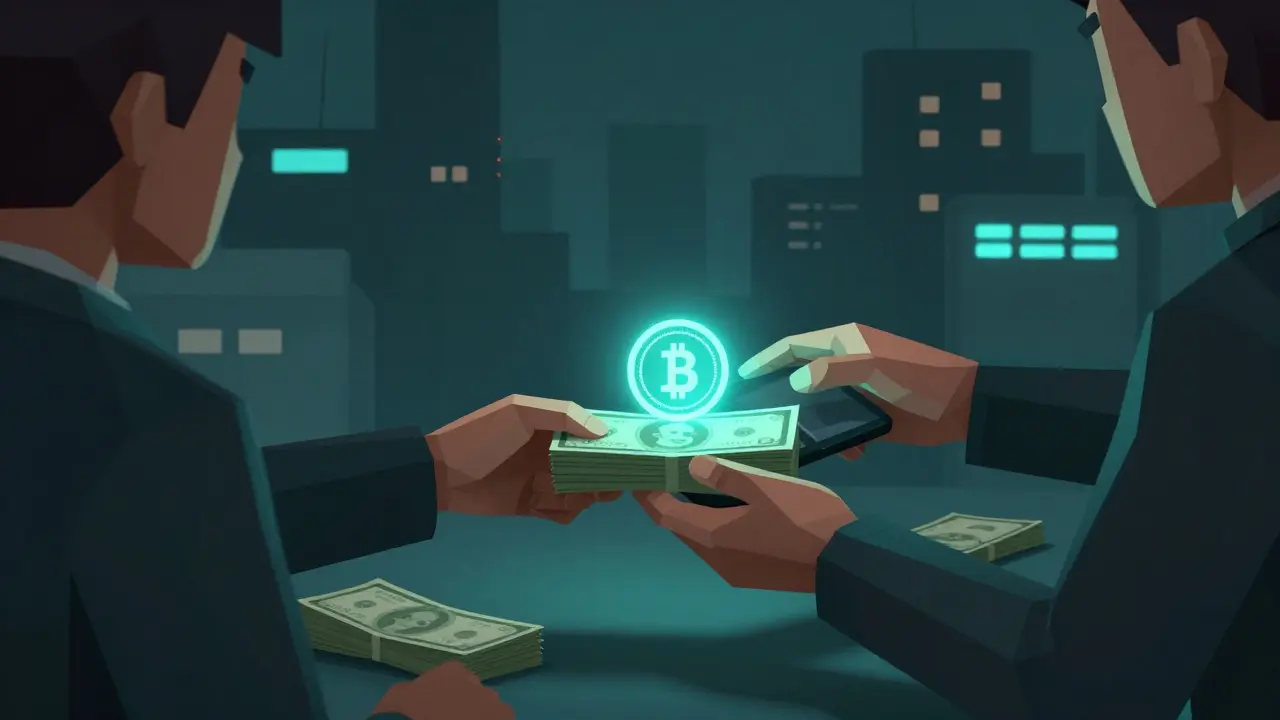
Imagine trying to use a financial tool that the government has completely banned, where one wrong move could lead to your bank account being frozen or worse. In Myanmar, this isn't a hypothetical scenario-it's the daily reality for thousands of people. Despite a total prohibition, a resilient, shadow economy has emerged. People aren't just trading for profit; they're using digital assets as a lifeline for survival, remittances, and even political resistance in a landscape where traditional banking has failed them.
The Legal Wall: Why Crypto is Illegal
To understand why the market is "underground," you first have to look at the rules. The Central Bank of Myanmar (CBM) is the sole authority for currency issuance in the country, and since 2020, it has maintained a hard line: cryptocurrency is unrecognized and unregulated. Under the Foreign Exchange Management Law, converting digital assets into foreign currency is treated as a criminal offense.
This isn't just a "hands-off" approach. The military regime views financial autonomy as a direct threat to its power. By controlling the flow of money, they control the population. Consequently, the CBM uses the Anti-Money Laundering (AML) laws to justify freezing accounts of anyone suspected of trading. This creates a high-stakes environment where the underground crypto market in Myanmar must operate in total secrecy to avoid imprisonment or heavy fines.
How the Shadow Market Actually Works
Since there are no legal domestic exchanges, the entire infrastructure is built on workarounds. If you want to buy Bitcoin or Ethereum in Yangon or Mandalay, you won't find a storefront. Instead, the process usually looks like this:
- VPN Access: Users utilize Virtual Private Networks (VPNs) to mask their location and access global platforms like Binance, which would otherwise be blocked or monitored.
- Social Media Hubs: Trading doesn't happen on a professional order book; it happens in Telegram groups, Facebook pages, and even TikTok. These platforms act as makeshift marketplaces.
- The Cash Dealer Network: Because the banking system is a liability, most trades are settled through "trusted cash dealers." These are middlemen who arrange off-record cash-for-crypto swaps, removing the digital paper trail that the CBM could track.
This system is incredibly fragile. Because liquidity is thin, a single large trade can cause wild price swings. You might pay a significant premium over the global market price just to find someone willing to take the risk of a cash swap.
| Feature | Official Status (CBM) | Underground Reality |
|---|---|---|
| Legality | Completely Banned | Widespread P2P Trading |
| Access Point | No Authorized Exchanges | Binance via VPN / Telegram |
| Payment Method | Blocked/Monitored Banks | Cash Dealers / Stablecoins |
| Mining | Illegal / Equipment Seized | Small-scale, clandestine ops |
The Role of Community and Education
When the government refuses to provide a framework, the community builds its own. The Myan Crypto Masters Community (MCM), founded by an individual known as Feliz, has become the heartbeat of the movement. With over 23,000 members, MCM isn't just a chat group; it's a decentralized school. They offer weekly workshops and courses in the Burmese language to help people avoid the most common traps.
Why is this education so critical? Because in an unregulated market, scams are rampant. In 2022, a high-profile crypto scheme collapsed, wiping out the savings of thousands of locals. Without a court to appeal to or a regulator to report to, these victims had zero recourse. MCM tries to bridge this gap, teaching newcomers how to secure their private keys and identify "rug pulls" before they lose everything.
Crypto as a Tool for Resistance
Beyond simple trading, cryptocurrency has evolved into a political instrument. The National Unity Government (NUG) has leveraged blockchain technology to bypass the military's financial stranglehold. The Spring Development Bank, built on the Polygon blockchain, is a prime example. It allows the diaspora to send remittances and provides gold-backed savings options.
For many, USDT (Tether) is the currency of choice. Its stability compared to the volatile Myanmar Kyat makes it ideal for preserving wealth and funding resistance activities. By using "USDT rails," the opposition can move funds across borders without needing a bank account that the regime could freeze at a moment's notice.
The Mining Exodus and Regional Shifts
Mining is perhaps the most dangerous part of the underground scene. It requires heavy electricity consumption, which is easy for authorities to spot in a country plagued by power shortages. When the regime began cracking down on hardware, a mass exodus occurred. Many miners packed up their rigs and moved to Thailand or Laos, where regulations are far more favorable.
This migration didn't just move the hardware; it moved the expertise. Myanmar's prohibition has effectively exported its technical talent to neighboring countries, while those who stayed behind are forced to operate on a clandestine, small scale, often hiding their equipment in residential areas to avoid detection.
The Hard Truths: Risks and Pitfalls
If you're looking at this as an investment opportunity, be warned: the risks are astronomical. You aren't just dealing with market volatility; you're dealing with systemic risk. Here are the most common pitfalls users face:
- The Trust Trap: Since P2P trades rely on trust, "exit scams" are common. A dealer might take your cash and never send the coins, or vice versa.
- Digital Footprints: Even with a VPN, a slip-up in a bank transfer description (like writing "crypto" in a memo) can trigger an automatic red flag for the CBM.
- Liquidity Crunch: Trying to exit a large position into cash can take days or weeks because there aren't enough liquid dealers to handle big volumes without spiking the price.
For most, the decision to enter this market is a trade-off between the risk of legal prosecution and the risk of financial ruin under a failing traditional system. For many, the latter is simply the greater threat.
Is it legal to own cryptocurrency in Myanmar?
Officially, no. The Central Bank of Myanmar (CBM) has banned crypto transactions and does not recognize digital assets. While simply "holding" coins in a private wallet is harder to prove, any attempt to trade them for cash or foreign currency is illegal under foreign exchange laws.
How do people in Myanmar buy crypto without banks?
Most users rely on peer-to-peer (P2P) networks. They find sellers on Telegram or Facebook and meet in person or use informal cash-transfer services to exchange physical currency for digital assets transferred to a private wallet.
What is the safest stablecoin for users in Myanmar?
USDT (Tether) is the most widely used stablecoin because of its high liquidity in the underground market and its ability to act as a hedge against the crashing value of the local currency.
What happens if the government finds a crypto miner?
Mining is strictly illegal. Authorities typically confiscate the hardware (ASICs or GPUs) and can initiate criminal charges, including fines and imprisonment, as mining is seen as a violation of energy and financial laws.
Can foreigners safely trade with people in Myanmar?
It is extremely risky. Because there is no legal recourse, you are entirely dependent on the honesty of the other party. Furthermore, interacting with certain networks may inadvertently involve entities under international sanctions.
Next Steps for Navigating the Landscape
If you are a resident or an observer of this market, the first step is prioritizing security. Use non-custodial wallets to ensure you have total control over your assets. For those new to the scene, seeking out established educational hubs like the Myan Crypto Masters Community can prevent the devastating losses associated with unregulated scams.
For those managing remittances, using Layer-2 solutions like Polygon can reduce the fees that often eat into the small amounts of money being sent to families in need. Above all, remember that in a regime where financial freedom is a crime, discretion isn't just a preference-it's a survival strategy.
Felix Eduardo Velasquez
April 28, 2026 AT 15:56The transition from traditional banking to decentralized rails in authoritarian regimes is a classic example of the Lindy Effect. When the state fails to provide a stable store of value, the people will naturally gravitate toward any system that offers a mathematical guarantee over a political one. USDT isn't ideal due to centralization, but in a survival scenario, liquidity beats purity every single time. It's fascinating to see how the technical talent is simply migrating across borders to keep the infrastructure alive.
Noel Mandotah
April 30, 2026 AT 10:20Oh wow, a secret crypto club on Telegram. Groundbreaking. 🙄
Alex Mazonowicz
May 1, 2026 AT 08:04This is so inspiring!!! It's amazing how people find a way to help each other even in the darkest times!!!! Keep fighting for freedom!!!!
Emily A
May 2, 2026 AT 20:49The reliance on P2P cash dealers is a catastrophic failure in risk management. One should realize that trusting a random individual in a Telegram group is not "navigating a market," but rather gambling with one's life savings. It is profoundly naive to assume that these middlemen aren't skimming or reporting users to the authorities for a bounty.
Arti Jain
May 3, 2026 AT 01:45Utterly pathetic. These people think a few coins solve systemic collapse. My country handles digital transformation with actual dignity and scale, not through "secret groups." Truly embarrassing.
Robert Smith
May 4, 2026 AT 03:12Wild times 🤯🚀
VIVEK SINGH
May 5, 2026 AT 15:26Ah, the irony of using a centralized stablecoin to fight a centralized regime. How very "decentralized" of them. But hey, at least they're learning the hard way that the only real one is the one you hold in your own keys, provided you don't forget the seed phrase while running from a soldier.
Wayne Gillis
May 6, 2026 AT 13:03Wait, do you think anyone here actually knows a guy in Yangon? 🕵️♂️ I've always wondered if I could send some assets over there to help out or maybe even find a way to get involved personally! 🌏✨ Like, imagine the rush of a clandestine cash swap! 💸💰 Who's down to try and find a contact??
Lloyd I
May 6, 2026 AT 22:58I really love how the community is stepping up to educate everyone through MCM. That's the real win here. If we can all share the right tools and safety tips, we can help people protect their wealth from those scams. Let's keep pushing for more open-source education!
Harvey Alford
May 7, 2026 AT 03:01I can't even imagine the stress. I'm literally shaking just thinking about my bank account being frozen.
Veronica Bago
May 7, 2026 AT 22:33It's just wild how different the world is for some people. Glad they have some way to get money home. ❤️
Gabby Puche
May 9, 2026 AT 20:54You guys are doing great! 🌟 Just keep staying safe and using those non-custodial wallets like the post said! 🛡️✨