
MonoX Protocol Crypto Exchange Review: Single-Token Liquidity Explained
Most decentralized exchanges make you deposit two tokens to create liquidity. You need ETH and USDC. Or BTC and DAI. That’s fine if you’ve got both. But what if you only have one? What if you’re a small project trying to launch a token and don’t have $50,000 to pair it with another coin? That’s where MonoX Protocol comes in - and why it’s worth looking at, even if it’s still early.
What Makes MonoX Different?
Traditional DEXs like Uniswap or SushiSwap use what’s called an Automated Market Maker (AMM). You put in two tokens, 50/50, and the system trades them against each other. The problem? You’re stuck with both. If the price of one token swings hard, you lose money - that’s called impermanent loss. And if you don’t have the second token? You can’t provide liquidity at all. MonoX flips that. Instead of requiring pairs, it lets you deposit just one token. How? It uses something called vCASH, a virtual stablecoin created inside the protocol. Your token gets paired with vCASH automatically. No need to find a counter-token. No need to lock up extra cash. You just deposit your single token - say, a new gaming coin or an NFT shard - and you’re instantly part of the liquidity pool. This isn’t just convenient. It’s a game-changer for small projects. Normally, launching a token means raising money to fund liquidity. That’s expensive. With MonoX, you can list your token with zero upfront capital. That means founders can spend their funds on development, marketing, or hiring - not on buying USDC to pair with their token.How MonoX Works Under the Hood
The core of MonoX is its virtual pair system. When you deposit your token, the protocol doesn’t match it with another real asset. Instead, it creates a virtual pair with vCASH. This virtual pair behaves like a real one: trades happen, prices adjust, liquidity is used. But behind the scenes, it’s all handled by smart contracts. This system reduces impermanent loss because you’re only exposed to one asset’s price movement - your own token - not the wild swings of two tokens against each other. It also means less capital is locked up. In traditional DEXs, $1 million in liquidity might be spread across 50 pairs. With MonoX, that same $1 million could power 100 different tokens, each using just their own funds. MonoX runs on Ethereum and Polygon. That’s smart. Ethereum gives you security and brand recognition. Polygon keeps fees low and speeds high. You can swap tokens across both chains without needing bridges or extra steps. The protocol’s smart contract address is 0x2920...f8fa5D, and it’s been audited, though full public reports aren’t widely available. The native token, MONO, powers everything. You pay trading fees in MONO. Liquidity providers earn MONO rewards. And token holders can vote on upgrades - governance is baked in. Total supply? 100 million MONO. Circulating supply? Around 7.8 million. That’s a big gap. It means there’s room for growth - or dilution, depending on how the team manages unlocks.Real-World Performance: What the Data Shows
Here’s the hard truth: MonoX isn’t moving much volume yet. CoinMarketCap lists MonoX as an “Untracked Listing.” That means no reliable trading data. No volume. No order books. No clear price trends. On decentralized exchange trackers like Dune Analytics or DeFiLlama, there’s almost nothing. That’s not normal for a protocol that’s been live for over a year. The MONO token price hovers around $0.0003 - less than a tenth of a cent. That’s not a typo. At that price, even 10,000 MONO is worth just $3. Some prediction sites say it could hit $0.0005 by end of 2025. Others say it could drop to $0.00008. The range is wide because there’s no real demand. No liquidity. No users. You won’t find active community discussions on Reddit or Twitter. GitHub shows little to no recent commits. Developer activity? Hard to measure. That’s a red flag. Even the most ambitious protocols need a growing user base and active code updates to survive.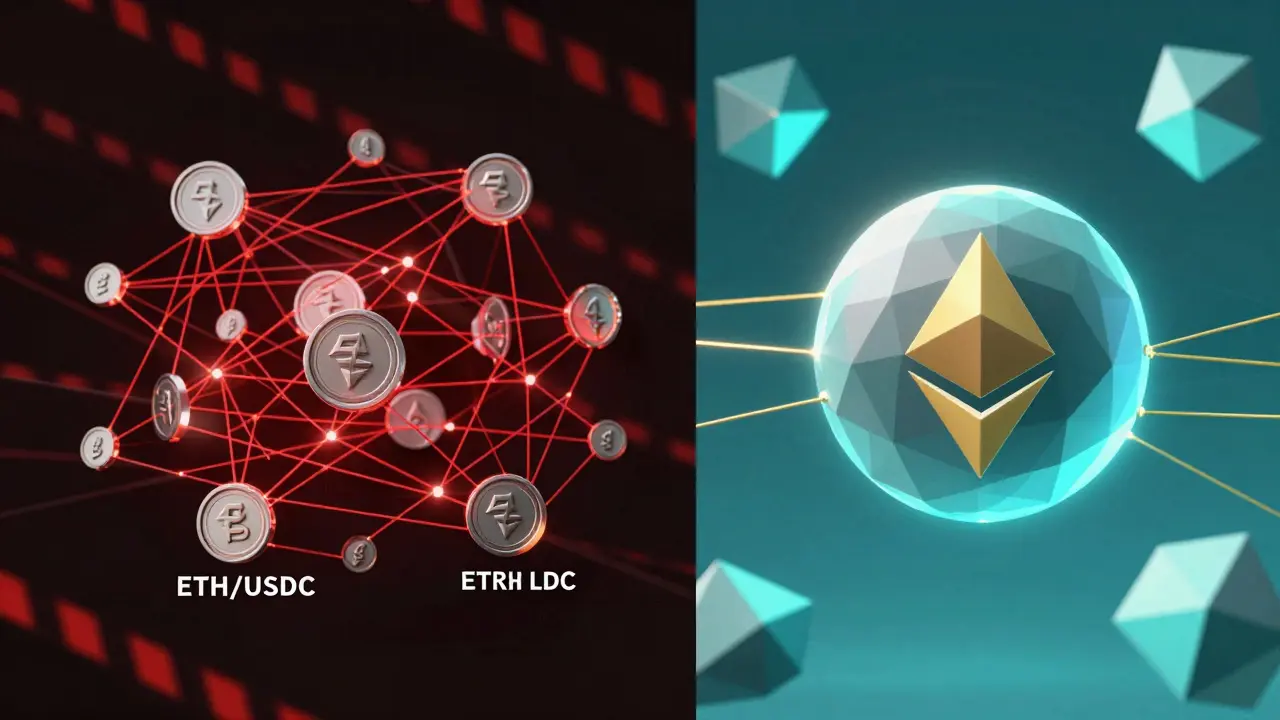
Who Should Use MonoX?
If you’re a trader looking for high-volume swaps? Skip it. There’s not enough depth to make trades without slippage. If you’re a project founder trying to launch a token with limited funds? MonoX could be your best shot. No need to raise $20K for liquidity. Just list. Get exposure. Build your community. Then, when you have users, you can bring in real liquidity. If you’re a liquidity provider with a single token you don’t want to pair? Maybe. But you’re taking a big risk. The token you deposit might drop 80% in value. And if no one trades it, your liquidity sits idle. You earn MONO rewards - but at $0.0003 each, that’s not much. MonoX is built for “Value Backed Tokens” - NFT shards, gaming tokens, insurance tokens, synthetic assets. These are niche markets. They’re not Bitcoin or Ethereum. They’re experimental. And MonoX is one of the few places where they can actually trade.The Risks You Can’t Ignore
MonoX has potential. But it’s not without danger. First, smart contract risk. Virtual pairs are complex. If there’s a bug, funds could be lost. Audits are good, but they’re not guarantees. DeFi has seen too many protocols collapse from one line of bad code. Second, regulatory risk. The SEC and other agencies are cracking down on DeFi protocols that act like exchanges. MonoX doesn’t have KYC. It doesn’t have compliance. That’s a liability. Third, dependency on Ethereum. If gas fees spike again - like they did in 2021 - users will leave. Polygon helps, but not everyone wants to bridge assets. You’re still tied to a slow, expensive network for core functions. And fourth - adoption. No one’s using it. If you can’t get users, even the best tech fails. MonoX needs partnerships. It needs token projects to actually list. It needs influencers to talk about it. Right now, it’s silent.
How to Get Started
If you still want to try MonoX, here’s how:- Get a wallet: MetaMask or WalletConnect works.
- Buy ETH or MATIC (for Polygon) to pay for gas.
- Go to Monoswap - the official interface - and connect your wallet.
- Choose “Add Liquidity.”
- Deposit just one token. The system will auto-pair it with vCASH.
- Confirm the transaction. Wait for it to mine.
Is MonoX the Future of DEXs?
The idea is brilliant. Single-token liquidity solves a real problem. It’s more capital-efficient. It’s more inclusive. It lowers the barrier for new projects. But ideas don’t win markets. Adoption does. MonoX is like a prototype car with a revolutionary engine - but no one’s built the roads to drive it on. Until projects start listing in bulk, until traders start using it for swaps, until volume hits $1 million a day - it’s just a theory with a smart contract. It’s not dead. But it’s not alive either. It’s waiting.What’s Next for MonoX?
The roadmap mentions expanding to other chains like Arbitrum and Base. It talks about integrating lending and derivatives. That’s ambitious. But without traction, those features are just slides in a pitch deck. The real test? Can MonoX convince even one major DeFi project to launch its token there? If a well-known NFT project or a DeFi protocol picks MonoX over Uniswap or SushiSwap? That’s when things change. Until then, treat it as an experiment - not a bet.Is MonoX Protocol safe to use?
MonoX has been audited, but public audit reports are limited. Like all DeFi protocols, it carries smart contract risk. If there’s a bug in the virtual pair system, funds could be lost. Only use money you’re willing to lose. Never deposit more than you can afford.
Can I trade MONO token on major exchanges?
No. MONO is not listed on Binance, Coinbase, or Kraken. It’s only available on decentralized exchanges like Monoswap, and even there, trading volume is extremely low. Liquidity is minimal, so large trades will cause big price swings.
Why is MonoX not tracked on CoinMarketCap?
CoinMarketCap only tracks projects with verifiable trading volume and liquidity. MonoX’s volume is too low or unverified. Without reliable data, it’s labeled “Untracked.” This signals low adoption, not necessarily a scam - but it does mean the protocol isn’t gaining traction.
How do I earn rewards on MonoX?
By providing liquidity with a single token. The protocol rewards you with MONO tokens over time. But because MONO’s price is under $0.0003, the rewards are small. You’re better off thinking of it as supporting a new protocol than earning income.
Should I invest in MONO token?
Not unless you’re speculating on long-term adoption. MONO has no real demand, low liquidity, and uncertain future. Price predictions vary wildly - from $0.00008 to $0.0006. That’s a sign of extreme uncertainty. Treat it as a high-risk experiment, not an investment.
What’s the difference between MonoX and Uniswap?
Uniswap requires two tokens to create a liquidity pool. MonoX lets you use just one. MonoX uses virtual pairs with vCASH; Uniswap uses real token pairs. MonoX reduces impermanent loss for single-token providers. Uniswap has far more volume, users, and liquidity. MonoX is innovative but unproven; Uniswap is established but less flexible.