
Mining Crypto in Russia: Law and Restrictions in 2025
Russia Crypto Mining Compliance Checker
Compliance Status
Key Implications
Since January 1, 2025, mining cryptocurrency in Russia isn’t illegal-but it’s far from free. The government didn’t ban it. Instead, it built a system to control it. If you’re thinking about setting up a miner in Russia, you need to know exactly where you can operate, when you’ll be shut off, and what happens if you skip the rules.
Where You Can’t Mine Crypto in Russia
Twelve regions in Russia have outright bans on cryptocurrency mining. These aren’t temporary. They’re locked in until at least March 15, 2031. The list includes Dagestan, Ingushetia, Kabardino-Balkaria, Karachay-Cherkessia, North Ossetia, Chechnya, and the four occupied Ukrainian territories: Donetsk, Lugansk, Zaporizhzhia, and Kherson. These areas were chosen because they already struggle with power shortages. The government doesn’t want mining equipment draining electricity from homes, clinics, or schools.
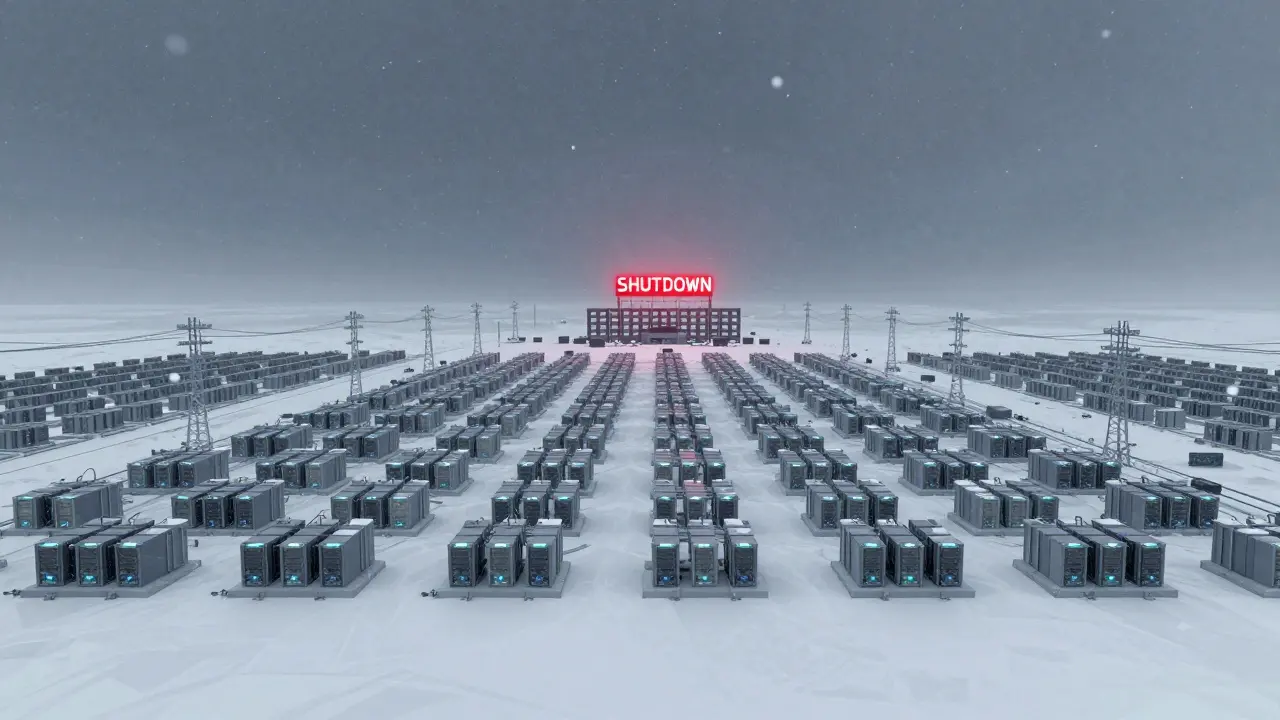
Even in regions where mining is allowed, you’re not safe from sudden shutdowns. Three Siberian regions-Irkutsk, Buryatia, and Zabaikalsky-face seasonal bans. From November 15 to March 15 every year, all mining operations there must stop. This isn’t just a suggestion. It’s enforced by remote disconnection. If you’re running rigs during those months, your power gets cut without warning. The government says it’s to protect heating systems during peak winter demand.
How the Power Grid Controls Miners
Every legal mining rig in Russia is now classified as a "fourth category" electricity consumer. That’s the lowest priority. When the grid hits peak load-usually during cold snaps or late afternoons-homes, hospitals, and factories get power first. Miners? They get shut off. The system works through a national registry. Every piece of mining hardware imported into Russia must be labeled, registered, and linked to its energy usage. Authorities can flip a switch from a central office and cut power to hundreds of rigs at once.
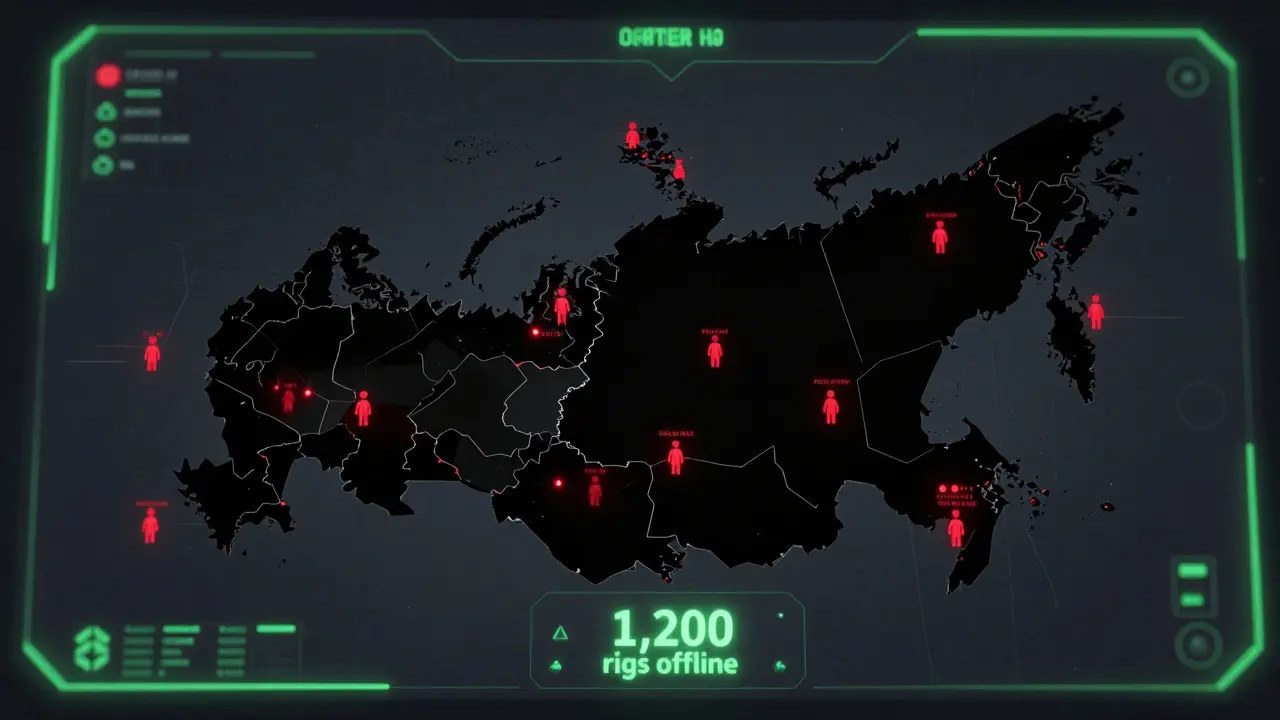
This isn’t theoretical. In December 2024, during a major cold snap in Siberia, over 1,200 registered mining facilities were remotely disconnected for 18 hours. No notice. No appeal. Just power off. The government says this system prevents blackouts. Miners say it makes long-term planning impossible. Either way, if you’re mining in Russia, you’re always one cold front away from losing your income.
Registration and the State Miner Registry
If you’re running more than 6,000 kWh of electricity per month, you must register with the Federal Tax Service. That’s about 20-25 standard ASIC miners running nonstop. Individuals mining below that threshold don’t need to register. But if you cross it? You’re now a legal business. You must report your equipment, your energy source, and your profits.
The registry isn’t just paperwork. It’s surveillance. Each registered miner gets a unique ID tied to their hardware. The government tracks how much power each unit uses, where it’s located, and when it’s active. The goal? To make sure no one’s hiding rigs under the radar. As of mid-2025, only about 30% of miners have registered. That means two out of three operations are still illegal-and at risk of fines or equipment seizure.
Fines and Penalties for Illegal Mining
Operating without registration carries heavy penalties. The base fine is 200,000 rubles (around $2,500). But the government is pushing to raise it to 2 million rubles ($25,500) by late 2025. That’s not just a slap on the wrist-it’s enough to wipe out a small mining setup. Authorities can also seize your equipment. In 2024, over 800 mining rigs were confiscated in Siberia and the Urals after inspections. The hardware is often auctioned off, with proceeds going to regional energy funds.
And it’s not just about fines. If you’re caught mining illegally and your equipment causes a local blackout, you could face criminal charges. The law now treats large-scale unauthorized mining as a threat to public infrastructure. That’s a big shift. It turns a financial violation into a public safety issue.
Taxes on Mining Profits
Since November 2024, Russia has taxed Bitcoin mining profits at 15%. This isn’t a tax on the coins you mine-it’s a tax on the ruble value of your earnings when you sell them. If you mine 1 BTC and sell it for 3 million rubles, you owe 450,000 rubles in taxes. You must report all sales to the tax service, even if you’re just swapping crypto for goods or services.
There’s a loophole: if you hold your crypto and don’t convert it to rubles, you don’t trigger the tax. But that’s risky. The government requires anyone holding over 600,000 rubles in crypto to declare it annually. If you’re sitting on a pile of Bitcoin and don’t report it, you’re opening yourself up to audits, penalties, and possible asset freezes.
What You Can and Can’t Do with Crypto in Russia
Here’s the catch: mining is legal. Trading is legal. But spending crypto is not. You can’t use Bitcoin to buy a laptop, pay for groceries, or settle a bill in Russia. The ruble is the only legal tender. This isn’t about controlling miners-it’s about controlling money. The government wants the benefits of mining (energy exports, tech jobs, tax revenue) without letting crypto challenge the ruble’s dominance.
That’s why the rules are so strict. They’re not trying to stop mining. They’re trying to contain it. Make it predictable. Make it taxable. Make it powerless when the grid needs saving.
Is Mining Crypto in Russia Still Worth It?
Some operators say yes. Russia has cheap electricity in certain regions-especially in Siberia and the Far East, where hydropower and coal plants are abundant. Mining hardware demand jumped 200% in Q4 2024 after the new laws passed. Investors are betting that the rules, while tight, create stability. Big firms are moving in, setting up industrial-scale farms in regions like Krasnoyarsk and Altai, where power is abundant and winters are brutal but predictable.
But for individuals? It’s a gamble. You need to know your region’s rules. You need to register if you’re above 6,000 kWh. You need to accept that your rigs might go dark for months. And you need to pay taxes on every sale. The profit margins are thin, and the risks are high.
One miner in Novosibirsk told a local news outlet: "I spent 800,000 rubles on equipment. I’ve been shut off twice this winter. I pay taxes. I’m registered. I’m not making a fortune. But at least I’m not in jail."
What Happens Next?
The Russian government is still tightening the screws. The digital development ministry is testing AI-powered energy monitoring systems that can predict mining activity based on grid anomalies. They’re also exploring mandatory energy usage caps per mining rig. If you’re thinking about getting into mining in Russia, don’t assume the rules will stay the same. The 2025 framework is the first version. Expect updates every year.
For now, the path is clear: register, know your region, track your power use, pay your taxes, and never assume you’re safe from a sudden blackout. Russia didn’t ban crypto mining. It turned it into a state-managed utility-with the government holding the power switch.
Adam Bosworth
December 6, 2025 AT 02:12So let me get this straight-Russia lets you mine crypto but cuts your power like it’s a bad Netflix show? Classic. They’re not regulating mining, they’re running a dystopian power grid reality TV. I’d rather mine in my basement in Ohio than deal with this. Also, 15% tax on sales? Bro, that’s just the IRS with a VPN.
Chris Jenny
December 6, 2025 AT 18:25They’re not shutting you down for power-they’re shutting you down because they KNOW. They KNOW you’re making money they can’t track. They KNOW you’re bypassing their control. This isn’t about grids-it’s about fear. The state doesn’t want people holding digital gold. They want you broke, dependent, and watching state TV. I’m not surprised. They’ve been doing this since the 90s. Watch-next they’ll ban private wallets. Mark my words.
Chloe Hayslett
December 8, 2025 AT 13:50Wow. So Russia’s finally doing something right. Letting miners operate but only if they play by the rules? Brilliant. Meanwhile, the U.S. is still arguing whether crypto is a security or a commodity. At least in Russia, you know where you stand. No more crypto bros pretending they’re rebels when they’re just tax evaders.
Mairead Stiùbhart
December 9, 2025 AT 07:54Oh honey, you think this is harsh? Try mining in Ireland and paying 50% in electricity costs. At least in Russia, you get a clear rulebook. Here? You get a bill that says ‘we’re not sure if you’re a business or a hobbyist’ and then charge you double. This is actually the most transparent system I’ve seen in years.
Renelle Wilson
December 10, 2025 AT 04:24It’s fascinating how this policy reflects a deeper tension: the state’s desire to harness the economic potential of cryptocurrency while maintaining absolute control over its monetary system. By legalizing mining under strict regulatory conditions, Russia effectively transforms a decentralized technology into a centrally managed energy consumption program. This is not suppression-it’s co-optation. And it’s remarkably sophisticated, if chilling.
Jerry Perisho
December 10, 2025 AT 10:40Just to clarify-the 6,000 kWh threshold is about 20-25 ASICs? That’s right. Most home miners won’t hit it. But if you’re running 30+ rigs, you’re basically a small utility. The registry system sounds like a nightmare to maintain, but at least it’s not random raids. Still, the seasonal bans in Siberia? Brutal. You’d need battery backups the size of a house.
Vincent Cameron
December 10, 2025 AT 13:26What’s really being mined here isn’t Bitcoin-it’s compliance. The state isn’t trying to stop mining. It’s trying to make miners into obedient nodes in its own infrastructure. Every rig becomes a data point, every kWh a tax line, every shutdown a reminder: you don’t own your hardware. You’re just borrowing it from the state. And that’s the real crypto revolution: the end of ownership.
Noriko Robinson
December 10, 2025 AT 16:33I love how this is framed like it’s all about power grids, but really it’s about control. You can mine, but you can’t spend. You can earn, but you can’t escape. You can register, but you’re always being watched. It’s like they’re saying, ‘We’ll let you play the game, but you’re not allowed to win.’ And honestly? That’s worse than a ban.
Jon Visotzky
December 12, 2025 AT 03:24Anyone else notice how they banned mining in the Caucasus and occupied territories but not in Moscow? Coincidence? I think not. This isn’t about energy-it’s about political loyalty. Regions that are loyal get to keep their lights on. Regions that aren’t? They get to freeze while the state takes their crypto profits. Real subtle.
Neal Schechter
December 13, 2025 AT 09:04For anyone thinking of mining in Russia: do your homework. Know your region’s rules. Register if you’re over 6kWh. And get a generator. I’ve got a buddy in Krasnoyarsk who runs a 50-rig farm. He’s got diesel backups, a solar array, and a satellite internet link. He says the government’s system is predictable-just not kind. If you’re not prepared, you’re not mining. You’re gambling.
Holly Cute
December 14, 2025 AT 13:32Oh wow, so Russia’s just like the U.S. but with more bureaucracy and fewer lawsuits. You mine, you pay taxes, you get shut off, you get fined. The only difference? In America, we pretend we don’t know what’s happening. In Russia, they just tell you. I respect the honesty. Still, 2 million ruble fines? That’s a small house. And they’re auctioning off the rigs? That’s just state-sanctioned theft.
Josh Rivera
December 15, 2025 AT 09:41So the government lets you mine… but only if you’re obedient? That’s not freedom. That’s serfdom with ASICs. And the fact that they’re using AI to detect mining activity? That’s not innovation. That’s surveillance capitalism on steroids. Anyone who thinks this is a good system is either working for the FSB or has never had their power cut off in the middle of winter.
ronald dayrit
December 15, 2025 AT 11:06There’s a deeper truth here: the state doesn’t fear crypto. It fears what crypto enables-decentralized autonomy. By making mining legal but utterly dependent on state infrastructure, they’ve created a system where miners are financially incentivized to comply, physically vulnerable to blackout, and socially isolated from the broader crypto community. You’re not a miner-you’re a utility worker with a Bitcoin wallet. And that’s the most terrifying part.
Yzak victor
December 16, 2025 AT 03:40My uncle runs a small farm in Altai. He’s registered, pays taxes, got shut off twice last winter. He says it’s not worth the stress anymore. He’s thinking of selling his rigs and buying a farm. I get it. You’re not making bank-you’re paying for the privilege of being a cog in a machine. And the worst part? You can’t even talk about it without someone thinking you’re a tax evader.
Billye Nipper
December 17, 2025 AT 09:21I just… I can’t believe how much control they have. It’s like they turned mining into a public service. You’re not a crypto pioneer-you’re a grid stabilizer with a side hustle. And the worst part? The people who suffer most are the ones trying to do it right. The underground miners? They’re still out there. And the government? They’re probably laughing.
Elizabeth Miranda
December 17, 2025 AT 23:37One miner in Novosibirsk said, "I’m not making a fortune. But at least I’m not in jail." That line hits harder than any policy analysis. This isn’t about economics. It’s about survival. Russia didn’t ban crypto mining-it turned it into a high-stakes game where the house always wins, and the players have to pay to play. And the only prize? Not getting arrested.