
Liquidation Risk in Crypto Lending: How It Works and How to Avoid It

When you borrow crypto, you’re not just taking out a loan-you’re betting against a market that can drop 30% in an hour. And if you lose that bet, your collateral gets sold automatically. No warning. No second chance. Just a cold, silent smart contract pulling the trigger. This is liquidation risk-the silent killer of thousands of crypto borrowers every year.
It doesn’t matter if you’re using Aave, Compound, or a centralized platform like Nexo. If your collateral value drops too far, the system doesn’t ask. It doesn’t negotiate. It just sells. And you lose everything you put up. No one calls. No human intervenes. Just code. And it’s happening right now, every minute, across the blockchain.
How Liquidation Actually Works
Imagine you deposit $20,000 worth of Bitcoin to borrow $10,000 in USDT. That’s a 50% loan-to-value (LTV) ratio. Most platforms allow you to borrow up to 70-80% LTV, but once you hit that limit, trouble starts. When BTC drops 25%, your $20,000 collateral is now worth $15,000. Your loan is still $10,000. Your LTV jumps to 66.7%. Still safe. But if BTC falls another 10%, your collateral drops to $13,500. Now your LTV is 74%. Most platforms trigger a margin call here. You get a notification. You have hours-or sometimes minutes-to add more collateral or pay down part of the loan.
But if you ignore it? Or if the market crashes faster than you can react?
At 80% LTV, the smart contract kicks in. Your Bitcoin gets sold-right then, right there-to cover the $10,000 debt. And here’s the kicker: the liquidator doesn’t pay market price. They get a 5-12% bonus. So if your BTC was worth $13,500, they buy it for $12,000. You lose $1,500 instantly. And that’s just the start. You still owe interest. You still lose your collateral. And you get nothing back.
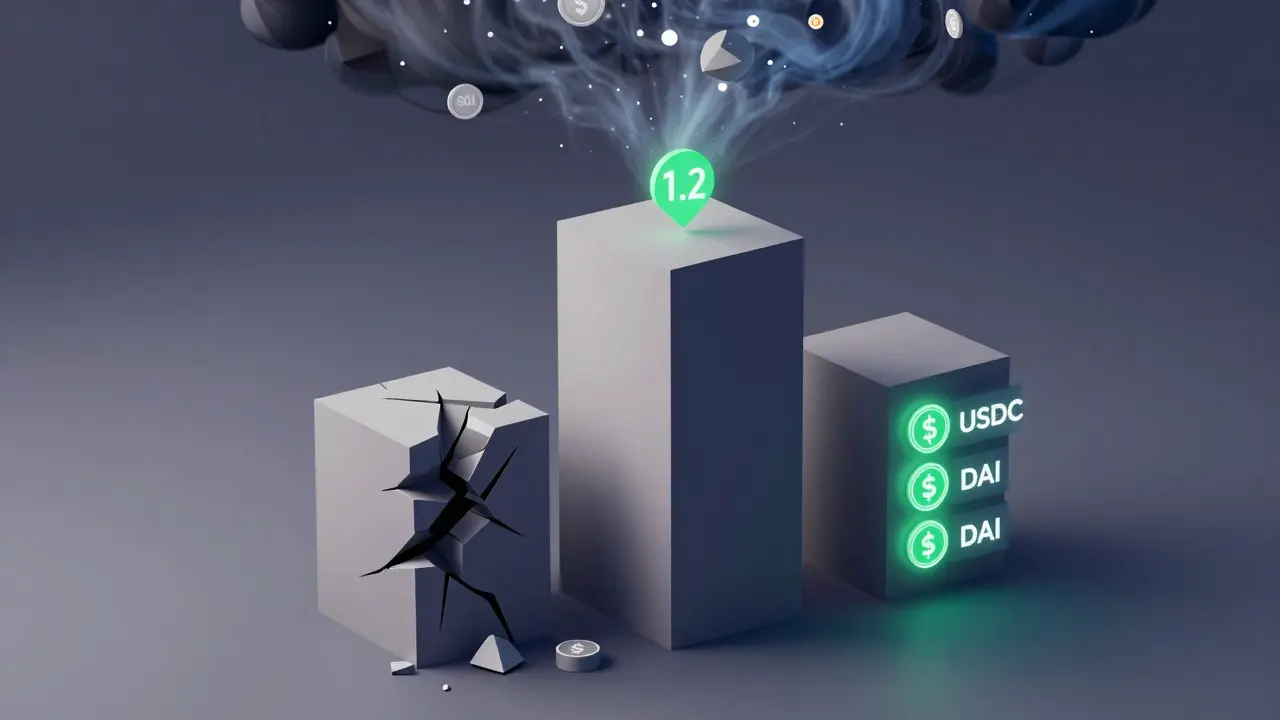
This isn’t theoretical. In 2022, during the Terra Luna collapse, over $1.2 billion in collateral was liquidated across DeFi protocols in less than 72 hours. Thousands of borrowers woke up to empty wallets. No one warned them. No one gave them time.
Why Crypto Liquidations Are So Brutal
Traditional finance gives you breathing room. If you fall behind on a margin call, your broker calls. You can ask for an extension. You can sell other assets. You can talk your way out of it.
Crypto doesn’t care.
There’s no human on the other end. No empathy. No flexibility. The system runs on price oracles-blockchain tools that feed real-time prices into smart contracts. And those oracles don’t wait. They don’t pause for holidays, blackouts, or panic. If the price dips below the threshold, the liquidation fires. In seconds.
And the volatility? It’s insane. Bitcoin can swing 15% in 10 minutes. Ethereum can drop 20% overnight. Stablecoins can depeg. Tokens can vanish. And when they do, your collateral evaporates before you even open your phone.
Compare that to a bank loan. If your house value drops 20%, you don’t get evicted the next day. You have months. Maybe years. Crypto? You have 17 minutes.
The Health Factor: Your Real Safety Net
Most platforms don’t just use LTV. They use something called the health factor. It’s a number. And if it drops below 1, you’re liquidated.
Aave’s health factor is calculated like this: (Total Collateral Value × Liquidation Threshold) ÷ Total Borrowed Amount. If your health factor is 1.5, you’re safe. At 1.1, you’re close. At 1.0? Game over. The system sells everything.
Here’s what that means in practice:
- At 1.5: You’re comfortable. Even if prices drop 30%, you’re still safe.
- At 1.2: You’re on thin ice. One bad news tweet could trigger liquidation.
- At 1.05: You’re already in danger. Monitor hourly.
- At 1.0: Liquidation triggered. No undo button.
Most people think they’re safe at 70% LTV. They’re not. If your collateral is volatile-say, SOL or ADA-and the market turns, your health factor can crash faster than you can type “Oh no.”

How to Avoid Getting Liquidated
You can’t stop market crashes. But you can stop yourself from being the one who loses everything.
- Never borrow more than 40% LTV. That’s the golden rule. If you’re borrowing $10,000, put up $25,000 in collateral. That gives you room for a 40% price drop before you hit danger.
- Use stable collateral. Borrowing against BTC or ETH is risky. Borrowing against USDC or DAI? Much safer. If you’re using volatile tokens as collateral, you’re playing Russian roulette.
- Set up alerts. Use tools like DeFi Saver, Zerion, or even simple Telegram bots that ping you when your health factor hits 1.2. Don’t wait for a liquidation notice. Watch it like a hawk.
- Keep emergency funds in stablecoins. If your collateral drops, you need cash to top it up. Don’t wait until the last second. Have $500-$2,000 in USDC ready to move instantly.
- Avoid leverage. Borrowing to buy more crypto is a recipe for disaster. You’re doubling your risk. One dip, and you lose it all.
Experienced users don’t borrow at 70%. They borrow at 30%. They sleep at night. They don’t check their phones at 3 a.m. wondering if their portfolio just vanished.
What Happens After Liquidation
Once the system sells your collateral, your debt is paid. But you don’t get anything back. Not even the leftover value.
Example: You put up $15,000 in ETH to borrow $10,000. ETH crashes. Your position is liquidated. The liquidator sells your ETH for $11,000 (with a 10% bonus). They pay back your $10,000 loan. They keep $1,000. You get $0. Your ETH is gone. Your debt is gone. And you’re out $15,000.
There’s no appeal. No refund. No second chance. The blockchain doesn’t forgive. It just records.
The Bigger Picture: Why This Matters
Liquidation risk isn’t just about losing money. It’s about trust.
People think DeFi is “trustless.” But it’s not. You’re trusting code. You’re trusting oracles. You’re trusting protocols that have no customer service. If you don’t understand how liquidation works, you’re not using DeFi-you’re gambling.
And the industry knows it. That’s why Aave, Compound, and others keep improving their systems. They’ve added partial liquidations. They’ve improved oracle accuracy. They’ve started testing grace periods. But none of that matters if you’re still borrowing at 80% LTV.
The real problem isn’t the technology. It’s the mindset. People treat crypto loans like credit cards. They’re not. They’re landmines.
Final Reality Check
You don’t need to be a genius to avoid liquidation. You just need discipline.
Here’s your checklist:
- Never borrow more than 40% of your collateral value.
- Use only stable or low-volatility assets as collateral.
- Set up real-time alerts for your health factor.
- Keep emergency funds in stablecoins.
- Never use borrowed crypto to buy more crypto.
If you follow these rules, you’ll survive the next crash. If you don’t? You’ll be another statistic.
There’s no magic trick. No secret hack. Just math. And patience.
What triggers a crypto loan liquidation?
A crypto loan is liquidated when your loan-to-value (LTV) ratio exceeds the platform’s threshold-usually between 75% and 85%. Some platforms, like Aave, use a health factor instead, and liquidation happens when it drops below 1. This means your collateral is no longer enough to cover your debt. The system automatically sells your assets to repay the loan.
Can you recover your collateral after liquidation?
No. Once liquidated, your collateral is sold to cover your debt, and any remaining value goes to the liquidator as a bonus. You don’t get anything back-not even the portion that was above your loan amount. The process is irreversible and happens on-chain without human intervention.
Do all crypto lending platforms have the same liquidation rules?
No. Centralized platforms like Nexo and BlockFi often use simpler LTV thresholds (e.g., 80%) and may send notifications before liquidation. DeFi platforms like Aave and Compound use health factors and smart contracts that trigger liquidations instantly. DeFi also offers liquidation bonuses (3-15%) to incentivize third parties to execute liquidations, while centralized platforms handle them internally.
How can I monitor my loan’s health in real time?
Use tools like DeFi Saver, Zerion, or Zapper to track your health factor and LTV. Set up alerts via Telegram bots or email services that notify you when your health factor drops below 1.2. Many wallets also offer built-in monitoring. Don’t rely on platform notifications-they often come too late.
Is it safer to borrow against Bitcoin or stablecoins?
It’s far safer to borrow against stablecoins like USDC or DAI because their value doesn’t fluctuate. Borrowing against Bitcoin or Ethereum exposes you to massive price swings. A 20% drop in BTC can trigger liquidation if you’re near your limit. Stable collateral gives you breathing room during market volatility.
Can liquidation be prevented with insurance?
Some DeFi insurance protocols, like Nexus Mutual or Cover Protocol, offer coverage for liquidation risk-but they’re not foolproof. They often have exclusions, waiting periods, and high premiums. Insurance can help offset losses, but it’s not a substitute for proper collateral management. Always assume you’re on your own.
Arya Dev
February 26, 2026 AT 18:58Leslie Cox
February 26, 2026 AT 23:47Nadia Shalaby
February 27, 2026 AT 17:21Robert Kromberg
February 27, 2026 AT 22:10Nicki Casey
February 28, 2026 AT 12:00Jessica Carvajal montiel
February 28, 2026 AT 12:33maya keta
March 2, 2026 AT 02:10Curtis Dunnett-Jones
March 2, 2026 AT 18:39Sean Logue
March 3, 2026 AT 03:49Carl Gaard
March 3, 2026 AT 19:22bella gonzales
March 4, 2026 AT 03:10Paul Reinhart
March 5, 2026 AT 22:20Samantha Stultz
March 7, 2026 AT 10:01Dianna Bethea
March 8, 2026 AT 02:22KingDesigners &Co
March 8, 2026 AT 09:28Felicia Eriksson
March 8, 2026 AT 22:13Alyssa Herndon
March 8, 2026 AT 23:07Jeff French
March 10, 2026 AT 06:34Elana Vorspan
March 10, 2026 AT 09:58