
Layer 2 Transaction Speed and Costs: How They Make Blockchain Usable Today
Ever tried sending Ethereum when gas fees hit $50 just to swap a token? Or waited 10 minutes for a simple NFT purchase to confirm? That’s not blockchain being slow-it’s Layer 1 being overwhelmed. Layer 2 solutions fix this. They’re not magic. They’re engineering. And by 2026, they’re the only reason most people can actually use blockchain without going broke or losing patience.
Why Layer 1 Can’t Handle Real-World Use
Ethereum, the most used blockchain for apps and tokens, processes about 25 transactions per second. Bitcoin? Around 7. That’s less than a credit card swipe. When demand spikes-like during an NFT drop or a DeFi yield surge-networks choke. Gas fees spike. Transactions sit in a queue. You pay more just to wait longer. This isn’t a bug. It’s how Layer 1 blockchains work. Every single transaction has to be verified by every node on the network. That’s secure-but it’s also slow and expensive. If every email had to be approved by every person on Earth before sending, you’d stop using email. That’s what Layer 1 felt like before Layer 2.What Layer 2 Actually Does
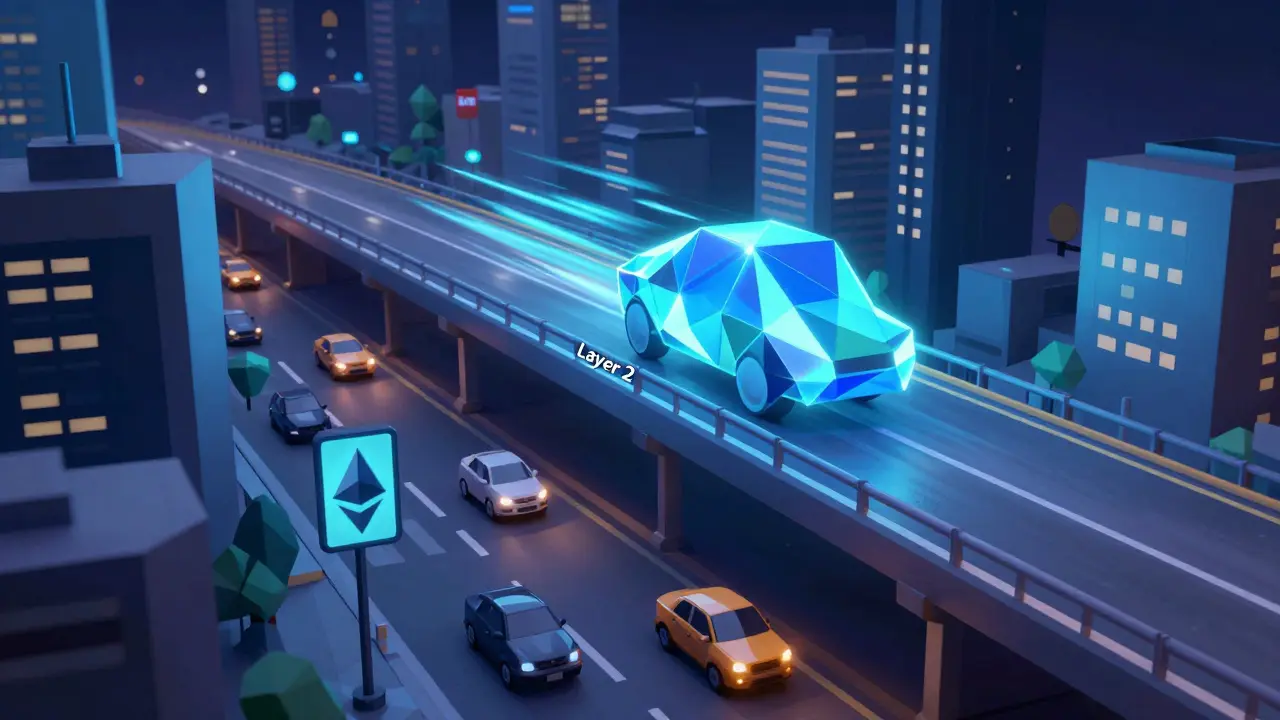
Layer 2 isn’t a new blockchain. It’s a highway built on top of the existing one. Think of Ethereum as a city center with one narrow road. Layer 2 is a bypass with 100 lanes. You drive on the bypass, do all your business off the main road, then drop off a single summary report back to the city center. This is called off-chain computation. Thousands of transactions happen instantly on the Layer 2 network. Only the final result-a single batch-gets written to Ethereum. That batch is verified by Ethereum’s security, so you don’t lose safety. But you gain speed and save money. There are two main types: Optimistic Rollups and zk-Rollups. Optimistic Rollups assume transactions are valid unless someone challenges them within a window (usually 7 days). zk-Rollups use math proofs (zero-knowledge) to prove everything is correct before even submitting to Ethereum. zk-Rollups are faster and cheaper, but harder to build. Optimistic Rollups are easier for developers to adopt.Speed: From Minutes to Milliseconds
On Ethereum, a simple token transfer can take 15 to 60 seconds during peak hours. Sometimes longer. On Polygon (a Layer 2), it’s under 2 seconds. On Arbitrum or OP Mainnet? Often under 1 second. Some, like zkSync, confirm transactions in under 300 milliseconds. Compare that to traditional banking. A wire transfer takes 1-3 days. A PayPal transaction? Instant-but centralized. Layer 2 gives you near-instant speed without giving up decentralization. For DeFi traders, this matters. A 5-second delay can mean losing a $10,000 arbitrage opportunity. Gaming is another example. In a blockchain game, you might need to buy an item, equip it, trade it, and sell it-all in under 10 seconds. On Ethereum, that’s impossible. On Immutable X (a Layer 2 built for NFT games)? It’s smooth. Players don’t notice they’re on a blockchain at all.Costs: From Dollars to Pennies
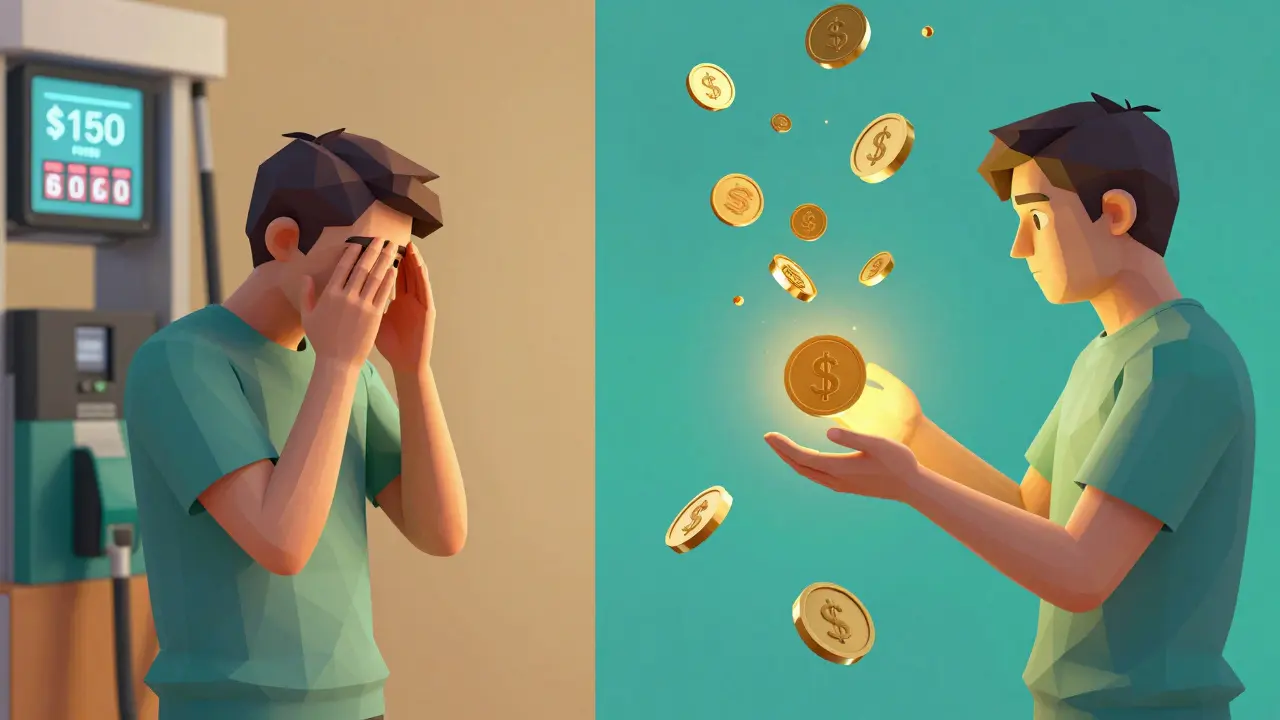
In late 2021, sending an NFT on Ethereum cost $200+. In 2025? On Layer 2, it’s $0.02 to $0.10. That’s 99% cheaper. Here’s the math:- Ethereum (Layer 1): $15-$150 per transaction
- Polygon: $0.005-$0.05
- Arbitrum: $0.01-$0.08
- zkSync Era: $0.002-$0.03
- OP Mainnet: $0.01-$0.10
Top Layer 2 Solutions in 2026
Not all Layer 2s are the same. Here’s what’s leading the pack:| Layer 2 Solution | TPS (Transactions Per Second) | Avg. Cost per Tx | Security Model | EVM Compatible? |
|---|---|---|---|---|
| Polygon zkEVM | 2,000+ | $0.01 | zk-Rollup | Yes |
| Arbitrum One | 40,000 | $0.03 | Optimistic Rollup | Yes |
| OP Mainnet | 35,000 | $0.02 | Optimistic Rollup | Yes |
| zkSync Era | 10,000 | $0.005 | zk-Rollup | Yes |
| Immutable X | 9,000 | $0.001 | zk-Rollup | No (custom) |
| Base (Coinbase) | 25,000 | $0.01 | Optimistic Rollup | Yes |
Polygon and Arbitrum dominate DeFi and general-purpose apps. zkSync and Immutable X lead in low-cost, high-volume use cases like gaming and NFTs. Base, backed by Coinbase, is growing fast because it’s easy for new users to join.
What to Look For When Choosing a Layer 2
Not every Layer 2 fits every need. Ask yourself:- Do you need maximum speed? Go for zk-Rollups like zkSync or Polygon zkEVM.
- Are you building a DeFi app? Arbitrum and OP Mainnet have the most liquidity and tools.
- Are you into NFTs or gaming? Immutable X and zkSync are built for it.
- Do you care about decentralization? Optimistic Rollups have longer challenge periods, which some see as more secure. zk-Rollups are faster but rely on complex math.
- Is your wallet compatible? MetaMask works with all EVM-compatible Layer 2s. Non-EVM chains like Solana’s Layer 2s need different tools.
Also, check the bridge. Moving funds from Ethereum to a Layer 2 takes time and fees. Some bridges are faster than others. Always test with a small amount first.
Why Layer 2 Isn’t Just a Temporary Fix
People used to call Layer 2 a “workaround.” That’s outdated. Today, over 80% of Ethereum-based DeFi volume happens on Layer 2. Over 70% of new NFTs are minted there. Ethereum itself is now mostly a settlement layer-like a bank’s clearinghouse. The future isn’t “Ethereum vs Layer 2.” It’s “Ethereum + Layer 2.” Layer 2s are the engines. Ethereum is the foundation. Together, they scale without sacrificing security.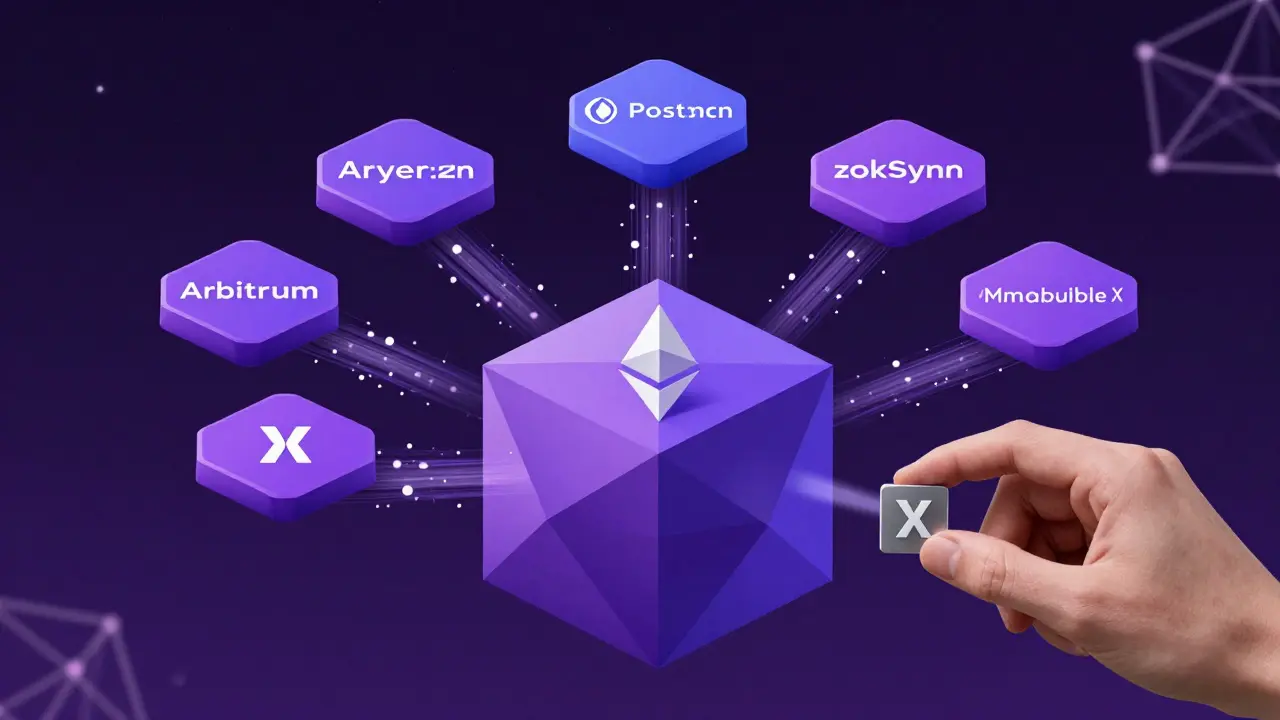
Real-World Impact: What Users Actually Do
A trader in Lagos uses Arbitrum to farm yield on $200 worth of ETH. Gas fees used to eat 40% of his profits. Now, they’re 1%. He’s making consistent returns. A digital artist in Brazil mints 100 NFTs on Immutable X for $0.10 total. On Ethereum, that would’ve cost $2,000. He’s now selling to collectors worldwide. A gamer in Japan buys a rare sword in a blockchain game, trades it, and cashes out-all in 8 seconds. No lag. No surprise fees. Just a normal experience. This isn’t hypothetical. These are real people using Layer 2 every day. The technology isn’t perfect. But it’s good enough. And that’s what matters.What’s Next for Layer 2?
The next wave is cross-chain interoperability. Right now, moving assets between Layer 2s can be clunky. New protocols like LayerZero and CCIP are making it seamless. Also, modular blockchains are coming. Instead of one chain doing everything, you’ll pick your own Layer 2 for speed, another for security, another for privacy. It’s like building with LEGO blocks. And fees? They’ll keep dropping. Some zk-Rollups are testing costs below $0.001 per transaction. That’s cheaper than sending a text message. Layer 2 isn’t the end. It’s the beginning of blockchain becoming invisible-like electricity. You don’t care how it works. You just use it.Are Layer 2s safe?
Yes, if you use well-audited ones. Layer 2s inherit Ethereum’s security. zk-Rollups prove transactions mathematically before they’re finalized. Optimistic Rollups rely on a 7-day challenge period where anyone can dispute fraud. Both are secure, but zk-Rollups are faster and cheaper. Never use obscure or untested Layer 2s-stick to Polygon, Arbitrum, zkSync, or OP Mainnet.
Do I need to move my crypto to use Layer 2?
Yes. You have to bridge your ETH or tokens from Ethereum (Layer 1) to the Layer 2 network. This takes a few minutes and costs a small fee (usually under $1). Once there, you can trade, stake, or play games at near-zero cost. You can always bridge back to Ethereum when needed.
Can I use Layer 2 with my MetaMask wallet?
Yes. MetaMask supports all major EVM-compatible Layer 2s like Arbitrum, Polygon, zkSync, and Base. Just add the network manually using its RPC details (easily found on their official websites). Once added, you can switch networks like switching between apps.
Why not just use Solana instead of Layer 2?
Solana is a Layer 1 with high speed and low cost-but it’s centralized in key ways. Its validators are fewer, and it has had network outages. Layer 2s like Arbitrum or zkSync run on Ethereum, which has 100,000+ validators and 10+ years of battle-tested security. If you want speed + decentralization, Layer 2 on Ethereum is still the safest bet.
Will Layer 2s make Ethereum obsolete?
No. Ethereum is the anchor. Layer 2s depend on it. They settle disputes, store final data, and rely on its security. Ethereum’s role is shifting from processing every transaction to being the trusted foundation. That’s a strength, not a weakness. Ethereum is becoming the backbone of the entire ecosystem.
What to Do Next
If you’re new to Layer 2:- Get a wallet like MetaMask.
- Add Arbitrum or Polygon as a network (search for official guides).
- Bridge $10-$20 worth of ETH from Ethereum to the Layer 2.
- Try swapping tokens on a DEX like Uniswap (on Arbitrum) or QuickSwap (on Polygon).
- See how fast and cheap it is.
If you’re a developer: Start building on Arbitrum or zkSync. They have the best documentation, tools, and community support. You’ll reach users faster and cheaper.
Layer 2 isn’t the future. It’s the present. And if you’re still using Ethereum directly for daily transactions, you’re paying too much and waiting too long. Time to move to the highway.
Pramod Sharma
January 18, 2026 AT 13:29Layer 2s are just capitalism’s way of making blockchain feel less broken. We built a decentralized dream and then taxed it into oblivion. Now we call the fix ‘innovation.’
Christina Shrader
January 19, 2026 AT 16:07I switched to Arbitrum last year. My gas fees dropped from $40 to $0.07. I didn’t think blockchain could feel this smooth.
Andre Suico
January 19, 2026 AT 20:08While Layer 2 solutions undeniably improve usability, it is critical to acknowledge that they introduce new attack surfaces through bridge protocols and centralized sequencers. Security must remain paramount.
Nishakar Rath
January 20, 2026 AT 12:50Layer 2s are just a bandaid on a corpse and you people are clapping like it’s a miracle. Ethereum is dead its just too stubborn to lie down and zkRollups are just fancy cheat codes for the rich who got in early
Patricia Chakeres
January 22, 2026 AT 08:53Who’s really controlling the sequencers? Coinbase runs Base. Polygon is backed by big VCs. This isn’t decentralization-it’s rebranding centralization with math.
kristina tina
January 24, 2026 AT 07:34THAT NFT ARTIST IN BRAZIL? I know her. She just sold her 100-piece collection for $12K total. She cried. Not from joy-from relief. She finally felt like she could breathe. This isn’t tech. This is liberation.
Anna Gringhuis
January 25, 2026 AT 18:06Of course you’re all excited. You’re using the same wallets and chains that let you pay $200 for a cat picture in 2021. Now you’re just mad because you can’t brag about how expensive it was anymore.
Michael Jones
January 27, 2026 AT 11:59Correction: zkSync Era’s average cost is $0.005, not $0.002. The minimum is $0.002, but averages reflect typical usage. Precision matters in technical discussions.
Lauren Bontje
January 29, 2026 AT 10:51Why are we letting foreign chains like Polygon dominate? America built the internet. Now we’re outsourcing our blockchain future to India and China? This is economic surrender.
Stephanie BASILIEN
January 30, 2026 AT 23:28While I appreciate the optimism surrounding Layer 2 adoption, one must consider the systemic risk inherent in relying on a single settlement layer. Ethereum’s vulnerability, however minor, becomes a single point of failure for an entire ecosystem. The fragility of this architecture is nontrivial.
Deb Svanefelt
January 31, 2026 AT 03:21I remember when we used to argue about whether blockchains could ever be fast. Now we’re arguing about which Layer 2 is the least centralized. We’ve come so far. And yet, we still can’t stop overthinking it. Sometimes, the tech just works. Let people use it.
Telleen Anderson-Lozano
January 31, 2026 AT 10:31Okay, so Layer 2s are faster, cheaper, and yes, kind of amazing-but what about the long-term implications for miner revenue? And what happens when Ethereum shifts to proof-of-stake entirely? Are we just creating a parallel economy that’s gonna collapse when the incentives change? I mean, seriously, think about it-
-the whole thing is built on trust in a settlement layer that doesn’t even process the transactions anymore. Isn’t that… ironic? Like, we’re outsourcing the work, but still paying the rent. And who’s watching the landlord?
Dustin Secrest
February 1, 2026 AT 00:30If blockchain is the new electricity, then Layer 2s are the power grid. We don’t care how the electrons get to our outlets-we just want the lights to turn on. The philosophy is in the utility, not the wiring.
Shaun Beckford
February 2, 2026 AT 04:51Layer 2s are just a way for VCs to repackage the same old crypto scam but with better marketing. You think you’re saving money? You’re just paying in attention now. And that’s way more expensive.
Chris Evans
February 3, 2026 AT 23:05zk-Rollups leverage cryptographic succinctness to achieve state validity without on-chain execution. Optimistic Rollups rely on game-theoretic fraud proofs. Both are elegant, but only one scales asymptotically. The future is composability through modular settlement layers, not monolithic chains.
Pat G
February 4, 2026 AT 09:30You think this is progress? I lost $800 last year because a Layer 2 bridge got hacked. This isn’t finance. It’s gambling with better UI.
Alexandra Heller
February 4, 2026 AT 13:07People act like Layer 2s are saving the world. But let’s be honest-most of these users are just speculators who don’t even know what a Merkle tree is. We’re not building a decentralized future. We’re building a faster casino.
Bryan Muñoz
February 5, 2026 AT 08:38THIS IS THE FUTURE BRO 😎💸 No more $50 gas fees. No more waiting. Just pure, unfiltered crypto freedom. Ethereum is the basement. Layer 2s are the penthouse. And you? You’re still stuck in the elevator. Get off your ass and bridge already 🚀