
Kraken Blocked Jurisdictions: The Complete List of Restricted Countries & Rules for 2026
Imagine logging into your favorite crypto exchange, ready to buy Bitcoin, only to see a red banner stating you are ineligible for service. It is frustrating, confusing, and unfortunately common in the world of digital assets. If you are trying to figure out why Kraken has limited your access or if you are checking whether your country is on the block list before signing up, you are not alone.
As of mid-2026, the landscape of cryptocurrency regulation has shifted dramatically. What was once a wild west of open borders is now a tightly regulated environment where geography dictates what you can trade, hold, or even view. Kraken, known for its strict compliance stance since its founding by Jesse Powell in 2011, enforces some of the most granular restrictions in the industry. This guide breaks down exactly who is blocked, what coins are banned where, and how new regulations like MiCA are reshaping the map.
The Hard Ban: Countries Where Kraken Is Completely Blocked
First, let’s look at the absolute no-go zones. These are jurisdictions where Kraken has pulled the plug entirely. If you reside in one of these places, you cannot create an account, deposit funds, or trade. These bans usually stem from international sanctions regimes enforced by bodies like the US Treasury’s Office of Foreign Assets Control (OFAC) or local regulatory voids that make compliance impossible.
The list of fully restricted nations includes:
- Sanctioned Nations: Afghanistan, Belarus, Iran, Iraq, North Korea, Syria, Libya, Sudan, South Sudan, Democratic Republic of the Congo, and Cuba.
- Russia and Occupied Territories: Russia is blocked, as are the Crimea, Donetsk, and Luhansk regions of Ukraine due to ongoing geopolitical conflicts and sanctions.
- High-Risk Jurisdictions: Central African Republic, Congo-Brazzaville, Eritrea, Guinea-Bissau, Lebanon, Mali, Namibia, Somalia, Tajikistan, Yemen, and Congo-Kinshasa.
Why so many? It comes down to Anti-Money Laundering (AML) laws. If a country lacks robust financial oversight or is under heavy international sanction, exchanges risk massive fines if they facilitate transactions there. Kraken chooses safety over market share in these regions.
United States Restrictions: A State-by-State Nightmare
If you live in the United States, the situation is more complex than a simple yes or no. While Kraken serves most of the US, it operates with one hand tied behind its back due to aggressive enforcement by the Securities and Exchange Commission (SEC) and state-level regulators. You might be able to sign up, but what you can do depends heavily on your zip code.
Here is the breakdown for US residents:
| Jurisdiction / User Type | Restrictions & Limitations |
|---|---|
| All US Residents | No XRP trading allowed. No EWT or GRT tokens. ETH2.S is staking-only (no direct spot trading). FLOW token trading is prohibited. |
| New York Residents | Cannot fully verify or trade. Only pre-verification is allowed pending BitLicense approval. Essentially, NY users are stuck in limbo. |
| Washington State Residents | Completely excluded from services until specific state regulations are met. |
| New Hampshire & Texas | Cannot fund, trade, or hold Euro (EUR) pairs. |
| All US Margin Traders | Margin positions must be closed within 28 days (compared to 365 days for non-US traders). |
The ban on XRP is particularly notable. While other major exchanges have started allowing XRP again following legal victories, Kraken maintains a cautious approach, excluding it for all US customers to avoid further regulatory friction. For New Yorkers, the lack of a BitLicense means Kraken remains inaccessible for active trading, forcing many to use workarounds or switch platforms.
The European Shift: MiCA and the Stablecoin Exodus
Europe underwent a massive change in early 2025 with the full implementation of the Markets in Crypto-Assets (MiCA) regulation. This wasn’t just a tweak; it was a structural overhaul. Kraken responded by delisting several major stablecoins across the European Economic Area (EEA). If you are in Austria, Cyprus, Czechia, Malta, Portugal, Spain, Sweden, or other EEA nations, this affects your portfolio directly.
The affected stablecoins include:
- Tether USDT
- PayPal USD (PYUSD)
- TrueUSD (TUSD)
- Tether EURt
- TerraClassic USD (USTC)
This decision shocked many users. Mark Greenberg, Kraken’s Global Head of Asset Management, had previously stated there were no plans to delist USDT in Europe. However, MiCA requires stablecoin issuers to meet stringent reserve and governance standards. When Tether and others faced hurdles in meeting these specific EU requirements quickly enough, Kraken chose compliance over convenience. By March 2025, spot trading for these assets in Europe had terminated, and users were forced to convert or withdraw.
For European traders, this means relying more on native fiat on-ramps or compliant alternatives like EURC (Euro Coin), which has seen increased adoption post-MiCA. It highlights a key trend: regulatory clarity often comes at the cost of asset variety.
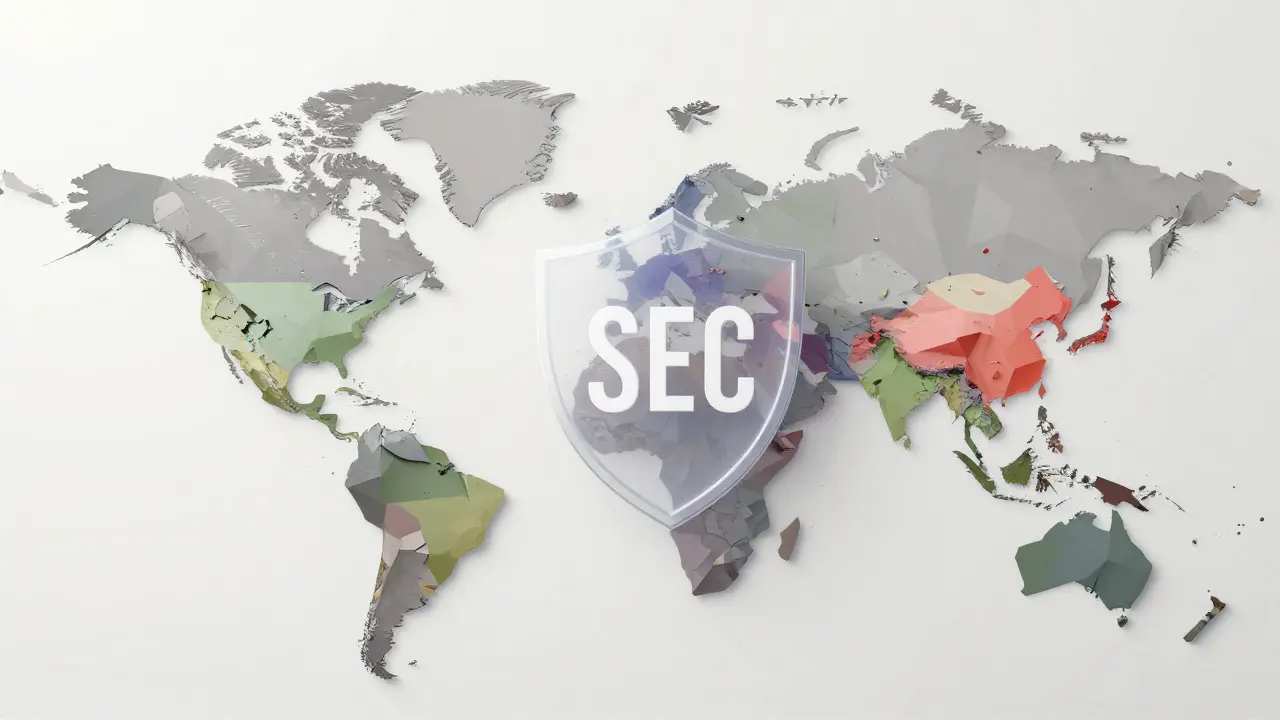
Australia, Japan, and Canada: Specific Token Bans
Outside the US and Europe, other major markets have their own quirks. Kraken tailors its offerings to fit local financial authorities, leading to fragmented experiences even among friendly jurisdictions.
Australia: Regulated by AUSTRAC, Australian users face a ban on "privacy coins." You cannot fund, trade, or hold DASH, Monero (XMR), or Zcash (ZEC). The logic here is transparency; regulators want to ensure every transaction can be traced to combat illicit finance.
Japan: Under the watchful eye of the Financial Services Agency (FSA), Japanese users must comply with stricter documentation standards for JPY trading. Additionally, like US and Canadian users, Japanese residents cannot trade the FLOW token.
Canada: FINTRAC regulations mean Canadian users share the US restrictions on EWT, GRT, and FLOW tokens. They also face similar limitations on certain security-like tokens deemed unregistered securities.
How Kraken Enforces These Rules
You might wonder, "Can I just use a VPN to bypass this?" The short answer is: don’t try it. Kraken employs a multi-layered verification system designed to catch geographic spoofing.
When you sign up, Kraken checks your IP address, verifies your government-issued ID, and requests proof of residence (like a utility bill). But the monitoring doesn’t stop there. They continuously monitor transaction patterns and login locations. If your IP suddenly jumps from Wellington, New Zealand, to Pyongyang, North Korea, your account will be flagged.
Attempting to circumvent restrictions via VPNs often leads to immediate account termination and asset freezes. Kraken’s detection systems are sophisticated, analyzing metadata beyond just the IP header. In the era of global AML scrutiny, exchanges treat jurisdictional fraud as a top-tier risk. It is safer to find an exchange that actually supports your region than to risk losing your funds to a frozen account.
Why Does Kraken Play It Safe?
Kraken’s reputation is built on trust and longevity. Founded in 2011, it survived the Mt. Gox collapse and numerous market crashes by never holding user funds in commingled accounts and maintaining strict solvency proofs. This conservative ethos extends to compliance.
In 2020, Kraken made history by becoming the first cryptocurrency exchange to receive a Special Purpose Depository Institution (SPDI) charter in Wyoming. This gave them access to traditional banking rails, a luxury many competitors still lack. To keep that banking relationship alive, Kraken must adhere to stricter standards than offshore exchanges.
While this sometimes angers retail traders who want access to every meme coin or privacy token, it attracts institutional investors. Banks and hedge funds prefer partners who won’t get shut down tomorrow due to a regulatory fine. Kraken’s strategy is clear: sacrifice some market share in gray-area jurisdictions to dominate the compliant, institutional-grade segment.
What Comes Next for 2026 and Beyond?
The regulatory map is still shifting. As we move through 2026, several trends are emerging:
- US Expansion Hopes: There is ongoing speculation about Kraken gaining licenses in New York and Washington State. Regulatory frameworks are slowly clarifying, which could open these lucrative markets.
- Staking Restorations: With evolving SEC guidance, Kraken may restore staking services for additional cryptocurrencies that were previously paused due to uncertainty over whether staking constitutes a security.
- Global Standardization: Expect more exchanges to adopt Kraken’s model. As MiCA spreads influence globally, other regions may follow suit, leading to fewer privacy coins and more regulated stablecoins worldwide.
For users, the takeaway is adaptability. Keep an eye on official announcements from Kraken regarding your specific jurisdiction. The rules today might differ from next year, especially as governments finalize their crypto tax and reporting frameworks.
Is Kraken available in my country?
Kraken serves over 190 countries. However, it is completely blocked in sanctioned nations like Russia, Iran, North Korea, and Cuba, as well as high-risk areas like Somalia and Yemen. If you are in the US, availability depends on your state. Check the official Kraken support page for the most current list of supported jurisdictions.
Why can't I trade XRP on Kraken in the US?
Despite recent legal developments, Kraken maintains a ban on XRP trading for all US residents to mitigate regulatory risk with the SEC. This restriction applies regardless of your state, though some other exchanges have begun reinstating XRP for US users.
Can I use a VPN to access Kraken if I am in a blocked country?
Technically, you might connect, but it is risky. Kraken uses advanced detection methods including IP geolocation, document verification, and transaction monitoring. If they detect you are circumventing geographic restrictions, they will likely terminate your account and freeze your assets. It is generally advised to use an exchange that officially supports your jurisdiction.
What happened to USDT on Kraken in Europe?
Due to the EU's MiCA regulation, Kraken delisted USDT and other non-compliant stablecoins in the European Economic Area starting in early 2025. Users were given a timeline to sell or withdraw these assets. This was done to ensure compliance with new EU stability and reserve requirements for stablecoins.
Are privacy coins like Monero banned on Kraken?
It depends on where you live. Australian residents cannot trade Monero (XMR), Dash, or Zcash due to AUSTRAC regulations. However, users in other permitted jurisdictions may still be able to trade these coins, unless specific local laws prohibit them.