
Japan Crypto Licensing Framework for Exchanges: What You Need to Know in 2025

Japan Crypto License Cost Calculator
Calculate Your Japan Crypto License Costs
Japan's crypto licensing framework requires significant financial investment. This calculator estimates your total costs based on the latest regulatory requirements.
Your estimated total costs will appear here after calculation
Key Cost Factors
Japan doesn’t just allow crypto exchanges to operate-it makes them earn it. If you’re thinking about launching a crypto exchange in Japan or using one as a trader, you need to understand this: Japan’s crypto licensing framework is one of the strictest-and most effective-in the world. It’s not about stopping innovation. It’s about making sure when something goes wrong, your money stays safe.
Why Japan’s Rules Are Different
Most countries struggle to decide if crypto is money, a commodity, or a security. Japan cut through that confusion back in 2017. The Payment Services Act (PSA) officially recognized virtual currencies as legal property. That meant exchanges couldn’t just operate in the shadows. They had to register with the Financial Services Agency (FSA), prove they were serious, and follow real rules. By September 2025, Japan took another big step. Crypto oversight moved from the PSA to the Financial Instruments and Exchange Act (FIEA). This wasn’t just a paperwork shuffle. It meant crypto assets were now treated like financial instruments-especially when they were used for investment, not just payments. Security tokens, tokenized real estate, and other asset-backed crypto now fall under the same rules as stocks and bonds. That’s a huge shift. It brings clarity. And it makes Japan the first major economy to unify traditional finance and crypto under one regulatory roof.The Cost of Getting Licensed
Getting a license in Japan isn’t cheap. It’s not even close. You need to be a kabushiki-kaisha-a Japanese joint-stock company-with a physical office in Japan and a resident manager who’s personally liable for compliance. That alone blocks most offshore operators. Then there’s the money. You need at least 10 million yen (about $68,000 USD) in capital, plus positive net assets. That’s not a startup budget. That’s a serious business investment. According to compliance firms like YB Case, most companies spend between $500,000 and $1 million just to get approved. And that’s before you even start building systems. The process takes 18 to 24 months. During that time, you’ll run a 6-month shadow operation. All your systems-trading, deposits, withdrawals-must handle simulated transactions flawlessly. No glitches. No delays. No errors. The FSA watches every step.Security Isn’t Optional-It’s Mandatory
After the $534 million Coincheck hack in 2018, Japan changed the game. Now, every licensed exchange must keep at least 95% of user funds in cold storage. That means offline, air-gapped wallets, physically locked away from the internet. No exceptions. No excuses. The remaining 5% in hot wallets must be protected by multi-signature systems and DDoS defenses capable of handling attacks over 1 terabit per second. Exchanges need 24/7 monitoring teams that respond within 15 minutes of any security alert. These aren’t suggestions. They’re audited requirements. JVCEA, the industry self-regulatory body, conducts random inspections. One failed audit? Your license is on the line. This isn’t just about tech. It’s about culture. Japanese exchanges spend more on security than on marketing. That’s why, despite being the world’s third-largest crypto market with over 12 million users, Japan has had far fewer major hacks than the U.S. or Europe. Reddit user TokyoTrader88 put it simply: “My 2.3 BTC stayed safe during the March 2025 incident. I wouldn’t trust an exchange without this level of protection.”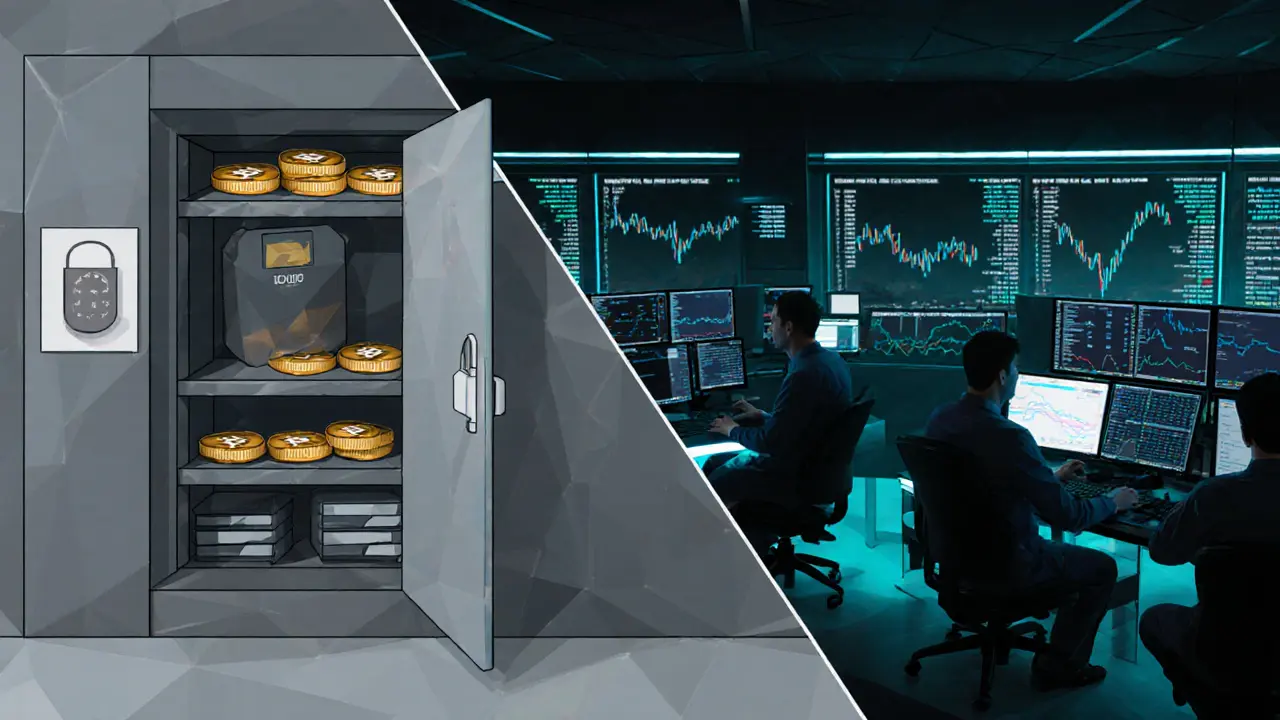
The Token Listing Black Box
Want to list a new coin? Too bad. You can’t just add it. The Japan Virtual Currency Exchange Association (JVCEA) runs a Token Listing Committee with 17 members. They review every single new token application. In Q2 2025 alone, they rejected 72% of submissions. Why? Meme coins with no whitepaper. Tokens with anonymous teams. Projects with no clear use case. Even if a coin is trending on Binance or Coinbase, if JVCEA says no, Japanese exchanges can’t list it. This caused a 30-day freeze on new listings in April 2025 after a surge in scam tokens. That’s not censorship. That’s consumer protection. But it’s also frustrating. Users on Trustpilot complain that GMO Coin and Bitbank don’t offer trending altcoins until months after global launch. Traders miss out. Retail users feel locked out.Trading Limits: Why Leverage Is Capped at 2x
Japan used to allow up to 4x leverage. In 2023, the FSA cut it to 2x. That’s lower than most global exchanges. Dubai allows 100x. Binance offers 125x. Japan says no. The reason? Retail losses. The FSA found that high-leverage trading led to mass liquidations during volatile swings. In 2024 alone, over 12,000 Japanese retail accounts lost their entire balances due to leveraged positions. The 2x cap was introduced to protect everyday investors. The result? A 15% drop in active day traders on Japanese exchanges, according to CryptoCompare. Professional traders complain. But retail users? 87% said in the FSA’s 2025 Consumer Confidence Report that they feel “very” or “somewhat” secure using licensed platforms. That’s 24 percentage points higher than in unregulated markets.The Banking Problem
Here’s the dirty secret: even if you’re licensed, getting a bank account is hard. Only 8% of Japanese banks currently work with crypto exchanges. Why? A 2020 guideline banned banks from holding crypto assets directly. That means exchanges can’t hold yen deposits in traditional accounts. They rely on third-party payment processors, which adds cost and delay. But that’s changing. In September 2025, the FSA signaled it might allow Japan’s megabanks-like Mitsubishi UFJ and Sumitomo Mitsui-to register as crypto exchange operators. If approved, these banks could hold Bitcoin as an investment asset, provided they keep 30% capital buffers against price crashes (vs. 8% for stocks). That could unlock billions in institutional capital.
Who’s Winning? Who’s Losing?
As of June 2025, 21 exchanges hold active FSA licenses. Big names like Bitbank, DMM Bitcoin, and GMO Coin dominate. But 17 have been shut down since 2017 for failing audits, poor KYC, or missing capital requirements. The bar is high-and it’s rising. Japan’s framework ranks third globally for regulatory clarity, behind Switzerland and Singapore, according to the Chamber of Digital Commerce. But it’s more expensive than Singapore’s. Japanese exchanges spend 25% of revenue on compliance. Singaporean ones spend 15%. The trade-off? Certainty. In the U.S., you don’t know if the SEC will come after you next week. In Japan, the rules are written in stone. You know exactly what you need to do. And if you follow them, you can operate legally for years.What’s Next? The ECISB Framework
The biggest change coming is the Amendment Act 2025, which will create the Electronic Payment Instrument and Crypto-asset Intermediary Service Business (ECISB) framework. This will require all exchanges to notify the FSA before launching new services-like staking, lending, or derivatives. By March 2026, the FIEA transition will be complete. Crypto assets will be fully integrated into Japan’s financial regulatory system. That means:- Payment tokens (like Bitcoin) follow PSA rules
- Investment tokens (like security tokens) follow FIEA rules
- Exchanges must file notifications for every new product
Final Thoughts: Is Japan’s Model Right for You?
If you’re a trader: Japan’s rules mean fewer coins, no high leverage, and slower access to new tokens. But your funds are safer than almost anywhere else. If you’re a business: Japan’s licensing process is brutal. It costs a million dollars and takes two years. But once you’re in, you have legal certainty. No regulatory whiplash. No sudden bans. Just a clear path forward. Japan isn’t trying to be the most exciting crypto market. It’s trying to be the most trustworthy. And for many, that’s worth more than a quick profit.How many crypto exchanges are currently licensed in Japan?
As of June 2025, 21 crypto exchanges hold active licenses from Japan’s Financial Services Agency (FSA). Since 2017, 17 exchanges have had their registrations canceled due to non-compliance with security, capital, or reporting requirements.
What is the minimum capital requirement to get a crypto license in Japan?
Exchanges must have at least 10 million yen (approximately $68,000 USD as of September 2025) in capital, plus positive net assets. This is not just a starting fee-it’s an ongoing requirement. The FSA regularly audits balance sheets to ensure compliance.
Why does Japan require 95% of crypto to be stored offline?
This rule was introduced after the 2018 Coincheck hack, where $534 million in NEM tokens were stolen from an online wallet. The FSA mandated cold storage to eliminate the risk of large-scale cyber theft. Exchanges must prove their cold wallet systems are secure through third-party audits, and any breach of this rule can lead to immediate license suspension.
Can I trade with leverage on Japanese crypto exchanges?
Yes, but only up to 2x leverage. Japan lowered the limit from 4x in 2023 to protect retail investors from catastrophic losses during volatile market swings. This is one of the lowest leverage limits among major crypto markets, making Japan less attractive for day traders but safer for long-term holders.
Why are new crypto tokens hard to list in Japan?
All new token listings must be approved by the Japan Virtual Currency Exchange Association (JVCEA) Token Listing Committee. They review whitepapers, smart contracts, team backgrounds, and market manipulation risks. In Q2 2025, 72% of applications were rejected. This slows down access to new projects but reduces exposure to scams and low-quality tokens.
Can Japanese banks hold cryptocurrency?
Currently, Japanese banks are prohibited from holding crypto assets directly under 2020 guidelines. However, the FSA is reviewing this rule as part of its 2025 regulatory overhaul. If approved, major banks like Mitsubishi UFJ could register as crypto exchange operators and hold Bitcoin as an investment asset-with strict capital buffers of 30% against price drops.
How long does it take to get a crypto license in Japan?
The process typically takes 18 to 24 months. It includes submitting documentation, undergoing a 6-month shadow operation where systems are tested under simulated conditions, passing FSA audits, and gaining JVCEA approval. Most applicants spend between $500,000 and $1 million during this period.
What’s the difference between PSA and FIEA in Japan’s crypto rules?
The Payment Services Act (PSA) treated crypto as a payment method and applied basic exchange licensing rules. The Financial Instruments and Exchange Act (FIEA), now fully active as of September 2025, treats crypto as a financial asset. Investment tokens (like security tokens) now fall under securities regulations, with stricter disclosure, reporting, and investor protection rules. This creates a two-tier system based on how the asset is used.
Japan’s crypto licensing framework isn’t perfect. It’s slow, expensive, and restrictive. But it works. Users trust it. Regulators enforce it. And as the world watches for a model that balances innovation with safety, Japan is showing how it can be done-without sacrificing security for speed.
Althea Gwen
November 29, 2025 AT 17:59Durgesh Mehta
November 30, 2025 AT 12:42Sarah Roberge
December 1, 2025 AT 22:21Jess Bothun-Berg
December 3, 2025 AT 09:08Layla Hu
December 5, 2025 AT 02:10Greer Dauphin
December 7, 2025 AT 01:48Bhoomika Agarwal
December 7, 2025 AT 04:19Katherine Alva
December 7, 2025 AT 09:01Nelia Mcquiston
December 8, 2025 AT 15:40Mark Stoehr
December 9, 2025 AT 22:13Shari Heglin
December 10, 2025 AT 08:34Reggie Herbert
December 11, 2025 AT 14:44Murray Dejarnette
December 12, 2025 AT 07:54Sarah Locke
December 13, 2025 AT 03:49Ankit Varshney
December 14, 2025 AT 13:19