
How to Set Up a Multi-Signature Wallet: The Ultimate Security Guide
Imagine handing over the keys to your bank account to someone else. Now imagine that person gets hacked, or loses their phone, or decides to drain your savings. In the world of cryptocurrency, if you use a standard single-signature wallet, that’s exactly what happens when one private key is compromised. There is no customer support line to call. There is no "forgot password" button. Your funds are gone forever.
This is why multi-signature wallets have become the gold standard for anyone serious about protecting their digital assets. Unlike traditional wallets that rely on a single key, a multi-sig wallet requires multiple cryptographic signatures to authorize a transaction. It’s like needing two out of three board members to sign off on a major corporate expense before the money moves. This guide will walk you through exactly how to set this up, why it matters, and how to avoid the common pitfalls that can leave you locked out of your own funds.
Understanding How Multi-Signature Wallets Work
To set up a multi-sig wallet correctly, you first need to understand the core mechanism: the M-of-N configuration. This is the heart of the system. "M" represents the number of signatures required to execute a transaction, while "N" is the total number of people or devices holding a key.
The most popular setup for individuals is a 2-of-3 wallet. Here’s how it works in practice:
- You generate three separate private keys (N=3).
- You store these keys on different devices-for example, a hardware wallet at home, a mobile device, and a backup hardware wallet stored in a safe deposit box.
- To spend funds, you only need two of those three keys to approve the transaction (M=2).
This structure provides incredible resilience. If you lose one key-say, your phone is stolen-you still have two remaining. You can access your funds without issue. If a hacker compromises one device, they cannot move the money because they lack the second signature. According to Ledger’s 2024 comparative analysis, a properly configured 2-of-3 wallet reduces the risk of total loss from 97% (in single-key scenarios) to approximately 19%.
For businesses or DAOs (Decentralized Autonomous Organizations), larger configurations like 3-of-5 or 4-of-7 are common. These ensure that no single individual has unilateral control over treasury funds, satisfying regulatory requirements for distributed control mechanisms as noted in SEC guidance from 2023.
Choosing the Right Tools for Your Setup
Not all wallets support multi-signature functionality natively. While Bitcoin has supported multi-sig since 2012 via the CHECKMULTISIG opcode, Ethereum relies on smart contracts. You need software that can coordinate between these different keys and networks.
| Wallet Software | Best For | Cost Model | User Experience Rating |
|---|---|---|---|
| Casa | Bitcoin-only users seeking ease of use | Premium ($399/year for HODL Pack) | 4.7/5 (High clarity) |
| Electrum | Advanced users and developers | Free (Open Source) | 3.2/5 (Technical interface) |
| BitPay Wallet | Cross-chain flexibility | Free | 4.1/5 (Good support) |
| Ledger Live | Hardware wallet owners | Free (Requires Ledger device) | 4.5/5 (Integrated ecosystem) |
If you are new to crypto, Casa offers the smoothest experience but comes with a subscription fee. For those comfortable with technical interfaces, Electrum is a powerful free option. Remember, the software is just the coordinator; the security comes from how you manage the underlying keys.
Step-by-Step Guide to Setting Up a 2-of-3 Wallet
Setting up a multi-sig wallet takes time. Coinbase’s 2024 user study found it takes an average of 63 minutes for experienced users, compared to 8 minutes for a single-sig wallet. Do not rush this process. A mistake here can mean permanent loss of access.
- Prepare Your Devices: You will need at least two, preferably three, distinct devices. Ideally, use hardware wallets like Trezor or Ledger for cold storage, combined with a mobile app for convenience. Ensure each device has the latest firmware installed.
- Generate Individual Keys: On each device, create a new wallet instance. Each device will generate its own unique 12- or 24-word recovery phrase. Write these down physically. Never digitize them. Store them in separate, secure locations (e.g., a fireproof safe at home, a bank safety deposit box).
- Select Your Configuration: Open your chosen multi-sig software (e.g., Casa or BitPay). Select the option to create a new multi-sig wallet. Choose the 2-of-3 configuration.
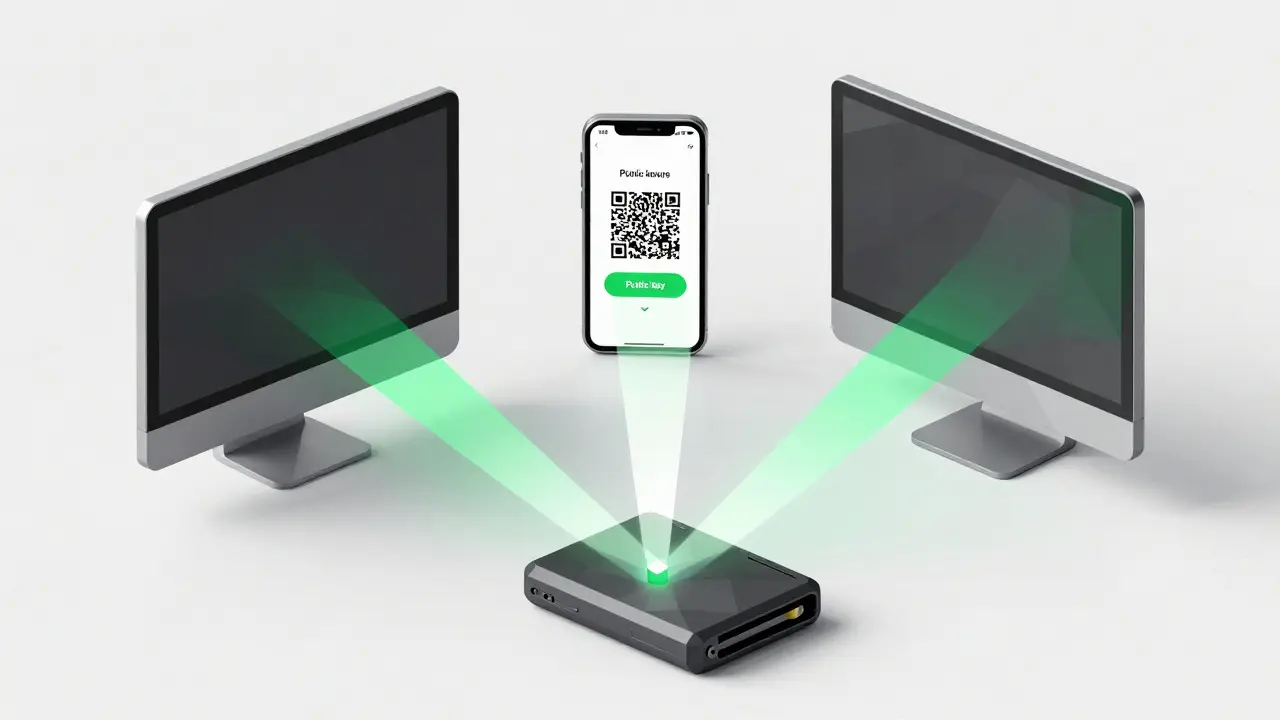
- Exchange Public Keys: This is the critical coordination step. You will need to share the public keys (not private keys!) between the devices. Most modern apps allow this via QR codes. Scan the QR code from Device A into Device B, then Device C, and so on, until all devices recognize each other.
- Verify the Setup: Once the network is established, the software will show a unified balance across all connected devices. Perform a small test transaction. Send a tiny amount of Bitcoin to a trusted address. Approve it with two of your devices. Confirm it broadcasts successfully to the blockchain.
A common pitfall during this phase is QR code scanning failures, which accounted for 31% of BitPay support tickets in Q1 2024. If scanning fails, double-check that your camera lens is clean and that you are using the correct version of the wallet software on all devices.
Security Best Practices and Backup Strategies
The beauty of multi-sig is also its danger. Because you have multiple recovery phrases to manage, the risk of losing access increases if you are disorganized. Chainalysis CTO Jonathan Levin reported that 37% of multi-sig wallet failures result from lost recovery phrases across multiple devices.
To mitigate this, follow these rules:
- Diversify Storage Locations: Do not keep all three recovery phrases in the same house. If a fire or flood destroys your home, you might lose all keys. Keep one at home, one in a safe deposit box, and perhaps one with a trusted family member or lawyer.
- Use Steel Backups: Paper degrades. Use steel plates engraved with your seed phrases to protect against fire and water damage. This is recommended by 73% of experienced users in CoinDesk surveys.
- Conduct Quarterly Tests: Every three months, open your wallet software and verify that you can still access the interface. You don’t need to move funds, but ensuring the software recognizes your keys prevents surprise lockouts.
- Document Your Strategy: Create a clear, written plan for your heirs or emergency contacts. Explain where the keys are and which two are needed to recover the wallet. Without this documentation, your assets may be permanently inaccessible upon your death.
Multi-Sig vs. MPC: What’s the Difference?
You may hear about MPC (Multi-Party Computation) wallets as an alternative. It’s important to know the difference. Traditional multi-sig generates a single signature on-chain only after multiple parties sign locally. MPC, however, splits the private key into shards and reconstructs the signature mathematically without ever exposing the full key.
MPC is often smoother for user experience and is gaining traction in institutional custody. However, for Bitcoin specifically, native multi-sig remains superior because it doesn’t require additional infrastructure layers. As Dr. Pieter Wuille, a Bitcoin Core developer, stated in 2023, multi-sig remains the "gold standard for cold storage of institutional Bitcoin holdings." If you are holding long-term Bitcoin, stick with native multi-sig. If you are trading frequently across multiple chains, MPC might offer better usability.
Troubleshooting Common Issues
Even with careful planning, things can go wrong. Here are solutions to frequent problems:
- Device Lost or Stolen: If you lose one device in a 2-of-3 setup, you are fine. Use the remaining two to access funds. Immediately create a new third key and update your configuration to replace the lost one.
- Software Update Breaks Sync: Always update all devices simultaneously. Version mismatches can cause synchronization errors. If this happens, revert to the previous stable version on all devices before updating again.
- Failed Transaction Broadcast: Multi-sig transactions take longer to confirm because they require more data. If a transaction stalls, check the mempool status. Sometimes increasing the transaction fee (RBF - Replace By Fee) helps, though this depends on your wallet software’s capabilities.
Remember, the complexity of multi-sig is the price of true security. As Gartner’s 2024 report notes, while user experience scores are lower (2.8/5), the security rating is high (4.3/5). For assets worth more than $10,000, this trade-off is almost always worth it.
Is a multi-signature wallet safe from hackers?
Yes, significantly safer than single-signature wallets. Since a hacker would need to compromise multiple independent devices to steal funds, the attack surface is drastically reduced. However, no system is 100% immune. Security depends heavily on how well you protect your individual private keys and recovery phrases.
Can I use a multi-sig wallet for Ethereum?
Yes, but it works differently than Bitcoin. Ethereum uses smart contracts to enforce multi-sig rules. Wallets like Gnosis Safe (formerly Multisig) are popular for Ethereum. The setup process is similar, but you interact with a contract address rather than native protocol opcodes.
What happens if I lose my recovery phrase for one key?
If you have a 2-of-3 setup and lose one phrase, you can still access your funds using the other two keys. However, you should immediately generate a new third key and update your wallet configuration to restore full redundancy. Losing two keys in a 2-of-3 setup results in permanent loss of funds.
Do multi-sig wallets cost more to transact?
Traditionally, yes, because multi-sig transactions are larger in size. However, with Bitcoin's Taproot upgrade and Schnorr signatures, multi-sig transactions can now appear as single-signatures on-chain, reducing fees by approximately 25%. Still, expect slightly higher fees than simple single-sig transfers.
Is multi-sig suitable for everyday spending?
It can be cumbersome for daily coffee purchases due to the extra steps involved in coordinating signatures. Many users keep a small amount of crypto in a single-sig hot wallet for daily spending and use multi-sig for long-term savings and large holdings.
mark valmart
May 28, 2026 AT 20:13man i just lost my seed phrase on a paper backup that got soaked in coffee last week so this multi-sig stuff sounds like a lifesaver but also kinda terrifying because if i lose two keys im screwed forever
Bill Gunn
May 30, 2026 AT 11:51Hey mark valmart! 🛡️ Don't panic yet. The whole point of the 2-of-3 setup is exactly to prevent that single point of failure. If you have your other two keys safe, you're golden. Just make sure those backups are in waterproof containers or better yet, steel plates as mentioned in the guide. It’s a bit of work upfront but saves your sanity later! 💪🔐
Crystal Davis
May 30, 2026 AT 17:39You are clearly misunderstanding the fundamental architecture of cryptographic security protocols. The article oversimplifies the complexity involved in managing multiple private keys across different hardware environments. Most retail users lack the technical proficiency to maintain three separate devices with updated firmware without introducing new attack vectors through poor hygiene practices. Furthermore, the reliance on QR code scanning for key exchange introduces significant latency and potential for man-in-the-middle attacks if not done in a completely air-gapped environment. This is not a solution for the average consumer who cannot even remember their password for email.
Barclay Chantel
June 1, 2026 AT 15:24Typical tech bro enthusiasm for unnecessary complexity. Real security is simple: buy gold, put it in a vault, forget about it. These digital coins are a scam anyway, but pretending they need 'multi-signature' setups just makes you look like you're trying to legitimize gambling. Only people who have something to hide or are deeply confused by basic finance bother with this nonsense. Keep it simple or don't play at all.
Hadleigh Edwards
June 2, 2026 AT 03:41I really appreciate the detailed breakdown here because I have been thinking about moving my savings from an exchange to cold storage for quite some time now and the idea of having multiple layers of protection does seem appealing although I am worried about the initial setup process taking too long and making mistakes which could be catastrophic given the irreversible nature of blockchain transactions so I will probably start with a small amount first to test the waters before committing any significant funds to this system
Dana Rapoport
June 3, 2026 AT 20:19The philosophical implication of distributed trust is fascinating. We are essentially replacing institutional trust with mathematical certainty, but we must accept the burden of personal responsibility. It is a trade-off between convenience and sovereignty. I find this shift necessary for true financial autonomy.
saradee dee
June 4, 2026 AT 18:28Oh my goodness this is such a huge relief to read because I was so scared after hearing about all those hacks lately and losing everything seems like a nightmare scenario that keeps me up at night but knowing there is a way to protect myself with multiple keys gives me so much peace of mind and I feel like I can finally breathe again thank you so much for explaining this in a way that makes sense to someone who is not super tech savvy
Joshua Alcover
June 5, 2026 AT 18:57The epistemological framework underlying decentralized autonomous organizations necessitates a rigorous adherence to cryptographic verification protocols. The utilization of multi-party computation versus native multi-signature schemes represents a dialectic tension between usability and ontological purity. One must consider the hegemonic structures of centralized exchanges and how they impose arbitrary constraints on individual agency. Therefore, the adoption of a 2-of-3 configuration is not merely a technical choice but a political statement against surveillance capitalism and the erosion of privacy rights in the digital age.
Diana Morris
June 7, 2026 AT 15:06stop overthinking it just do it already every minute you wait is another minute someone else is securing their assets while you sit there reading articles instead of acting get your ledger devices set up today and stop making excuses
Miss Masquer
June 9, 2026 AT 11:40In Canada we often think about legacy planning and estate management quite seriously due to our strong cultural emphasis on family continuity and legal preparedness so the section about documenting your strategy for heirs is particularly resonant with me because I have seen too many families struggle with accessing digital assets after a loved one passes away without clear instructions so I highly recommend creating a physical document stored with your lawyer that outlines where each key is located and who holds them to ensure your wishes are respected
Christina Pearce
June 9, 2026 AT 17:50I’m curious about the cost aspect mentioned in the table. Does using Casa actually save money in the long run compared to the potential fees of Electrum? Also, has anyone tried the BitPay wallet for Ethereum specifically? I want to make sure I’m not locking myself into a Bitcoin-only ecosystem if I plan to diversify later.
Craig Swanson
June 11, 2026 AT 11:46Listen up everyone because this is critical information that you need to pay attention to right now. If you are holding more than $10k in crypto and you are not using a multi-sig wallet you are being reckless with your own money. Do not let fear of complexity stop you from securing your future. Follow the steps in this guide exactly as written. Get your hardware wallets. Generate your keys. Store them safely. Test the transaction. Do not skip a single step. Your financial security depends on your discipline and action today. Stop procrastinating and secure your assets properly before it is too late.