
How to Access DEXs from Banned Countries: Risks, Tools & Legal Reality

Imagine needing to send money home or protect your savings from hyperinflation, but the government says holding cryptocurrency is a crime. In places like China, Algeria, and Bangladesh, that isn’t a hypothetical scenario-it’s daily life for millions. While centralized exchanges (CEXs) are easy to block because they require ID verification, Decentralized Exchanges (DEXs) are blockchain-based trading platforms that operate without central intermediaries, enabling peer-to-peer transactions through smart contracts. Because DEXs don’t hold your keys or demand your passport, they remain technically accessible even in jurisdictions with total crypto bans. But accessing them safely in 2026 is a high-stakes game of cat and mouse between users and state-level surveillance.
The landscape has shifted dramatically since 2024. According to the Atlantic Council’s 2025 assessment, cryptocurrency is generally banned in 10 nations and partially restricted in 20 others. Yet, despite these prohibitions, TRM Labs reports that regulators in 30 jurisdictions-representing over 70% of global crypto exposure-are now aggressively targeting decentralized finance infrastructure. This article breaks down how people in banned regions actually access DEXs, the technical hurdles they face, the severe legal risks involved, and whether it’s worth the danger.
Why DEXs Are Different from Centralized Exchanges
To understand why DEX access persists in banned zones, you first need to grasp the fundamental difference between a DEX and a traditional exchange. When you use Binance or Coinbase, you are interacting with a company. That company holds your funds, knows who you are, and can freeze your account if a court orders it. Governments ban these entities by blocking their websites and pressuring banks to cut off funding.
A Decentralized Exchange like Uniswap or PancakeSwap is different. It’s essentially code running on a public blockchain like Ethereum or BNB Chain. There is no customer service team, no headquarters to raid, and no central database of user identities. You connect your own digital wallet directly to the protocol. If a government blocks the website URL, the underlying smart contract still exists on the blockchain. As long as you can reach the blockchain node, you can trade. This architectural resilience is why DEX usage grew 19% year-over-year in China in 2024, despite the country spending an estimated $2.3 billion annually on crypto-related internet monitoring.
The Technical Stack: How Users Bypass Blocks
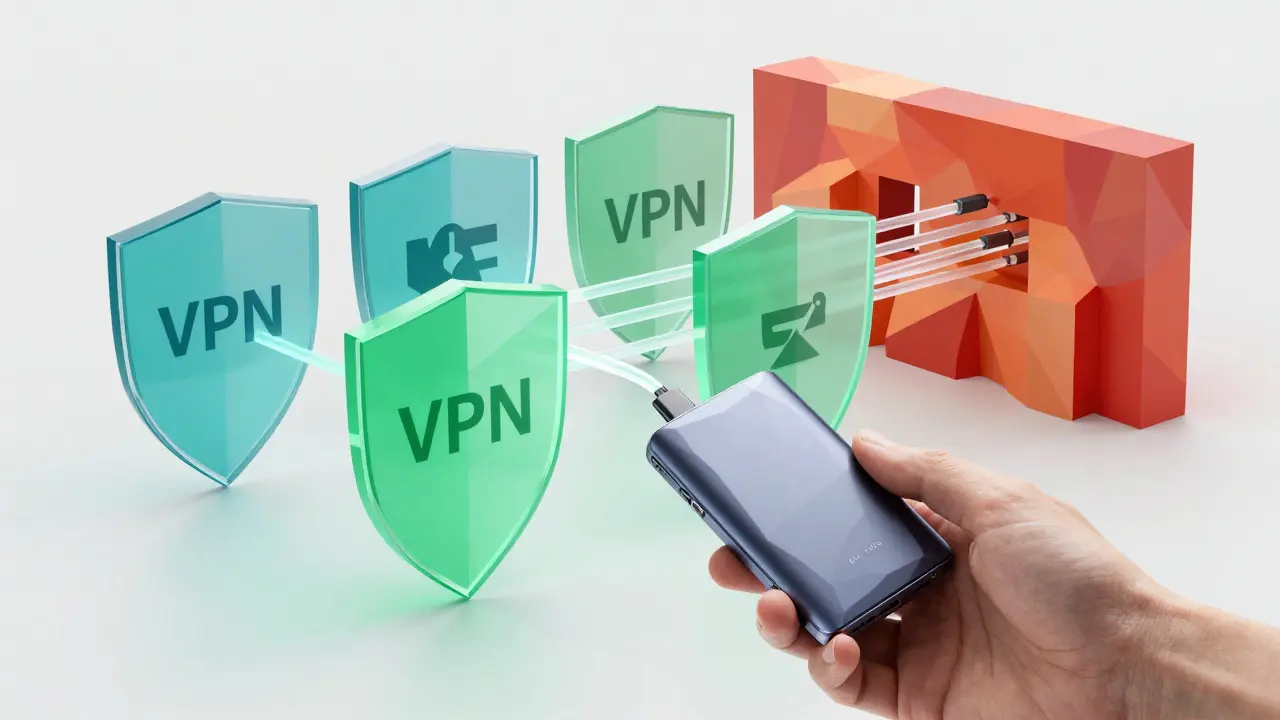
Accessing a DEX from a banned jurisdiction isn’t as simple as opening a browser tab. In countries like China and Algeria, governments actively block known DEX domain names and IP addresses. To get around this, users have developed a specific technical workflow. Here is what a typical setup looks like in 2026:
- Virtual Private Networks (VPNs): The first line of defense. A 2025 Chainalysis field study found that 78% of surveyed users in China and Algeria rely on consistent VPN usage to mask their location and bypass firewalls. Premium services like NordVPN and ExpressVPN show success rates of 89% and 85% respectively in penetrating China’s Great Firewall, according to PCMag testing.
- Non-Custodial Wallets: Since you can’t use a bank card to buy crypto, you need a way to store assets. MetaMask and Trust Wallet saw 42% higher usage growth in banned jurisdictions compared to regulated markets in 2025. Hardware wallets like the Ledger Nano X are preferred for security, with 58% of Chinese users employing air-gapped signing methods to prevent remote hacking.
- Decentralized Domain Systems: When standard URLs are blocked, users turn to systems like the Ethereum Name Service (ENS). Instead of typing `uniswap.org`, which might be filtered, users interact directly via `.eth` domains or even raw contract addresses. In China, 63% of users rely on these decentralized naming systems to avoid detection.
- Privacy-Focused Browsers: Standard browsers leak data. Users often switch to Brave or Tor-enabled browsers to obscure their IP address further before connecting to a DEX interface.
However, this stack comes with a cost. Transaction confirmation times increase by 15-25% due to network latency from VPN routing. More critically, gas fees become a major hurdle. Since buying crypto through regulated channels is prohibited, users must acquire initial funds via peer-to-peer (P2P) transfers or cross-border remittances, often paying a premium for the risk.
Regional Case Studies: Real-World Adaptation
The strategy for accessing DEXs varies wildly depending on local laws and enforcement capabilities. Let’s look at three distinct scenarios from 2025 and early 2026.
| Jurisdiction | Legal Status | Primary Access Method | Key Risk Factor |
|---|---|---|---|
| China | Total Ban (since 2021) | Hardware wallets + Telegram OTC groups + ENS domains | AI-powered traffic analysis (Project Great Wall 2.0) detecting encrypted transactions with 82% accuracy by mid-2025. |
| Algeria | Criminalized (Law No. 25-10, 2025) | Monero bridges + P2P wireless mesh networks | High rate of phishing attacks; 61% of users experienced wallet draining from fake mirror sites in 2024. |
| Bangladesh | Criminal Penalties under AML laws | Browser extensions + Steganography (hiding data in images) | Technical complexity; 38% of users cite extreme difficulty in maintaining privacy measures. |
In China, the approach is institutional and cautious. With all exchanges and mining forbidden, users predominantly employ hardware wallets combined with offline Telegram groups for acquiring USDT. They then swap on Uniswap using direct contract interactions to minimize digital footprints.
In Algeria, where Law No. 25-10 criminalizes owning, issuing, trading, and mining crypto with prison sentences up to one year, users are forced into more sophisticated privacy measures. A significant 47% adoption rate of Monero bridges was observed in 2025. Monero, a privacy coin, obscures transaction details, making it harder for authorities to trace funds back to individuals. However, this sophistication attracts scammers. Algerian users report encountering fake Uniswap sites at alarming rates, with 31% falling victim to front-end impersonation in Q1 2025 alone.
Bangladesh presents a unique case of technical desperation. Facing strict anti-money laundering penalties, some users resort to steganography-hiding DEX transaction data within ordinary image files shared on social media. A Dhaka University Blockchain Lab Study from Q4 2024 found that while 44% reported success with this method, 38% cited the extreme technical complexity as a barrier. This highlights a crucial point: accessibility doesn’t mean ease of use.
The Hidden Costs: Security and Liquidity Traps
It’s not just about getting in; it’s about staying safe. The environment for DEX users in banned jurisdictions is fraught with hidden costs that don’t appear on the screen.
Transaction Failure Rates: In regulated markets, DEX transactions fail about 7% of the time due to network congestion or slippage issues. In banned jurisdictions, this rate jumps to 28%. Why? Network interference. Firewalls can drop packets mid-transaction, causing you to pay gas fees for nothing. For a user earning a minimum wage, losing $5-$20 per failed attempt is devastating.
Liquidity Fragmentation: You can’t easily swap local currency for crypto on a DEX. You usually have to go through multiple hops: Local Currency -> Stablecoin (via P2P) -> ETH -> Target Token. Each hop adds slippage and cost. DEX Screener data shows 17% higher slippage in banned jurisdictions due to thinner liquidity pools for non-major pairs.
Phishing and Scams: Desperation makes users vulnerable. With official sites blocked, users rely on community-shared links. The "Verified Mirror List" maintained by volunteer moderators on subreddits is updated hourly because malicious actors constantly create new fake sites. In 2024, 63% of banned-jurisdiction users reported higher exposure to phishing attempts compared to their counterparts in open markets.

Regulatory Countermeasures: The War Is Escalating
Governments aren’t sitting idle. The era of simply blocking IP addresses is ending. Regulators are moving up the stack.
In June 2025, the UAE’s Central Bank for Digital Assets issued the world’s first "DeFi Risk Framework," establishing liability protocols for DEX developers. While the UAE isn’t a banned jurisdiction, this framework signals a global shift: regulators want to hold the *front-end* operators accountable, even if the backend is decentralized. Consequently, 14 of the 30 jurisdictions studied by TRM Labs implemented mandatory DEX front-end takedowns in 2025.
China’s Cyberspace Administration launched "Project Great Wall 2.0" in Q1 2025. This system uses AI-powered traffic analysis to identify encrypted DEX transactions. By June 2025, its accuracy improved to 82%. This forced users to adopt "stealth protocols," such as forks of Tornado Cash adapted for Ethereum Layer-2 networks, adding another layer of complexity to the average user’s workflow.
Meanwhile, the IMF’s February 2025 Financial Stability Report warned that unregulated DEX access creates systemic risks through unmonitored capital flight, estimating $18.7 billion in unrecorded cross-border flows from banned to permitted jurisdictions in 2024. This financial leakage is likely to drive even harsher penalties in the coming years.
Is It Worth the Risk?
For many, the answer is yes. In Venezuela, which isn’t officially banned but heavily restricted, users reported 73% higher remittance success rates through DEXs during hyperinflation periods. In Nigeria, 89% of surveyed users cited DEX access as their "only viable remittance channel." The value proposition is clear: financial sovereignty when the state fails to provide stability.
But you must weigh this against the reality. The learning curve is steep. TRM Labs’ 2025 usability study documented that users require an average of 93 hours to achieve basic DEX proficiency in banned jurisdictions, compared to 38 hours in regulated environments. You are essentially becoming a cybersecurity specialist overnight.
If you decide to proceed, follow these golden rules: 1. Never trust a link sent via DM. Always verify contract addresses on official block explorers. 2. Use a burner wallet for DEX interactions, keeping your main holdings in cold storage. 3. Assume any transaction is potentially visible. Privacy tools help, but blockchain analytics firms like TRM Labs can still trace patterns. 4. Start small. Your first few transactions will likely fail or cost extra in gas. Treat this as tuition.
Can the government track my DEX transactions if I use a VPN?
A VPN hides your IP address from the DEX interface, but it does not hide your wallet address on the blockchain. If you ever link your identity to that wallet (e.g., by withdrawing to a regulated exchange or using a KYC on-ramp), authorities can trace your history backward. Additionally, advanced traffic analysis tools like China's Project Great Wall 2.0 can sometimes correlate timing and packet sizes to infer activity, even without seeing the content.
What happens if I get caught using a DEX in a banned country?
Penalties vary by jurisdiction. In Algeria, Law No. 25-10 imposes up to one year in prison and fines between 200,000 and 1,000,000 Algerian dinars. In China, participants face asset confiscation and potential criminal charges. In Bangladesh, activities fall under anti-money laundering laws, which carry severe penalties. Enforcement focuses on large-scale traders and those facilitating on-ramps, but individual users are not immune.
Are there safer alternatives to DEXs in banned regions?
Peer-to-Peer (P2P) trading platforms like Binance P2P or LocalBitcoins (where available) offer some protection because they mediate trades, but they still require KYC and are frequently blocked. Non-custodial swaps using atomic swaps or privacy coins like Monero offer better anonymity than standard DEXs, but they come with higher technical barriers and liquidity issues. There is no perfectly safe option in a banned jurisdiction.
Why do DEX transaction failure rates seem so high in my region?
In banned jurisdictions, government firewalls often interfere with the connection between your wallet and the blockchain nodes. This causes timeouts or dropped packets during the critical signing phase. Combined with higher network latency from VPNs, this leads to a 28% failure rate compared to 7% globally. Always ensure you are connected to a reliable RPC endpoint and consider using Layer-2 solutions which may be less scrutinized.
Will regulations tighten further in 2026?
Yes. The trend is moving from blocking websites to regulating infrastructure. With the UAE's DeFi Risk Framework and increased focus on front-end liability, expect more jurisdictions to blacklist wallet providers and DEX interfaces. However, Gartner predicts complete ban regimes will struggle to collapse by 2027 as technical evasion methods improve faster than regulatory enforcement capabilities.