
How Rollups Drastically Cut Blockchain Transaction Costs
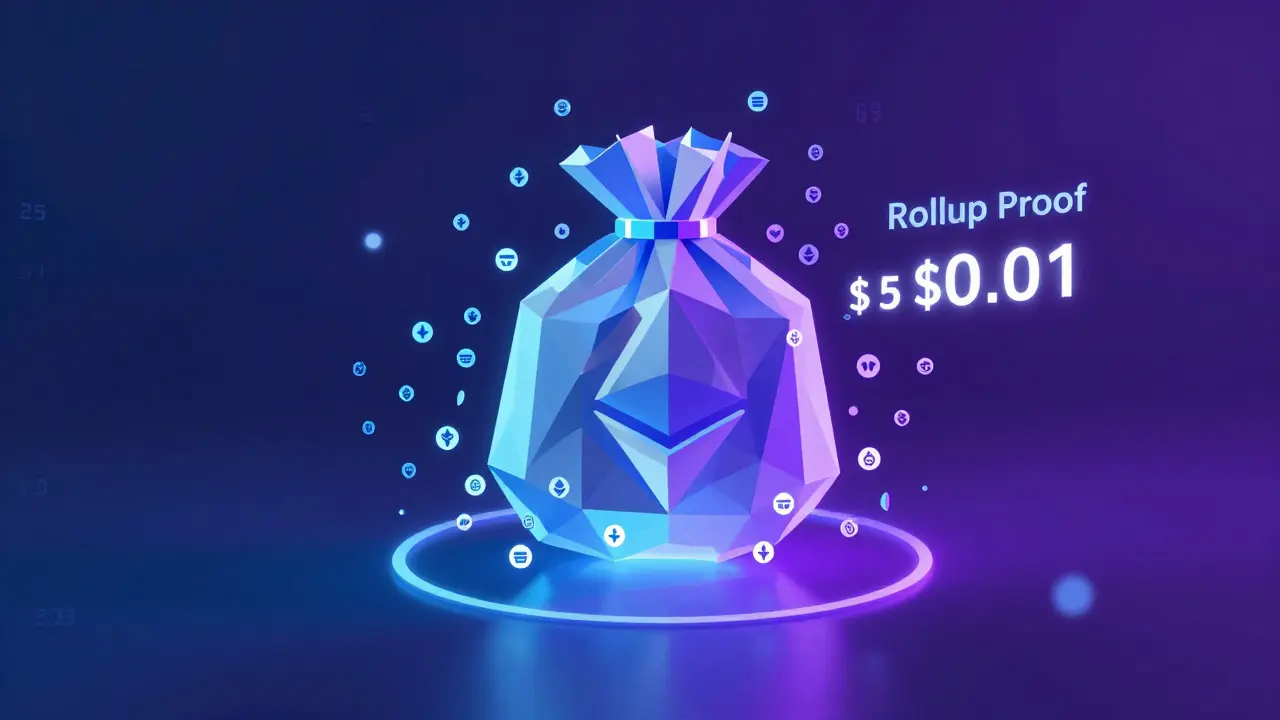
Imagine sending a Bitcoin transaction that costs less than a penny instead of $5. That’s not science fiction-it’s what blockchain rollups do every day. If you’ve ever been priced out of using DeFi, minting an NFT, or even sending a small payment on Ethereum, rollups are the reason you can finally do it without breaking the bank.
Why Transaction Fees Are So High on Blockchains
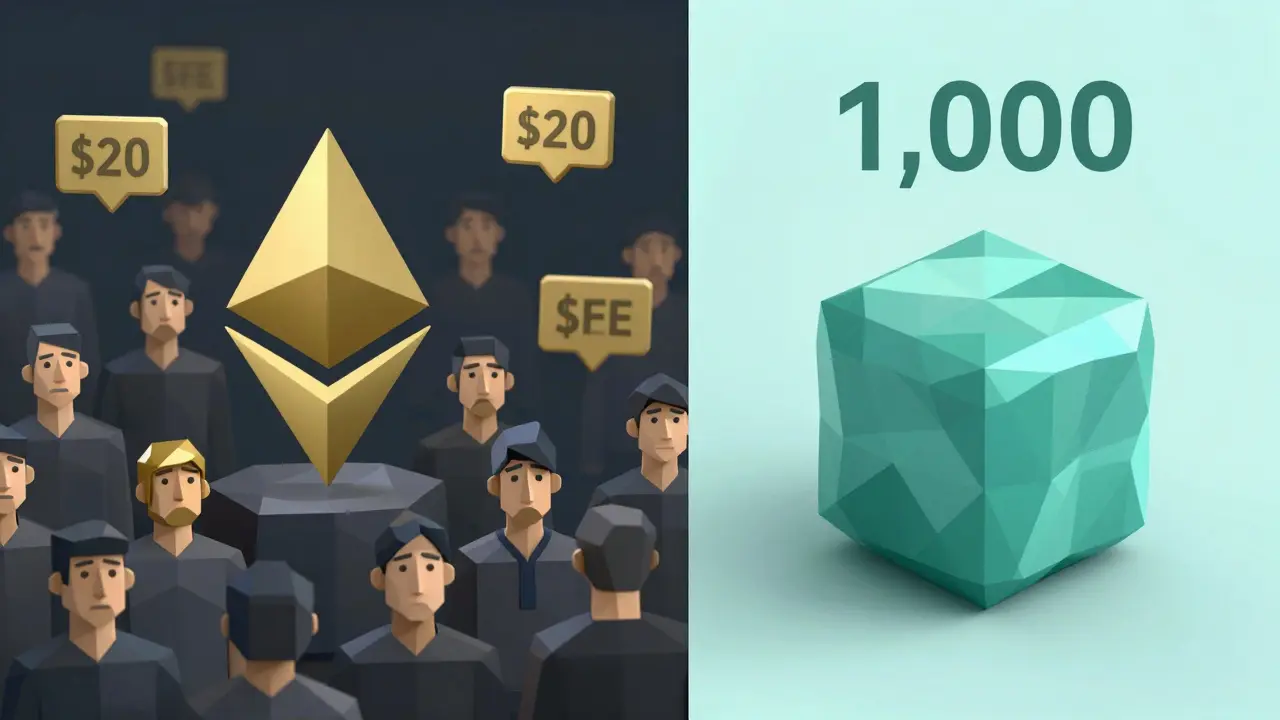
Blockchains like Ethereum were never built to handle millions of transactions per second. They were designed to be secure and decentralized, which means every single transaction has to be checked, verified, and recorded by every node on the network. That’s great for security, but terrible for cost. When demand spikes-like during an NFT drop or a DeFi surge-network congestion kicks in. Miners prioritize transactions with the highest fees, and regular users get stuck paying $10, $20, even $50 just to send a simple token swap.This isn’t just annoying-it’s a dealbreaker. How many people are going to pay $15 to buy a $5 digital asset? Or use a DeFi protocol when gas fees eat up half your profit? The answer: almost none. That’s why rollups were created.
What Are Rollups? (And How They Slash Costs)
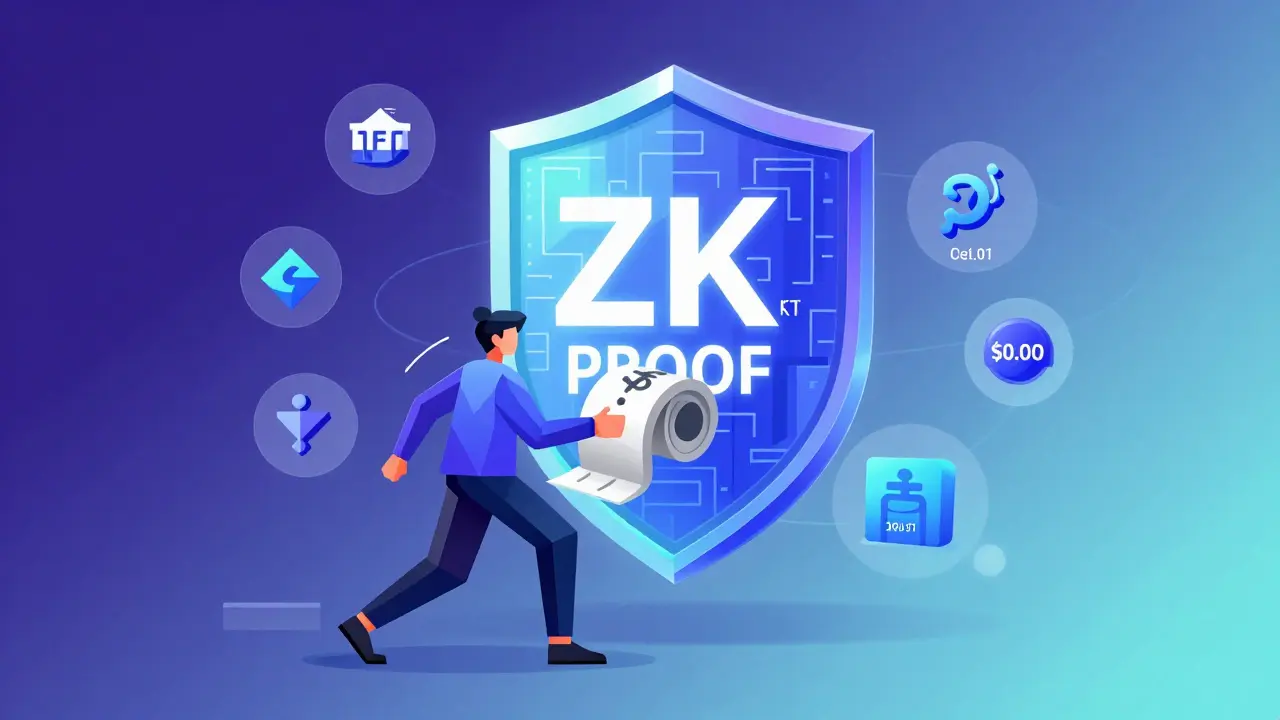
Rollups are Layer 2 solutions that process hundreds or thousands of transactions off the main blockchain, then bundle them into one compact proof and submit it back to the main chain. Think of it like taking 500 grocery receipts, stapling them together, and handing the cashier one single receipt instead of 500 separate ones.The magic happens in two ways:
- Off-chain processing: Instead of every node verifying each transaction individually, only the rollup’s operator does the heavy lifting. The main blockchain just checks a cryptographic proof that says, "These 1,000 transactions are valid."
- Data compression: Rollups shrink transaction data by up to 95%. A single Ethereum transaction might take 100 bytes. A rollup batch of 1,000 transactions might only take 1,200 bytes total. That’s a 98% reduction in data used.
This is why costs drop so hard. On Ethereum, a standard swap might cost 50 gwei (around $15). On a rollup, it can cost as little as 0.5 gwei-less than 10 cents. Some ZK-rollups have brought costs down to under 1 cent per transaction.
ZK-Rollups vs. Optimistic Rollups: Which Saves More?
There are two main types of rollups, and they handle cost reduction differently:| Feature | ZK-Rollups | Optimistic Rollups |
|---|---|---|
| Proof Type | Zero-knowledge proofs (cryptographic) | Fraud proofs (challenge period) |
| Finality Time | Fast (seconds) | 7-14 days |
| Cost per Transaction | $0.01-$0.05 | $0.03-$0.10 |
| Security | Equal to Ethereum | Equal to Ethereum |
| Best For | High-frequency trading, micropayments | Complex smart contracts, DeFi apps |
ZK-rollups are more efficient because their proofs are smaller and verified instantly. Optimistic rollups wait for a challenge period, which adds delay and slightly increases cost. But both are dramatically cheaper than Layer 1.
Real-World Impact: Where Rollups Are Changing the Game
The cost savings aren’t theoretical. They’re already reshaping industries:- DeFi: Platforms like Arbitrum and Optimism let users trade, lend, and borrow without paying $20 in gas fees. Aave and Uniswap now run on rollups-making liquidity accessible to small investors.
- Gaming: Games like Guild of Guardians and Axie Infinity moved to rollups because players could no longer afford to make in-game moves on Ethereum. Now, players earn, trade, and upgrade assets with near-zero fees.
- NFTs: Minting an NFT on Ethereum used to cost $50-$100. On Polygon’s zkEVM, it’s under $0.10. That’s why NFT adoption exploded outside crypto-native circles.
- Micropayments: Content creators can now receive $0.01 tips via rollups. Before, even a 1-cent payment was impossible. Now, it’s routine.
Rollups don’t just reduce cost-they unlock entirely new use cases that were economically dead on Layer 1.
Why Rollups Are Better Than Sidechains
You might wonder: why not just use a sidechain like Polygon (PoS) or Solana? They’re cheap too.The difference is security. Sidechains have their own validators. If they get hacked or go offline, your funds are at risk. Rollups don’t have that problem. They inherit Ethereum’s security. Even if the rollup operator vanishes, you can still withdraw your money directly to Ethereum. That’s because rollups are anchored to the main chain-they’re not independent.
Think of it this way: Sidechains are like a private bank. Rollups are like a bank that keeps your money locked in a vault you can access anytime-even if the bank collapses.
The Catch: What Rollups Can’t Fix
Rollups aren’t magic. They still rely on Ethereum for final settlement. That means:- They’re still limited by Ethereum’s blockspace. If Ethereum gets congested, rollup data costs can spike.
- Liquidity is split. If you’re using Arbitrum, you can’t easily trade with someone on Optimism without bridging-adding complexity and cost.
- Developers need to learn new tools. Building on a rollup isn’t the same as building on Ethereum. It’s doable, but it adds friction.
Still, these are trade-offs worth making. The cost savings are so massive that most new projects choose rollups over Layer 1 or sidechains.
What’s Next? The Future of Rollup Cost Reduction
Ethereum’s upcoming upgrade, danksharding, will make rollups even cheaper. It’s designed to massively increase data availability on Layer 1, meaning rollups can submit even more transactions with less cost. Experts predict per-transaction fees could drop below 0.1 cent by 2027.New types of rollups are also emerging-like recursion rollups, which bundle multiple rollup proofs into one, and hybrid models that combine ZK and optimistic techniques. These aren’t just tweaks-they’re leaps in efficiency.
The goal isn’t just to make transactions cheaper. It’s to make blockchain usable for everyone-not just speculators.
Should You Use Rollups?
If you’re:- Using DeFi daily? → Yes. Rollups cut your costs by 90%+
- Minting or trading NFTs? → Absolutely. You’ll save hundreds per transaction.
- Building an app? → Use a rollup from day one. Don’t start on Layer 1 unless you have a very specific reason.
- Just holding crypto? → You don’t need to interact with rollups directly. But your wallet probably already supports them.
The math is simple: if you’re doing more than a few transactions a month, rollups save you money. Period.
Are rollups safe?
Yes. Rollups inherit the security of Ethereum. Even if the rollup operator goes offline, users can still withdraw their funds directly to the main chain. This is a key advantage over sidechains, where network failure can mean permanent loss of funds.
Do I need to switch wallets to use rollups?
No. Most modern wallets like MetaMask, Coinbase Wallet, and Phantom automatically detect and support rollups. You just need to switch networks in your wallet settings-usually one click. Your private keys stay the same.
Can I send ETH from Ethereum to a rollup?
Yes. You bridge your ETH or tokens from Ethereum to the rollup using a bridge interface. This costs a small fee (usually under $1) and takes a few minutes. Once there, you pay pennies for every transaction.
Why aren’t all apps using rollups?
Some older apps are still on Layer 1 because migrating requires engineering work. Others avoid rollups due to fragmented liquidity or lack of developer tools. But the trend is clear: over 80% of new DeFi and NFT projects launch on rollups today.
Will rollups make Ethereum cheaper for everyone?
Yes. By moving 90%+ of transactions off-chain, rollups reduce congestion on Ethereum. That means even users who stay on Layer 1 see lower gas fees. Rollups don’t just help themselves-they help the whole network.
Rollups didn’t just improve blockchain-they fixed its biggest flaw: cost. What used to be a barrier to entry is now a gateway. And for the first time, blockchain isn’t just for the tech-savvy or wealthy. It’s for everyone.
Emily Pegg
March 9, 2026 AT 07:02Josh Moorcroft-Jones
March 9, 2026 AT 11:14Jamie Hoyle
March 10, 2026 AT 00:59Christina Young
March 10, 2026 AT 03:49James Burke
March 11, 2026 AT 16:31Bill Pommier
March 12, 2026 AT 08:24Olivia Parsons
March 12, 2026 AT 22:07Nick Greening
March 14, 2026 AT 11:38Jeffrey Dean
March 16, 2026 AT 05:57Brian T
March 16, 2026 AT 12:24Nash Tree Service
March 17, 2026 AT 06:56Ethan Grace
March 18, 2026 AT 13:59