
How News Drives Crypto Sentiment: A 2026 Guide to Trading Media Impact
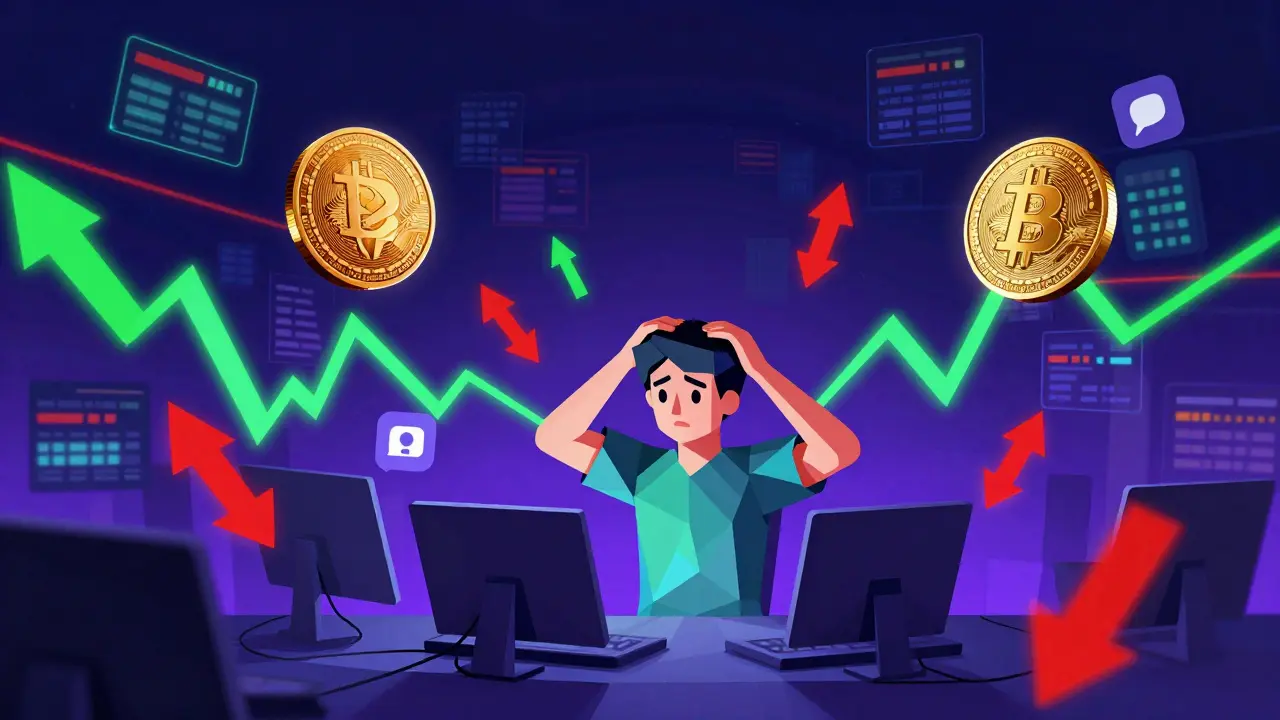
Did you know that a single headline can move the entire cryptocurrency market before traders even finish reading it? In June 2026, this isn't just speculation. Research from the University of Texas shows that news sentiment accounts for roughly 34.7% of short-term price volatility in Bitcoin. If you are trading digital assets, ignoring media coverage is like driving with your eyes closed. You might get lucky for a while, but eventually, you will crash into something you didn't see coming.
We used to think prices moved based on supply and demand alone. That model is outdated. Today, investor perception-shaped by tweets, regulatory announcements, and mainstream media reports-drives immediate buying and selling pressure. This article breaks down how news impacts crypto sentiment, which tools actually work in 2026, and how you can use this data without losing money to false signals.
The Science Behind the Hype: How Sentiment Moves Prices
To understand why news matters, we need to look at the mechanism. When positive news hits, algorithms scan headlines, interpret the tone, and execute trades in milliseconds. Human traders then react to the price movement, creating a feedback loop. This process is known as sentiment-driven market microstructure.
Dr. Elena Rodriguez, Director of the MIT Digital Currency Initiative, published findings in the Journal of Finance (2026) stating that crypto-specific news sentiment has a 2.3x stronger correlation with price movements than general market sentiment. Regulatory news is the biggest driver here, with a correlation coefficient of r=0.87. This means when the SEC or EU regulators speak, the market listens-and reacts violently.
Consider the January 2026 example where Coinbase CEO Brian Armstrong withdrew support for the Market Structure Bill. Within hours, Bitcoin dipped below $96,000. It wasn't a change in technology or adoption; it was a shift in narrative. The market perceived regulatory uncertainty as risk, triggering sell-offs. Understanding this link between narrative and price is crucial for any trader looking to survive in today's volatile environment.
Tools of the Trade: NLP and AI in Crypto Analysis
You cannot read every news article yourself. There are approximately 1.2 million financial news articles published daily across 47 languages. To keep up, traders rely on Natural Language Processing (NLP) models. These systems use machine learning to classify text as positive, negative, or neutral.
In 2025, BERT-based transformer models achieved 92.4% accuracy in sentiment classification, according to the Journal of Financial Data Science. However, not all tools are created equal. Traditional financial news platforms like RavenPack struggle with crypto-specific jargon, achieving only 54.3% accuracy on crypto events. Specialized platforms like Santiment and TheTIE perform significantly better, with Santiment leading the pack at an 82.6% accuracy rate for crypto-specific events.
| Platform | Accuracy (Crypto Events) | Data Sources | Key Strength | Best For |
|---|---|---|---|---|
| Santiment | 82.6% | 1,200+ Crypto-Native | Regulatory Impact Score (87.2% accuracy) | Institutional & Pro Traders |
| LunarCrush | 76.2% | Social Media Focus | Free Tier Accessibility | Retail Traders |
| TheTIE | 74.8% | 1,200+ Sources | Multi-Source Aggregation | Altcoin Analysis |
| RavenPack | 54.3% | 42 Legacy Sources | Traditional Finance Integration | Legacy Hedge Funds |
Latency is another critical factor. Advanced systems process news with 237-millisecond latency. This allows algorithmic trading bots to react before the price fully moves. If you are a retail trader using a manual interface, you are already behind. The key is to use these tools not for high-frequency trading, but for identifying broader trends that will last longer than a few seconds.
The Regulatory Wildcard: Why Laws Matter More Than Tech
If there is one type of news that dominates crypto sentiment, it is regulation. The 2024 Blockchain Regulatory Impact Report found that regulatory news drives 58.2% of market-wide panic events. This makes sense. Technology evolves slowly; laws can change overnight.
In January 2026, the U.S. Senate Banking Committee postponed the markup of the Digital Asset Market Clarity Act. The reaction was immediate: Coinbase stock dropped 3.26%, and Bitcoin fell 0.92% within 90 minutes. This wasn't because the tech broke; it was because clarity vanished. Uncertainty kills liquidity.
Conversely, positive regulatory developments create rallies. When the EU implemented MiCA 2.0 requirements in early 2027 (planned), firms had to incorporate sentiment risk assessments. This forced institutional players to take sentiment seriously, further embedding it into price action. As a trader, you must monitor legislative calendars closely. A bill being introduced is often more impactful than its final passage, as the mere discussion shifts sentiment from bearish to hopeful.

Pitfalls and False Signals: What Tools Get Wrong
Sentiment analysis is powerful, but it is far from perfect. One major weakness is interpreting sarcasm. According to ACM 2025 findings, AI accuracy drops to 43.8% when dealing with sarcastic or ironic content. Crypto Twitter is full of sarcasm. A tweet saying "Wow, great job crashing the market" might be interpreted as positive by a dumb algorithm, leading to disastrous buy signals.
Another issue is meme coins. The 2025 Messari report showed that sentiment analysis tools have an average accuracy of only 42.1% for meme coins. These assets are driven by community hype, influencer shilling, and pure chaos-not logical news narratives. Relying on standard sentiment scores for Dogecoin or newer memes is a recipe for loss.
Also, beware of "pump and dump" sentiment spoofing. Bad actors deliberately generate positive news or social media buzz to trick algorithms and retail traders into buying. The 2025 Chainalysis Sentiment Fraud Report noted that 19.3% of false signals were caused by such manipulation. Always cross-reference sentiment spikes with on-chain volume. If sentiment is high but volume is low, it is likely a trap.
Practical Application: How to Use Sentiment Data
So, how do you actually use this information? First, don't trade solely on sentiment. Use it as a filter. If technical indicators suggest a buy, but sentiment is overwhelmingly negative due to regulatory fear, wait. The trend may reverse quickly.
Second, combine sentiment with order book analysis. Reddit users who successfully traded using sentiment tools often mentioned checking the order book depth. If sentiment turns bullish but the order book shows thin liquidity, the price spike will be short-lived. User 'AltcoinSherpa2024' documented a successful trade in January 2026 by exiting a position four hours before a regulatory announcement, avoiding a 7.2% drawdown. He didn't guess; he used Santiment's regulatory alert system.
Third, understand the time horizon. The 2025 Wiley Financial Review meta-analysis concluded that news sentiment reliably predicts price movements only up to 12 hours. Beyond 24 hours, fundamental factors reassert dominance. Do not use a negative news headline as a reason to hold a long-term investment unless the news fundamentally changes the asset's value proposition (like a hack or a ban).

Future Trends: Where Is Sentiment Analysis Heading?
The industry is evolving rapidly. By 2027, Gartner projects the crypto sentiment analysis sector will reach $1.2 billion. We are seeing a convergence of sentiment analysis with on-chain metrics. Early implementations show an 18.3% improvement in prediction accuracy when combining both data types (Delphi Digital, Jan 2026). This holistic approach provides a clearer picture: sentiment tells you what people feel, on-chain data tells you what they are doing.
Additionally, regulators are stepping in. The SEC plans to integrate sentiment analysis into its Market Abuse Detection System (MADS) by Q3 2026. This means exchanges will have better tools to detect manipulation, potentially reducing the noise from pump-and-dump schemes. For traders, this could mean cleaner signals and fewer false positives in the future.
Conclusion: Stay Alert, Stay Skeptical
News impact on cryptocurrency sentiment is real, measurable, and profitable if handled correctly. But it requires discipline. Don't trust every green arrow on a dashboard. Understand the source, check the context, and verify with other data points. In a market where information travels faster than light, your edge isn't speed-it's interpretation.
How accurate is crypto sentiment analysis in 2026?
Specialized platforms like Santiment achieve around 82.6% accuracy for crypto-specific events, while traditional tools lag behind at 54.3%. However, accuracy drops significantly for meme coins (42.1%) and sarcastic content (43.8%).
Does news really affect Bitcoin price?
Yes. A 2025 University of Texas study found that news sentiment accounts for approximately 34.7% of short-term price volatility in Bitcoin. Regulatory news is particularly impactful, driving over 58% of market panic events.
Which sentiment analysis tool is best for beginners?
LunarCrush is popular among retail traders due to its accessible free tier and focus on social media metrics. Santiment offers deeper regulatory insights but has a steeper learning curve and higher cost for advanced features.
How long does news sentiment impact prices?
Research indicates that news sentiment reliably predicts price movements for up to 12 hours. Beyond 24 hours, fundamental factors and long-term trends tend to override initial sentiment reactions.
Can sentiment analysis predict meme coin crashes?
Not reliably. Meme coins are driven by irrational exuberance and influencer hype, which standard NLP models struggle to interpret. Accuracy for meme coin sentiment is currently around 42.1%, making it highly risky to trade based on these signals alone.
Fede Faith
June 21, 2026 AT 21:26I've been tracking sentiment data since the early days of altseason, and this breakdown is spot on. The correlation between regulatory headlines and immediate price action is undeniable now. It's not just noise anymore; it's a measurable asset class driver.
What really stands out to me is the latency issue mentioned. Retail traders are always going to be at a disadvantage against algos that process news in milliseconds. The only way we win is by using these tools for broader trend identification rather than trying to scalp the initial spike. Santiment’s regulatory impact score has saved my portfolio more times than I can count.
Josh Dodson
June 23, 2026 AT 11:30thats so true! i used to try and trade the headlines but got wrecked every time. now i just wait for the dust to settle. much less stress lol
Suman Patil
June 23, 2026 AT 18:45The jargon here is heavy but the core message is vital for any serious participant in the digital asset space. We need to stop treating crypto as isolated from traditional market mechanics. The integration of NLP models into trading strategies is no longer optional if you want to survive the volatility.
In India, we see similar patterns with local regulatory announcements causing massive swings. It's all about narrative control. If you can decode the sentiment before the mass market reacts, you have an edge. Keep pushing this knowledge forward, it helps demystify the chaos.
Kumaran sowkarpet
June 24, 2026 AT 12:04Nice writeup :D The part about meme coins having low accuracy for sentiment analysis is key. People forget that memes run on pure emotion and hype, not logic. Trying to apply standard financial sentiment metrics to Doge or Shiba is like using a thermometer to measure humidity. Different tools needed for different beasts. Always check volume though, never trust the buzz alone!
Mauricio Contreras Loredo
June 25, 2026 AT 23:08Oh wow, another article telling us that 'news matters.' Groundbreaking stuff. I bet the SEC is thrilled to know their press releases move markets more than actual tech upgrades. It's hilarious how we pretend this is a free market when it's just a reaction chamber to Washington's mood swings. But sure, keep buying your expensive API subscriptions to read what everyone else already knows.
sreeja boora
June 26, 2026 AT 04:32This analysis lacks depth regarding the specific regulatory frameworks emerging in Asia. While US-centric views dominate, the global nature of blockchain means ignoring other jurisdictions is negligent. The MiCA implementation in Europe is significant, but one must also consider the varying approaches in APAC regions which often drive distinct sentiment cycles unrelated to Western media narratives.
Grace Newman
June 26, 2026 AT 09:08One must question the source of these 'University of Texas' studies. Are they independent? Or funded by the very platforms selling these sentiment tools? The convergence of big data, AI, and financial surveillance is terrifying. They are not just analyzing sentiment; they are shaping it. The SEC integrating sentiment analysis into abuse detection is essentially admitting they are monitoring our thoughts before we act. This is not trading; it is behavioral conditioning.
Sylvia Mossman
June 27, 2026 AT 02:21Everyone here acting like sentiment analysis is some holy grail. It's garbage. You're paying for lagging indicators wrapped in fancy UI. The real money is made by those who ignore the news entirely and focus on raw on-chain flows. News is for suckers who get rekt by pump-and-dumps orchestrated by the same bots analyzing the sentiment. Wake up.
Greg Lewis
June 27, 2026 AT 19:11we think therefore we trade but do we trade because we think or because the algorithm thinks for us. the line between observer and observed blurs when your wallet moves based on a tweet parsed by a machine learning model trained on biased data. is the market real or just a reflection of our collective anxiety fed back to us through silicon mirrors
Sonya O'Brien
June 28, 2026 AT 04:24I find myself nodding along with several points here, particularly regarding the limitations of current NLP models when faced with sarcasm, which is prevalent in online communities. It is quite fascinating to consider how the interpretation of tone can drastically alter market movements, leading to potential inefficiencies that sophisticated actors might exploit. Furthermore, the distinction between short-term volatility driven by news and long-term fundamental value is crucial for maintaining a balanced investment strategy, as many retail investors unfortunately conflate the two, resulting in premature exits during temporary dips caused by negative headlines that ultimately prove to be baseless fears.
Filbert Reeves
June 28, 2026 AT 12:50they dont want you to know that the sentiment tools are rigged. its all a setup to manipulate retail traders into buying at the top. the algorithms are programmed to show positive signals right before the dump. ive seen the code snippets leaked on dark web forums. its obvious when you look at the timing of the 'positive' spikes. dont fall for it. the whole system is designed to extract wealth from the little guy. wake up sheeple.
Nick Rice
June 29, 2026 AT 16:29Let's cut through the noise. Sentiment is a tool, not a crystal ball. If you're relying on it for entry points, you're doing it wrong. Use it for risk management. If sentiment is euphoric, tighten your stops. If it's fearful, look for accumulation opportunities. Simple as that. Stop overcomplicating it with conspiracy theories and philosophical musings. Trade the tape, not the headline.
Eric Scheinberg
June 29, 2026 AT 17:04The statistical correlations presented are compelling. A correlation coefficient of r=0.87 for regulatory news is exceptionally high. However, causality should not be assumed without rigorous testing. The latency advantage of institutional players remains a significant barrier to entry for retail participants utilizing these tools. Prudence is advised.
pankaj chawla
July 1, 2026 AT 01:13Great insights. In my experience, combining sentiment with order book depth is the most reliable strategy. Many people miss the liquidity aspect. High sentiment with low volume is a trap. Always verify with on-chain data. This approach has consistently yielded better results for me than following news blindly.
Jessica Lane
July 1, 2026 AT 20:57I appreciate the detailed breakdown of the pitfalls, especially regarding meme coins. It is concerning how easily retail investors can be misled by false signals generated by bad actors. Education on cross-referencing data sources is essential. How do you suggest beginners start implementing these checks without being overwhelmed by the amount of information available?
Charles Pawlikowski
July 3, 2026 AT 04:26America leads the world in financial innovation despite the red tape. The SEC is doing its job protecting investors from scams. Those complaining about regulation are either criminals or naive. The fact that US-based platforms like Coinbase are driving the narrative is a testament to our strength. Don't listen to the haters overseas trying to undermine our markets. Stay strong patriots :)
Kwon Bill
July 4, 2026 AT 21:13The alpha lies in the multi-source aggregation. Single-source sentiment is noisy. You need to triangulate between social volume, developer activity, and exchange inflows. TheTIE does this well for altcoins. For BTC, stick to the macro regulatory feeds. The key is filtering signal from noise. Most tools fail here because they lack context-awareness. Build your own stack if you can afford the compute.
Danna Charris
July 5, 2026 AT 20:38Precisely. Most retail traders lack the discipline to interpret these signals correctly. They see green and buy, ignoring the underlying fundamentals. True expertise requires understanding the nuance behind the data points. Keep your circle small and your analysis deep.