
Glimpse (GLMS) IDO Airdrop: Complete Guide & Safety Checklist

You’ve seen the buzz. Maybe you got an email promising free Glimpse tokens, or perhaps a Discord group is hyping up the upcoming GLMS IDO Launch airdrop. It sounds too good to ignore-free crypto from a new project? But here is the hard truth: if you cannot find concrete, verified details about the Glimpse GLMS token on major aggregators like CoinMarketCap or CoinGecko, you are walking into potential danger.
As of mid-2026, there is no widely recognized, audited information regarding a specific "Glimpse" project launching a token called GLMS through a reputable Initial DEX Offering (IDO). This absence of data is not just a gap; it is a red flag. In the world of decentralized finance (DeFi), silence often means scams, rug pulls, or dead projects. This guide will help you verify what is real, understand how legitimate IDOs work, and protect your wallet from common traps.
What Is an IDO and Why Do Airdrops Matter?
To understand why the Glimpse IDO claims might be suspicious, we first need to break down the mechanics. An Initial DEX Offering (IDO) is a fundraising method where a blockchain project sells its native tokens directly to investors via a decentralized exchange or a launchpad platform. Unlike traditional IPOs, IDOs are permissionless and open to anyone with a crypto wallet.
Airdrops are marketing tools used by these projects. They distribute small amounts of tokens for free to early adopters. The goal? To build a community, create liquidity, and generate hype before the token hits the open market. Legitimate platforms like Polkastarter, DAO Maker, or BSCPad have strict vetting processes. They do not announce random projects without clear documentation, team identities, and smart contract audits.
If a project called "Glimpse" is claiming an IDO but lacks a presence on these established platforms, or if their website is newly registered with no traffic history, you should pause. Real projects publish whitepapers, roadmap timelines, and audit reports from firms like CertiK or Hacken. Without these, you are not investing; you are gambling.
The Red Flags Surrounding the "Glimpse GLMS" Claims
Let’s look at the specific issues with the current information available on the Glimpse GLMS token. When I searched for verified data, the results were empty. No official announcement from major exchanges. No listing on Etherscan or BscScan for a verified GLMS contract. No social media following that looks organic rather than bot-generated.
- No Verifiable Smart Contract: You cannot buy or claim airdrops without a contract address. If the project provides a link but refuses to share the raw contract code for independent review, run away.
- Anonymous Team: While some DeFi projects remain pseudonymous, most successful IDOs reveal at least key developers or advisors. Total anonymity combined with high promises is a classic scam tactic.
- Urgency Tactics: Scammers use phrases like "limited time," "last chance," or "only 100 spots left." Legitimate IDOs have transparent allocation mechanisms and public timelines.
- Requests for Private Keys: Never, ever enter your seed phrase or private key to claim an airdrop. This is the #1 way wallets get drained.
In May 2026, the regulatory landscape for crypto is tighter than ever. Projects operating in the gray areas are being shut down quickly. If Glimpse is not compliant with basic disclosure standards, it likely won’t survive long enough for you to profit.
How to Verify Any Crypto Project Before Participating
You don’t need to be a blockchain developer to spot a fake. Here is a simple checklist you can use for any project, including this alleged Glimpse IDO.
- Check Domain Age: Use a tool like Whois.com. If the website was created last week but claims to have been in development for two years, it is a lie.
- Search for Audits: Look for links to audit reports in their footer. Click them. Do they lead to real PDFs from known security firms? Or do they lead to generic pages?
- Analyze Social Sentiment: Go to Twitter (X) and Telegram. Are people asking genuine questions about technology? Or are they all posting "LFG!" and emojis? Bot accounts often follow identical patterns.
- Verify Tokenomics: A legitimate project publishes a token distribution chart. How many tokens are reserved for the team? For liquidity? For marketing? If the team holds more than 20-30%, be cautious of future dumps.
- Look for Community Governance: Does the project have a DAO? Can users vote on proposals? Lack of governance structure suggests centralized control, which increases risk.
For the Glimpse GLMS case, applying this checklist reveals significant gaps. There is no evidence of a working product, no active GitHub repository showing code commits, and no partnerships with recognizable brands. These missing pieces are critical.
Common IDO Scams You Must Avoid
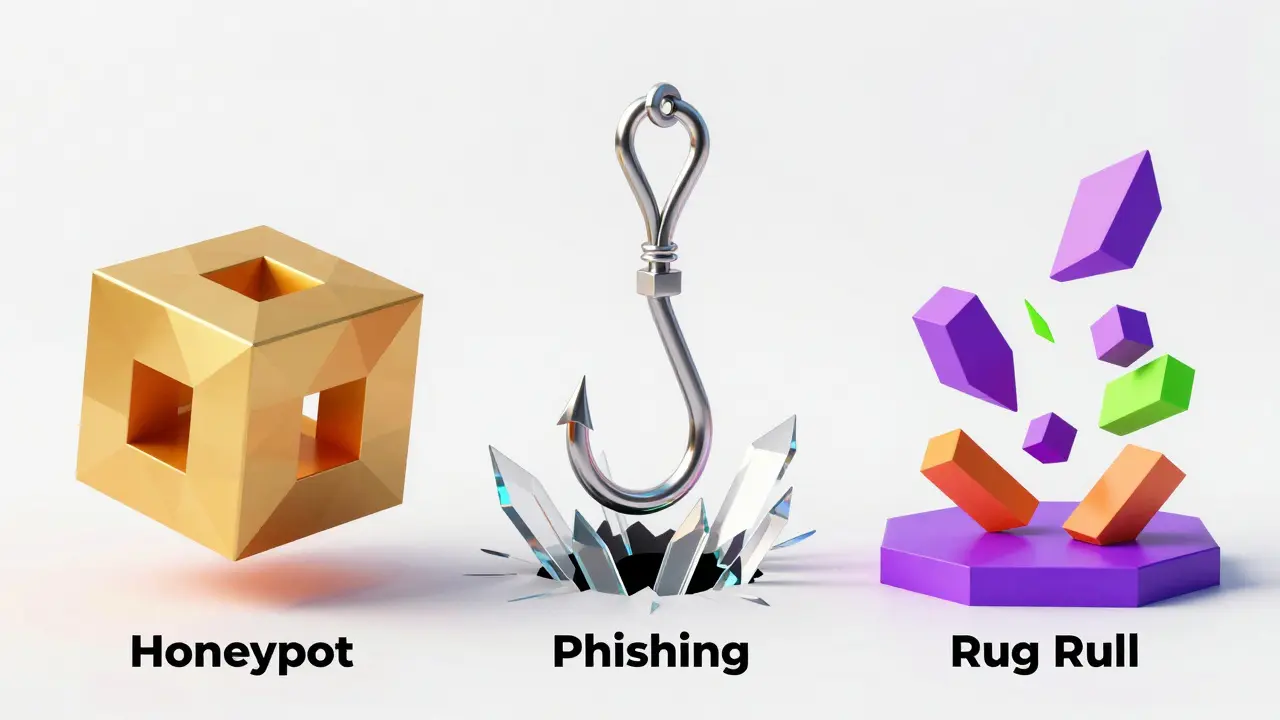
Scammers have become sophisticated. They don’t just steal money; they steal trust. Here are three common schemes targeting people looking for free tokens.
| Scam Type | How It Works | Warning Sign |
|---|---|---|
| Honeypot Token | You can buy the token, but the smart contract prevents selling. The price goes up artificially, trapping buyers. | Only one or two sell transactions visible on the block explorer. |
| Phishing Airdrop | Fake emails or DMs send you to a clone website. You connect your wallet, approve a malicious transaction, and lose funds. | URL looks similar but has slight spelling errors (e.g., glimpce.io instead of glimpse.io). |
| Rug Pull | Developers raise funds, then withdraw all liquidity from the pool, leaving the token worthless. | Liquidity is not locked for a long period (e.g., less than 6 months). |
If you encounter any of these signs with the Glimpse project, disengage immediately. Remember, if something feels off, it probably is. The crypto space is filled with noise, and your job is to filter out the signal from the scam.
Safe Alternatives for Finding Legitimate Airdrops
Just because the Glimpse IDO looks risky doesn’t mean you should stop participating in Web3 growth. There are plenty of safe ways to earn tokens. Focus on established ecosystems.
Consider exploring airdrops from Layer 2 solutions like Arbitrum or Optimism. These networks have massive user bases and transparent governance. Another option is interacting with blue-chip DeFi protocols like Uniswap or Aave. While past airdrops may have ended, new features and upgrades often bring rewards for early testers.
Also, keep an eye on reputable launchpads. Platforms like TrustPad and Gamefi regularly host IDOs for vetted projects. By holding their native tokens or completing KYC (Know Your Customer) verification, you gain access to safer opportunities. Yes, it requires effort, but it protects your capital.
Protecting Your Wallet in 2026
Security is not optional. With deepfake AI and advanced phishing attacks on the rise, your digital hygiene must be impeccable. Here are essential steps to secure your assets.
- Use a Hardware Wallet: Devices like Ledger or Trezor keep your private keys offline. Never store large amounts of crypto on hot wallets like MetaMask for long periods.
- Enable 2FA: Use an authenticator app (like Google Authenticator or Authy) for all your exchange and wallet accounts. SMS-based 2FA is vulnerable to SIM swapping.
- Revoke Permissions: Regularly check sites like Revoke.cash to see which contracts have access to your wallet. Revoke any permissions you no longer recognize.
- Beware of Deepfakes: If you receive a video call or voice message from a "project founder" asking for help, verify it through another channel. AI can mimic voices and faces convincingly.
These practices might seem tedious, but they are the difference between keeping your wealth and losing it all in seconds. The cost of a hardware wallet is negligible compared to the value of your portfolio.
Conclusion: Stay Skeptical, Stay Safe
The allure of free tokens is strong, but the risks associated with unverified projects like the alleged Glimpse GLMS IDO are higher. Without concrete evidence of legitimacy-audits, team transparency, and platform endorsements-you should assume the worst. The crypto market rewards patience and diligence, not impulsivity.
Focus on building knowledge. Learn how to read block explorers. Understand tokenomics. Join communities that prioritize education over hype. By doing so, you position yourself to benefit from genuine innovations while avoiding the pitfalls designed to exploit newcomers. Your financial security depends on your ability to question everything.
Is the Glimpse GLMS token listed on major exchanges?
No, as of May 2026, there is no verified listing of a GLMS token on major cryptocurrency exchanges like Binance, Coinbase, or Kraken. Always check CoinMarketCap or CoinGecko for official listings.
How can I tell if an IDO airdrop is a scam?
Look for red flags such as anonymous teams, lack of smart contract audits, urgency tactics, and requests for private keys. Legitimate projects provide detailed whitepapers and are hosted on reputable launchpads.
What is the safest way to participate in crypto airdrops?
Participate in airdrops from well-established projects with transparent governance and audited smart contracts. Use a separate wallet for interactions and never share your seed phrase.
Should I invest in projects with no online presence?
Absolutely not. A lack of online presence, social media activity, or technical documentation indicates a high risk of fraud. Only engage with projects that have verifiable histories and active communities.
Are hardware wallets necessary for airdrop participation?
While not strictly required for small interactions, using a hardware wallet significantly enhances security. It isolates your main assets from potential malware or phishing attacks encountered during airdrop claims.